Kirjojen hintavertailu. Mukana 11 342 296 kirjaa ja 12 kauppaa.

Kirjahaku

Etsi kirjoja tekijän nimen, kirjan nimen tai ISBN:n perusteella.

7 kirjaa tekijältä Anne Curry

Henry V (Penguin Monarchs)

Henry V (Penguin Monarchs)

Anne Curry

Penguin Books Ltd
2018
nidottu
The acclaimed Penguin Monarchs series: short, fresh, expert accounts of England's rulers - now in paperbackHenry V's invasion of France, in August 1415, represented a huge gamble. As heir to the throne, he had been a failure, cast into the political wilderness amid rumours that he planned to depose his father. Despite a complete change of character as king - founding monasteries, persecuting heretics, and enforcing the law to its extremes - little had gone right since. He was insecure in his kingdom, his reputation low. On the eve of his departure for France, he uncovered a plot by some of his closest associates to remove him from power. Agincourt was a battle that Henry should not have won - but he did, and the rest is history. Within five years, he was heir to the throne of France. In this vivid new interpretation, Anne Curry explores how Henry's hyperactive efforts to expunge his past failures, and his experience of crisis - which threatened to ruin everything he had struggled to achieve - defined his kingship, and how his astonishing success at Agincourt transformed his standing in the eyes of his contemporaries, and of all generations to come.
Agincourt

Agincourt

Anne Curry

Oxford University Press
2015
sidottu
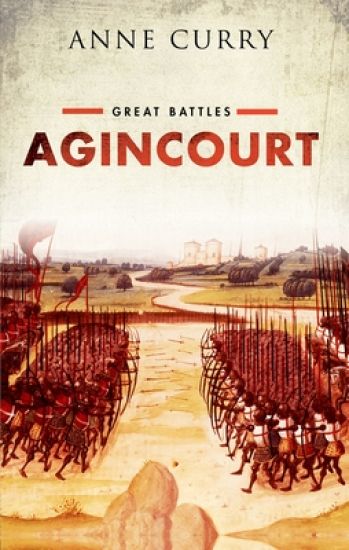
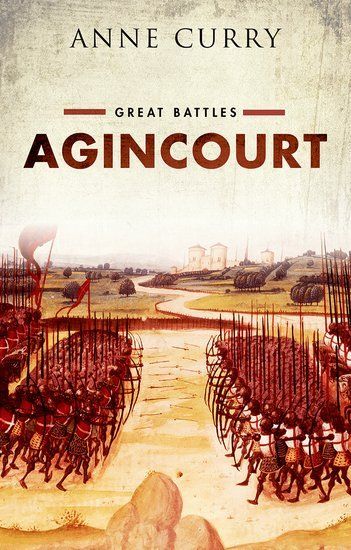
Agincourt (1415) is an exceptionally famous battle, one that has generated a huge and enduring cultural legacy in the six hundred years since it was fought. Everybody thinks they know what the battle was about. Even John Lennon, aged 12, wrote a poem and drew a picture headed 'Agincourt'. But why and how has Agincourt come to mean so much, to so many? Why do so many people claim their ancestors served at the battle? Is the Agincourt of popular image the real Agincourt, or is our idea of the battle simply taken from Shakespeare's famous depiction of it? Written by the world's leading expert on the battle, this book shows just why it has occupied such a key place in English identity and history in the six centuries since it was fought, exploring a cultural legacy that stretches from bowmen to Beatles, via Shakespeare, Dickens, and the First World War. Anne Curry first sets the scene, illuminating how and why the battle was fought, as well as its significance in the wider history of the Hundred Years War. She then takes the Agincourt story through the centuries from 1415 to 2015, from the immediate, and sometimes surprising, responses to it on both sides of the Channel, through its reinvention by Shakespeare in King Henry V (1599), and the enduring influence of both the play and the film versions of it, especially the patriotic Laurence Olivier version of 1944, at the time of the D-Day landings in Normandy. But the legacy of Agincourt does not begin and end with Shakespeare's play: from the eighteenth century onwards, on both sides of the Channel and in both the English and French speaking worlds the battle was used as an explanation of national identity, giving rise to jingoistic works in print and music. It was at this time that it became fashionable for the gentry to identify themselves with the victory, and in the Victorian period the Agincourt archer came to be emphasized as the epitome of 'English freedom'. Indeed, even today, historians continue to 'refight' the battle - an academic contest which has intensified over recent years, in the run-up to the sixth hundredth anniversary year of 2015.
Agincourt

Agincourt

Anne Curry

Oxford University Press
2021
nidottu
From Shakespeare to The Beatles, the battle of Agincourt has dominated the cultural landscape as one of the most famous battles in British history. Anne Curry seeks to find out how and why the legacy of Agincourt has captured the popular imagination. Agincourt (1415) is an exceptionally famous battle, one that has generated a huge and enduring cultural legacy in the six hundred years since it was fought. Everybody thinks they know what the battle was about. Even John Lennon, aged 12, wrote a poem and drew a picture headed 'Agincourt'. But why and how has Agincourt come to mean so much, to so many? Why do so many people claim their ancestors served at the battle? Is the Agincourt of popular image the real Agincourt, or is our idea of the battle simply taken from Shakespeare's famous depiction of it? Written by the world's leading expert on the battle, this book shows just why it has occupied such a key place in English identity and history in the six centuries since it was fought, exploring a cultural legacy that stretches from bowmen to Beatles, via Shakespeare, Dickens, and the First World War. Anne Curry first sets the scene, illuminating how and why the battle was fought, as well as its significance in the wider history of the Hundred Years War. She then takes the Agincourt story through the centuries from 1415 to now, from the immediate, and sometimes surprising, responses to it on both sides of the Channel, through its reinvention by Shakespeare in King Henry V (1599), and the enduring influence of both the play and the film versions of it, especially the patriotic Laurence Olivier version of 1944, at the time of the D-Day landings in Normandy. But the legacy of Agincourt does not begin and end with Shakespeare's play: from the eighteenth century onwards, on both sides of the Channel and in both the English and French speaking worlds the battle was used as an explanation of national identity, giving rise to jingoistic works in print and music. It was at this time that it became fashionable for the gentry to identify themselves with the victory, and in the Victorian period the Agincourt archer came to be emphasized as the epitome of 'English freedom'. Indeed, even today, historians continue to 'refight' the battle.
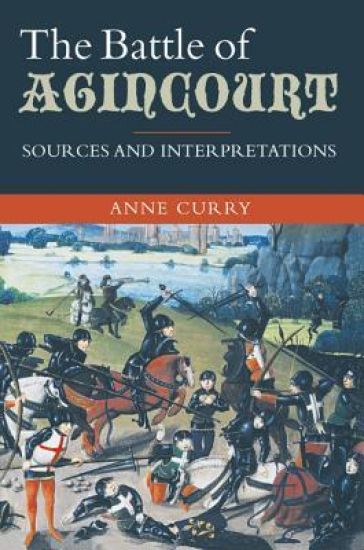
The Battle of Agincourt: Sources and Interpretations
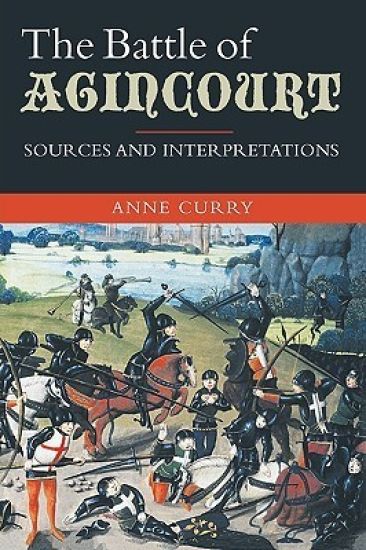
Latest title, destined to be the Agincourt sourcebook for years to come, in the Warfare in History: Sources and Interpretations series. Accessible collections of primary sources covering the Hundred Years War are still remarkably few and far between, and teachers of the subject will find Curry's volume a valuable addition to their bibliographies and teaching aids.FRENCH HISTORY "Agincourt! Agincourt! Know ye not Agincourt?" So began a ballad of around 1600. Since the event itself [25 October 1415], the great military engagement has occupied a special place in both English andFrench consciousness, respectively as either one of the greatest military successes ever, or as the "accursed day". Much ink has been spilt on the battle but do we really know Agincourt? Not since Harris Nicolas's History of the Battle of Agincourt (1827-33) has there been a full attempt to survey the sources until now: this book brings together, in translation and with commentary, English and French narrative accounts and literary works of the fifteenth century. It also traces the treatment of the battle in sixteenth-century English histories and in the literary representations of, amongst others, Shakespeare and Drayton. After examining how later historians interpreted the battle, it concludes with the first full assessment of the extremely rich administrative records which survive for the armies which fought "upon Saint Crispin's day". ANNE CURRY is Professor of Medieval Historyat the University of Southampton. CONTENTS Twenty-six chronicle sources, English and French Accounts from six sixteenth-century English historians Twenty-one records of contemporary reception of the battle, and the development of the literary tradition, in England and France Summaries of interpretations from the eighteenth to the twentieth centuries Excerpts from eighteen administrative records relating to the Englishand French armies
The Hundred Years War

The Hundred Years War

Anne Curry

BLOOMSBURY PUBLISHING PLC
2023
nidottu
An illustrated overview of the Hundred Years War, the longest-running and the most significant conflict in western Europe in the later Middle Ages. There can be no doubt that military conflict between France and England dominated European history in the 14th and 15th centuries. The Hundred Years War is of considerable interest both because of its duration and the number of theatres in which it was fought. Drawing on the latest research for this new edition, Hundred Years War expert Professor Anne Curry examines how the war can reveal much about the changing nature of warfare: the rise of infantry and the demise of the knight; the impact of increased use of gunpowder and the effect of the war on generations of people. Updated and revised for the new edition, with full-colour maps and 50 new images, this illustrated introduction provides an important reference resource for the academic or student reader as well as those with a general interest in late medieval warfare.
1415 Agincourt

1415 Agincourt

Anne Curry

THE HISTORY PRESS LTD
2024
pokkari
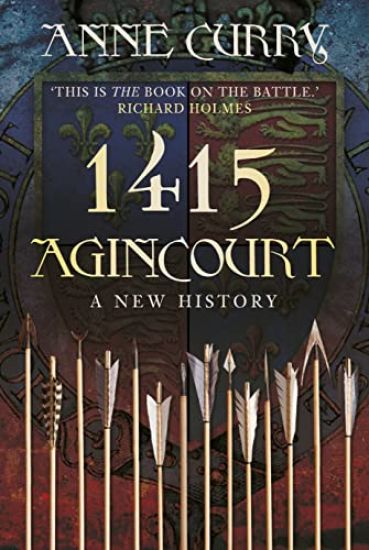
As night fell in Picardy on Thursday 24 October 1415, Henry V and his English troops, worn down by their long march in search of a crossing of the Somme, can only have dreamt that the battle of the next day would be remembered as one of the most momentous victories ever won.Six hundred years down the line, the battle of Agincourt still rings through the centuries. In this stupendous victory English and Welsh archers who formed the bulk of Henry’s army prevailed against large numbers of French men-at-arms and cavalry.This startling and revisionist history recreates the campaign and battle from the perspectives of the English. Acclaimed as one of the best battle accounts ever published, Anne Curry has updated her classic work in honour of the 600th anniversary of Agincourt.
The Battle of Agincourt: Sources and Interpretations
A great teaching tool for every aspect of medieval history... a remarkable book. JOURNAL OF MILITARY HISTORY Accessible collections of primary sources covering the Hundred Years War are still remarkably few and far between, and teachers of the subject will find Curry's volume a valuable addition to their bibliographies and teaching aids.FRENCH HISTORY "Agincourt! Agincourt! Know ye not Agincourt?" So began a ballad of around 1600. Since the event itself (25 October 1415), the great military engagement has occupied a special place in both English andFrench consciousness, respectively as either one of the greatest military successes ever, or as the "accursed day". Much ink has been spilt on the battle but do we really know Agincourt? Not since Harris Nicolas's History of the Battle of Agincourt (1827-33) has there been a full attempt to survey the sources until now: this book brings together, in translation and with commentary, English and French narrative accounts and literary works of the fifteenth century. It also traces the treatment of the battle in sixteenth-century English histories and in the literary representations of, amongst others, Shakespeare and Drayton. After examining how later historians interpreted the battle, it concludes with the first full assessment of the extremely rich administrative records which survive for the armies which fought "upon Saint Crispin's day". ANNE CURRY is Professor of Medieval Historyat the University of Southampton.