Kirjojen hintavertailu. Mukana 11 342 296 kirjaa ja 12 kauppaa.

Kirjahaku

Etsi kirjoja tekijän nimen, kirjan nimen tai ISBN:n perusteella.

9 kirjaa tekijältä Anne Davison

A History of China

A History of China

Anne Davison

Independently Published
2019
pokkari
Napoleon Bonaparte, when referring to China, famously said; "China is a sleeping giant. Let her sleep, for when she wakes, she will shake the world." His words were prophetic. For centuries China slumbered. Then, about forty years ago she woke up and since that time has risen to become the world's second largest economy by GDP with the world's greatest purchasing power.This book tells of China's turbulent past. It is a story of famine and flood, invasion and occupation, revolution and renewal, world war and civil war. Starting with the pre-historical Yellow Emperor, the earlier chapters trace the origins of the Great Wall, the discovery of the Terracotta Warriors and the opening up of the ancient Silk Road. Later chapters include the arrival of Buddhism, the period under the Mongol rule of Kublai Khan as well as the refinement of porcelain and the opening up of trade with the West under the Ming dynasty.The final chapters cover the opium wars and the 'hundred years of humiliation' that led to the fall of the Qing dynasty. This is followed by the Republican era, Civil War and the arrival of Communism. The Epilogue looks at how China has succeeded in combining socialism with a market economy that has resulted in a dynamic and exciting country.As with other books in the 'In Brief' series, this book is aimed at the general reader who wants to understand a particular historical topic but does not have the time or inclination to read a heavy academic tome. With this mind, footnotes have been omitted.While there will inevitably be gaps in a book of this size, the intention is to cover the most significant events that moulded China's history. Should the reader be inspired to further reading on the subject, a small selection of the main works that have been consulted is provided at the end. Where possible, maps and charts are provided which should help the reader navigate through the text. A 'Who's Who and What's What' is included at the end.
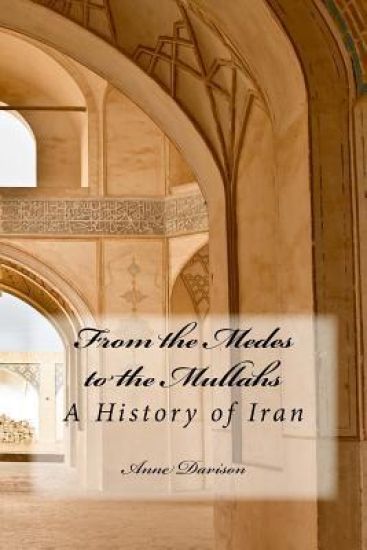
From the Medes to the Mullahs

From the Medes to the Mullahs

Anne Davison

Createspace Independent Publishing Platform
2013
pokkari
This book offers a general overview of the history of Iran. Starting around 600 BCE with the Medes it traces the key events right up to and including the modern Islamic Republic of Iran.Of particular interest it includes the Islamic conquest of Persia, the Sunni-Shi'a schism, and Iran's relations with the West post World War I. Containing some useful maps, the book is aimed at the general reader who is looking for a short, accessible account of the rich history of the country. It is hoped that this book, which is the first in the series 'In Brief: books for busy people', might provide a useful introduction to a complex country that is often misunderstood. 'From the Medes to the Mullahs' will also give the reader to a better understanding of the issues facing the Middle East today.
Paul of Tarsus

Paul of Tarsus

Anne Davison

Createspace Independent Publishing Platform
2013
pokkari
It is often said that without Paul the Apostle there would have been no Christian Church. Certainly it was Paul who took the message of Christ beyond the region of Palestine to the Gentiles of Asia Minor and it was Paul who established the first Churches across Anatolia and beyond, into the Greek Peninsula. It is therefore arguable that if it had not been for Paul, the Church would not have become the worldwide Faith that it is today. It is also arguable that without the structure of the Roman Empire of the First Century, the early Church would not have spread as it did. This book places Paul in his historical context; the Graeco-Roman world of the First Century. Part One of the book explains how the Eastern Mediterranean came to be Greek in culture but Roman in government.Part Two looks at the life of a Jew or Christian at that time, living under Roman rule.Part Three follows the life of Paul; a Roman Citizen, an urban, well-educated Jew of the Diaspora; born in Tarsus, which was then a prosperous and cosmopolitan port city. This is not another Biblical study on the life of St Paul, or a work of Christian apologetics. Rather it looks at the radical Jew of the First Century who challenged the status quo. He was a man who faced both the hostility of the Jews and the might of the Roman Empire.Containing some useful maps, it is short and accessible and should appeal to the general reader who is interested in the man Paul of Tarsus: a First Century Radical, from a historical perspective rather than the more usual avenue, through Scripture.This book is the second (the first being From the Medes to the Mullahs) in the 'In Brief series; Books for Busy People'.
Holy Roman Empire

Holy Roman Empire

Anne Davison

Createspace Independent Publishing Platform
2014
pokkari
This book traces the history of the Holy Roman Empire, which lasted for over a thousand years, from the reign of Charlemagne in AD 800 until AD 1806 when it was dissolved following defeat by Napoleon. It is an Empire that had no fixed boundaries and until the 16th century, when the Habsburgs settled in Vienna, it had no permanent imperial city. At different periods its territories stretched from the North Sea to the Balkans and for a time in the 16th century included the South Americas.The book describes the complex relationship between the Emperor and the Papacy. It also includes reference to the European Reformation and the Ottoman Empire.The final chapters concentrate on the Habsburg Dynasty from the 13th century to the present.Including some useful maps this book should appeal to a reader who is looking for a clear and accessible account of a complex and important European Empire.
Making Sense of Militant Islam

Making Sense of Militant Islam

Anne Davison

Createspace Independent Publishing Platform
2015
pokkari
This book is essential reading for anyone wanting to make sense of the recent rise in radical Islam.The early chapters explore the roots of radical thought from the early period of Islamic history. The second part of the book examines the recent rise of militant groups such as Al Qaeda, the Taliban and ISIS/ISIL.Containing useful maps and charts it is written in a clear and accessible style. It would appeal to the non-specialist who wants to better understand this complex topic but does not have the time or inclination to read a heavy academic tome.
The Ottoman Empire

The Ottoman Empire

Anne Davison

Createspace Independent Publishing Platform
2016
pokkari
The history of the Ottoman Empire, as with most Empires, is complex. It is also a history that is little understood by the general public. At the same time there are many events that occurred within the context of Ottoman history that the general reader may be quite familiar with: for example, the Fall of Constantinople in 1453, the Crimean War in 1853, the Battle of Gallipoli or exploits of Lawrence of Arabia during the First World War.This book begins with the arrival of the Turkic tribes into Anatolia in the 13th century and covers the main events up to and including the dissolution of the Empire in 1923. The final part of the book explores the link between today's conflicts in the Middle East and the peace process following the First World War, in particular the Sykes-Picot Agreement, the Balfour Declaration and the Treaty of Sevres.Although all Ottoman history is fascinating, the period from the 18th century onwards is particularly important in relation to the making of today's Eastern Europe and the Balkans. Equally, if not more importantly, is the period from the First World War and the dissolution of the Empire. A better understanding of this last period could help many people make better sense of the complex situation in the Middle East today.As with other books in the 'In Brief' series, this book is aimed at the general reader who wants to understand a particular historical topic but does not have the time or inclination to read a heavy academic tome. With this mind, footnotes have been omitted but the reader should find the maps helpful.
The Mughal Empire

The Mughal Empire

Anne Davison

Createspace Independent Publishing Platform
2017
pokkari
This book tells the story of the Mughal Empire, which lasted from 1526 to 1857 when it was dissolved by the British following the Indian Uprising. It was a time when the Indian sub-continent was ruled by a Turco-Mongol Islamic dynasty.The early Mughals, who came from Central Asia, introduced many aspects of Persian culture into India, for example literature, painting and architecture. The Taj Mahal is a surviving example of the particular Indo-Islamic style of Mughals architecture.Under the first six Emperors, the Mughals enjoyed expansion and prosperity. The reign of Akbar the Great was unusual for its religious tolerance. Shah Jahan is remembered for the many magnificent buildings he commissioned. The sixth Emperor, Aurangzeb was a conservative Muslim who introduced Sharia Law. Contemporary sources, both biographies and the accounts of European travellers, help to put flesh onto the bones of these Emperors.With the death of Aurangzeb in 1707, the Empire went into a steady decline. This was partly due to the affects of Aurangzeb's religious policies that had alienated the majority Hindu population. Another reason was the growing power of the Hindu Marathas. But the greatest factor was the increasing presence and influence of the British East India Company.By the middle of the 19th Century Mughal power was limited to just Delhi and its environs. Relations between the British and local population had deteriorated. A minor incident broke out in the ranks of the Bengal Native Infantry leading to the Indian Uprising. This book is written in an accessible style that should appeal to the non-academic. Maps, family trees, a Who's Who and a Timeline should help the reader navigate through this fascinating story.
A History of Russia

A History of Russia

Anne Davison

Createspace Independent Publishing Platform
2018
pokkari
Russia has recently marked one hundred years since the 1917 Russian Revolution and the overthrow of the Romanov Dynasty. Seventy-four years of Soviet rule followed, until 1991, when the USSR (Union of Soviet Socialist Republics) was dissolved.It could be said that the Soviet experiment was simply a blip in the long history of the Russian people. But how, or why did the blip happen? More significantly, is the blip slowly being forgotten, while people and events from Russia's 'glorious' past are re-emerging into the Russian consciousness? There are signs that this may be the case. Joseph Stalin has been brought in from the cold and a monument to Vladimir the Great has been erected outside the Kremlin. Even a monument of Ivan the Terrible has been unveiled on the grounds that through his expansionist policies he increased Russia's territory. And the Russian Orthodox Church has been reinstated, not only as a moral force but also as a supporter of the Russian State. This book is an attempt to look back at Russian history and to try and discover why these particular rulers are so relevant today. Perhaps it might then be possible to identify those characteristics, traits and trends that not only survived the Soviet period, but re-emerged as strong as ever.Starting with Rurik, the founder of the Kievan Rus', the book includes the Mongol Invasions, the Dukes of Muscovy, the Romanovs and Revolution. The final Chapter covers the Soviet period and the Epilogue reflects on the current Presidency of Vladimir Putin. As with other books in the 'In Brief' series, this book is aimed at the general reader who wants to understand a particular historical topic but does not have the time or inclination to read a heavy academic tome. With this mind, footnotes have been omitted. While there will inevitably be gaps in a book of this size, the intention is to cover the most significant events that moulded Russian history. Should the reader be inspired to further reading on the subject, a small selection of the main works that have been consulted is provided at the end. Where possible, maps and charts are provided which should help the reader navigate through the text. A 'Who's Who and What's What' is included at the end.