Kirjojen hintavertailu. Mukana 12 016 292 kirjaa ja 12 kauppaa.

Kirjahaku

Etsi kirjoja tekijän nimen, kirjan nimen tai ISBN:n perusteella.

6 kirjaa tekijältä Anne Fletcher

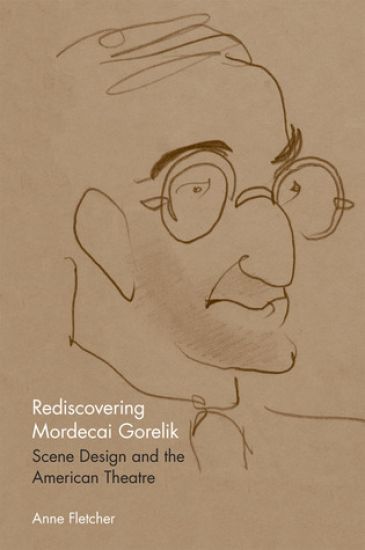
Rediscovering Mordecai Gorelik

Rediscovering Mordecai Gorelik

Anne Fletcher

Southern Illinois University Press
2009
nidottu
This title examines the life and achievements of a theater legend. ""Rediscovering Mordecai Gorelik"" explores the life and work of the pioneering scene designer whose career spanned decades in American theater. Anne Fletcher's insightful volume draws intriguing parallels and contrasts between Gorelik's productions and the theatrical movements of the twentieth century, exposing the indelible mark he left on the stage. Through in-depth analysis of his letters, diaries, designs, and theoretical works, Fletcher examines the ways in which Gorelik's productions can be used as a mirror to reflect the shifting dramatic landscapes of his times. Fletcher places Gorelik against the colorful historical backdrops that surrounded him - including the avant-garde movement of the 1920s, World War II, the Cold War, and absurdism - using the designer's career as a window into the theater during these eras. Within these cultural contexts, Gorelik sought to blaze his own unconventional path through the realms of theater and theory. Fletcher traces Gorelik's tenures with such companies as the Provincetown Players, the Theatre Guild, and the Theatre Union, as well as his relationships with icons such as Bertolt Brecht, revealing how his interactions with others influenced his progressive designs and thus set the stage for major dramatic innovations. In particular, Fletcher explores Gorelik's use of scenic metaphor: the employment of stage design techniques to subtly enhance the tone or mood of a production. Fletcher also details the designer's written contributions to criticism and theory, including the influential volume ""New Theatres for Old"", as well as other articles and publications. In addition to thorough examinations of several of Gorelik's most famous projects, ""Rediscovering Mordecai Gorelik"" contains explications of productions by such legends as John Howard Lawson, Clifford Odets, and Arthur Miller. Also included are numerous full-color and black-and-white illustrations of Gorelik's work, most of which have never been available to the public until now. More than simply a portrait of one man, this indispensable volume is a cultural history of American theater as seen through the career of a visionary designer and theoretician.

Modern American Drama: Playwriting in the 1930s
The Decades of Modern American Drama series provides a comprehensive survey and study of the theatre produced in each decade from the 1930s to 2009 in eight volumes. Each volume equips readers with a detailed understanding of the context from which work emerged: an introduction considers life in the decade with a focus on domestic life and conditions, social changes, culture, media, technology, industry and political events; while a chapter on the theatre of the decade offers a wide-ranging and thorough survey of theatres, companies, dramatists, new movements and developments in response to the economic and political conditions of the day. The work of the four most prominent playwrights from the decade receives in-depth analysis and re-evaluation by a team of experts, together with commentary on their subsequent work and legacy. A final section brings together original documents such as interviews with the playwrights and with directors, drafts of play scenes, and other previously unpublished material.The major playwrights and their works to receive in-depth coverage in this volume include:* Clifford Odets: Waiting for Lefty (1935), Awake and Sing! (1935) and Golden Boy (1937);* Lillian Hellman: The Children’s Hour (1934), The Little Foxes (1939), and Days to Come (1936);* Langston Hughes: Mulatto (1935), Mule Bone (1930, with Zora Neale Hurston) and Little Ham (1936);* Gertrude Stein: Doctor Faustus Lights the Lights (1938), Four Saints in Three Acts (written in 1927, published in 1932) and Listen to Me (1936).
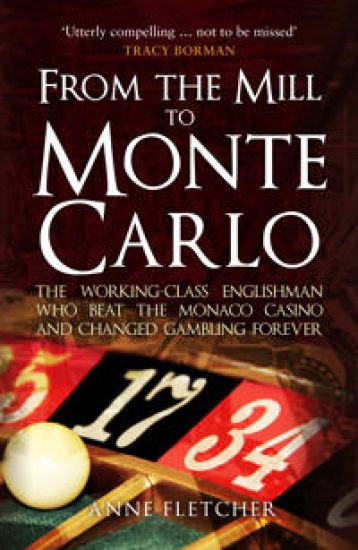
From the Mill to Monte Carlo

From the Mill to Monte Carlo

Anne Fletcher

Amberley Publishing
2021
pokkari
This is the story of a man who went from Yorkshire mill worker to Monte Carlo millionaire. Amongst the men ‘who broke the bank at Monte Carlo’, Joseph Hobson Jagger is unique. He is the only one known to have devised an infallible and completely legal system to defeat the odds at roulette and win a fortune. But he was not what might be expected. He wasn’t a gentleman or an aristocrat, he wasn’t a professional gambler, he was a Yorkshire textile worker who had laboured in the Victorian mills of Bradford since childhood. What led a man like this to travel nearly a thousand miles to the exclusive world of the Riviera when most people lived and died within a few miles of where they were born? The trains that took him there were still new and dangerous, he did not speak French and had never left the north of England. His motivation was strong. Joseph, his wife and four children, the youngest of whom was only two, faced a situation so grave that their only escape seemed to be his desperate gamble on the roulette tables of Monte Carlo. Today Jagger’s legacy is felt in casinos worldwide and yet he is virtually unknown. Anne Fletcher is his great-great-great niece and in this true-life detective story she uncovers how he was able to win a fortune, what happened to his millions and why Jagger should now be regarded as the real ‘man who broke the bank at Monte Carlo’.
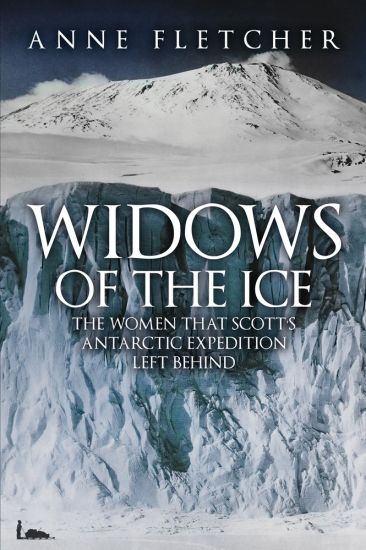
Widows of the Ice

Widows of the Ice

Anne Fletcher

AMBERLEY PUBLISHING
2022
sidottu
As Captain Scott lay freezing and starving to death on his return journey from the South Pole, he wrote with a stub of pencil his final words: ‘For God’s sake look after our people.’ Uppermost in his mind were the three women who would now be widows: Kathleen, his own bohemian artist wife; Oriana, the devout wife of the expedition’s chief scientist, Ted Wilson; and Lois, the Welsh working-class wife of Petty Officer Edgar Evans. When the news came that the men were dead, they became heroes, their story filling column inches in newspapers across the world. Their widows were thrust into the limelight, forced to grieve in public view, keeping a stiff upper lip while the world praised their husbands’ sacrifice. These three women had little in common except that their husbands had died together, but this shared experience was to shape the rest of their lives. Each experienced their loss differently, their treatment by the press and the public influenced by their class and contemporary notions of both manliness and womanly behaviour. Each had to rebuild their life, fiercely and loyally defending their husbands’ legacies and protecting their fatherless children in the face of financial hardship, public criticism and intense press scrutiny. Widows of the Ice is not the story of famous women but of forgotten wives, whose love and support helped to shape one of the most iconic moments in British history. They have drifted to the outer edges of the Antarctic narrative, and bringing them back gives a new perspective to a story we thought we already knew. It is a story of imperialistic dreams, misogyny and classism, but also of enormous courage, high ideals, duty – and, above all, love.
From the Mill to Monte Carlo

From the Mill to Monte Carlo

Anne Fletcher

Amberley Publishing
2018
sidottu
This is the story of a man who went from Yorkshire mill worker to Monte Carlo millionaire. Amongst the men ‘who broke the bank at Monte Carlo’, Joseph Hobson Jagger is unique. He is the only one known to have devised an infallible and completely legal system to defeat the odds at roulette and win a fortune. But he was not what might be expected. He wasn’t a gentleman or an aristocrat, he wasn’t a professional gambler, he was a Yorkshire textile worker who had laboured in the Victorian mills of Bradford since childhood. What led a man like this to travel nearly a thousand miles to the exclusive world of the Riviera when most people lived and died within a few miles of where they were born? The trains that took him there were still new and dangerous, he did not speak French and had never left the north of England. His motivation was strong. Joseph, his wife and four children, the youngest of whom was only two, faced a situation so grave that their only escape seemed to be his desperate gamble on the roulette tables of Monte Carlo. Today Jagger’s legacy is felt in casinos worldwide and yet he is virtually unknown. Anne Fletcher is his great-great-great niece and in this true-life detective story she uncovers how he was able to win a fortune, what happened to his millions and why Jagger should now be regarded as the real ‘man who broke the bank at Monte Carlo’.