Kirjojen hintavertailu. Mukana 11 244 527 kirjaa ja 12 kauppaa.

Kirjahaku

Etsi kirjoja tekijän nimen, kirjan nimen tai ISBN:n perusteella.

6 kirjaa tekijältä Annette Federico

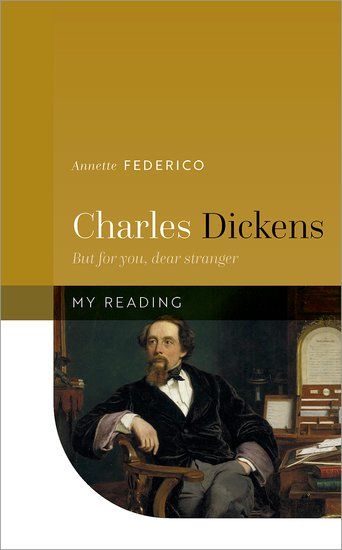
Charles Dickens

Charles Dickens

Annette Federico

Oxford University Press
2022
sidottu
A personal approach to Dickens's art that pays attention to what magnetizes Federico or strikes her as newly relevant to our own world, and to her life, as she explores what Dickens' works are emotionally about. Dickens's first concern in all his fiction is with people's feelings and their imaginations. Everything else--the social criticism, the satire, the comedy--flows from that spring. How does a person begin to imagine, to enter vividly into the life he or she has been given, and into the lives of others? How does someone change, how do they love, give their trust, look forward to the future? These questions make their way into all of Dickens's novels, including the four discussed in this contribution to the My Reading series: Oliver Twist (1837-39), David Copperfield (1849-50), Little Dorrit (1855-57), and A Tale of Two Cities (1859). Consistent with the aims of the series, this book takes a personal approach to Dickens's art. Federico follows her own responses, paying attention to what magnetizes her or strikes her as newly relevant to our own world, and to her life. What is the story emotionally about? This becomes the important question as she reads through Dickens's works. It is the question that opens the door to her own memories, her own stories, as she grows from being an innocent reader of Dickens to a more critical, professionalized one--while still listening confidentially to what Dickens has to teach her about hope, love, and the limits of knowledge.
Engagements with Close Reading

Engagements with Close Reading

Annette Federico

Routledge
2015
sidottu
What should we do with a literary work? Is it best to become immersed in a novel or poem, or is our job to objectively dissect it? Should we consult literature as a source of knowledge or wisdom, or keenly interrogate its designs upon us? Do we excavate the text as an historical artifact, or surrender to its aesthetic qualities? Balancing foundational topics with new developments, Engagements with Close Reading offers an accessible introduction to how prominent critics have approached the task of literary reading. This book will help students learn different methods for close reading perform a close analysis of an unfamiliar text articulate meaningful responsesBeginning with the New Critics and recent argument for a return to formalism, the book tracks the reactions of reader-response critics and phenomenologists, and concludes with ethical criticism’s claim for the value of literary reading to our moral lives. Rich in literary examples, most reprinted in full, each chapter models practical ways for students to debate the pros and cons of objective and subjective criticism. In the final chapter, five distinguished critics shed light on the pleasures and difficulties of close reading in their engagements with poetry and fiction.In the wake of cultural studies and historicism, Engagements with Close Reading encourages us to bring our eyes back to the words on the page, inviting students and instructors to puzzle out the motives, high stakes, limitations, and rewards of the literary encounter under the pressure of this beleaguered and persistent methodology.
Engagements with Close Reading

Engagements with Close Reading

Annette Federico

Routledge
2015
nidottu
What should we do with a literary work? Is it best to become immersed in a novel or poem, or is our job to objectively dissect it? Should we consult literature as a source of knowledge or wisdom, or keenly interrogate its designs upon us? Do we excavate the text as an historical artifact, or surrender to its aesthetic qualities? Balancing foundational topics with new developments, Engagements with Close Reading offers an accessible introduction to how prominent critics have approached the task of literary reading. This book will help students learn different methods for close reading perform a close analysis of an unfamiliar text articulate meaningful responsesBeginning with the New Critics and recent argument for a return to formalism, the book tracks the reactions of reader-response critics and phenomenologists, and concludes with ethical criticism’s claim for the value of literary reading to our moral lives. Rich in literary examples, most reprinted in full, each chapter models practical ways for students to debate the pros and cons of objective and subjective criticism. In the final chapter, five distinguished critics shed light on the pleasures and difficulties of close reading in their engagements with poetry and fiction.In the wake of cultural studies and historicism, Engagements with Close Reading encourages us to bring our eyes back to the words on the page, inviting students and instructors to puzzle out the motives, high stakes, limitations, and rewards of the literary encounter under the pressure of this beleaguered and persistent methodology.
Idol of Suburbia

Idol of Suburbia

Annette Federico

University of Virginia Press
2000
sidottu
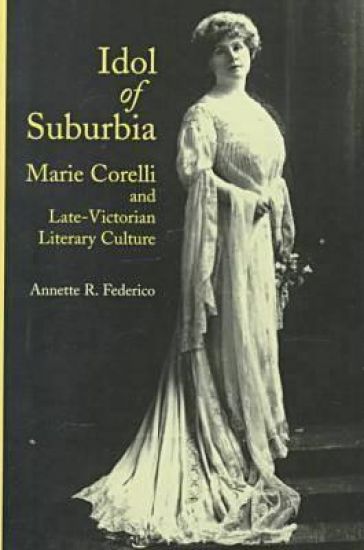
Marie Corelli was the most popular novelist of the turn of the 20th century, outselling Hall Caine, Mrs Humphrey Ward, H.G. Wells and Arthur Conan Doyle by the thousands. For 30 years she was ridiculed by reviewers and the literary elite, but these opinions had no impact on her mass appeal. In 1895, she broke all previous publishing records, and by 1906 a Corelli novel sold 100,000 copies a year. This text seeks to return Corelli to conversations about the late-Victorian and Edwardian literary world. As Annette R. Federico points out, Corelli's participation in the cultural life of her time was highly creative, combative and contradictory. Her ongoing war with highbrow literary critics and her management of her own image illuminate continuing debates about literary value, class hegemony and gender politics at the fin de siecle. In examining Corelli's celebrity and her protean literary talents in the context of a changing book market, Federico reveals the profusion of the late-Victorian literary imagination. She analyzes Corelli's participation in literary decadence, feminism, and New Woman fiction, and she discusses how seriously we should take her aesthetic and its literary influence. Federico asks why heterosexual love seems pathological in so many of Corelli's novels and assesses the validity of biographical and psychoanalytic explanations of her celibacy and her lifelong companionship with another woman.
Reading the Victorian Novel

Reading the Victorian Novel

Annette Federico

TAYLOR FRANCIS LTD
2024
sidottu
Reading the Victorian Novel is a clear and engaging introduction to Victorian fiction.In this book, Annette Federico invites readers to turn their attention to the bursting imaginations and formal inventiveness of Victorian novelists themselves. Five conventions prevailed in the building of a Victorian novel: serialisation, narration, plotting, description, and characterization. Each chapter is rich in examples of these practices and attentive to the historical and cultural contexts that shaped them, as well as to the responses and judgments of Victorian readers and contemporary scholars. Federico keeps the focus on the writer’s choices and the reader’s experience––on the meeting of minds and imaginations against the backdrop of history.Reading the Victorian Novel is an appreciative and discerning guide for anyone with an interest in the resonant and vibrant worlds of nineteenth-century fiction.
Reading the Victorian Novel

Reading the Victorian Novel

Annette Federico

TAYLOR FRANCIS LTD
2024
nidottu
Reading the Victorian Novel is a clear and engaging introduction to Victorian fiction.In this book, Annette Federico invites readers to turn their attention to the bursting imaginations and formal inventiveness of Victorian novelists themselves. Five conventions prevailed in the building of a Victorian novel: serialisation, narration, plotting, description, and characterization. Each chapter is rich in examples of these practices and attentive to the historical and cultural contexts that shaped them, as well as to the responses and judgments of Victorian readers and contemporary scholars. Federico keeps the focus on the writer’s choices and the reader’s experience––on the meeting of minds and imaginations against the backdrop of history.Reading the Victorian Novel is an appreciative and discerning guide for anyone with an interest in the resonant and vibrant worlds of nineteenth-century fiction.