Kirjojen hintavertailu. Mukana 11 717 486 kirjaa ja 12 kauppaa.

Kirjahaku

Etsi kirjoja tekijän nimen, kirjan nimen tai ISBN:n perusteella.

6 kirjaa tekijältä Annette Insdorf

Cinematic Overtures

Cinematic Overtures

Annette Insdorf

Columbia University Press
2017
sidottu
A great movie's first few minutes are the key to the rest of the film. Like the opening paragraphs of a novel, they draw the viewer in and set up the thematic concerns and stylistic approach that will be developed over the course of the narrative. A strong opening sequence leads the viewer to trust the filmmakers. Other times, opening shots are intentionally misleading as they invite alert, active participation with the film. In Cinematic Overtures, Annette Insdorf discusses the opening sequence so that viewers turn first impressions into deeper understanding of cinematic technique. From Joe Gillis's voice-over in Sunset Boulevard as he lies dead in a swimming pool to the hallucinatory opening of Apocalypse Now, from a stream-of-consciousness montage as found in Hiroshima, mon amour to the slowly unfolding beginning of Schindler's List, Cinematic Overtures analyzes opening shots from a range of Hollywood and international films. Insdorf pays close attention to how the viewer makes sense of these scenes and the cinematic world they are about to enter. As she looks at the strategies of opening scenes, Insdorf also examines how films critique and explore the power of the camera's gaze. Along with analyses of opening scenes, the book offers a series of revelatory and surprising readings of individual films and the works of some of the leading directors of the past seventy-five years.Erudite but accessible, Cinematic Overtures will lead film scholars and ardent movie fans alike to greater attentiveness to those fleeting opening moments.
Cinematic Overtures

Cinematic Overtures

Annette Insdorf

Columbia University Press
2017
pokkari
A great movie's first few minutes are the key to the rest of the film. Like the opening paragraphs of a novel, they draw the viewer in and set up the thematic concerns and stylistic approach that will be developed over the course of the narrative. A strong opening sequence leads the viewer to trust the filmmakers. Other times, opening shots are intentionally misleading as they invite alert, active participation with the film. In Cinematic Overtures, Annette Insdorf discusses the opening sequence so that viewers turn first impressions into deeper understanding of cinematic technique. From Joe Gillis's voice-over in Sunset Boulevard as he lies dead in a swimming pool to the hallucinatory opening of Apocalypse Now, from a stream-of-consciousness montage as found in Hiroshima, mon amour to the slowly unfolding beginning of Schindler's List, Cinematic Overtures analyzes opening shots from a range of Hollywood and international films. Insdorf pays close attention to how the viewer makes sense of these scenes and the cinematic world they are about to enter. As she looks at the strategies of opening scenes, Insdorf also examines how films critique and explore the power of the camera's gaze. Along with analyses of opening scenes, the book offers a series of revelatory and surprising readings of individual films and the works of some of the leading directors of the past seventy-five years.Erudite but accessible, Cinematic Overtures will lead film scholars and ardent movie fans alike to greater attentiveness to those fleeting opening moments.
Philip Kaufman

Philip Kaufman

Annette Insdorf

University of Illinois Press
2012
sidottu
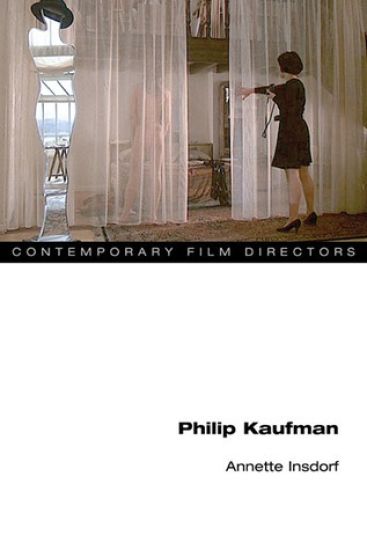
American director Philip Kaufman is hard to pin down: a visual stylist who is truly literate, a San Franciscan who often makes European films, he is an accessible storyteller with a sophisticated touch. Celebrated for his vigorous, sexy, and reflective cinema, Kaufman is best known for his masterpiece The Unbearable Lightness of Being and the astronaut saga The Right Stuff. His latest film, Hemingway & Gellhorn(premiering May 2012 on HBO), stars Nicole Kidman and Clive Owen. In this study, Annette Insdorf argues that the stylistic and philosophical richness of Kaufman's cinema makes him a versatile auteur. She demonstrates Kaufman's skill at adaptation, how he finds the precise cinematic device for a story drawn from seemingly unadaptable sources, and how his eye translates the authorial voice from books that serve as inspiration for his films. Closely analyzing his movies to date (including Invasion of the Body Snatchers, The Wanderers, and Quills), Insdorf links them by exploring the recurring and resonant themes of sensuality, artistic creation, codes of honor, and freedom from manipulation. While there is no overarching label or bold signature that can be applied to his oeuvre, she illustrates the consistency of themes, techniques, images, and concerns that permeates all of Kaufman's works.
Philip Kaufman

Philip Kaufman

Annette Insdorf

University of Illinois Press
2012
nidottu
American director Philip Kaufman is hard to pin down: a visual stylist who is truly literate, a San Franciscan who often makes European films, he is an accessible storyteller with a sophisticated touch. Celebrated for his vigorous, sexy, and reflective cinema, Kaufman is best known for his masterpiece The Unbearable Lightness of Being and the astronaut saga The Right Stuff. His latest film, Hemingway & Gellhorn(premiering May 2012 on HBO), stars Nicole Kidman and Clive Owen. In this study, Annette Insdorf argues that the stylistic and philosophical richness of Kaufman's cinema makes him a versatile auteur. She demonstrates Kaufman's skill at adaptation, how he finds the precise cinematic device for a story drawn from seemingly unadaptable sources, and how his eye translates the authorial voice from books that serve as inspiration for his films. Closely analyzing his movies to date (including Invasion of the Body Snatchers, The Wanderers, and Quills), Insdorf links them by exploring the recurring and resonant themes of sensuality, artistic creation, codes of honor, and freedom from manipulation. While there is no overarching label or bold signature that can be applied to his oeuvre, she illustrates the consistency of themes, techniques, images, and concerns that permeates all of Kaufman's works.
Double Lives, Second Chances

Double Lives, Second Chances

Annette Insdorf

Northwestern University Press
2013
nidottu
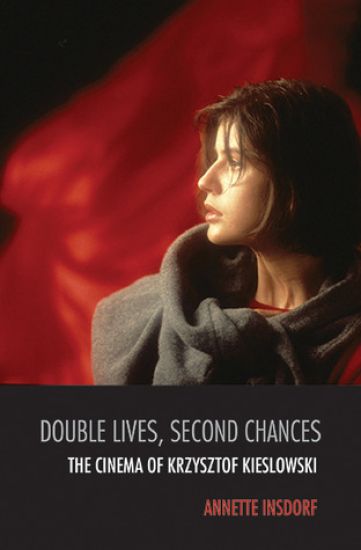
Krzysztof Kieslowski (1941 – 1996) is widely recognised as one of the greatest filmmakers of the latter half of the twentieth century. Beginning as a documentarian who took on controversial subjects in communist Poland in the 1960’s and 70’s, Kieslowski gained an international reputation with his later narrative films The Double Life of Veronique and the Three Colours trilogy (Blue, White, and Red). He also made the Decalogue, a celebrated series for Polish television. The first comprehensive analysis of Kieslowski’s entire body of work to be published in English, Annette Insdorf’s book still stands as the best introduction to a uniquely gifted artist.
Intimations

Intimations

Annette Insdorf

Northwestern University Press
2017
nidottu
In this first study in English of a master of Polish cinema, Annette Insdorf explores Has's thirteen feature films with the same deep insight of her groundbreaking book on Krzysztof Kieslowski, Double Lives, Second Chances (Northwestern, 2013).Wojciech Has's films are still less known outside of his native Poland than those of his countrymen Andrzej Wajda, Krzysztof Zanussi, and Krzysztof Kieslowski. Yet thanks to his singular vision, many critics rank Has among the masters of world cinema. Some of his movies have developed a cult following, notably The Saragossa Manuscript, the favorite film of the Grateful Dead's Jerry Garcia, which has been praised by directors Luis Buñuel, Francis Ford Coppola, and Roman Polanski.Has's films reveal the inner lives of his characters, which he portrays by giving free rein to his own wildly creative imagination. In addition to The Saragossa Manuscript, his diverse and innovative filmography includes The Hourglass Sanatorium, a vividly surreal depiction of Hassidic life in Poland between the world wars; The Noose, a stark poetic drama about a lucid alcoholic who knows he will not be able to kick the habit; and How to Be Loved, in which an actress remembers her wartime past.Has made disparate but formally striking movies infused with European strains of existentialism and the avant-garde. With many of his films being restored and rereleased, new generations of film lovers are discovering his artistic genius. Intimations: The Cinema of Wojciech Has is the definitive guide in English to his work.