Kirjojen hintavertailu. Mukana 11 244 527 kirjaa ja 12 kauppaa.

Kirjahaku

Etsi kirjoja tekijän nimen, kirjan nimen tai ISBN:n perusteella.

3 kirjaa tekijältä Annette Trefzer

Disturbing Indians

Disturbing Indians

Annette Trefzer

The University of Alabama Press
2016
nidottu
How Faulkner, Welty, Lytle, and Gordon reimagined and reconstructed the Native American past in their work.In this book, Annette Trefzer argues that not only have Native Americans played an active role in the construction of the South’s cultural landscape—despite a history of colonization, dispossession, and removal aimed at rendering them invisible—but that their under-examined presence in southern literature provides a crucial avenue for a post-regional understanding of the American south. William Faulkner, Eudora Welty, Andrew Lytle, and Caroline Gordon created works about the Spanish conquest of the New World, the Cherokee frontier during the Revolution, the expansion into the Mississippi Territory, and the slaveholding societies of the American southeast. They wrote 100 years after the forceful removal of Native Americans from the southeast but consistently returned to the idea of an —Indian frontier— each articulating a different vision and discourse about Native Americans—wholesome and pure in the vision of some, symptomatic of hybridity and universality for others.Trefzer contends that these writers engage in a double discourse about the region and nation: fabricating regional identity by invoking the South’s "native" heritage and pointing to issues of national guilt, colonization, westward expansion, and imperialism in a period that saw the US sphere of influence widen dramatically. In both cases, the —Indian— signifies regional and national self-definitions and contributes to the shaping of cultural, racial, and national "others." Trefzer employs the idea of archeology in two senses: quite literally the excavation of artifacts in the South during the New Deal administration of the 1930s (a surfacing of material culture to which each writer responded) and archeology as a method for exploring texts she addresses (literary digs into the textual strata of America’s literature and its cultural history).
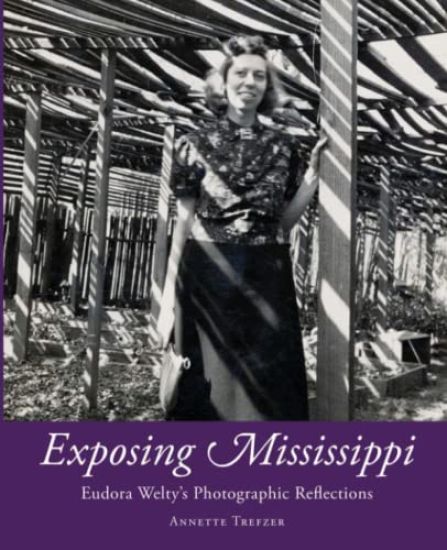
Exposing Mississippi

Exposing Mississippi

Annette Trefzer

UNIVERSITY PRESS OF MISSISSIPPI
2022
sidottu
Internationally known as a writer, Eudora Welty has as well been spotlighted as a talented photographer. The prevalent idea remains that Welty simply took snapshots before she found her true calling as a renowned fiction writer. But who was Welty as a photographer? What did she see? How and why did she photograph? And what did Welty know about modern photography? In Exposing Mississippi: Eudora Welty's Photographic Reflections, Annette Trefzer elucidates Welty’s photographic vision and answers these questions by exploring her photographic archive and writings on photography. The photographs Welty took in the 1930s and ’40s frame her visual response to the cultural landscapes of the segregated South during the Depression. The photobook One Time, One Place, which was selected, curated, and shaped into a visual narrative by Welty herself, serves as a starting point and guide for the following chapters on her spatial hermeneutic. The book is divided into sections by locations and offers how the framing of these areas reveals Welty’s radical commentary of the spaces her camera captured. There are over eighty images in Exposing Mississippi, including some never-before-seen archival photographs, and sections of the book draw on over three hundred more. The chapters on institutional, leisure, and memorial landscapes address how Welty’s photographs contribute to, reflect on, and intervene in customary visual constructions of the Depression-era South.
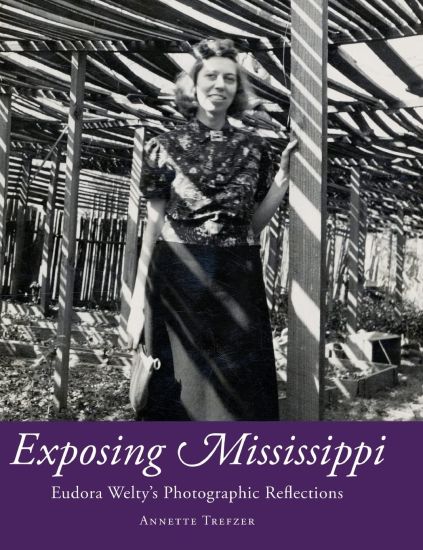
Exposing Mississippi

Exposing Mississippi

Annette Trefzer

UNIVERSITY PRESS OF MISSISSIPPI
2022
pokkari
Internationally known as a writer, Eudora Welty has as well been spotlighted as a talented photographer. The prevalent idea remains that Welty simply took snapshots before she found her true calling as a renowned fiction writer. But who was Welty as a photographer? What did she see? How and why did she photograph? And what did Welty know about modern photography? In Exposing Mississippi: Eudora Welty's Photographic Reflections, Annette Trefzer elucidates Welty’s photographic vision and answers these questions by exploring her photographic archive and writings on photography. The photographs Welty took in the 1930s and ’40s frame her visual response to the cultural landscapes of the segregated South during the Depression. The photobook One Time, One Place, which was selected, curated, and shaped into a visual narrative by Welty herself, serves as a starting point and guide for the following chapters on her spatial hermeneutic. The book is divided into sections by locations and offers how the framing of these areas reveals Welty’s radical commentary of the spaces her camera captured. There are over eighty images in Exposing Mississippi, including some never-before-seen archival photographs, and sections of the book draw on over three hundred more. The chapters on institutional, leisure, and memorial landscapes address how Welty’s photographs contribute to, reflect on, and intervene in customary visual constructions of the Depression-era South.