Kirjojen hintavertailu. Mukana 11 627 381 kirjaa ja 12 kauppaa.

Kirjahaku

Etsi kirjoja tekijän nimen, kirjan nimen tai ISBN:n perusteella.

4 kirjaa tekijältä Annie Cohen-Solal

Mark Rothko

Mark Rothko

Annie Cohen-Solal

Yale University Press
2016
pokkari
A fascinating exploration of the life and work of one of America’s most famous and enigmatic postwar visual artists Mark Rothko, one of the greatest painters of the twentieth century, was born in the Jewish Pale of Settlement in 1903. He immigrated to the United States at age ten, taking with him his Talmudic education and his memories of pogroms and persecutions in Russia. His integration into American society began with a series of painful experiences, especially as a student at Yale, where he felt marginalized for his origins and ultimately left the school. The decision to become an artist led him to a new phase in his life. Early in his career, Annie Cohen-Solal writes, “he became a major player in the social struggle of American artists, and his own metamorphosis benefited from the unique transformation of the U.S. art world during this time.” Within a few decades, he had forged his definitive artistic signature, and most critics hailed him as a pioneer. The numerous museum shows that followed in major U.S. and European institutions ensured his celebrity. But this was not enough for Rothko, who continued to innovate. Ever faithful to his habit of confronting the establishment, he devoted the last decade of his life to cultivating his new conception of art as an experience, thanks to the commission of a radical project, the Rothko Chapel in Houston, Texas. Cohen-Solal’s fascinating biography, based on considerable archival research, tells the unlikely story of how a young immigrant from Dvinsk became a crucial transforming agent of the art world—one whose legacy prevails to this day.
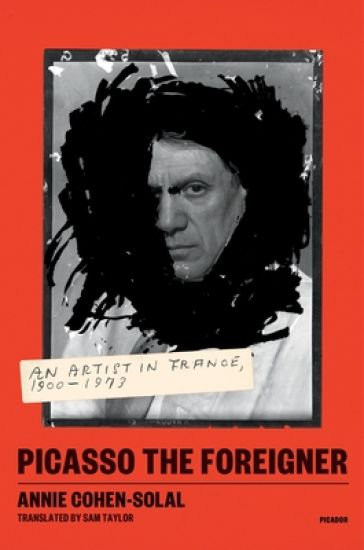
Picasso the Foreigner: An Artist in France, 1900-1973

Picasso the Foreigner: An Artist in France, 1900-1973

Annie Cohen-Solal

Farrar, Straus and Giroux
2023
sidottu
A New York Times Book Review Editors' Choice"Absorbing and] astute . . . Cohen-Solal captures a facet of Picasso's character long overlooked." --Hamilton Cain, The Wall Street Journal"A beguiling read, as ingenious as it is ambitious . . . See Picasso and Paris shimmering with new light." --Mark Braude, author of Kiki Man Ray: Art, Love, and Rivalry in 1920s ParisBorn from her probing inquiry into Picasso's odyssey in France, which inspired a museum exhibition of the same name, historian Annie-Cohen Solal's Picasso the Foreigner presents a bold new understanding of the artist's career and his relationship with the country he called home. Winner of the 2021 Prix Femina EssaiBefore Picasso became Picasso--the iconic artist now celebrated as one of France's leading figures--he was constantly surveilled by the French police. Amid political tensions in the spring of 1901, he was flagged as an anarchist by the security services--the first of many entries in an extensive case file. Though he soon emerged as the leader of the cubist avant-garde, and became increasingly wealthy as his reputation grew worldwide, Picasso's art was largely excluded from public collections in France for the next four decades. The genius who conceived Guernica in 1937 as a visceral statement against fascism was even denied French citizenship three years later, on the eve of the Nazi occupation. In a country where the police and the conservative Acad mie des Beaux-Arts represented two major pillars of the establishment at the time, Picasso faced a triple stigma--as a foreigner, a political radical, and an avant-garde artist. Picasso the Foreigner approaches the artist's career and art from an entirely new angle, making extensive use of fascinating and long-overlooked archival sources. In this groundbreaking narrative, Picasso emerges as an artist ahead of his time not only aesthetically but politically, one who ignored national modes in favor of contemporary cosmopolitan forms. Annie Cohen-Solal reveals how, in a period encompassing the brutality of World War I, the Nazi occupation, and Cold War rivalries, Picasso strategized and fought to preserve his agency, eventually leaving Paris for good in 1955. He chose the south over the north, the provinces over the capital, and craftspeople over academicians, while simultaneously achieving widespread fame. The artist never became a citizen of France, yet he generously enriched and dynamized the country's culture like few other figures in its history. This book, for the first time, explains how. Includes color images
Picasso the Foreigner: An Artist in France, 1900-1973
A New York Times Book Review Editors' Choice"Absorbing and] astute . . . Cohen-Solal captures a facet of Picasso's character long overlooked." --Hamilton Cain, The Wall Street Journal"A beguiling read, as ingenious as it is ambitious . . . See Picasso and Paris shimmering with new light." --Mark Braude, author of Kiki Man Ray: Art, Love, and Rivalry in 1920s ParisBorn from her probing inquiry into Picasso's odyssey in France, which inspired a museum exhibition of the same name, historian Annie-Cohen Solal's Picasso the Foreigner presents a bold new understanding of the artist's career and his relationship with the country he called home. Winner of the 2021 Prix Femina EssaiBefore Picasso became Picasso--the iconic artist now celebrated as one of France's leading figures--he was constantly surveilled by the French police. Amid political tensions in the spring of 1901, he was flagged as an anarchist by the security services--the first of many entries in an extensive case file. Though he soon emerged as the leader of the cubist avant-garde, and became increasingly wealthy as his reputation grew worldwide, Picasso's art was largely excluded from public collections in France for the next four decades. The genius who conceived Guernica in 1937 as a visceral statement against fascism was even denied French citizenship three years later, on the eve of the Nazi occupation. In a country where the police and the conservative Acad mie des Beaux-Arts represented two major pillars of the establishment at the time, Picasso faced a triple stigma--as a foreigner, a political radical, and an avant-garde artist. Picasso the Foreigner approaches the artist's career and art from an entirely new angle, making extensive use of fascinating and long-overlooked archival sources. In this groundbreaking narrative, Picasso emerges as an artist ahead of his time not only aesthetically but politically, one who ignored national modes in favor of contemporary cosmopolitan forms. Annie Cohen-Solal reveals how, in a period encompassing the brutality of World War I, the Nazi occupation, and Cold War rivalries, Picasso strategized and fought to preserve his agency, eventually leaving Paris for good in 1955. He chose the south over the north, the provinces over the capital, and craftspeople over academicians, while simultaneously achieving widespread fame. The artist never became a citizen of France, yet he generously enriched and dynamized the country's culture like few other figures in its history. This book, for the first time, explains how. Includes color images
Jean-paul Sartre - A Life

Jean-paul Sartre - A Life

Annie Cohen-Solal

The New Press
2006
nidottu
From a description of Sartre's hitherto unknown father to the painful last moments of Sartre's declining years, this intimate portrait incorporates previously untold aspects of Sartre's private, political, and literary life, in a new edition of the acclaimed biography, honoring the centennial of Sartre's birth. Reprint.