Kirjojen hintavertailu. Mukana 11 342 296 kirjaa ja 12 kauppaa.

Kirjahaku

Etsi kirjoja tekijän nimen, kirjan nimen tai ISBN:n perusteella.

12 kirjaa tekijältä Ansgar Allen

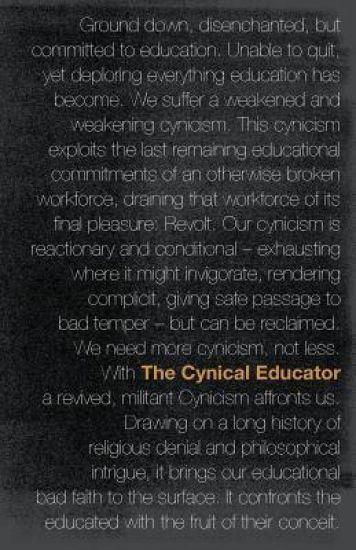
Cynicism

Cynicism

Ansgar Allen

MIT Press
2020
pokkari
A short history of cynicism, from the fearless speech of the ancient Greeks to the jaded negativity of the present.Everyone's a cynic, yet few will admit it. Today's cynics excuse themselves half-heartedly—“I hate to be a cynic, but..."—before making their pronouncements. Narrowly opportunistic, always on the take, contemporary cynicism has nothing positive to contribute. The Cynicism of the ancient Greeks, however, was very different. This Cynicism was a marginal philosophy practiced by a small band of eccentrics. Bold and shameless, it was committed to transforming the values on which civilization depends. In this volume of the MIT Press Essential Knowledge series, Ansgar Allen charts the long history of cynicism, from the “fearless speech” of Greek Cynics in the fourth century BCE to the contemporary cynic's lack of social and political convictions.Allen describes ancient Cynicism as an improvised philosophy and a way of life disposed to scandalize contemporaries, subjecting their cultural commitments to derision. He chronicles the subsequent “purification” of Cynicism by the Stoics; Renaissance and Enlightenment appropriations of Cynicism, drawing on the writings of Shakespeare, Rabelais, Rousseau, de Sade, and others; and the transition from Cynicism (the philosophy) to cynicism (the modern attitude), exploring contemporary cynicism from the perspectives of its leftist, liberal, and conservative critics. Finally, he considers the possibility of a radical cynicism that admits and affirms the danger it poses to contemporary society.
Benign Violence: Education in and beyond the Age of Reason
Education is a violent act, yet this violence is concealed by its good intent. Education presents itself as a distinctly improving, enabling practice. Even its most radical critics assume that education is, at core, an incontestable social good.Setting education in its political context, this book, now in paperback, offers a history of good intentions, ranging from the birth of modern schooling and modern examination, to the rise (and fall) of meritocracy. In challenging all that is well-intentioned in education, it reveals how our educational commitments are always underwritten by violence. Our highest ideals have the lowest origins.Seeking to unsettle a settled conscience, Benign Violence: Education in and beyond the Age of Reason is designed to disturb the reader. Education constitutes us as subjects; we owe our existence to its violent inscriptions. Those who refuse or rebel against our educational present must begin by objecting to the subjects we have become.
Benign Violence: Education in and beyond the Age of Reason
Education is a violent act, yet this violence is concealed by its good intent. Education presents itself as a distinctly improving, enabling practice. Even its most radical critics assume that education is, at core, an incontestable social good.Setting education in its political context, this book, now in paperback, offers a history of good intentions, ranging from the birth of modern schooling and modern examination, to the rise (and fall) of meritocracy. In challenging all that is well-intentioned in education, it reveals how our educational commitments are always underwritten by violence. Our highest ideals have the lowest origins.Seeking to unsettle a settled conscience, Benign Violence: Education in and beyond the Age of Reason is designed to disturb the reader. Education constitutes us as subjects; we owe our existence to its violent inscriptions. Those who refuse or rebel against our educational present must begin by objecting to the subjects we have become.
Benign Violence: Education in and beyond the Age of Reason
Education is a violent act, yet this violence is concealed by its good intent. Education presents itself as a distinctly improving, enabling practice. Even its most radical critics assume that education is, at core, an incontestable social good.Setting education in its political context, this book, now in paperback, offers a history of good intentions, ranging from the birth of modern schooling and modern examination, to the rise (and fall) of meritocracy. In challenging all that is well-intentioned in education, it reveals how our educational commitments are always underwritten by violence. Our highest ideals have the lowest origins.Seeking to unsettle a settled conscience, Benign Violence: Education in and beyond the Age of Reason is designed to disturb the reader. Education constitutes us as subjects; we owe our existence to its violent inscriptions. Those who refuse or rebel against our educational present must begin by objecting to the subjects we have become.
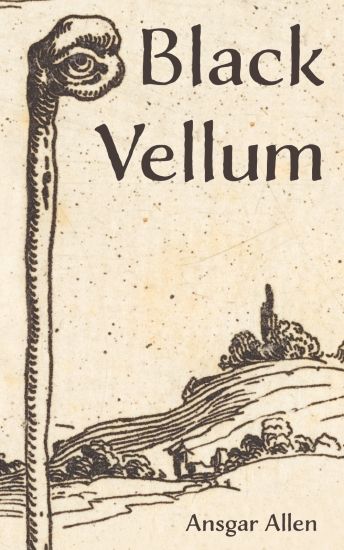
Black Vellum

Black Vellum

Ansgar Allen

Schism Press
2023
pokkari
A priest remakes himself from animal flesh. A land surveyor travels into the earth's crust in search of a boulder. Hauled for centuries it forms a rut, the longest sentence in recorded history.Black Vellum is a Nietzschean experiment. The priest symptomizes Nietzsche's analysis and serves as an embodiment, a deviant incarnation, of the philosopher himself. Other figures are encountered in the content of their thought; Schopenhauer, Cioran, Freud, and Bataille enter as minor actors. None are named as such, and their intuitions are allowed to interanimate. Most readings and re-readings of established figures appear bound to the task of moderation, this book attends to their derangements.-"The intellect was only first produced as a result of this diminishment of perception, writes Ansgar Allen in Black Vellum. This is an exquisitely written philosophical tale about human civilization as the quest for order, measurement, and automation-and perhaps, about how nihilism and despair have always fed our fantasies of humanoid machines." Germ n Sierra, author of The Artifact"A notepad wrapped in black vellum records a descent into a rift valley where an oddly abridged humanity hunkers, replicating its codes through geological time. A story within that story details the Frankenstein-like creation of a meat automaton, designed to render the consolatory function of religion obsolete. Transecting all of this, is a brilliant reflection on the machinic immiseration of the organism and its stalled dreams of transcendence. Allen has distilled the speculations of Nietzsche and Freud into an impersonal meatspace whose soulless protagonist is writing its own suicide note - while time dissolves all, while the space of inscription reveals caverns measureless to man. Black Vellum is the work of an extremely subtle mind, co-opting horror to trace the integuments of a glitching futurity somehow liberated from the traditional impasses of nihilism." David Roden, author of Snuff Memories"Black Vellum unspools before the reader like a memory thread with which to weave one's forgetting of the world, a darkness to navigate the blinding light, a testimony of corporeality that grows and grows and becomes the home of the mind exiled by the body. Within its pages, there are ways of seeing, mechanisms of being, of carrying both oneself and the burdens of the landscape before one's eyes-the fibers of the world enslaved to its own image and those of what we must weave in its place. Through a rich prose, evocative of the mythological void state in which everything necessary existed all at once, Ansgar Allen creates a mirror-like journal, in the pages of which one can find, beyond a reflection of the self, a recollection of how paths are traveled, and worlds undone." - Christina Tudor-Sideri, author of Disembodied and Under the Sign of the Labyrinth
The Sick List

The Sick List

Ansgar Allen

Boiler House Press
2021
nidottu
'The Sick List operates on the far side of literature.' John Schad In this novel, an unnamed academic in an unnamed contemporary university, relates his obsession with his tutor, Gordon. He pores over the increasingly bizarre mis-readings in Gordon’s annotations in a strange selection of stolen library books. Is Gordon unraveling a mystery? Or is his own mind unraveling? Meanwhile, an epidemic of catatonia breaks out; academics are found slumped and unconscious at their desks. Is reading itself the cause of this sickness? Is the only escape to return to illiteracy?Witty, moving, and beautifully written, The Sick List plays with the dividing line between deploring and exemplifying what it most despises. Inspired by the work of the Austrian novelist Thomas Bernhard, it considers how the minds of educated people are moulded by both the breadth of literary culture and the narrowness of academic institutions. ‘The Sick List is about menace, about a menace (Gordon), and is written in the voice of a menace. It reads like one of the pen-portraits of surreal ultra-violence in Bernhard's Gargoyles, where education turns out to be the most deceitful panacea of all.' Katharine Craik
Plague Theatre

Plague Theatre

Ansgar Allen

Equus Press
2023
pokkari
Set in Scarborough on the north coast of England, Plague Theatre tells of a great derangement which takes hold of the town in or around 1720. No one can tell if it is the body or the mind that has become infected, but what threatens the town risks making the north east uninhabitable.Plague Theatre is concerned with the plague that is already present in society before the virus, or bacterium, or rat. It offers an extended meditation on Antonin Artaud's neglected essay 'Theatre and the Plague', in which Artaud claims that the pathogenic cause of each plague is secondary, or peripheral before the real calamity which is social. Both plague and theatre achieve, for Artaud, 'the exteriorization of a latent undercurrent of cruelty'. It is through cruelty which appears as revelation 'that all the perversity of which the mind is capable, whether in a person or a nation, becomes localized'."Ansgar Allen has quickly become one of my favorite authors. He takes risks and writes well-these things alone are a rarity today. Equal parts informative, entertaining, and aesthetically appealing, Plague Theatre is an excellent introduction to his evolving oeuvre." - D. Harlan Wilson"Plague Theatre is a superb book. Ansgar Allen has created a terrarium of decay; a hall of mirrors whose corridors are lined with countless psychomanteums depicting varying stages upon which everything crumbles in reflection of our own supreme annihilation."-Daniel Beauregard"Imagine W. G. Sebald and Italo Calvino collaborated to write an autodecaying mystery on the possibilities of something definitive happening in Scarborough, in London, in Caligari, in Marseille, in Camus' Oran, in anyplace at anytime, and you'll have some idea of the brilliant, dramaturgically-infused vision of abstracted pestilence that is Plague Theatre. Part phantom exegesis, part metafictional Klein bottle, Ansgar Allen has written a novel about writing, a text about the exhilarating dangers of repetition and of continuity as obsession, as Yersinia pestis. With Artaud's "Theatre and the Plague" and Defoe's Journal of the Plague Year as scrambled guidebooks to its multiplicious and provisional somewhere, the reader is left to bob, delirious, like driftwood in the sibylline and necrotic sludge of our stubbornly inconclusive histories. Artaud considered the plague, like theatre, to be "a crisis resolved either by death or cure," but here we are offered a third way, a non-direction, a resilient sickness, a resolution resistant to completion till the very end (and there is no end)."-Gary J. Shipley