Kirjojen hintavertailu. Mukana 11 244 527 kirjaa ja 12 kauppaa.

Kirjahaku

Etsi kirjoja tekijän nimen, kirjan nimen tai ISBN:n perusteella.

21 kirjaa tekijältä Anthony B. Pinn

The Oxford Handbook of Humanism

The Oxford Handbook of Humanism

Anthony B. Pinn

Oxford University Press Inc
2021
sidottu
While humanist sensibilities have played a formative role in the advancement of our species, critical attention to humanism as a field of study is a more recent development. As a system of thought that values human needs and experiences over supernatural concerns, humanism has gained greater attention amid the rapidly shifting demographics of religious communities, especially in Europe and North America. This outlook on the world has taken on global dimensions as well, with activists, artists, and thinkers forming a humanistic response not only to traditional religion, but to the pressing social and political issues of the 21st century. With in-depth, scholarly chapters, The Oxford Handbook of Humanism aims to cover the subject by analyzing its history, its philosophical development, its influence on culture, and its engagement with social and political issues. In order to expand the field beyond more Western-focused works, the Handook discusses humanism as a worldwide phenomenon, with regional surveys that explore how the concept has developed in particular contexts. The Handbook also approaches humanism as both an opponent to traditional religion as well as a philosophy that some religions have explicitly adopted. By both synthesizing the field, and discussing how it continues to grow and develop, the Handbook promises to be a landmark volume, relevant to both humanism and the rapidly changing religious landscape.
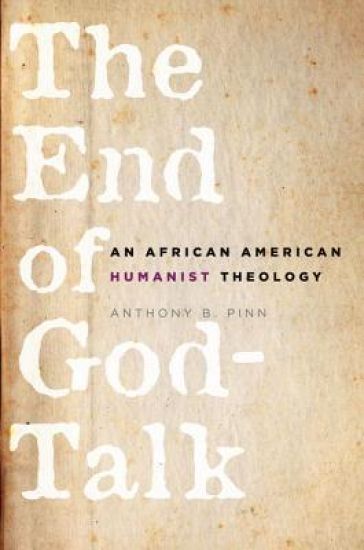
The End of God-Talk

The End of God-Talk

Anthony B. Pinn

Oxford University Press Inc
2012
sidottu
In this groundbreaking study, Anthony B. Pinn challenges the long held assumption that African American theology is solely theist, arguing that this assumption has stunted African American theological discourse and excluded a rapidly growing segment of the African American population - non-theists. Rejecting the assumption of theism as the African American orientation, Pinn poses a crucial question: What is a non-theistic theology? The End of God-Talk outlines the first systematic African American non-theistic theology. Pinn offers a new center for theological inquiry, grounded in a more scientific notion of the human than the imago Dei ideas that dominates African American theistic theologies. He proposes a turn to Henry David Thoreau, Frederick Douglass, Harriet Tubman, and Alice Walker in order to effect a sense of ethical conduct consistent with African American non-theistic humanism. The End of God-Talk ends with an exploration of the religious significance of ordinary spaces and activities as settings for humanist theological engagement. Through a turn to embodied human life as the proper arena and content of theologizing, Pinn opens up a new theological path with important implications for ongoing work in African American religious studies.
The End of God-Talk

The End of God-Talk

Anthony B. Pinn

Oxford University Press Inc
2012
nidottu
In this groundbreaking study, Anthony B. Pinn challenges the long held assumption that African American theology is solely theist, arguing that this assumption has stunted African American theological discourse and excluded a rapidly growing segment of the African American population - non-theists. Rejecting the assumption of theism as the African American orientation, Pinn poses a crucial question: What is a non-theistic theology? The End of God-Talk outlines the first systematic African American non-theistic theology. Pinn offers a new center for theological inquiry, grounded in a more scientific notion of the human than the imago Dei ideas that dominates African American theistic theologies. He proposes a turn to Henry David Thoreau, Frederick Douglass, Harriet Tubman, and Alice Walker in order to effect a sense of ethical conduct consistent with African American non-theistic humanism. The End of God-Talk ends with an exploration of the religious significance of ordinary spaces and activities as settings for humanist theological engagement. Through a turn to embodied human life as the proper arena and content of theologizing, Pinn opens up a new theological path with important implications for ongoing work in African American religious studies.
Biblical Outlaws

Biblical Outlaws

Anthony B. Pinn

YALE UNIVERSITY PRESS
2026
sidottu
A revelatory exploration of how the Bible’s underdogs, outlaws, and forgotten figures can teach us radical new ways of living In this unprecedented book, a secular humanist and celebrated scholar of religion tells the stories of the Bible’s most marginalized figures, challenging readers to reconsider who are the heroes of the text, and who are the villains. What happens when such figures as Lot’s Wife, Job’s Wife, Nimrod, “Doubting” Thomas, and the cursed disciple Judas take center stage? What happens if the Bible is read to privilege the margins of life, where the most socially questionable and ignored are found? In asking and answering these questions, Anthony B. Pinn finds important lessons in the hidden corners of scripture, in the dark places, and among the despised figures who have a troubled relationship with a troubling world. Freeing these figures to offer their version of events, this book encourages a reading of the Bible against the Bible. What results are surprising new ways for readers to imagine the world and their place in it. Pinn argues that there are life-affirming lessons to learn from these marginalized figures. Something important about our humanity, the fragile nature of life, is illustrated not by the Bible’s heroes but by those we tend to forget or discredit.
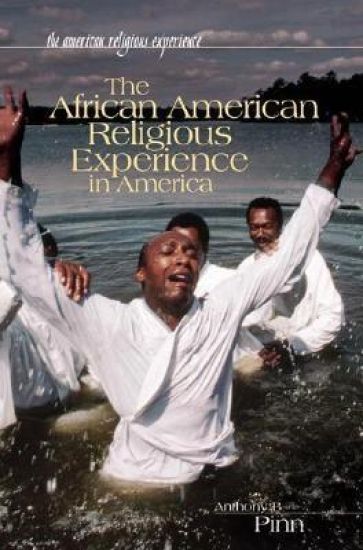
The African American Religious Experience in America
Most who think about African American religion limit themselves to black churches, or perhaps to aspects of Islamic thought and practice. But a close look at the religious landscape of African American communities presents a much more complex, thick, and layered religious reality comprising many competing faiths and practices. The African American Religious Experience in America provides readers with an introduction to the tremendous religious diversity of African American communities in the United States, with snapshots of 11 religious traditions practiced by African Americans—from Buddhism to Catholicism, from Judaism to Voodoo. Each snapshot provides readers a better understanding of how African Americans practice their faiths in the United States.The African American Religious Experience in America provides resources for students taking classes on the history of American religion, African American Studies, and on American Studies. In addition to the in-depth discussion of the varieties of African American Religion, the volume includes a historical introduction to the development of African American Religion, a glossary of terms, a timeline of important events, a series of short biographies of important figures in the history of African American religion and a bibliography of sources for further study. Finally, the book includes a series of primary source documents that will provide students with first-person accounts of how religion is practiced in the African American community both today and in the past.
Introducing African American Religion

Introducing African American Religion

Anthony B. Pinn

Routledge
2012
sidottu
This book offers a creative and unique approach to the history of African American religion. Tracing what it has meant to be African American and religious within the context of the United States, it provides a vital snapshot of some of the traditions that have shaped the religious imagination of the country. Major themes and problems encountered by African Americans involved in a variety of traditions are depicted in a clear and engaging fashion.The chapters move from the period of slavery and the early arrangement of religious thought and practice within communities of enslaved Africans to the more recent growth in the number of African American "Nones". Drawing on cultural developments such as hip hop, Anthony Pinn links the language and activities of African American religious experience to the cultural worlds in which African Americans live. Introducing African American Religion includes illustrations, summaries, discussion questions and suggestions for further reading as well as a glossary and chronology, helping students to become familiar with the main terms of the traditions discussed and to place their development in historical context. Additional resources can be found on the companion website: www.routledge.com/cw/pinn
Introducing African American Religion

Introducing African American Religion

Anthony B. Pinn

Routledge
2012
nidottu
This book offers a creative and unique approach to the history of African American religion. Tracing what it has meant to be African American and religious within the context of the United States, it provides a vital snapshot of some of the traditions that have shaped the religious imagination of the country. Major themes and problems encountered by African Americans involved in a variety of traditions are depicted in a clear and engaging fashion.The chapters move from the period of slavery and the early arrangement of religious thought and practice within communities of enslaved Africans to the more recent growth in the number of African American "Nones". Drawing on cultural developments such as hip hop, Anthony Pinn links the language and activities of African American religious experience to the cultural worlds in which African Americans live. Introducing African American Religion includes illustrations, summaries, discussion questions and suggestions for further reading as well as a glossary and chronology, helping students to become familiar with the main terms of the traditions discussed and to place their development in historical context. Additional resources can be found on the companion website: www.routledge.com/cw/pinn
By These Hands

By These Hands

Anthony B. Pinn

New York University Press
2001
pokkari
The Black church is often praised for its contribution to Black culture and politics. More recently Islam has been recognized as an important force in African American liberation. Anthony Pinn's new anthology By These Hands demonstrates the crucial, often overlooked role that Humanism has played in African American struggles for dignity, power and justice. Pinn collects the finest examples of African American Humanism and shows how its embrace by a variety of prominent figures in African American thought and letters has served as the basis for activism and resistance to American racism and sexism. Pinn uncovers little known treasures of African American Literature such as The Slave Narrative of James Hay, where an abused slave decides to rely on himself, rather than God, for deliverance from the horrors of slavery, and a letter from Frederick Douglass which scandalized his religious friends by proclaiming that "One honest Abolitionist was a greater terror to slaveholders than whole acres of camp-meeting preachers shouting glory to God." Essays by Zora Neale Hurston and Richard Wright demonstrate the profound influence of Humanism in the Harlem Rennaisance, and pieces by James Farmer, Amiri Baraka (Leroi Jones) and Huey Newton show Humanism's impact on the civil rights and Black Power movements. Designed for classroom use, this radical reconsideration of African American history will be a must read for anyone interested in African American History, African American Religion and Philosophy, and American History. Contributors: Norm Allen, Jr., Herbert Aptheker, James Baldwin, Amiri Imamu Baraka, J. Mason Brewer, Sterling Brown, Frederick Douglass, W.E.B.Du Bois, James Foreman, Duchess Harris, Hubert H. Harrison, Harry Haywood, Zora Neale Hurston, William R. Jones, William Loren Katz, Benjamin E. Mays, Huey P. Newton, Daniel Payne, J. Saunders Redding, William L. Van DeBurg, Alice Walker, and Richard Wright.
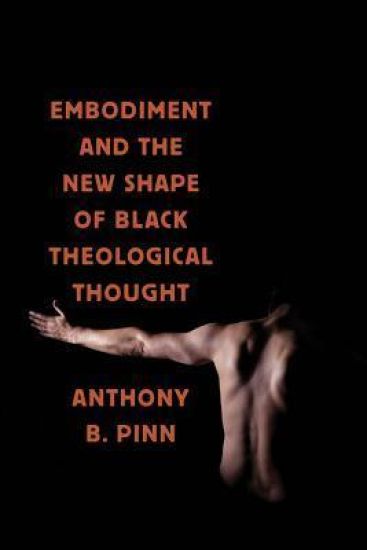
Embodiment and the New Shape of Black Theological Thought

Embodiment and the New Shape of Black Theological Thought

Anthony B. Pinn

New York University Press
2010
sidottu
Black theology tends to be a theology about no-body. Though one might assume that black and womanist theology have already given significant attention to the nature and meaning of black bodies as a theological issue, this inquiry has primarily taken the form of a focus on issues relating to liberation, treating the body in abstract terms rather than focusing on the experiencing of a material, fleshy reality. By focusing on the body as a physical entity and not just a metaphorical one, Pinn offers a new approach to theological thinking about race, gender, and sexuality. According to Pinn, the body is of profound theological importance. In this first text on black theology to take embodiment as its starting point and its goal, Pinn interrogates the traditional source materials for black theology, such as spirituals and slave narratives, seeking to link them to materials such as photography that highlight the theological importance of the body. Employing a multidisciplinary approach spanning from the sociology of the body and philosophy to anthropology and art history, Embodiment and the New Shape of Black Theological Thought pushes black theology to the next level.
Embodiment and the New Shape of Black Theological Thought

Embodiment and the New Shape of Black Theological Thought

Anthony B. Pinn

New York University Press
2010
pokkari
Black theology tends to be a theology about no-body. Though one might assume that black and womanist theology have already given significant attention to the nature and meaning of black bodies as a theological issue, this inquiry has primarily taken the form of a focus on issues relating to liberation, treating the body in abstract terms rather than focusing on the experiencing of a material, fleshy reality. By focusing on the body as a physical entity and not just a metaphorical one, Pinn offers a new approach to theological thinking about race, gender, and sexuality. According to Pinn, the body is of profound theological importance. In this first text on black theology to take embodiment as its starting point and its goal, Pinn interrogates the traditional source materials for black theology, such as spirituals and slave narratives, seeking to link them to materials such as photography that highlight the theological importance of the body. Employing a multidisciplinary approach spanning from the sociology of the body and philosophy to anthropology and art history, Embodiment and the New Shape of Black Theological Thought pushes black theology to the next level.
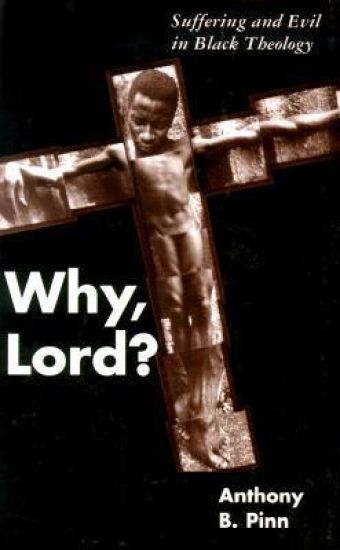
Why, Lord?

Why, Lord?

Anthony B. Pinn

Continuum International Publishing Group Ltd.
1999
nidottu
By challenging some of the most cherished theological beliefs to emerge within black Christian communities, this text encourages us to extend the range of our religious world views and embrace black cultural expressions that have been ignored or despised. Anthony Pinn explores theological texts, preaching, folklore, spirituals, blues and rap to look at beliefs held within the African American community that contribute to the suffering of its members and to unleash a tradition of African American humanism.
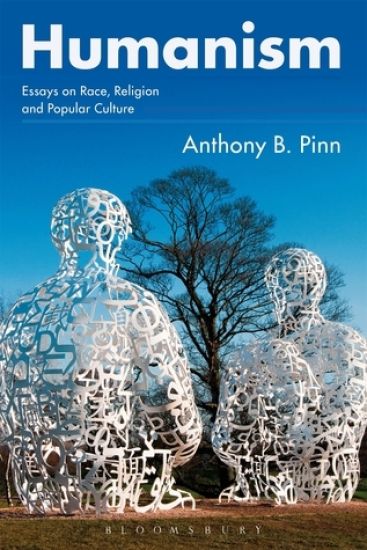
Humanism

Humanism

Anthony B. Pinn

Bloomsbury Academic
2015
sidottu
Who are the "Nones"? What does humanism say about race, religion and popular culture? How do race, religion and popular culture inform and affect humanism?The demographics of the United States are changing, marked most profoundly by the religiously unaffiliated, or what we have to come to call the "Nones". Spread across generations in the United States, this group encompasses a wide range of philosophical and ideological perspectives, from some in line with various forms of theism to those who are atheistic, and all sorts of combinations in between. Similar changes to demographics are taking place in Europe and elsewhere. Humanism: Essays on Race, Religion and Popular Culture provides a much-needed humanities-based analysis and description of humanism in relation to these cultural markers. Whereas most existing analysis attempts to explain humanism through the natural and social sciences (the "what" of life), Anthony B. Pinn explores humanism in relation to "how" life is arranged, socialized, ritualized, and framed. This ground-breaking publication brings together old and new essays on a wide range of topics and themes, from the African-American experience, to the development of humanist churches, and the lyrics of Jay Z.
Humanism

Humanism

Anthony B. Pinn

Bloomsbury Academic
2015
nidottu
Who are the "Nones"? What does humanism say about race, religion and popular culture? How do race, religion and popular culture inform and affect humanism?The demographics of the United States are changing, marked most profoundly by the religiously unaffiliated, or what we have to come to call the "Nones". Spread across generations in the United States, this group encompasses a wide range of philosophical and ideological perspectives, from some in line with various forms of theism to those who are atheistic, and all sorts of combinations in between. Similar changes to demographics are taking place in Europe and elsewhere. Humanism: Essays on Race, Religion and Popular Culture provides a much-needed humanities-based analysis and description of humanism in relation to these cultural markers. Whereas most existing analysis attempts to explain humanism through the natural and social sciences (the "what" of life), Anthony B. Pinn explores humanism in relation to "how" life is arranged, socialized, ritualized, and framed. This ground-breaking publication brings together old and new essays on a wide range of topics and themes, from the African-American experience, to the development of humanist churches, and the lyrics of Jay Z.
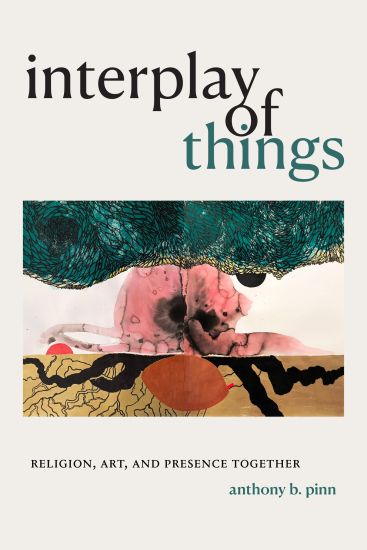
Interplay of Things

Interplay of Things

Anthony B. Pinn

Duke University Press
2021
sidottu
In Interplay of Things Anthony B. Pinn theorizes religion as a technology for interrogating human experiences and the boundaries between people and other things. Rather than considering religion in terms of institutions, doctrines, and creeds, Pinn shows how religion exposes the openness and porousness of all things and how they are always involved in processes of exchange and interplay. Pinn examines work by Nella Larsen and Richard Wright that illustrates an openness between things, and he traces how pop art and readymades point to the multidirectional nature of influence. He also shows how Ron Athey's and Clifford Owens's performance art draws out inherent interconnectedness to various cultural codes in ways that reveal the symbiotic relationship between art and religion as a technology. Theorizing that antiblack racism and gender- and class-based hostility constitute efforts to close off the porous nature of certain bodies, Pinn shows how many artists have rebelled against these attempts to counter openness. His analyses offer a means by which to understand the porous, unbounded, and open nature of humans and things.
Interplay of Things

Interplay of Things

Anthony B. Pinn

Duke University Press
2021
pokkari
In Interplay of Things Anthony B. Pinn theorizes religion as a technology for interrogating human experiences and the boundaries between people and other things. Rather than considering religion in terms of institutions, doctrines, and creeds, Pinn shows how religion exposes the openness and porousness of all things and how they are always involved in processes of exchange and interplay. Pinn examines work by Nella Larsen and Richard Wright that illustrates an openness between things, and he traces how pop art and readymades point to the multidirectional nature of influence. He also shows how Ron Athey's and Clifford Owens's performance art draws out inherent interconnectedness to various cultural codes in ways that reveal the symbiotic relationship between art and religion as a technology. Theorizing that antiblack racism and gender- and class-based hostility constitute efforts to close off the porous nature of certain bodies, Pinn shows how many artists have rebelled against these attempts to counter openness. His analyses offer a means by which to understand the porous, unbounded, and open nature of humans and things.
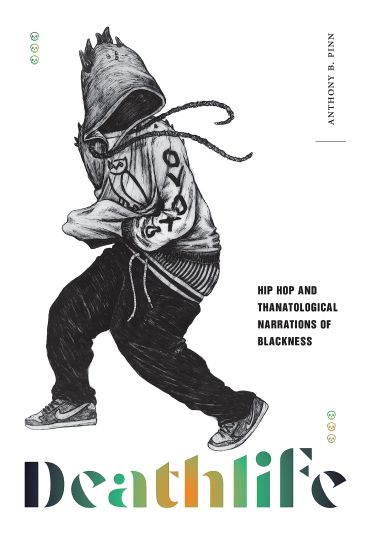
Deathlife

Deathlife

Anthony B. Pinn

DUKE UNIVERSITY PRESS
2024
sidottu
In Deathlife, Anthony B. Pinn analyzes hip hop to explore how Blackness serves as a framework for defining and guiding the relationship between life and death in the United States. Pinn argues that white supremacy and white privilege operate based on the right to distinguish death from life. This distinction is produced and maintained through the construction of Blackness as deathlife. Drawing on Afropessimism and Black moralism, Pinn theorizes deathlife as a technology of whiteness that projects whites’ anxieties about the end of their lives onto the Black other. Examining the music of Jay-Z; Kendrick Lamar; Tyler, the Creator; and others, Pinn shows how hip hop configures the interconnection and dependence between death and life in such a way that death and life become indistinguishable. In so doing, Pinn demonstrates that hip hop presents an alternative to deathlife that challenges the white supremacist definitions of Blackness and anti-Blackness more generally.
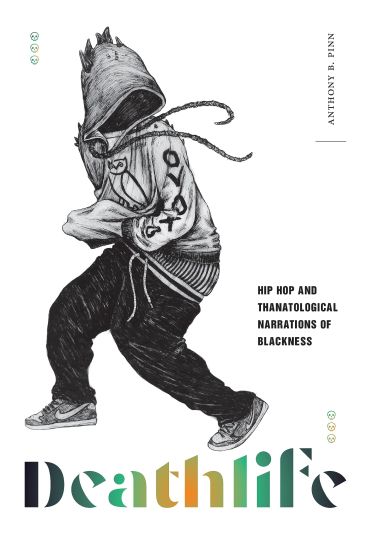
Deathlife

Deathlife

Anthony B. Pinn

DUKE UNIVERSITY PRESS
2024
pokkari
In Deathlife, Anthony B. Pinn analyzes hip hop to explore how Blackness serves as a framework for defining and guiding the relationship between life and death in the United States. Pinn argues that white supremacy and white privilege operate based on the right to distinguish death from life. This distinction is produced and maintained through the construction of Blackness as deathlife. Drawing on Afropessimism and Black moralism, Pinn theorizes deathlife as a technology of whiteness that projects whites’ anxieties about the end of their lives onto the Black other. Examining the music of Jay-Z; Kendrick Lamar; Tyler, the Creator; and others, Pinn shows how hip hop configures the interconnection and dependence between death and life in such a way that death and life become indistinguishable. In so doing, Pinn demonstrates that hip hop presents an alternative to deathlife that challenges the white supremacist definitions of Blackness and anti-Blackness more generally.
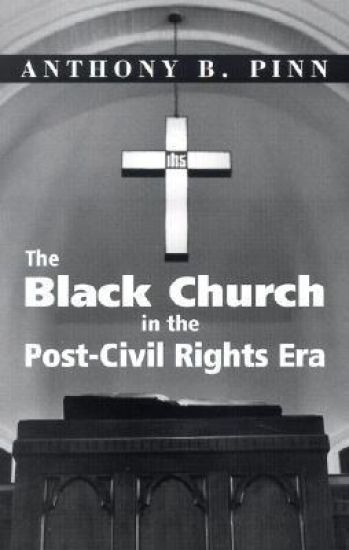
The Black Church in the Post-Civil Rights Era

The Black Church in the Post-Civil Rights Era

Anthony B. Pinn

Orbis Books (USA)
2002
sidottu
Pinn describes themes in the history of the Black Church as well as the major beliefs and forms of worship that define this tradition. He then focuses on the practices of the Black Church, especially as it has engaged in issues of economic development and justice, and struggles with such issues as the full inclusion of women, sexuality, and health. Throughout, Pinn highlights the important and creative tension between "spiritual" and "mundane" concerns to which the Black Church must respond and by which it is shaped.
What is Humanism and Why Does it Matter?

What is Humanism and Why Does it Matter?

Anthony B. Pinn

Acumen Publishing Ltd
2013
sidottu
We live in a world of social, political, economic, and religious rupture. Ideologies polarise to fuel confrontation within communities, nations and regions of the world. At this point in the twenty-first century, humanism's focus on reason, ethics and justice offers the potential to rethink and re-engage in new ways. "What Is Humanism, and Why Does It Matter?" brings together leading humanist thinkers and activists to examine humanism and how it can work in the world. Humanism is often misunderstood. The movement includes both atheists and agnostics, who seek to make ethical sense of the world based on shared human values and a concern for human welfare, happiness and fulfillment. "What Is Humanism, and Why Does It Matter?" presents an overview and exploration of the meaning and nature of humanism, both as a philosophy and as a way of engaging with the challenges of the world.