Kirjojen hintavertailu. Mukana 12 516 570 kirjaa ja 12 kauppaa.

Kirjahaku

Etsi kirjoja tekijän nimen, kirjan nimen tai ISBN:n perusteella.

46 kirjaa tekijältä Anthony Burton

The Iron Men

The Iron Men

Anthony Burton

The History Press Ltd
2015
nidottu
The eighteenth century saw the second Iron Age. Practically everything was made of iron: the machines of the Industrial Revolution; bridges and the ships that went under them; the trains running on their rails; and the frames of the first skyscrapers. But progress was bought at a price and the working classes paid it. The knife grinders of Sheffield were lucky to reach their 30th birthday before their ruined lungs gave up, women chain makers were described as ‘The White Slaves of England’ and, in a time before health and safety regulations, each advance in technology risked a new kind of deadly accident. Tracking both the brilliant innovation of the period and the hardship and struggle that powered it, this is the story of how iron changed the world.
The Canal Builders

The Canal Builders

Anthony Burton

NPI Media Group
2005
nidottu
Just over 250 years ago a revolution started in the UK that was to make it the powerhouse of the world. The Industrial Revolution saw the growth of the town, altered trade patterns and of the first proper transport system in the country. From the first river navigations to the building of some of the most impressive canals, Anthony Burton looks at the men who made Britain 'Great', those first pioneers of the industrial age. Without the new canals it is unlikely that Britain would have become industrialised just so quickly and a few men like Thomas Telford, William Jessop and James Brindley were responsible for most of the first canals. First published in 1969, this revised edition is the definitive history of Britain's canals and the men who made them.
Canal 250

Canal 250

Anthony Burton

The History Press Ltd
2011
sidottu
When a young English nobleman was thwarted in love he abandoned the court, retired to his estate near Manchester and built a canal to serve his coalmines. The Bridgewater Canal was the sensation of the age and led others to follow the example of the enterprising Duke of Bridgewater. From his starting point in 1760, over the next half-century Britain was covered by a network of waterways that became the lifeblood of the Industrial Revolution. This is the story of 250 years of history on those canals, and of the people who made and used them. The book tells of the great engineers, such as Telford, Brindley and Jessop and of the industrialists, such as Wedgwood and Arkwright who promoted the canals they built. It also tells the story of the anonymous navvies who dug the canals, the men and women who ran the boats and the workers who kept the canals running. Covering the entire history of the canal network (from the glorious early days, through the years of decline caused by rail and then road competition, up to the subsequent revival of the canals as leisure routes), this wonderfully illustrated book is a must-have for all canal enthusiasts.
History's Most Dangerous Jobs: Navvies

History's Most Dangerous Jobs: Navvies

Anthony Burton

The History Press Ltd
2012
nidottu
This is the story of the men who built Britain’s canals and railways – not the engineers and the administrators but the ones who provided the brawn and muscle. There had never been a workforce like the navvies, a great army of men, moving about the country following the work as it became available. This book will tell of their extraordinary feats of strength and their often colourful lives. They lived rough, usually having to make do with huts and shelters cobbled together from whatever materials were available. They worked hard and drank hard. Often exploited by their employers, they were always liable to erupt into riots that could have fatal results. The book will look at who these men were, where they came from – and destroy the myth that they were all Irish. It is a story full of drama, but above all one of great achievements.
History's Most Dangerous Jobs: Miners

History's Most Dangerous Jobs: Miners

Anthony Burton

The History Press Ltd
2013
nidottu
Mining is Britain’s oldest industry, and this book follows the men and, in the past, women who spent their lives working underground. Since the New Stone Age various minerals have been wrested from British soil – copper, tin, gold, lead – but in later periods the key commodity was coal. Those who worked in the mines were constantly battling on two fronts: there was the continual danger of flood and explosion; and the often bitter struggles against the mine owners. This story is also one of invention and innovation, looking particularly at how the independent miners of Cornwall and Devon were at the forefront of the development of the steam engine that was to transform society. This, the second book in an exciting new series looking at Britain’s most dangerous industries, is a tale of blood, sweat and death among a courageous and close-knit community that has now all but passed into history.
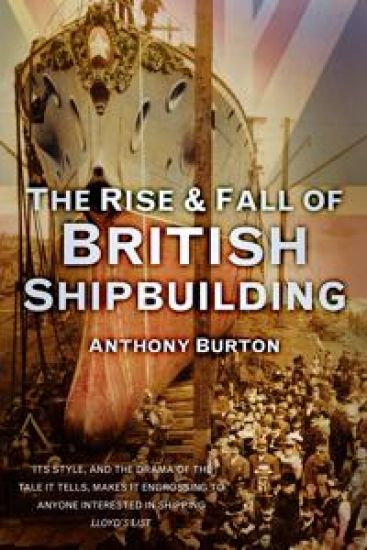
The Rise and Fall of British Shipbuilding

The Rise and Fall of British Shipbuilding

Anthony Burton

The History Press Ltd
2013
nidottu
From modest beginnings, Britain rose throughout the nineteenth century to become the greatest shipbuilding nation in the world, yet by the end of the following century the British merchant fleet ranked just 38 in the world. The glory days of sail had given way to the introduction of the steam age. Traditional shipwrights had railed against new industrial methods resulting in the infamous demarcation disputes. Talented men, like Brunel and Armstrong, had always sought change and development, but too many shipbuilders were relying on old technologies. From building mighty battleships and extravagant ocean liners, the nation became complacent and its yards were eventually no longer as innovative as their foreign competitors. In the twenty-first century, British shipbuilding has shrunk to a mere fraction of its former size and has become almost totally dependent on government contracts. The popularity of and fascination with this subject has prompted a new edition of Anthony Burton’s successful book. With fresh images and a new, final chapter, the story of the rise and cataclysmic fall of British shipbuilding has been brought right up to date.
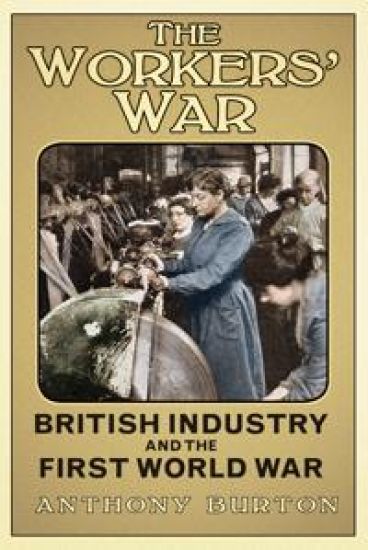
The Workers' War

The Workers' War

Anthony Burton

The History Press Ltd
2014
sidottu
The First World War is famous for the unprecedented loss of life on a global scale; it was a conflict that affected the world forever. However, it wasn’t only in terms of bloodshed that the war rocked the nation: it also massively impacted the industrial integrity of Britain. This was a war not just of fighting, but of technological and industrial advances. All areas of industry, from aviation to food production, leapt ahead in terms of development over the four-year period: from the Wright Brothers in 1903 to the Sopwith Camel in 1917, and from the first motorcars to the tank within twenty years. On a social level, working Britain experienced change as well: with the men at war, it fell to the women of the country to keep the factories going, challenging preconceptions as they did. Here Anthony Burton shows how the First World War produced fundamental changes in British society.
Victorian and Edwardian Locomotive Portraits, Northern England, Wales, Scotland and Ireland
The Victorian and Edwardian periods saw the development of the steam locomotive in Britain from a comparatively simple machine to a powerful main line express capable of speeds of a hundred miles an hour. The book starts with an introduction dealing with the main lines of development in the north of Britain and that is followed by a picture section with over a hundred photographs. Each illustration has an extended caption giving details of the engine and its history. The material is arranged geographically, with sections dealing with the north of England, Wales, Scotland, Ireland and a separate section on light railways. The photographs are all of the locomotives in their working days, many showing them in action on both passenger and goods trains. This splendid collection shows the rich diversity of Britain’s railways and how different companies and their engineers produced engines of great individuality. This is a book that will be enjoyed by all lovers of the golden age of steam railways.
The Independent Locomotive Builders

The Independent Locomotive Builders

Anthony Burton

PEN SWORD BOOKS LTD
2025
sidottu
The big railway companies had famous locomotive works such as Crewe and Swindon, but this is the story of the very many other companies, who not only built locomotives for the British railways but supplied them to railways all round the world. Many of these companies were highly innovative, developing engines of many different types from narrow gauge to articulated locomotives and specialist engines for tramways. The list is inclusive, covering the famous names such as Robert Stephensons & Co and Beyer Peacock as well as companies that produced just a few locomotives. The time spam covers over two centuries from Fenton, Murray & Wood who built the locomotives for the world’s first successful commercial railway, the Middleton Colliery of 1812 to the present day and the world of electric and diesel taction. In telling this story, the reader will come to appreciate how important these companies were in the whole story of locomotion development. In countries across the globe, from America to Australia, they were often the very first to supply engines to start up their new rail networks. With over a hundred illustrations in both black and white in colour, this is a book that will appeal to all who have an interest in the wide world of railways.
The Canal Builders

The Canal Builders

Anthony Burton

Pen Sword Transport
2021
nidottu
Canal Builders is a classic history book for anyone interested in the development of Britains canal system. The book, which was first published in the 1970s, is now republished here in a new fifth edition. It takes the reader from the middle of the eighteenth century, to the start of the railway age in the early nineteenth century. Anthony Burton has revised and improved the original text, using new material that he has found in archives since it was first published, and has added many extra illustrations. This is the remarkable story of the many groups of people who were responsible for building Britains canal system. There were industrialists, such as Josiah Wedgwood, who promoted canals to help his own industry, and speculators, who financed the projects in the hope of a good return. The work was planned by engineers, some of whom, such as James Brindley and Thomas Telford, have become famous, while others have remained virtually unknown but still did magnificent work. This is also the story of the great, anonymous army of men who actually did the work the navvies. This was the first book ever to study the lives of these labourers in detail. Altogether it is an epic story of how the transport route that made the industrial revolution possible was built. 'Well planned and well written There is no better introduction to the early canal age.' The Economist
Thomas Telford

Thomas Telford

Anthony Burton

PEN SWORD BOOKS LTD
2023
nidottu
Thomas Telford's life was extraordinary: born in the Lowlands of Scotland, where his father worked as a shepherd, he ended his days as the most revered engineer in the world, known punningly as The Colossus of Roads. He was responsible for some of the great works of the age, such as the suspension bridge across the Menai Straits and the mighty Pontcysyllte aqueduct. He built some of the best roads seen in Britain since the days of the Romans and constructed the great Caledonian Canal, designed to take ships across Scotland from coast to coast. He did as much as anyone to turn engineering into a profession and was the first President of the newly formed Institution of Civil Engineers. All this was achieved by a man who started work as a boy apprentice to a stonemason. He was always intensely proud of his homeland and was to be in charge of an immense programme of reconstruction for the Highlands that included building everything from roads to harbours and even designing churches. He was unquestionably one of Britains finest engineers, able to take his place alongside giants such as Brunel. He was also a man of culture, even though he had only a rudimentary education. As a mason in his early days he had worked alongside some of the greatest architects of the day, such as William Chambers and Robert Adams, and when he was appointed County Surveyor for Shropshire early in his career, he had the opportunity to practice those skills himself, designing two imposing churches in the county and overseeing the renovation of Shrewsbury Castle. Even as a boy, he had developed a love of literature and throughout his life wrote poetry and became a close friend of the Poet Laureate, Robert Southey. He was a man of many talents, who rose to the very top of his profession but never forgot his roots: he kept his old masons tools with him to the end of his days. There are few official monuments to this great man, but he has no need of them: the true monuments are the structures that he left behind that speak of a man who brought about a revolution in transport and civil engineering.
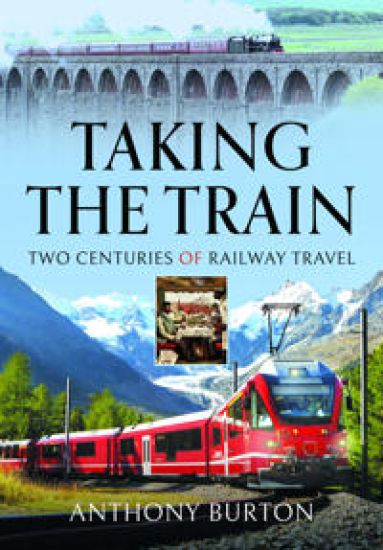
Taking the Train

Taking the Train

Anthony Burton

PEN SWORD BOOKS LTD
2024
sidottu
The book looks at rail travel from the passenger’s point of view, beginning when a coach drawn by horses, rumbled down the newly laid tracks linking Swansea to Mumbles in 1807 and takes the reader right up to the present day. It was not long after that first service opened in Wales that the first steam passenger trains began to operate. The story broadens out from the first inter-city line connecting Liverpool to Manchester to spread first around Britain and eventually spread across the world. The book paints vivid pictures of how travel seemed to passengers in different countries, drawing on many first-hand accounts. The early days offered little in comfort – third class passengers had to make do with carriages that were simply open trucks. Gradually conditions improved and eventually there was an age of luxury travel epitomised by the famous Orient Express. Every aspect of rail travel is looked at, from tragic tales of fatal accidents to the role of railway travel in films and books. This lively account of the pioneering days and what many regard as the golden age of rail travel will be welcomed by anyone who enjoys taking the train.
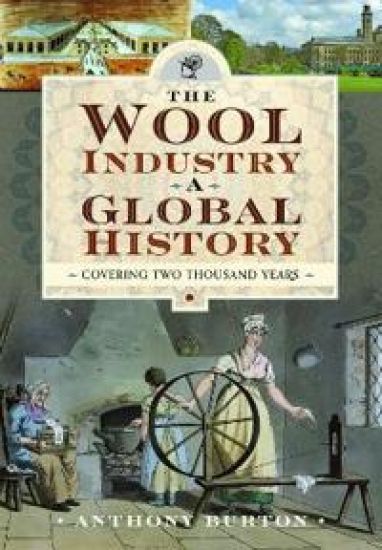
The Wool Industry a Global History

The Wool Industry a Global History

Anthony Burton

PEN SWORD BOOKS LTD
2024
sidottu
The story of wool covers 4,000 years of human history – the first written record of dying wool for cloth was found on a Mesopotamian papyrus c. 2000 BCE. In this book, the whole story is told, from the rearing of the different animals that provide the raw material to its transformation into woven cloth and knitted material. Much of the emphasis is on Britain, where, in the Middle Ages, wool was the basis for much of the country’s prosperity, as can still be seen in the magnificent opulence of the churches endowed by the wool merchants. It deals with the different techniques used for spinning, weaving and finishing cloth. The eighteenth century saw great changes, as production moved from cottage to mill and the mill towns grew. But this is also an international story, looking at a variety of different topics, from the work of Incan and Mayan people in South America to the development of the flocks of Australia. But, this is not just about technology – it is also about how that technology has an impact on the lives of people, from th life of the shepherd to the industrial disputes that broke into the violence of the Luddite rebellions.
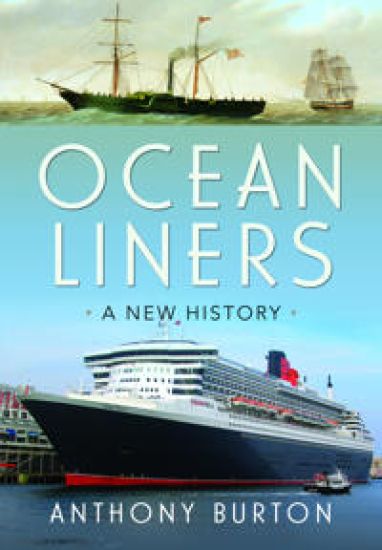
Ocean Liners

Ocean Liners

Anthony Burton

PEN SWORD BOOKS LTD
2024
sidottu
There has always been a romance around ocean liners, but this book looks behind the romance to show the reality of travelling the oceans of the world. The book starts with the first scheduled transatlantic crossings in the age of sail, then moves on through the development of the steamers and ends in the present day, when ocean liners have given way to airliners. All aspects of the subject are discussed. The experience of travelling by sea varied enormously from the luxury of first-class travel to the often brutal conditions endured by immigrants. Ship design developed in the race between competing companies to provide the most powerful ships. But while technology came into the fundamental design, when it came to décor, for many of the great liners the interiors looked back with a romanticised view of the past. It is not always realised that a great liner might have almost as many crew as passengers, and this looks at all those who kept the ships running, from the black gang in the engine room to the captain on the bridge. The result is a rounded view of what it meant to travel on some of the greatest ships ever built.
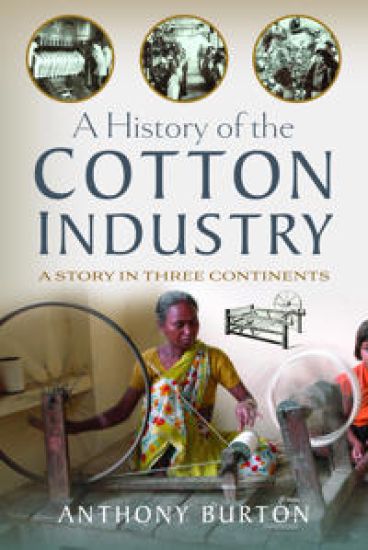
A History of the Cotton Industry

A History of the Cotton Industry

Anthony Burton

PEN SWORD BOOKS LTD
2023
sidottu
This book is about technology and how it has changed the lives of people on three continents over the last three hundred years. The development of the cotton industry was the starting point for one of the great turning points in history – the industrial revolution. It began with the importation of cloth into Britain from India and that created a new fashion. As the demand for cotton cloth grew, British inventors began to find ways of making the same cloth using powered machinery and built the first cotton mills. The old way of life of the textile workers was transformed, as work moved from home to factory and thousands of small children were brought in to tend the new machines. If conditions in the cotton towns were bad, they were far worse in America where, thanks to the work of slaves, the country took over the supply of raw material from India. During the American Civil War, Britain turned again to India for its supplies. Today, positions have changed dramatically. India again has a thriving industry, while in Britain only a fraction of the old mills are still at work. The author looks in detail at the technology that produced the changes, but the emphasis is very much on the human stories of the industrialists and their workers, the planters and their slaves in Britain, India and America.
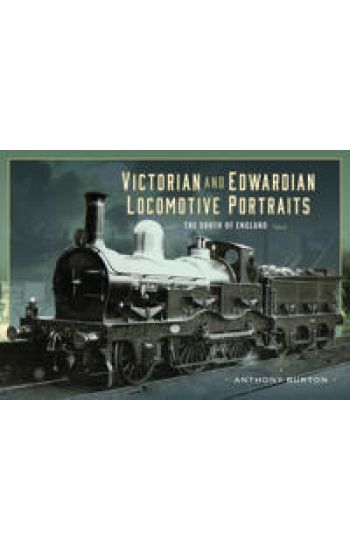
Victorian and Edwardian Locomotive Portraits - The South of England
The Victorian and Edwardian periods saw the development of the steam locomotive in Britain from a comparatively simple machine to a powerful main line express capable of speeds of a hundred miles an hour. The book starts with an introduction dealing with the main line of development and that is followed by a picture section with over 190 photographs. Each illustration has an extended caption giving details of the engine and its history. The material is arranged geographically, starting with the railways of southern England and ending with Irish railways. The Channel Islands, the Isle of Wight and the Isle of Man are also included, and there is a section on English light railway. The photographs are all of the locomotives in their working days, many showing them in action on both passenger and goods trains. This splendid collection shows the rich diversity of Britain’s railways and how different companies and their engineers produced engines of great individuality. This is a book that will be enjoyed by all lovers of the golden age of steam railways.
Craft of the Inland Waterways

Craft of the Inland Waterways

Anthony Burton

PEN SWORD BOOKS LTD
2023
sidottu
The book traces the history of the various craft that have been used for transport on Britain's rivers and canals from the earliest times to the present day. The first section deals with the long history of the development of river craft, from prehistoric log boats to the whole range of sailing barges, such as the Humber keel and the Thames barge. By the middle of the 18th century, canal construction brought in a new generation of craft, not just the familiar narrow boats, but the wide boats such as the Leeds & Liverpool short boats, maintenance craft and even passenger boats. Steam power was introduced in the 19th century for a variety of crafts from tugs to pleasure steamers, while the 20th century brought in the diesel motors for boats and barges of all kinds. Today, there is still some commercial traffic, but an ever-increasing demand for boats for pleasure. Much of this story is told in terms of preserved craft and is also based on the author's own experience aboard many of these craft, whether crewing a Thames barge or working in the engine room of a Clyde puffer.
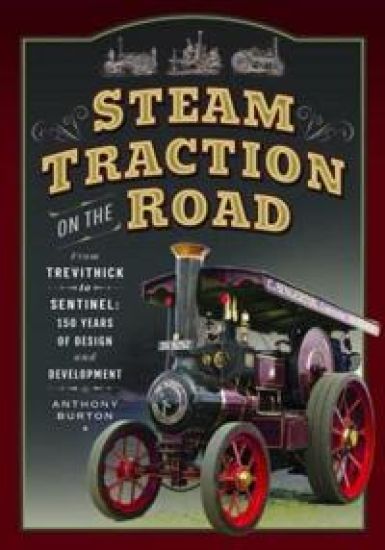
Steam Traction on the Road

Steam Traction on the Road

Anthony Burton

PEN SWORD BOOKS LTD
2023
nidottu
This is the story of how for more than a hundred years steam power played a vital role in the development of road transport. It all began with tentative attempts to build steam carriages by pioneers such as Cugnot in France and Trevithick in Britain, and in the early part of the nineteenth century there were significant attempts to develop steam carriages and omnibuses. That these attempts ultimately failed was largely due to opposition by road authorities and draconian legislation. Steam power did, however, find a real purpose in agriculture, where the traction engine was used for a variety of tasks from towing and working threshing machines, to ploughing. Once the value of the traction engine had been established, it soon found a use in many parts of the world for heavy haulage work and appeared in an exotic guise as the showman's engine. The latter was not only used to haul rides to fairgrounds but also powered a dynamo that could light up the fair at night. By the end of the nineteenth century, steam on the road took on a new life with the development of steam cars and trucks. For a time they vied the new internal combustion engine for supremacy on the road. The American Doble Company even developed a 100mph steam sports car. Ultimately steam lost the war, but steam vehicles survive and delight us still thanks to enthusiastic owners and restorers.