Kirjojen hintavertailu. Mukana 12 357 562 kirjaa ja 12 kauppaa.

Kirjahaku

Etsi kirjoja tekijän nimen, kirjan nimen tai ISBN:n perusteella.

7 kirjaa tekijältä Anthony P. Maingot

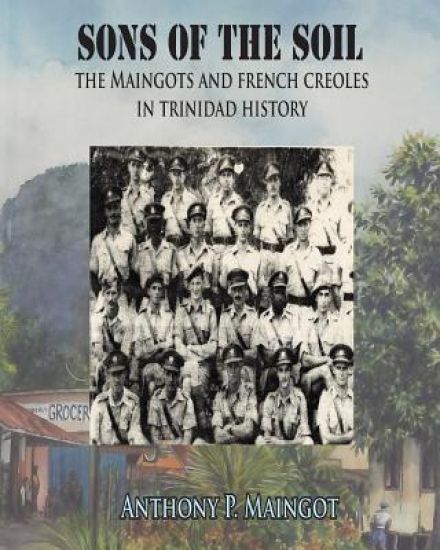
Sons of the Soil: The Maingots and French Creoles in Trinidad History

Sons of the Soil: The Maingots and French Creoles in Trinidad History

Anthony P. Maingot

Createspace Independent Publishing Platform
2018
nidottu
In 1776 Joseph tienne Maingot, a young bourgeois boy from Bordeaux, traveled to the French island of Martinique to join his father. In 1786 he left for Trinidad, a Spanish island (barely) governed from Caracas. What brought him to this "isla inutil" (useless island) ignored for over 200 years while other European powers battled continuously to possess even the smallest island in the Caribbean?A Royal C dula in 1783 had signaled a change in Spain's colonization policy offering generous land grants to White and Free Colored Catholics. Led by Roume de St. Laurent, a visionary Grenadian creole, Joseph tienne Maingot and many other French settlers with their slaves began to develop the formerly abandoned island. They were enormously successful. In 1797 the English conquered and struggled to deal with a polyglot population, originally growing sugar and then cocoa, and a French culture tinged with West African influences. The many clashes over language, religion and education, gave rise to a French Creole identity known for its congenial life style, its music, cuisine and piquant sense of humor. So was Carnival and Calypso born. The permanence and love of the Island by the many male and female descendants of Joseph Etienne Maingot, through the best and worst of times, has earned them the honorific: "sons of the soil."
Race, Ideology, and the Decline of Marxism in the Caribbean

Race, Ideology, and the Decline of Marxism in the Caribbean

Anthony P. Maingot

University Press of Florida
2015
nidottu
Most studies view the Caribbean as disparate countries prone to revolution and ripe for rebellion. In a refreshing departure from the norm, Anthony Maingot, using historical and contemporary examples, explains that the region is actually populated by resilient, adaptable societies that combine both modern and conservative elements.Despite the Caribbean’s diverse languages, nationalities, racial differences, ideologies, microhistories, and political systems, it is defined by a similarity of postcolonial-era challenges. Maingot examines the contemporary intellectual, social, economic, and cultural trajectories of Caribbean nations and locates the common conservative thread in its many revolutions and transitions. He concludes that this prevailing tendency deserves better acknowledgment, by which the Caribbean can chart possible productive paths that have not yet been considered, especially with regard to combating increased corruption.By focusing on changes since the 1990s, this ambitious volume, by one of the preeminent scholars in Caribbean studies, helps define the future course of investigations in this complex region.
Miami

Miami

Anthony P. Maingot

Signal Books Ltd
2013
nidottu
Miami, or 'Sweet Water' in the Creek Indian language, is one of the newest cities in the United States. While northern Florida was fought over by European powers and finally taken by the Americans as part of the slave-worked plantation South, Miami lay largely ignored and populated by more alligators than humans until its incorporation as a city in 1896. The driving force was Henry Flagler, who brought his railroad down to Miami and from there to Key West and trade with Cuba. Once settled, 'Tin Can' tourists from the North, Midwest and South rode their Model-T Fords down to Florida and Miami and the boom in land sales began. After the Prohibition period and the heyday of the bootleggers, a new but still segregated Miami emerged from the Second World War. Miami Beach became a tourist mecca and once Disney World opened in Orlando, millions passed through Miami to reach it and Florida and Miami entered a new era of growth and development. It was Fidel Castro, however, who created present-day Miami by exiling over a million of Cuba s middle class. Showing enormous entrepreneurial skill and an exuberant taste for life, Cubans and more recently, Brazilians, Venezuelans and Colombians created the first Latin and 'tropical' city in the US. Anthony P. Maingot explores the momentous history and vibrant culture of this most cosmopolitan city. With the highest percentage of foreign-born residents in the US, Miami is a melting-pot of music, dance, visual arts, cuisine sports and political argument. Maingot reveals how this unique cultural mix keeps the new city humming and ensures the perpetuation of its tropical joie de vivre. * City of migrants and tourists: 'capital of Latin America and the Caribbean'; Little Havana and Little Haiti; exiles and entrepreneurs; the world s biggest cruise ship hub. * City of crime: the Prohibition boom; Al Capone, Meyer Lansky and the mob; Miami Vice and modern-day drug crime. * City of culture: art deco architecture; the Latin recording industry; writers of the Caribbean diaspora; centre of performing arts.
Miami

Miami

Anthony P. Maingot

Interlink Books
2014
nidottu
Sociologist and Miami resident Anthony P. Maingot has written a cultural history of this vibrant city, which boasts the highest percentage of foreign-born residents in the US. Miami, or "Sweet Water" in the Creek Indian language, is one of the newest cities in the United States. While northern Florida was fought over by European powers and finally taken by the Americans as part of the slave-worked plantation South, Miami lay largely ignored and populated by more alligators than humans until its incorporation as a city in 1896. The driving force was Henry Flagler, who brought his railroad down to Miami and from there to Key West--and trade with Cuba. Once settled, "Tin Can" tourists from the North, Midwest and South rode their Model-T Fords down to Florida and Miami and the boom in land sales began. After the Prohibition period and the heyday of the bootleggers, a new but still segregated Miami emerged from the Second World War. Miami Beach became a tourist mecca and once Disney World opened in Orlando, millions passed through Miami to reach it and Florida and Miami entered a new era of growth and development. It was Fidel Castro, however, who created present-day Miami by exiling over a million of Cuba's middle class. Showing enormous entrepreneurial skill and an exuberant taste for life, Cubans and more recently, Brazilians, Venezuelans and Colombians created the first Latin and "tropical" city in the US. Anthony P. Maingot explores the momentous history and vibrant culture of this most cosmopolitan city. With the highest percentage of foreign-born residents in the US, Miami is a melting-pot of music, dance, visual arts, cuisine sports and political argument. Maingot reveals how this unique cultural mix keeps the new city humming and ensures the perpetuation of its tropical joie de vivre. * City of migrants and tourists: "capital of Latin America and the Caribbean"; Little Havana and Little Haiti; exiles and entrepreneurs; the world's biggest cruise ship hub. * - City of crime: the Prohibition boom; Al Capone, Meyer Lansky and the mob; Miami Vice and modern-day drug crime. * City of culture: art deco architecture; the Latin recording industry; writers of the Caribbean Diaspora; center of performing arts.
The United States and the Caribbean

The United States and the Caribbean

Anthony P. Maingot; Wilfredo Lozano

Routledge
2004
sidottu
This volume provides the first comprehensive assessment of post-Cold War US-Caribbean relations. Focusing on Haiti, the Dominican Republic and Trinidad-Tobago, the book looks at the political history of the region during the Cold War years, the region's current political economy, international security, and issues of migration and crime. Spanning the Caribbean's linguistic and cultural sub regions (Spanish, French, English, and Dutch) it calls attention to the achievements, setbacks, and concerns that are common to the region. The United States and the Caribbean will be of interest to students and scholars of economics, geography and politics and international relations in general.
The United States and the Caribbean

The United States and the Caribbean

Anthony P. Maingot; Wilfredo Lozano

Routledge
2004
nidottu
This volume provides the first comprehensive assessment of post-Cold War US-Caribbean relations. Focusing on Haiti, the Dominican Republic and Trinidad-Tobago, the book looks at the political history of the region during the Cold War years, the region's current political economy, international security, and issues of migration and crime. Spanning the Caribbean's linguistic and cultural sub regions (Spanish, French, English, and Dutch) it calls attention to the achievements, setbacks, and concerns that are common to the region. The United States and the Caribbean will be of interest to students and scholars of economics, geography and politics and international relations in general.
Venezuela's Petro-Diplomacy

Venezuela's Petro-Diplomacy

Ralph S Clem; Anthony P. Maingot; Cristina Eguizábal

University Press of Florida
2015
nidottu
Since coming to power in 1999, President Hugo Chavez has used the windfall of high oil prices to remake Venezuela internally along the model of twenty-first-century socialism and, even more audaciously, to rewrite global relations by directly challenging U.S. hegemony. The dramatic ascendency of the country in hemispheric and global international relations over the past decade is the subject of Venezuela’s Petro-Diplomacy.