

Kirjahaku
Etsi kirjoja tekijän nimen, kirjan nimen tai ISBN:n perusteella.
20 kirjaa tekijältä Anthony Stevens
Though he was a prolific writer and an original thinker of vast erudition, Jung lacked a gift for clear exposition and his ideas are less widely appreciated than they deserve. In this concise introduction, Anthony Stevens explains clearly the basic concepts of Jungian psychology: the collective unconscious, complex, archetype, shadow, persona, anima, animus, and the individuation of the Self. He examines Jung's views on such disparate subjects as myth, religion, alchemy, `sychronicity', and the psychology of gender differences, and he devotes separate chapters to the stages of life, Jung's theory of psychological types, the interpretation of dreams, the practice of Jungian analysis, and to the unjust allegation that Jung was a Nazi sympathizer. Finally, he argues that Jung's visionary powers and profound spirituality have helped many to find an alternative set of values to the arid materialism prevailing in Western society. ABOUT THE SERIES: The Very Short Introductions series from Oxford University Press contains hundreds of titles in almost every subject area. These pocket-sized books are the perfect way to get ahead in a new subject quickly. Our expert authors combine facts, analysis, perspective, new ideas, and enthusiasm to make interesting and challenging topics highly readable.
Commonly dismissed as mystical by scientists, archetypes were described by Jung as biological entities, which have evolved through natural selection, and which, if they exist at all, must be amenable to empirical study. Anthony Stevens has discovered the key to opening up this long-ignored scientific approach to the archetype.
Every night we enter a mythic realm, a dark, primordial world of fear and desire. What this world offers, Anthony Stevens suggests, may well be the key to understanding our waking mysteries--ourselves, our society, and our history. A prominent psychiatrist and practicing Jungian analyst, Stevens views dreaming from both psychological and neurological perspectives to show how dreams owe their origins as much to our evolutionary history as a species as to our personal history as individuals.A work rich in symbolic and scientific insight, Private Myths traverses the course of dream interpretation from distant hunter-gatherer times to the present. This analysis is as authoritative as it is wide-ranging, including discussions of the biology of dreaming and the discovery of REM sleep, elaboration of the latest neuroscientific techniques in sleep research, and an assessment of the century-long legacy of analytic practice to dream interpretation. In a close look at the actual processes of dream formation, Stevens relates "dream work" to other creative capacities such as language, poetry, storytelling, memory, play, symptom-formation, magic, and ritual. He draws on his many years of experience to analyze key historical dreams, such as Freud's dream of Irma's injection and Hitler's dream of being buried alive, and enriches this discussion with analyses of his own and his patients' dreams.Remarkable in its breadth, Private Myths makes the principles of dream interpretation accessible to scientists, the findings of dream science accessible to analysts, and the discoveries of both available to anyone intrigued by the mysteries of dreams and dreaming.
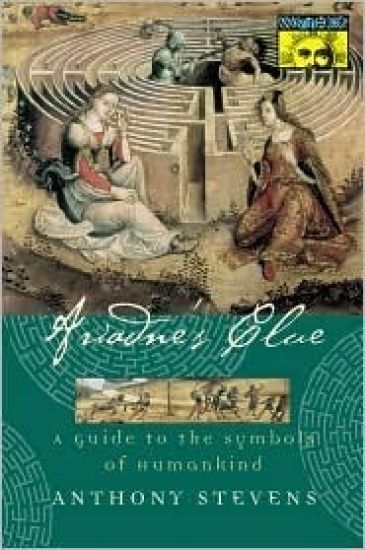
"Stevens has a unique capacity for relating myths and symbols to the way our psyches function today, thus bringing symbols alive rather than dismissing them as historical curiosities. He is also a stylish writer, and is able to link his conclusions from a variety of fields into a consistent, readable whole."--Anthony Storr, University of Oxford Symbolism is the most powerful and ancient means of communication available to humankind. For centuries people have expressed their preoccupations and concerns through symbolism in the form of myths, stories, religions, and dreams. The meaning of symbols has long been debated among philosophers, antiquarians, theologians, and, more recently, anthropologists and psychologists. In Ariadne's Clue, distinguished analyst and psychiatrist Anthony Stevens explores the nature of symbols and explains how and why we create the symbols we do. The book is divided into two parts: an interpretive section that concerns symbols in general and a "dictionary" that lists hundreds of symbols and explains their origins, their resemblances to other symbols, and the belief systems behind them. In the first section, Stevens takes the ideas of C. G. Jung a stage further, asserting not only that we possess an innate symbol-forming propensity that exists as a creative and integral part of our psychic make-up, but also that the human mind evolved this capacity as a result of selection pressures encountered by our species in the course of its evolutionary history. Stevens argues that symbol formation has an adaptive function: it promotes our grasp on reality and in dreams often corrects deficient modes of psychological functioning. In the second section, Stevens examines symbols under four headings: "The Physical Environment," "Culture and Psyche," "People, Animals, and Plants," and "The Body." Many of the symbols are illustrated in the book's rich variety of woodcuts. From the ancient symbol of the serpent to the archetypal masculine and feminine, from the earth to the stars, from the primordial landscape of the savannah to the mysterious depths of the sea, Stevens traces a host of common symbols back through time to reveal their psychodynamic functioning and looks at their deep-rooted effects on the lives of modern men, women, and children.
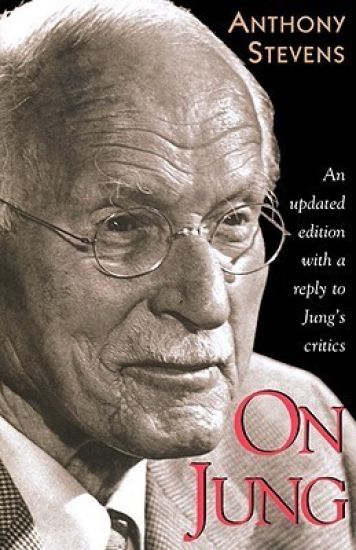
Here Anthony Stevens examines every stage of Jung's personal and professional development to throw light on his theories of the life cycle, dream symbolism, and the collective unconscious. Jung's life experience made him a profound, stimulating, and immensely influential writer on almost every aspect of human behavior; this lucid and penetrating study makes the ideal introduction to his life and ideas. This new edition contains a preface intended as a rebuttal to the recent attacks on Jung made by Noll and McLynn.
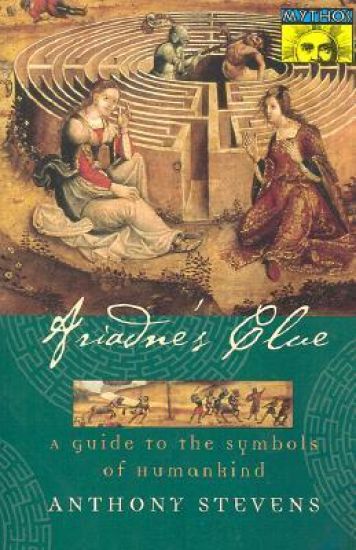
Ariadne's Clue: A Guide to the Symbols of Humankind
Anthony Stevens
PRINCETON UNIVERSITY PRESS
2001
nidottu
Symbolism is the most powerful and ancient means of communication available to humankind. For centuries people have expressed their preoccupations and concerns through symbolism in the form of myths, stories, religions, and dreams. The meaning of symbols has long been debated among philosophers, antiquarians, theologians, and, more recently, anthropologists and psychologists. In Ariadne's Clue, distinguished analyst and psychiatrist Anthony Stevens explores the nature of symbols and explains how and why we create the symbols we do. The book is divided into two parts: an interpretive section that concerns symbols in general and a dictionary that lists hundreds of symbols and explains their origins, their resemblances to other symbols, and the belief systems behind them. In the first section, Stevens takes the ideas of C. G. Jung a stage further, asserting not only that we possess an innate symbol-forming propensity that exists as a creative and integral part of our psychic make-up, but also that the human mind evolved this capacity as a result of selection pressures encountered by our species in the course of its evolutionary history. Stevens argues that symbol formation has an adaptive function: it promotes our grasp on reality and in dreams often corrects deficient modes of psychological functioning. In the second section, Stevens examines symbols under four headings: The Physical Environment, Culture and Psyche, People, Animals, and Plants, and The Body. Many of the symbols are illustrated in the book's rich variety of woodcuts. From the ancient symbol of the serpent to the archetypal masculine and feminine, from the earth to the stars, from the primordial landscape of the savannah to the mysterious depths of the sea, Stevens traces a host of common symbols back through time to reveal their psychodynamic functioning and looks at their deep-rooted effects on the lives of modern men, women, and children.

In 'The Roots of War and Terror', Anthony Stevens provides profound insights into the nature and origins of armed conflict. Combining the concepts of the archetype and the collective unconscious (Jungian) with crucial evidence from the behavioural and biological sciences, Stevens exposes war as an ancient propensity rooted in human psychology - particularly in the psychology and anatomy of the human male.Stevens explains what attracts men to the profession of arms and describes the age-old techniques, still used in military training camps, which are necessary to activate the warrior archetype in the masculine psyche. The author sheds light on how leaders persuade populations to go to war and lays bare the unconscious fantasies that could draw us all to final Armageddon.In later chapters in his book, Stevens discusses ways of inhibiting the archetypes of war (through educational policy and admission of women into the citadels of masculine power) of diverting them into less destructive channels.' The Roots of War and Terror' is an indispensable work for anyone wishing to understand the psychological basis of war or hoping to discover ways in which the unimaginable catastrophe of nuclear war could be avoided.'Denial and dissociation, repression and projection enable us to remain cheerfully unconscious. Disguised as defenders of our egos and protectors of our peace of mind, those discreet flunkies are really secret agents in the service of the archetypes of war. Unknown and unrecognised by our fellow citizens, they are the stooges of Armageddon.'

Commonly dismissed as mystical by scientists, archetypes were described by Jung as biological entities, which have evolved through natural selection, and which, if they exist at all, must be amenable to empirical study. Anthony Stevens has discovered the key to opening up this long-ignored scientific approach to the archetype.

Anthony Stevens has devoted a lifetime to modernizing our understanding of the archetypes within us, relating them to conceptual developments in a variety of scientific disciplines, such as the patterns of behaviour of behavioural ecology, the species-specific behavioural systems of Bowlby’s attachment theory, the deep structures of Chomskian linguistics, and the modules of evolutionary psychology, to name but a few. This selection of papers and chapters from the course of Stevens’ career, all lucidly written and argued, highlight episodes in the progress of his quest to place archetypal theory on a sound scientific foundation. As a whole, Living Archetypes examines how archetypes are activated in the life history of all of us, how archetypal imperatives may be fulfilled or thwarted by our living circumstances, how they manifest in our dreams, symbols, fantasies and symptoms, and how appreciating their dynamics can generate insights of enormous therapeutic power.Living Archetypes: The Selected Works of Anthony Stevens provides an invaluable resource for Jungian psychotherapists, psychologists, academics and students committed to extending the evolutionary approach to psychology and psychiatry and understanding the dynamic significance of archetypes.

Archetype: A Natural History of the Self, first published in 1982, was a ground-breaking book; the first to explore the connections between Jung's archetypes and evolutionary disciplines such as ethology and sociobiology, and an excellent introduction to the archetypes in theory and practical application as well.C.G. Jung's 'archetypes of the collective unconscious' have traditionally remained the property of analytical psychology, and have commonly been dismissed as 'mystical' by scientists. But Jung himself described them as biological entities, which, if they exist at all, must be amenable to empirical study. In the work of Bowlby and Lorenz, and in studies of the bilateral brain, Anthony Stevens has discovered the key to opening up this long-ignored scientific approach to the archetypes, originally envisaged by Jung. At last, in a creative leap made possible by the cross-fertilisation of several specialist disciplines, psychiatry can be integrated with psychology, with ethology and biology. The result is an immensely enriched science of human behaviour.In Archetype Revisited, Stevens considers the enormous cultural, social and intellectual changes that have taken place since the publication of the original edition, and includes:- An updated chapter on The Archetypal Masculine and Feminine, reflecting recent research findings and developments in feminist thinking;- Commentary on the intrusion of neo-Darwinian thinking into psychology and psychiatry;- Analysis of what has happened to the archetype in terms of our understanding of it and our responses to it.This Classic Edition of the book includes a new introduction by the author.
Archetype: A Natural History of the Self, first published in 1982, was a ground-breaking book; the first to explore the connections between Jung's archetypes and evolutionary disciplines such as ethology and sociobiology, and an excellent introduction to the archetypes in theory and practical application as well.C.G. Jung's 'archetypes of the collective unconscious' have traditionally remained the property of analytical psychology, and have commonly been dismissed as 'mystical' by scientists. But Jung himself described them as biological entities, which, if they exist at all, must be amenable to empirical study. In the work of Bowlby and Lorenz, and in studies of the bilateral brain, Anthony Stevens has discovered the key to opening up this long-ignored scientific approach to the archetypes, originally envisaged by Jung. At last, in a creative leap made possible by the cross-fertilisation of several specialist disciplines, psychiatry can be integrated with psychology, with ethology and biology. The result is an immensely enriched science of human behaviour.In Archetype Revisited, Stevens considers the enormous cultural, social and intellectual changes that have taken place since the publication of the original edition, and includes:- An updated chapter on The Archetypal Masculine and Feminine, reflecting recent research findings and developments in feminist thinking;- Commentary on the intrusion of neo-Darwinian thinking into psychology and psychiatry;- Analysis of what has happened to the archetype in terms of our understanding of it and our responses to it.This Classic Edition of the book includes a new introduction by the author.

This book presents papers from the course of Anthony Stevens' career, highlighting episodes in the progress of his quest to place archetypal theory on a sound scientific foundation. It is an invaluable resource for Jungian psychotherapists, psychologists, academics and students.
With the evolution of human consciousness, nature has finally become conscious of itself. It has taken eons of time, this lumbering progress through the minds of reptiles, mammals, and primates, and it is still working out its purpose in the archetypes of the collective unconscious encoded in the most ancient parts of the human brain. The recent evolutionary history of our species, which Jung personified as ""the two million-year-old human being in us all,"" is still active in our dreams, myths, psychiatric symptoms, traditional healing practices, and typical patterns of behavior. Through a wide-ranging review of developments in anthropology, ethology, sociobiology, neuroscience, psycholinguistics, and Jungian psychology, Anthony Stevens explores the nature of the two million-year-old self and examines ways in which the contemporary world both fulfills and frustrates its basic needs and intentions. Drawing on his experience as an analyst, Stevens evokes dreams and psychiatry to reveal a compelling and challenging view of the two million-year-old Self as embodying no less than the will of nature. By granting close attention to nature's mind, Stevens argues, we not only further personal wholeness but also help redress the gross imbalances of our culture, which are threatening the destruction of the earth. For the ecologically concerned, this book offers a dramatic new perspective on our future relations with our planet.

As organizations grapple with the complexities of governance, risk management, and compliance (GRC), AI emerges as a powerful ally, offering unprecedented efficiency, accuracy, and decision-making prowess.AI and the Future of GRC: A Guide for Cybersecurity Risk and Compliance Leaders serves as a comprehensive roadmap for embracing this transformative technology. Author Anthony Stevens, a seasoned expert in AI and GRC, draws upon his extensive experience to guide readers through the intricate web of opportunities and challenges that AI presents.Whether you're a seasoned risk and compliance professional or a forward-thinking leader seeking to stay ahead of the curve, AI and the Future of GRC is an indispensable guide. Unlock the power of AI, drive innovation, and fortify your organization's resilience in an ever-changing business environment.

Varje natt träder vi in i en mystisk värld, ett mörkt urtidsrike fyllt av önskningar, tvivel, fantasi och oro – vi drömmer. Drömmandet är oerhört betydelsefullt, såväl ur personligt som ur antropologiskt perspektiv, och kan vara en nyckel till förståelsen av oss själva, av samhället och av historien. I Privata myter guidar Anthony Stevens läsaren genom drömtolkningens labyrintiska mysterier, berättar om människans kunskap om drömmar i äldre tider – ända från stenåldern – och redovisar olika drömteorier i modern tid, framför allt hos Freud och Jung. Vi får också ta del av nutida drömvetenskap, där upptäckten av REM-sömnen, ny teknik inom hjärnforskningen och över ett århundrade av psykoanalytisk erfarenhet samverkar till att ge oss ökad kunskap om drömmandets och drömmarnas betydelse. Anthony Stevens tar bland annat upp drömmarnas kreativa aspekt, där "drömarbetet" jämförs med andra kreativa processer som språk, poesi, berättande, minne, lek och magi. Han beskriver hur drömmar används i analytisk terapi och hur man själv kan arbeta med sina drömmar. Stevens analyserar också en rad "klassiska" drömmar, bl.a. Descartes stora filosofiska dröm, Freuds berömda dröm om Irmas injektion och Hitlers dröm om att bli levande begravd. Dessutom får vi läsa om hur drömmarna har ändrat historiens förlopp och om deras rika bidrag till konst och vetenskap.