Kirjojen hintavertailu. Mukana 11 342 296 kirjaa ja 12 kauppaa.

Kirjahaku

Etsi kirjoja tekijän nimen, kirjan nimen tai ISBN:n perusteella.

12 kirjaa tekijältä Anthony Storr

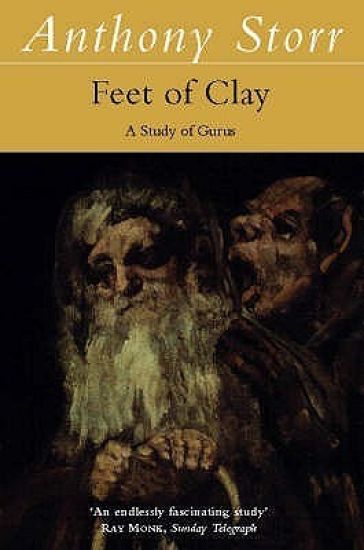
Feet of Clay

Feet of Clay

Anthony Storr

HARPERCOLLINS PUBLISHERS
1997
nidottu
There are many reports of strange cults which enthral their followers and cut themselves off from the world. Invariably led by gurus, or "spiritual leaders", the fruit of these cults are mass suicides in the South American jungle or the self-immolation of hundreds in besieged fortresses. This study provides an examination of these men and women and of those who follow them. It takes as example some of those considered to be modern gurus - James Jones, David Koresh, the Bhagwan Shree Rajneesh, Gurdjieff and others - and establishes what each of them has in common. It then examines what they share with other gurus whose teachings are accepted or at least respected - Jung, Freud, Ignatius Loyola, Jesus himself - and finds some startling continuities.
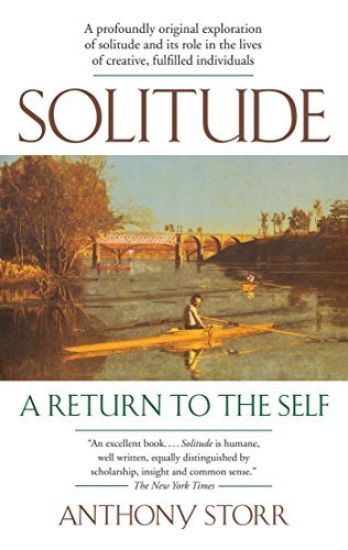
Solitude

Solitude

Anthony Storr

Harpercollins Publishers
1997
pokkari
This study challenges the widely-held view that success in personal relationships is the only key to happiness. In a series of biographical sketches, it demonstrates how many of the creative geniuses of our civilization have been solitary, by temperament or circumstance.
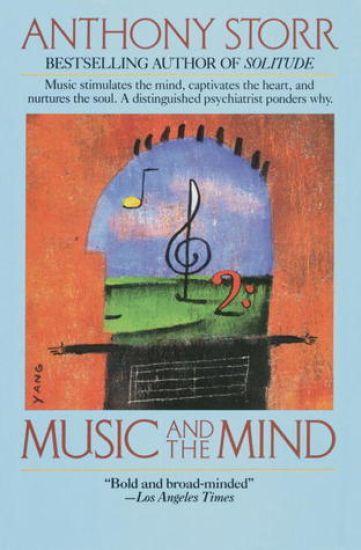
Music and the Mind

Music and the Mind

Anthony Storr

Harpercollins Publishers
1993
pokkari
Why does music have such an effect on our minds and bodies? It is the most mysterious and most intangible of all forms of art. Anthony Storr believes that music today is a significant experience for a greater number of people than ever before, and in this book he explores why this should be so.
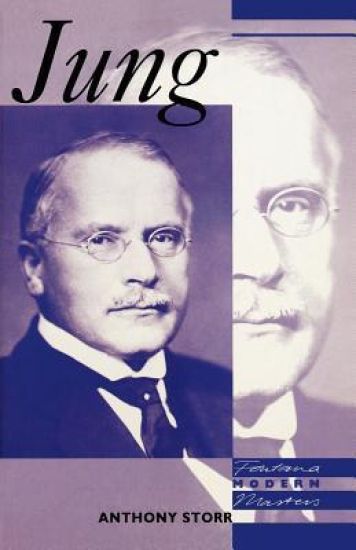
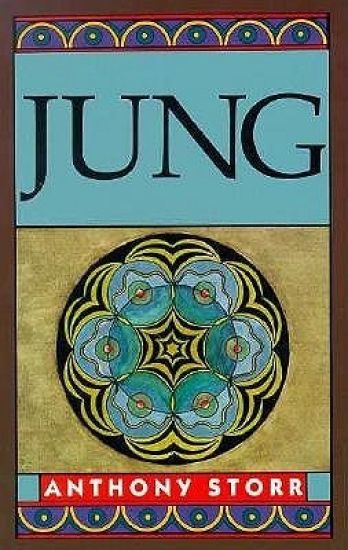
Jung

Jung

Anthony Storr

HARPERCOLLINS PUBLISHERS
2008
pokkari
'Every page is clear and interesting, taking one closer to understanding why Jung's thought was so profound. Examples, models and case histories are provided.'Economist
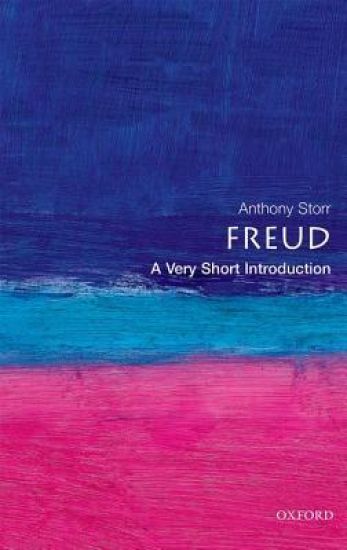
Freud

Freud

Anthony Storr

Oxford University Press
2001
nidottu
Sigmund Freud (1856-1939) revolutionized the way in which we think about ourselves. From its beginnings as a theory of neurosis, Freud developed psycho-analysis into a general psychology which became widely accepted as the predominant mode of discussing personality and interpersonal relationships. ABOUT THE SERIES: The Very Short Introductions series from Oxford University Press contains hundreds of titles in almost every subject area. These pocket-sized books are the perfect way to get ahead in a new subject quickly. Our expert authors combine facts, analysis, perspective, new ideas, and enthusiasm to make interesting and challenging topics highly readable.
Music and the Mind

Music and the Mind

Anthony Storr

Ballantine Books Inc.
1994
nidottu
"Writing with grace and clarity...he touches on everything from the evolution of the Western tonal system, to the Freudian theory of music as infantile escapism, to the differing roles o the right and left brain in perceiving music." WALL STREET JOURNALDrawing on his own life long passion for music and synthesizing the theories of Plato, Schopenhauer, Stravinsky, Nietzsche, Bartok, and others, distinguished author and psychologist Anthony Storr illuminates music's deep beauty and timeless truth and why and how music is one of the fundamental activities of mankind.
Human Destructiveness (Psychology Revivals)
First published in 1972, this fully revised edition was originally published in 1991 and provides a classic study of humanity’s capacity for evil.The human species is capable of the most appalling cruelty. Why is this and where does our capacity for such destructiveness come from? In Human Destructiveness, Anthony Storr explores these important questions.In seeking to shed light on such brutal phenomena as genocide, racial conflict and other large-scale manifestations of violence, he cautions against easy extrapolations from individual behaviour to the behaviour of groups and nations, though he offers illuminating discussions of aggressive personality disorders, sadomasochism and the mechanisms of paranoid delusion. Most provocatively, he locates the propensity for mass outbreaks of cruelty in the imagination: ‘to be able to see fellow human beings as wholly evil requires an imaginative capacity not found in other species.’Combining wide scholarship, humane intelligence and a graceful style, Human Destructiveness provides an illuminating study of some of the darkest corners of the human psyche.
Human Destructiveness (Psychology Revivals)
Originally published in 1972, this fully revised edition was published in 1991 and provides a classic study of humanity’s capacity for evil.The human species is capable of the most appalling cruelty. Why is this and where does our capacity for such destructiveness come from? In Human Destructiveness, Anthony Storr explores these important questions.In seeking to shed light on such brutal phenomena as genocide, racial conflict and other large-scale manifestations of violence, he cautions against easy extrapolations from individual behaviour to the behaviour of groups and nations, though he offers illuminating discussions of aggressive personality disorders, sadomasochism and the mechanisms of paranoid delusion. Most provocatively, he locates the propensity for mass outbreaks of cruelty in the imagination: ‘to be able to see fellow human beings as wholly evil requires an imaginative capacity not found in other species.’Combining wide scholarship, humane intelligence and a graceful style, Human Destructiveness provides an illuminating study of some of the darkest corners of the human psyche.
Jung

Jung

Anthony Storr

ROUTLEDGE
1991
nidottu
Carl Gustav Jung first wanted to be an archaeologist. When family finances made this impossible, he pursued a medical degree from Basel University. Considering a specialization in surgery, he stumbled upon a psychiatry book--an event that changed the course of his life and ultimately the whole field of depth psychology. Anthony Storr looks at these and other telling facts about Jung's life in the opening chapter of this highly acclaimed book. Though fundamentally concerned with Jung's ideas, Storr's approach shows his conviction that in the realm of dynamic psychology it is impossible to separate ideas from the personality of the man in whom they occurred. His clear and concise review of the whole corpus of Jung's writings always keeps in sight the man behind the work, as each subsequent chapter concentrates on a particular Jungian concept, guiding the reader through the life and ideas of this great thinker. Storr investigates the major principles of analytical psychology, presenting such central concepts as the collective unconscious, the archetypes, the shadow, and the persona. He looks at Jung's religious turmoil and his inner need to reconcile the opposition between objectivity and subjectivity. He shows how his ideas follow a progression from the intellectual agitation that characterized the young psychologist to the advanced theories of balance and integration found in the mature man. Storr concludes his book with a look at psychotherapy, describing advances as well as problems involved in a practical consideration of Jungian techniques. Perhaps the most remarkable element of Jung is its illumination of complex concepts--concepts that had they been easily accessible in the original would have caused a wider appreciation of Jung's work. The clarity and order that Storr brings to light in Jung's psychology will come as a welcome surprise to those who have found him an obscure if provocative thinker. Storr's sensitive analysis makes the book compelling reading for everyone interested in Jung, and his clear exposition provides a superior introduction for newcomers, allowing the genius of Jung to appear for the widest possible audience. First published in 1973, this classic study is now available again. The Routledge edition includes a brief preface in which the author describes his previous work on Jung as well as his meeting with the great Swiss thinker.
Solitude

Solitude

Anthony Storr

Simon Schuster
2005
nidottu
Originally published in 1988, Anthony Storr's enlightening meditation on the creative individual's need for solitude has become a classic."Solitude" was seminal in challenging the established belief that "interpersonal relationships of an intimate kind are the chief, if not the only, source of human happiness." Indeed, most self-help literature still places relationships at the center of human existence. Lucid and lyrical, Storr's book cites numerous examples of brilliant scholars and artists -- from Beethoven and Kant to Anne Sexton and Beatrix Potter -- to demonstrate that solitude ranks alongside relationships in its impact on an individual's well-being and productivity, as well as on society's progress and health. But solitary activity is essential not only for geniuses, says Storr; the average person, too, is enriched by spending time alone. For fifteen years, readers have found inspiration and renewal in Storr's erudite, compassionate vision of human experience.