Kirjojen hintavertailu. Mukana 11 699 587 kirjaa ja 12 kauppaa.

Kirjahaku

Etsi kirjoja tekijän nimen, kirjan nimen tai ISBN:n perusteella.

8 kirjaa tekijältä Anthony Uhlmann

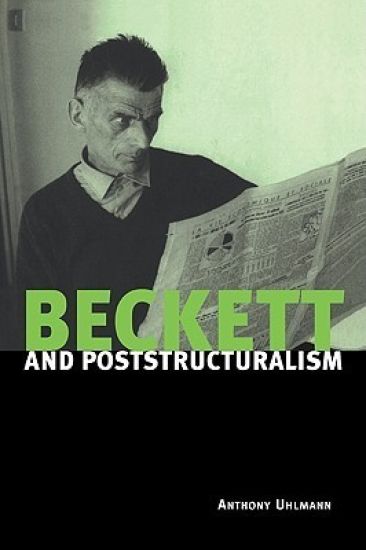
Beckett and Poststructuralism

Beckett and Poststructuralism

Anthony Uhlmann

Cambridge University Press
2008
pokkari
In Beckett and Poststructuralism, Anthony Uhlmann offers a reading of Beckett in relation to French philosophy, particularly the work of Foucault, Deleuze and Guattari, Levinas, and Derrida. Uhlmann offers a work of literary criticism that is also a piece of intellectual history, emphasizing how Beckett develops a kind of critical thinking which differs from yet is just as powerful as that of philosophers who, along with Beckett, found themselves faced with sets of ethical problems which were thrown into sharp relief in post-war France. Uhlmann explores the links between ethics and physical existence in Beckett, Foucault and Deleuze and Guattari, and between ethics and language in Beckett, Derrida and Levinas, showing how post-war French philosophy was powerfully affected by Beckett's work. Literature is not reduced to philosophy or vice versa; rather Uhlmann considers how they interrelate and overlap, informing and deforming one another, and how both encounter history.
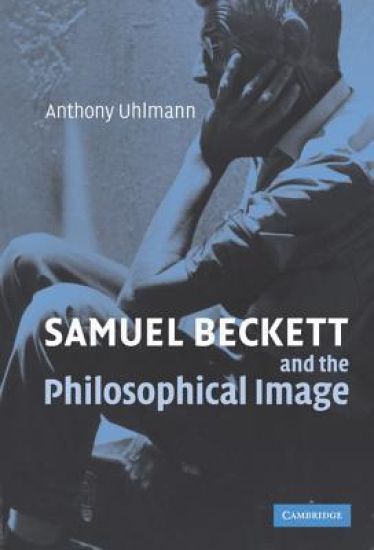
Samuel Beckett and the Philosophical Image

Samuel Beckett and the Philosophical Image

Anthony Uhlmann

Cambridge University Press
2009
pokkari
Beckett often made use of images from the visual arts and readapted them, staging them in his plays, or using them in his fiction. Anthony Uhlmann sets out to explain how an image differs from other terms, like 'metaphor' or 'representation', and, in the process, to analyse Beckett's use of images borrowed from philosophy and aesthetics. This study, first published in 2006, carefully examines Beckett's thoughts on the image in his literary works and his extensive notes to the philosopher Arnold Geulincx. Uhlmann considers how images might allow one kind of interaction between philosophy and literature, and how Beckett makes use of images which are borrowed from, or drawn into dialogue with, philosophical images from Geulincx, Berkeley, Bergson, and the ancient Stoics. Uhlmann's reading of Beckett's aesthetic and philosophical interests provides a revolutionary reading of the importance of the image in his work.
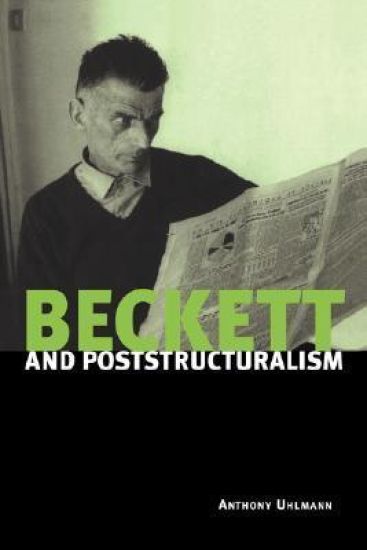
Beckett and Poststructuralism

Beckett and Poststructuralism

Anthony Uhlmann

Cambridge University Press
1999
sidottu
In Beckett and Poststructuralism, Anthony Uhlmann offers a reading of Beckett in relation to French philosophy, particularly the work of Foucault, Deleuze and Guattari, Levinas, and Derrida. Uhlmann offers a work of literary criticism that is also a piece of intellectual history, emphasizing how Beckett develops a kind of critical thinking which differs from yet is just as powerful as that of philosophers who, along with Beckett, found themselves faced with sets of ethical problems which were thrown into sharp relief in post-war France. Uhlmann explores the links between ethics and physical existence in Beckett, Foucault and Deleuze and Guattari, and between ethics and language in Beckett, Derrida and Levinas, showing how post-war French philosophy was powerfully affected by Beckett's work. Literature is not reduced to philosophy or vice versa; rather Uhlmann considers how they interrelate and overlap, informing and deforming one another, and how both encounter history.
Samuel Beckett and the Philosophical Image

Samuel Beckett and the Philosophical Image

Anthony Uhlmann

Cambridge University Press
2006
sidottu
Beckett often made use of images from the visual arts and readapted them, staging them in his plays, or using them in his fiction. Anthony Uhlmann sets out to explain how an image differs from other terms, like 'metaphor' or 'representation', and, in the process, to analyse Beckett's use of images borrowed from philosophy and aesthetics. This study, first published in 2006, carefully examines Beckett's thoughts on the image in his literary works and his extensive notes to the philosopher Arnold Geulincx. Uhlmann considers how images might allow one kind of interaction between philosophy and literature, and how Beckett makes use of images which are borrowed from, or drawn into dialogue with, philosophical images from Geulincx, Berkeley, Bergson, and the ancient Stoics. Uhlmann's reading of Beckett's aesthetic and philosophical interests provides a revolutionary reading of the importance of the image in his work.
Thinking in Literature: Joyce, Woolf, Nabokov

Thinking in Literature: Joyce, Woolf, Nabokov

Anthony Uhlmann

Continuum Publishing Corporation
2011
nidottu
Thinking in Literature sets out to examine how the Modernist novel might be understood to be a machine for thinking, and further how it might offer means of coming to terms with what it means to think. It begins with a theoretical analysis of the concept of thinking in literature using Gilles Deleuze as a point of departure and returning directly to the work of the two philosophers who were most important to Deleuze's understanding of thinking in literature: Spinoza and Leibniz. Three elements are identified as crucial to aesthetic expression: relation; sensation; and composition. Yet in order to build a fuller understanding of these processes it is necessary to move from theory to specific readings of artistic practice. Uhlmann examines the aesthetic practice of three major Modernist writers: James Joyce, Virginia Woolf, and the young Vladimir Nabokov. Each can be understood as working with relation, sensation and composition, yet each emphasize the interrelations between them in differing ways in expressing the potentials for thinking in literature.
Thinking in Literature: Joyce, Woolf, Nabokov

Thinking in Literature: Joyce, Woolf, Nabokov

Anthony Uhlmann

Continuum Publishing Corporation
2011
sidottu
Thinking in Literature sets out to examine how the Modernist novel might be understood to be a machine for thinking, and further how it might offer means of coming to terms with what it means to think. It begins with a theoretical analysis of the concept of thinking in literature using Gilles Deleuze as a point of departure and returning directly to the work of the two philosophers who were most important to Deleuze's understanding of thinking in literature: Spinoza and Leibniz. Three elements are identified as crucial to aesthetic expression: relation; sensation; and composition. Yet in order to build a fuller understanding of these processes it is necessary to move from theory to specific readings of artistic practice. Uhlmann examines the aesthetic practice of three major Modernist writers: James Joyce, Virginia Woolf, and the young Vladimir Nabokov. Each can be understood as working with relation, sensation and composition, yet each emphasize the interrelations between them in differing ways in expressing the potentials for thinking in literature.
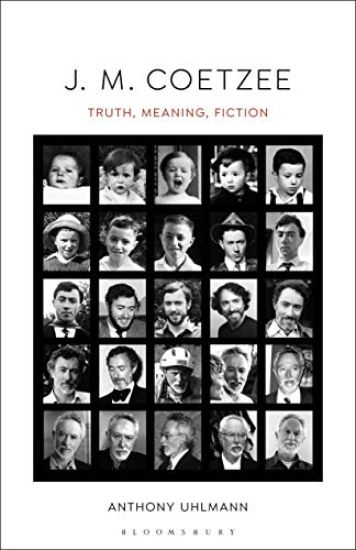
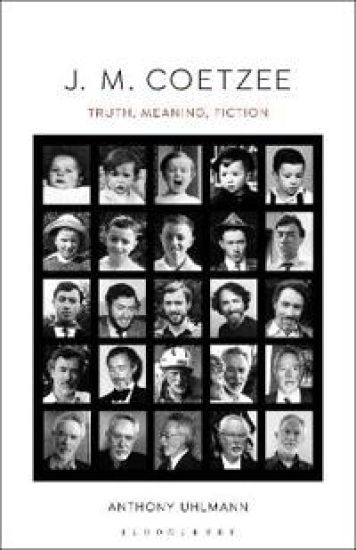
J. M. Coetzee

J. M. Coetzee

Anthony Uhlmann

Bloomsbury Academic USA
2020
nidottu
J. M. Coetzee: Truth, Meaning, Fiction illuminates the intellectual and philosophical interests that drive Coetzee’s writing. In doing so, it makes the case for Coetzee as an important and original thinker in his own right. Whilst looking at Coetzee’s writing career, from his dissertation through to The Schooldays of Jesus (2016), and interpreting running themes and scenarios, style and evolving attitudes to literary form, Anthony Uhlmann also offers revealing glimpses, informed by archival research, of Coetzee’s writing process. Among the main themes that Uhlmann sees in Coetzee’s writing, and which remains highly relevant today, is the awareness that there is truth in fiction, or that fiction can provide valuable insights into real world problems, and that there are also fictions of the truth: that we are surrounded, in our everyday lives, by stories we wish to believe are true. J. M. Coetzee: Truth, Meaning, Fiction offers a revealing new account of one of arguably our most important contemporary writers.
J. M. Coetzee

J. M. Coetzee

Anthony Uhlmann

Bloomsbury Academic USA
2020
sidottu
J. M. Coetzee: Truth, Meaning, Fiction illuminates the intellectual and philosophical interests that drive Coetzee’s writing. In doing so, it makes the case for Coetzee as an important and original thinker in his own right. Whilst looking at Coetzee’s writing career, from his dissertation through to The Schooldays of Jesus (2016), and interpreting running themes and scenarios, style and evolving attitudes to literary form, Anthony Uhlmann also offers revealing glimpses, informed by archival research, of Coetzee’s writing process. Among the main themes that Uhlmann sees in Coetzee’s writing, and which remains highly relevant today, is the awareness that there is truth in fiction, or that fiction can provide valuable insights into real world problems, and that there are also fictions of the truth: that we are surrounded, in our everyday lives, by stories we wish to believe are true. J. M. Coetzee: Truth, Meaning, Fiction offers a revealing new account of one of arguably our most important contemporary writers.