Kirjojen hintavertailu. Mukana 11 717 486 kirjaa ja 12 kauppaa.

Kirjahaku

Etsi kirjoja tekijän nimen, kirjan nimen tai ISBN:n perusteella.

48 kirjaa tekijältä Antonio Negri

Negri on Negri

Negri on Negri

Antonio Negri

Routledge
2003
sidottu
Political philosopher, convicted activist, leftist intellectual and coauthor of the bestselling Empire, Antonio Negri is one of the most controversial thinkers at work today. In this booklength conversation with Anne Dufourmentelle, Negri offers thoughtful responses to twenty-six terms, alphabetically arranged, that have had special significance for his life and work. Negri speaks openly here of his involvement with political movements, his exile, his return to Italy and years there in prison, and his life since. But beyond the biographical there is much here to explain Negri's ideas on globalization, the future of social change, and the history of political thought. The book's subjects - fascism, Heidegger, the Red Brigades, Wittgenstein, empire, Kant, the unconscious, and many others - are often thresholds from which Negri shares his views on still larger topics. Negri on Negri provides a fascinating glimpse into his mind and life. Perhaps nowhere else can one engage so readily the ideas of this major contemporary thinker.
Negri on Negri

Negri on Negri

Antonio Negri

Routledge
2003
nidottu
Political philosopher, convicted activist, leftist intellectual and coauthor of the bestselling Empire, Antonio Negri is one of the most controversial thinkers at work today. In this booklength conversation with Anne Dufourmentelle, Negri offers thoughtful responses to twenty-six terms, alphabetically arranged, that have had special significance for his life and work. Negri speaks openly here of his involvement with political movements, his exile, his return to Italy and years there in prison, and his life since. But beyond the biographical there is much here to explain Negri's ideas on globalization, the future of social change, and the history of political thought. The book's subjects - fascism, Heidegger, the Red Brigades, Wittgenstein, empire, Kant, the unconscious, and many others - are often thresholds from which Negri shares his views on still larger topics. Negri on Negri provides a fascinating glimpse into his mind and life. Perhaps nowhere else can one engage so readily the ideas of this major contemporary thinker.
Factory of Strategy

Factory of Strategy

Antonio Negri

Columbia University Press
2014
sidottu
Factory of Strategy is the last of Antonio Negri's major political works to be translated into English. Rigorous and accessible, it is both a systematic inquiry into the development of Lenin's thought and an encapsulation of a critical shift in Negri's theoretical trajectory. Lenin is the only prominent politician of the modern era to seriously question the "withering away" and "extinction" of the state, and like Marx, he recognized the link between capitalism and modern sovereignty and the need to destroy capitalism and reconfigure the state. Negri refrains from portraying Lenin as a ferocious dictator enforcing the proletariat's reappropriation of wealth, nor does he depict him as a mere military tool of a vanguard opposed to the Ancien Regime. Negri instead champions Leninism's ability to adapt to different working-class configurations in Russia, China, Latin America, and elsewhere. He argues that Lenin developed a new political figuration in and beyond modernity and an effective organization capable of absorbing different historical conditions. He ultimately urges readers to recognize the universal application of Leninism today and its potential to institutionally-not anarchically-dismantle centralized power.
Factory of Strategy

Factory of Strategy

Antonio Negri

Columbia University Press
2015
pokkari
Factory of Strategy is the last of Antonio Negri's major political works to be translated into English. Rigorous and accessible, it is both a systematic inquiry into the development of Lenin's thought and an encapsulation of a critical shift in Negri's theoretical trajectory. Lenin is the only prominent politician of the modern era to seriously question the "withering away" and "extinction" of the state, and like Marx, he recognized the link between capitalism and modern sovereignty and the need to destroy capitalism and reconfigure the state. Negri refrains from portraying Lenin as a ferocious dictator enforcing the proletariat's reappropriation of wealth, nor does he depict him as a mere military tool of a vanguard opposed to the Ancien Regime. Negri instead champions Leninism's ability to adapt to different working-class configurations in Russia, China, Latin America, and elsewhere. He argues that Lenin developed a new political figuration in and beyond modernity and an effective organization capable of absorbing different historical conditions. He ultimately urges readers to recognize the universal application of Leninism today and its potential to institutionally-not anarchically-dismantle centralized power.
Marx Beyond Marx

Marx Beyond Marx

Antonio Negri

Pluto Press
1992
sidottu
In 1978, at the invitation of Louis Althusser, Negri presented a series of seminars on Marx's Grundrisse in Paris. This is the book of those seminars. Negri, a leading figure of the Italian Autonomia, was in France as a consequence of charges relating to revolutionary action brought against him by the Italian state...Marx Beyond Marx aims towards a reconstruction of Marxist theory, a reconstruction that goes beyond Marx by going back to Marx, an angry Marxism summoned by the real possibility of communism...In setting the agenda for such reconstruction, and in clarifying its priorities, Marx Beyond Marx is a pathbreaking and indispensible work.
Marx Beyond Marx

Marx Beyond Marx

Antonio Negri

Pluto Press
1992
pokkari
A reconstruction of Marxist theory that goes beyond Marx by going back to Marx, an angry Marxism summoned by the real possibility of communism. In setting the agenda for such a reconstruction, and in clarifying its priorities.
The Politics of Subversion

The Politics of Subversion

Antonio Negri

Polity Press
2005
nidottu
In this important book, Antonio Negri develops the key ideas that were to form the basis for the highly influential analyses of new forms of power and social struggle presented in Empire and Multitude. He shows how new technology and the break-up of the traditional factory have created new social subjects whose value is no longer tied to their skill. The spread of communication networks and the globalization of production mean that capitalism has become totalized – but not, Negri stresses, monolithic. On the contrary, the possibilities for subversion have correspondingly increased. Going beyond classical Marxism, he shows how old solidarities must be reformulated and new alliances created. The struggles which marked the political end of the twentieth century are now being repeated in a new historical conjuncture, giving rise to new forms of transnational solidarity that can challenge dominant global powers. This new paperback edition, which includes a new Preface by the author, is an excellent introduction to the work of one of the most influential political thinkers writing today and will be essential reading for anyone who wishes to understand the new forms of conflict and struggle that will shape the world in the twenty-first century.
Reflections on Empire

Reflections on Empire

Antonio Negri

Polity Press
2008
nidottu
This new book from Antonio Negri, one of the most influential political thinkers writing today, provides a concise and accessible introduction to the key ideas of his recent work. Giving the reader a sense of the wider context in which Negri has developed the ideas that have become so central to current debates, the book is made up of five lectures which address a series of topics that are dealt with in his world-famous books empire, globalization, multitude, sovereignty, democracy. Reflections on Empire will appeal to anyone interested in current debates about the ways in which the world is changing today, to the many people who are followers of Negri's work and to students and scholars in sociology, politics and cultural studies.
Empire and Beyond

Empire and Beyond

Antonio Negri

Polity Press
2008
nidottu
Today, Empire no longer has an outside: it no longer tolerates realities external to itself. Hence every war cannot but be a civil war, an internal battle, a domestic strife. But if the enemy is always within, militarization is part and parcel of normalization and every war necessarily appears as a policing operation. And yet has the sun really set on the old materialist dream of transforming social conflict into the beginnings of liberation? In the cracks of Empire one can discern an emergent capacity to remould the world. The anti-Empire is represented by the multitude, the collection of impassioned and desiring individuals whose potential for action offers the best hope for a better world. In this book Antonio Negri explains the key concepts and methods which he and Michael Hardt have used to analyse Empire and the new forms of power and counter-power that are shaping and reshaping our world today. Through five introductory lectures and several supporting texts Negri constructs a democratic discourse on globalization, renews the premises of a materialist analysis of social and political life and offers some glimpses of the future.
Diary of an Escape

Diary of an Escape

Antonio Negri

Polity Press
2010
sidottu
n Many people across the world know Antonio Negri as an internationally renowned political thinker whose book, Empire, co-authored with Michael Hardt, is an international bestseller. Much less well known is the fact that, up until 1979, Negri was a university professor teaching in Paris and Padova. On April 7th, 1979 he was arrested, charged with the murder of Italian politician Aldo Moro, accused of 17 other murders, of being the head of the Red Brigades and of fomenting insurrection against the state. He has since been absolved of all these accusations, but thanks to the emergency laws in Italy at the time, he was sentenced to 30 years in prison. Then, in July 1983, he was elected as a member of parliament, which meant that he was released from prison after four and a half years of preventive detention. After months of debate, the Lower House decided to strip him of his parliamentary immunity Ð by 300 votes in favour and 293 against. At that point he left Italy for exile in France where he remained until 1997 and continued to maintain his innocence of all the crimes of which he was accused. This book is Negri's diary in which he tells of his imprisonment, trial, the elections, and his escape to and exile in France. Both personal and political, it recounts a little known aspect of Negri's life and will be of great interest to anyone concerned with the work of this enormously influential political thinker.
Diary of an Escape

Diary of an Escape

Antonio Negri

Polity Press
2010
nidottu
n Many people across the world know Antonio Negri as an internationally renowned political thinker whose book, Empire, co-authored with Michael Hardt, is an international bestseller. Much less well known is the fact that, up until 1979, Negri was a university professor teaching in Paris and Padova. On April 7th, 1979 he was arrested, charged with the murder of Italian politician Aldo Moro, accused of 17 other murders, of being the head of the Red Brigades and of fomenting insurrection against the state. He has since been absolved of all these accusations, but thanks to the emergency laws in Italy at the time, he was sentenced to 30 years in prison. Then, in July 1983, he was elected as a member of parliament, which meant that he was released from prison after four and a half years of preventive detention. After months of debate, the Lower House decided to strip him of his parliamentary immunity Ð by 300 votes in favour and 293 against. At that point he left Italy for exile in France where he remained until 1997 and continued to maintain his innocence of all the crimes of which he was accused. This book is Negri's diary in which he tells of his imprisonment, trial, the elections, and his escape to and exile in France. Both personal and political, it recounts a little known aspect of Negri's life and will be of great interest to anyone concerned with the work of this enormously influential political thinker.
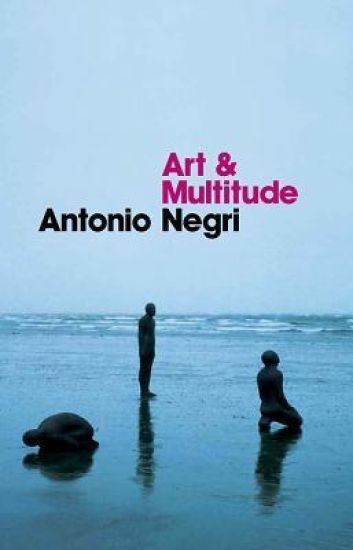
Art and Multitude

Art and Multitude

Antonio Negri

Polity Press
2011
sidottu
Nine letters on art, written to friends from exile in France in the 1980s. Starting from earlier materialist approaches to art, Negri relates artistic production to the structures of social production characteristic of each historical era. This enables him to define the nature of both material and artistic production in the era of post-modernity and post-Fordism - the era Negri characterizes as that of immaterial labour. Negri then seeks to define artistic beauty in this new era, and this he does in terms of concepts that have become fundamental to his thinking - singularity, multitude, abstraction, collective work, event, the biopolitical, the common. Art is living labour, and therefore invention of singularity, of singular figures and objects. But this expressive act only achieves beauty when the signs and language through which it expresses itself turn themselves into community, when they are contained within a common project. The beautiful is not the act of imagining, but an imagination that has become action. Art, in this sense, is multitude.
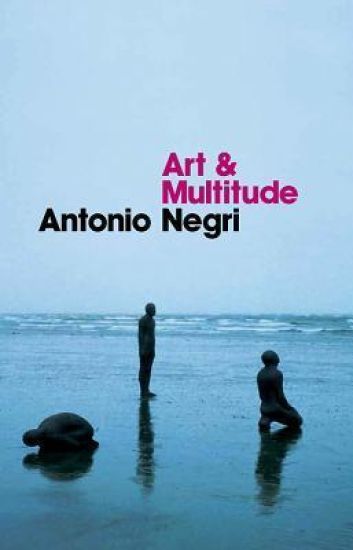
Art and Multitude

Art and Multitude

Antonio Negri

Polity Press
2011
nidottu
Nine letters on art, written to friends from exile in France in the 1980s. Starting from earlier materialist approaches to art, Negri relates artistic production to the structures of social production characteristic of each historical era. This enables him to define the nature of both material and artistic production in the era of post-modernity and post-Fordism - the era Negri characterizes as that of immaterial labour. Negri then seeks to define artistic beauty in this new era, and this he does in terms of concepts that have become fundamental to his thinking - singularity, multitude, abstraction, collective work, event, the biopolitical, the common. Art is living labour, and therefore invention of singularity, of singular figures and objects. But this expressive act only achieves beauty when the signs and language through which it expresses itself turn themselves into community, when they are contained within a common project. The beautiful is not the act of imagining, but an imagination that has become action. Art, in this sense, is multitude.
Pipeline

Pipeline

Antonio Negri

Polity Press
2015
sidottu
Four men in a cell in Rebibbia prison, Rome, awaiting trial on serious charges of subversion. One of them, the political thinker Antonio Negri, spends his days writing. Among his writings are twenty letters addressed to a young friend in France letters in which Negri reflects on his own personal development as a philosopher, theorist and political activist and analyses the events, activities and movements in which he has been involved. The letters recount an existential journey that links a rigorous philosophical education with a powerful political passion, set against the historical backdrop of postwar Italy. Crucially, Negri recalls the pivotal moment in 1978 when the former prime minister of Italy, Aldo Moro, was kidnapped and killed by the Red Brigades, and how the institutions then pinned that killing onto him and his associates. Published here for the first time, these letters offer a unique and invaluable insight into the factors that shaped the thinking of one of the most influential political theorists of our time and they document Negri’s role in the development of political movements like Autonomia. They are a vivid testimony to one man’s journey through the political upheavals and intellectual traditions of the late 20th century, in the course of which he produced a body of work that has had, and continues to have, a profound impact on radical thought and politics around the world.
Pipeline

Pipeline

Antonio Negri

Polity Press
2015
nidottu
Four men in a cell in Rebibbia prison, Rome, awaiting trial on serious charges of subversion. One of them, the political thinker Antonio Negri, spends his days writing. Among his writings are twenty letters addressed to a young friend in France letters in which Negri reflects on his own personal development as a philosopher, theorist and political activist and analyses the events, activities and movements in which he has been involved. The letters recount an existential journey that links a rigorous philosophical education with a powerful political passion, set against the historical backdrop of postwar Italy. Crucially, Negri recalls the pivotal moment in 1978 when the former prime minister of Italy, Aldo Moro, was kidnapped and killed by the Red Brigades, and how the institutions then pinned that killing onto him and his associates. Published here for the first time, these letters offer a unique and invaluable insight into the factors that shaped the thinking of one of the most influential political theorists of our time and they document Negri’s role in the development of political movements like Autonomia. They are a vivid testimony to one man’s journey through the political upheavals and intellectual traditions of the late 20th century, in the course of which he produced a body of work that has had, and continues to have, a profound impact on radical thought and politics around the world.
Insurgencies

Insurgencies

Antonio Negri

University of Minnesota Press
2009
nidottu
New EditionIn the ten years since the initial publication of Insurgencies, Antonio Negri's reputation as one of the world's foremost political philosophers has grown dramatically. An invigorating appraisal of revolutionary thought, Insurgencies is both the precursor to and the historical basis for Antonio Negri and Michael Hardt's masterwork, Empire.At the center of this book is the conflict between "constituent power," the democratic force of revolutionary innovation, and "constituted power," the fixed power of formal constitutions and central authority. This conflict, Negri argues, defines the drama of modern rebellions. Now with a foreword by Michael Hardt, Insurgencies leads to a new notion of how power and action must be understood if we are to achieve a democratic future.
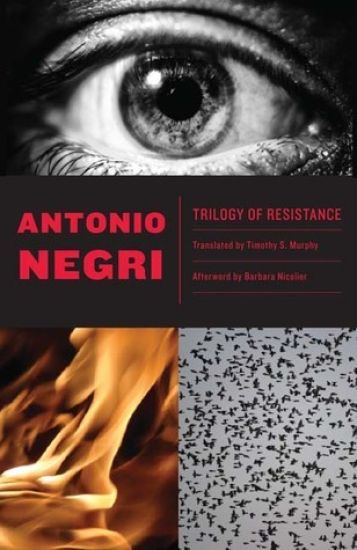
Trilogy of Resistance

Trilogy of Resistance

Antonio Negri

University of Minnesota Press
2011
nidottu
With Trilogy of Resistance, the political philosopher Antonio Negri extends his intervention in contemporary politics and culture into a new medium: drama. The three plays collected for the first time in this volume dramatize the central concepts of the innovative and influential thought he has articulated in his best-selling books Empire and Multitude, coauthored with Michael Hardt. In the tradition of Bertolt Brecht and Heiner Müller, Negri’s political dramas are designed to provoke debate around the fundamental questions they raise about resistance, violence, and tyranny. In Swarm, the protagonist searches for an effective mode of activism; with the help of a Greek-style chorus, she tries on different roles, from the suicide bomber and party apparatchik to the multitude. The Bent Man, set in fascist Italy, focuses on a woodcutter who resists fascism by bending himself in two and using his own now-twisted body as a weapon against war. In Cithaeron, perhaps the most audacious of the three plays, Negri reworks Euripides’s Bacchae to explore the circumstances that would compel a diverse and creative community to withdraw from both the despotic government that constrains it and the traditional family relationships that reinforce that despotism.First published in France in 2009 and featuring an introduction by Negri, Trilogy of Resistance provides a direct and passionate distillation of Negri’s concepts and offers insights into one of the most important projects in political philosophy currently under way, as well as a timely reminder of the power of theater to effectively dramatize complex and challenging ideas.
The Labor of Job

The Labor of Job

Antonio Negri

Duke University Press
2009
sidottu
In The Labor of Job, the renowned Marxist political philosopher Antonio Negri develops an unorthodox interpretation of the Old Testament book of Job, a canonical text of Judeo-Christian thought. In the biblical narrative, the pious Job is made to suffer for no apparent reason. The story revolves around his quest to understand why he must bear, and why God would allow, such misery. Conventional readings explain the tale as an affirmation of divine transcendence. When God finally speaks to Job, it is to assert his sovereignty and establish that it is not Job’s place to question what God allows. In Negri’s materialist reading, Job does not recognize God’s transcendence. He denies it, and in so doing becomes a co-creator of himself and the world.The Labor of Job was first published in Italy in 1990. Negri began writing it in the early 1980s, while he was a political prisoner in Italy, and it was the first book he completed during his exile in France (1983–97). As he writes in the preface, understanding suffering was for him in the early 1980s “an essential element of resistance. . . . It was the problem of liberation, in prison and in exile, from within the absoluteness of Power.” Negri presents a Marxist interpretation of Job’s story. He describes it as a parable of human labor, one that illustrates the impossibility of systems of measure, whether of divine justice (in Job’s case) or the value of labor (in the case of late-twentieth-century Marxism). In the foreword, Michael Hardt elaborates on this interpretation. In his commentary, Roland Boer considers Negri’s reading of the book of Job in relation to the Bible and biblical exegesis. The Labor of Job provides an intriguing and accessible entry into the thought of one of today’s most important political philosophers.
The Labor of Job

The Labor of Job

Antonio Negri

Duke University Press
2010
pokkari
In The Labor of Job, the renowned Marxist political philosopher Antonio Negri develops an unorthodox interpretation of the Old Testament book of Job, a canonical text of Judeo-Christian thought. In the biblical narrative, the pious Job is made to suffer for no apparent reason. The story revolves around his quest to understand why he must bear, and why God would allow, such misery. Conventional readings explain the tale as an affirmation of divine transcendence. When God finally speaks to Job, it is to assert his sovereignty and establish that it is not Job’s place to question what God allows. In Negri’s materialist reading, Job does not recognize God’s transcendence. He denies it, and in so doing becomes a co-creator of himself and the world.The Labor of Job was first published in Italy in 1990. Negri began writing it in the early 1980s, while he was a political prisoner in Italy, and it was the first book he completed during his exile in France (1983–97). As he writes in the preface, understanding suffering was for him in the early 1980s “an essential element of resistance. . . . It was the problem of liberation, in prison and in exile, from within the absoluteness of Power.” Negri presents a Marxist interpretation of Job’s story. He describes it as a parable of human labor, one that illustrates the impossibility of systems of measure, whether of divine justice (in Job’s case) or the value of labor (in the case of late-twentieth-century Marxism). In the foreword, Michael Hardt elaborates on this interpretation. In his commentary, Roland Boer considers Negri’s reading of the book of Job in relation to the Bible and biblical exegesis. The Labor of Job provides an intriguing and accessible entry into the thought of one of today’s most important political philosophers.
Time for Revolution

Time for Revolution

Antonio Negri

Continuum International Publishing Group Ltd.
2004
nidottu
Written in prison two decades apart, these two essays reflect Antonio Negris abiding interest in the philosophy of time and resistance. The first essay traces the fracture lines that force capitalist society into perpetual crisis. The second, written immediately after the global bestseller, Empire, develops the two key concepts of empire and multitude. Time for Revolution explores the burning issue of our times: is there still a place for resistance in a society utterly subsumed by capitalism?