Kirjojen hintavertailu. Mukana 11 244 527 kirjaa ja 12 kauppaa.

Kirjahaku

Etsi kirjoja tekijän nimen, kirjan nimen tai ISBN:n perusteella.

17 kirjaa tekijältä Appian

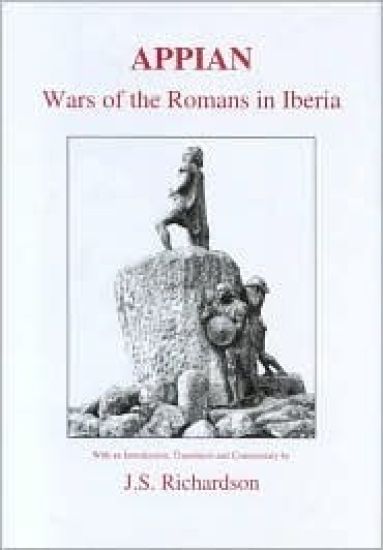
Appian: Wars of the Romans in Iberia
Appian wrote his Roman History in the second century AD as a series of books arranged geographically to chronicle the rise of the Roman Empire. His Iberike, of which this is the first translation with historical commentary in English, deals with the Romans' wars in the Iberian peninsula from the third to the first centuries BC. It is the only continuous source for much of the history of this crucial period in one of the earliest regions of Rome's imperial expansion, and so fills in the gap made by the loss of Livy's later books. He describes the major campaigns of the conquest from the defeat of the Carthaginians by Scipio Africanus, the wars against the Celtiberians, the war against the Lusitanians under Viriathus and the siege of Numantia. The value of the text is not merely as a chronicle of otherwise obscure events, Appian was an historian who deserves to be studied in his own right. This scholarly edition presents the Greek text with facing-page English translation, accompanied by an introduction, historical commentary and copious notes.
Appian: Wars of the Romans in Iberia
Appian's "Iberike", of which this is a translation with historical commentary in English, deals with the Romans' wars in the Iberian peninsula from the third to the first centuries BC. It is the only continuous source for much of the history of this period in Rome's imperial expansion.
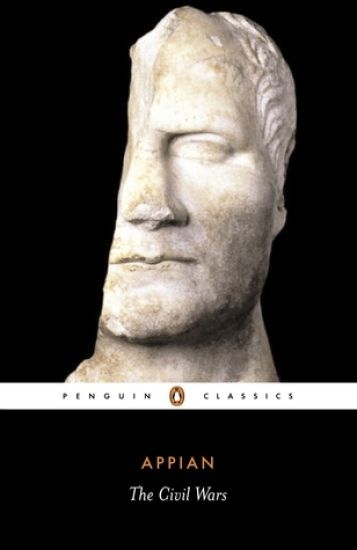
The Civil Wars

The Civil Wars

Appian

Penguin Classics
1996
pokkari
Taken from Appian's Roman History, the five books collected here form the sole surviving continuous historical narrative of the era between 133-35 BC - a time of anarchy and instability for the Roman Empire. A masterly account of a turbulent epoch, they describe the Catiline conspiracy; the rise and fall of the First Triumvirate; the murder of Julius Caesar; the formation of the Second Triumvirate by Antonius, Octavian, and Lepidus; and brutal civil war. A compelling depiction of the decline of the Roman state into brutality and violence, The Civil Wars portrays political discontent, selfishness and the struggle for power - a struggle that was to culminate in a titanic battle for mastery over the Roman Empire, and the defeat of Antony and Cleopatra by Octavian in 31 BC
Roman History, Volume I

Roman History, Volume I

Appian

Harvard University Press
2019
sidottu
Rome’s foreign wars, nation by nation.Appian (Appianus) is among our principal sources for the history of the Roman Republic, particularly in the second and first centuries BC, and sometimes our only source, as for the Third Punic War and the destruction of Carthage. Born circa AD 95, Appian was an Alexandrian official at ease in the highest political and literary circles who later became a Roman citizen and advocate. He apparently received equestrian rank, for in his later years he was offered a procuratorship. He died during the reign of Antoninus Pius (emperor 138–161).Appian’s theme is the process by which the Roman Empire achieved its contemporary prosperity, and his unique method is to trace in individual books the story of each nation’s wars with Rome up through her own civil wars. Although this triumph of “harmony and monarchy” was achieved through characteristic Roman virtues, Appian is unusually objective about Rome’s shortcomings along the way. His history is particularly strong on financial and economic matters, and on the operations of warfare and diplomacy.Of the work’s original twenty-four books, only the Preface and Books 6–9 and 11–17 are preserved complete or nearly so: those on the Spanish, Hannibalic, African, Illyrian, Syrian, and Mithridatic wars, and five books on the civil wars.This edition of Appian replaces the original Loeb edition by Horace White and adds the fragments, as well as his letter to Fronto.
Roman History, Volume II

Roman History, Volume II

Appian

Harvard University Press
2019
sidottu
Rome’s foreign wars, nation by nation.Appian (Appianus) is among our principal sources for the history of the Roman Republic, particularly in the second and first centuries BC, and sometimes our only source, as for the Third Punic War and the destruction of Carthage. Born circa AD 95, Appian was an Alexandrian official at ease in the highest political and literary circles who later became a Roman citizen and advocate. He apparently received equestrian rank, for in his later years he was offered a procuratorship. He died during the reign of Antoninus Pius (emperor 138–161).Appian’s theme is the process by which the Roman Empire achieved its contemporary prosperity, and his unique method is to trace in individual books the story of each nation’s wars with Rome up through her own civil wars. Although this triumph of “harmony and monarchy” was achieved through characteristic Roman virtues, Appian is unusually objective about Rome’s shortcomings along the way. His history is particularly strong on financial and economic matters, and on the operations of warfare and diplomacy.Of the work’s original twenty-four books, only the Preface and Books 6–9 and 11–17 are preserved complete or nearly so: those on the Spanish, Hannibalic, African, Illyrian, Syrian, and Mithridatic wars, and five books on the civil wars.This edition of Appian replaces the original Loeb edition by Horace White and adds the fragments, as well as his letter to Fronto.
Roman History, Volume III

Roman History, Volume III

Appian

Loeb Classical Library
2019
sidottu
Rome’s foreign wars, nation by nation.Appian (Appianus) is among our principal sources for the history of the Roman Republic, particularly in the second and first centuries BC, and sometimes our only source, as for the Third Punic War and the destruction of Carthage. Born circa AD 95, Appian was an Alexandrian official at ease in the highest political and literary circles who later became a Roman citizen and advocate. He apparently received equestrian rank, for in his later years he was offered a procuratorship. He died during the reign of Antoninus Pius (emperor 138–161).Appian’s theme is the process by which the Roman Empire achieved its contemporary prosperity, and his unique method is to trace in individual books the story of each nation’s wars with Rome up through her own civil wars. Although this triumph of “harmony and monarchy” was achieved through characteristic Roman virtues, Appian is unusually objective about Rome’s shortcomings along the way. His history is particularly strong on financial and economic matters, and on the operations of warfare and diplomacy.Of the work’s original twenty-four books, only the Preface and Books 6–9 and 11–17 are preserved complete or nearly so: those on the Spanish, Hannibalic, African, Illyrian, Syrian, and Mithridatic wars, and five books on the civil wars.This edition of Appian replaces the original Loeb edition by Horace White and adds the fragments, as well as his letter to Fronto.
Roman History, Volume IV

Roman History, Volume IV

Appian

Harvard University Press
2020
sidottu
Rome’s internal conflicts, from the Gracchi to the Empire.Appian (Appianus) is among our principal sources for the history of the Roman Republic, particularly in the second and first centuries BC, and sometimes our only source, as for the Third Punic War and the destruction of Carthage. Born circa AD 95, Appian was an Alexandrian official at ease in the highest political and literary circles who later became a Roman citizen and advocate. He apparently received equestrian rank, for in his later years he was offered a procuratorship. He died during the reign of Antoninus Pius (emperor 138–161).Appian’s theme is the process by which the Roman Empire achieved its contemporary prosperity, and his unique method is to trace in individual books the story of each nation’s wars with Rome up through her own civil wars. Although this triumph of “harmony and monarchy” was achieved through characteristic Roman virtues, Appian is unusually objective about Rome’s shortcomings along the way. His history is particularly strong on financial and economic matters, and on the operations of warfare and diplomacy.Of the work’s original twenty-four books, only the Preface and Books 6–9 and 11–17 are preserved complete or nearly so: those on the Spanish, Hannibalic, African, Illyrian, Syrian, and Mithridatic wars, and five books on the civil wars.This edition of Appian replaces the original Loeb edition by Horace White and adds the fragments, as well as his letter to Fronto.
Roman History, Volume V

Roman History, Volume V

Appian

Harvard University Press
2020
sidottu
Rome’s internal conflicts, from the Gracchi to the Empire.Appian (Appianus) is among our principal sources for the history of the Roman Republic, particularly in the second and first centuries BC, and sometimes our only source, as for the Third Punic War and the destruction of Carthage. Born circa AD 95, Appian was an Alexandrian official at ease in the highest political and literary circles who later became a Roman citizen and advocate. He apparently received equestrian rank, for in his later years he was offered a procuratorship. He died during the reign of Antoninus Pius (emperor 138–161).Appian’s theme is the process by which the Roman Empire achieved its contemporary prosperity, and his unique method is to trace in individual books the story of each nation’s wars with Rome up through her own civil wars. Although this triumph of “harmony and monarchy” was achieved through characteristic Roman virtues, Appian is unusually objective about Rome’s shortcomings along the way. His history is particularly strong on financial and economic matters, and on the operations of warfare and diplomacy.Of the work’s original twenty-four books, only the Preface and Books 6–9 and 11–17 are preserved complete or nearly so: those on the Spanish, Hannibalic, African, Illyrian, Syrian, and Mithridatic wars, and five books on the civil wars.This edition of Appian replaces the original Loeb edition by Horace White and adds the fragments, as well as his letter to Fronto.
Roman History, Volume VI

Roman History, Volume VI

Appian

Harvard University Press
2020
sidottu
Rome’s internal conflicts, from the Gracchi to the Empire.Appian (Appianus) is among our principal sources for the history of the Roman Republic, particularly in the second and first centuries BC, and sometimes our only source, as for the Third Punic War and the destruction of Carthage. Born circa AD 95, Appian was an Alexandrian official at ease in the highest political and literary circles who later became a Roman citizen and advocate. He apparently received equestrian rank, for in his later years he was offered a procuratorship. He died during the reign of Antoninus Pius (emperor 138–161).Appian’s theme is the process by which the Roman Empire achieved its contemporary prosperity, and his unique method is to trace in individual books the story of each nation’s wars with Rome up through her own civil wars. Although this triumph of “harmony and monarchy” was achieved through characteristic Roman virtues, Appian is unusually objective about Rome’s shortcomings along the way. His history is particularly strong on financial and economic matters, and on the operations of warfare and diplomacy.Of the work’s original twenty-four books, only the Preface and Books 6–9 and 11–17 are preserved complete or nearly so: those on the Spanish, Hannibalic, African, Illyrian, Syrian, and Mithridatic wars, and five books on the civil wars.This edition of Appian replaces the original Loeb edition by Horace White and adds the fragments, as well as his letter to Fronto.
Des Guerres Des Romains

Des Guerres Des Romains

Appian

Hachette Livre - BNF
2013
pokkari
Des guerres des Romains . Traduit de grec en francois. Par Me Odet-Philippe, sieur Des Mares, ...Date de l'edition originale: 1659" Histoire romaine (francais). 1660]"Ce livre est la reproduction fidele d'une oeuvre publiee avant 1920 et fait partie d'une collection de livres reimprimes a la demande editee par Hachette Livre, dans le cadre d'un partenariat avec la Bibliotheque nationale de France, offrant l'opportunite d'acceder a des ouvrages anciens et souvent rares issus des fonds patrimoniaux de la BnF.Les oeuvres faisant partie de cette collection ont ete numerisees par la BnF et sont presentes sur Gallica, sa bibliotheque numerique.En entreprenant de redonner vie a ces ouvrages au travers d'une collection de livres reimprimes a la demande, nous leur donnons la possibilite de rencontrer un public elargi et participons a la transmission de connaissances et de savoirs parfois difficilement accessibles.Nous avons cherche a concilier la reproduction fidele d'un livre ancien a partir de sa version numerisee avec le souci d'un confort de lecture optimal. Nous esperons que les ouvrages de cette nouvelle collection vous apporteront entiere satisfaction.Pour plus d'informations, rendez-vous sur www.hachettebnf.fr