Kirjojen hintavertailu. Mukana 12 417 947 kirjaa ja 12 kauppaa.

Kirjahaku

Etsi kirjoja tekijän nimen, kirjan nimen tai ISBN:n perusteella.

3 kirjaa tekijältä Ari J. Blatt

Pictures Into Words

Pictures Into Words

Ari J. Blatt

University of Nebraska Press
2012
sidottu
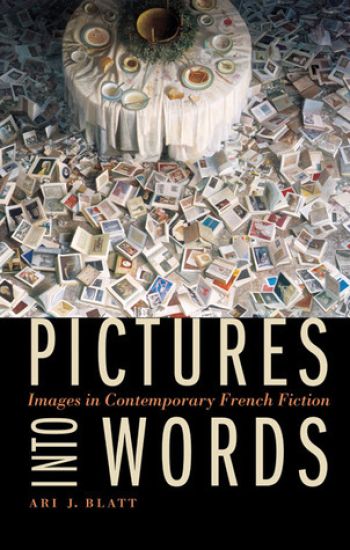
The explosive proliferation of pictures in advertising and pop culture, mass media, and cyberspace following World War II, along with the profusion of critical thinking that tries to make sense of it, has had wide-ranging implications for cultural production as such. Pictures into Words explores how this proliferation of graphic images has profoundly affected narrative writing in France, especially, as Ari J. Blatt argues, the structure, content, and symbolic logic of contemporary French fiction. By examining a specific corpus of narratives by authors Claude Simon, Georges Perec, Pierre Michon, and Tanguy Viel—books that originate amid, conjure up, and indeed are essentially about pictures—Blatt addresses the most salient questions pertaining to the relationship between literature and visual culture today. Each of the novels considered here engages the work of several postwar artists, from Robert Rauschenberg, Andy Warhol, Vincent van Gogh, and Orson Welles to Jeff Koons, Joseph L. Mankiewicz, Pierre Huyghe, and Marcel Duchamp. As Blatt's cross-disciplinary readings show, despite their gleeful raiding of the visual archive to generate and enrich their stories, many contemporary narratives that tell tales about pictures simultaneously express a cautious skepticism toward vision and visual representation. Pictures into Words examines how such novels, while seemingly complicit with the visual, simultaneously "write back" against the images they exploit, reclaiming some of literature's lost ground in our visually inundated world.
The Topographic Imaginary

The Topographic Imaginary

Ari J. Blatt

LIVERPOOL UNIVERSITY PRESS
2022
sidottu
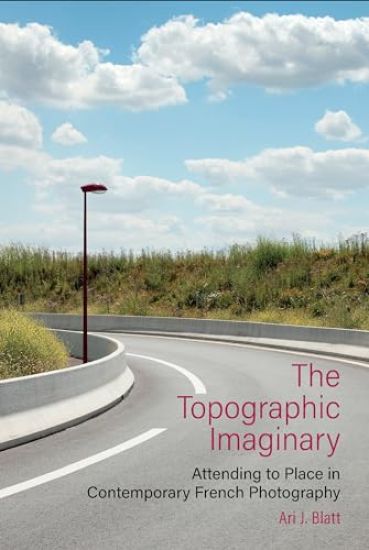
Since the early 1980s, art photographers from metropolitan France have been training their lenses on ordinary landscapes throughout the country they call home. The Topographic Imaginary is the first book to study this important and flourishing trend. It examines work by artists who meld documentary and creative modes to attune viewers to places that mainstream culture tends to tune out, but which, as Ari J. Blatt argues, are in fact more meaningful than they initially appear. From views of building sites in Paris, peri-urban edgelands, or a tangle of trees in a forest, to those that ponder the play of light and shadow on roadside fields in Normandy or the tacky colors painted on dated village shopfronts, images that signal the emergence of a “topographic turn” in contemporary French photography constitute new ways of seeing and sensing France’s diverse national territory. As Blatt suggests, they also represent a visual laboratory through which to investigate how landscape “scapes” our understanding of French culture. In their efforts to reimagine a more traditional and time-worn idea of France’s shared common space, topographic photographs animate conversations about capital and class; cities and their peripheries; the politics and impact of development; migration and borders; memory, history, and affect; empire and postcolonialism; national identity; and the changing environment. The Topographic Imaginary thus reveals how attending to place in pictures provides valuable insight into the disposition of a nation in flux.
The Topographic Imaginary

The Topographic Imaginary

Ari J. Blatt

LIVERPOOL UNIVERSITY PRESS
2024
nidottu
Since the early 1980s, art photographers from metropolitan France have been training their lenses on ordinary landscapes throughout the country they call home. The Topographic Imaginary is the first book to study this important and flourishing trend. It examines work by artists who meld documentary and creative modes to attune viewers to places that mainstream culture tends to tune out, but which, as Ari J. Blatt argues, are in fact more meaningful than they initially appear. From views of building sites in Paris, peri-urban edgelands, or a tangle of trees in a forest, to those that ponder the play of light and shadow on roadside fields in Normandy or the tacky colors painted on dated village shopfronts, images that signal the emergence of a “topographic turn” in contemporary French photography constitute new ways of seeing and sensing France’s diverse national territory. As Blatt suggests, they also represent a visual laboratory through which to investigate how landscape “scapes” our understanding of French culture. In their efforts to reimagine a more traditional and time-worn idea of France’s shared common space, topographic photographs animate conversations about capital and class; cities and their peripheries; the politics and impact of development; migration and borders; memory, history, and affect; empire and postcolonialism; national identity; and the changing environment. The Topographic Imaginary thus reveals how attending to place in pictures provides valuable insight into the disposition of a nation in flux.