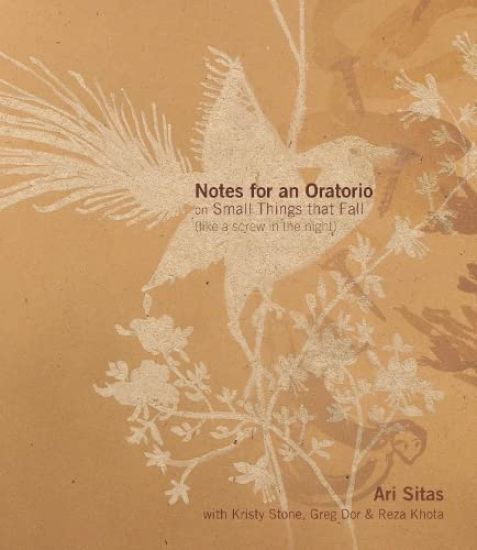
Have a kerala coffee on the go; hop on a train to see the Elephant Man; stop for a moment to sip on a Sula or order a chai. Ari Sitas awakens our senses with this unique sensory encounter. Experience the sights, sounds and smells of India with Aouda and Passerpartout.
Notes for an Oratorio on Small Things That Fall is a poetic, creative and sociological take on our contemporary silk roads and hazmat highways. Parts of its libretto have been staged by Anuradha Kapur and Deepan Sivaramanan in Delhi in 2018 as Dark Things.The journey reconstructs a via dolorosa through the excesses and forms of exploitation, discrimination and suffering.
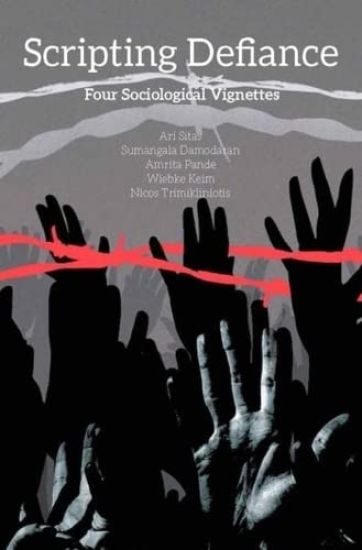
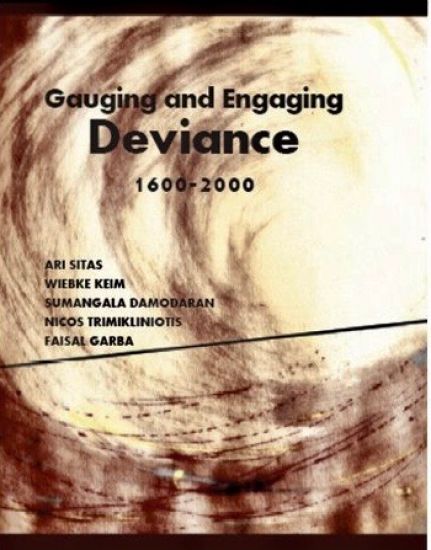
This is the second volume from the authors (along with several others) of Gauging and Engaging Deviance, which is positioned between the ideas of deviance and defiance and attempts to uncover scripts through which notions of deviance as well as acts of defiance unravel. It argues that instead of the monologue about the binary of European modernity and its traditional backwoods, the contours are to be found in another archive, one that is made up of significant scripts or narratives of defiance that endure through subaltern people's cultural formations despite and in response to dominant ideas and ideologies. Such scripts within this archive will help sociology reconstitute itself away from its original mandate: to be part of the fixers, to help the maintenance of social order, to predict and control aberrant behaviour and to create functional individuals and ensembles. The chapters look at specific figures of discontent: the worker, the woman, the student, the artist, the migrant and refugee, the prisoner, and, as a counter-voice, the movements of reaction to their discontent, the movements of authoritative restoration.
Gauging and Engaging Deviance is at once a creative and challenging work. It is not just a critique of the sociological canon, but an imaginative reconstruction that is generous to all nooks and crannies of the planet. It is also a memorial to modernity's victims, whether they were perceived to be deviant or not. Its broad historical range, its geographical spread, and its attention to race and power create a conceptual grammar through which we can speak of the key challenges, traumas and violence of the contemporary period. Through its pages the Maroon and the Pirate meet Don Quixote, the Thug and the Apostate in a journey that takes the reader through slave factories, plantations, prisons, and extermination camps, gauging the price of what it has meant to struggle to be contrary or free.
Nicholas Wolpe; Mcebisi Ndletyana; Ibbo Mandaza; Ayanda Ntsabula; Xolela Mangcu; Joel Netshitenzhe; Ben Turok; Ari Sitas; Tshilidzi Marwala; Nomboniso Gasa
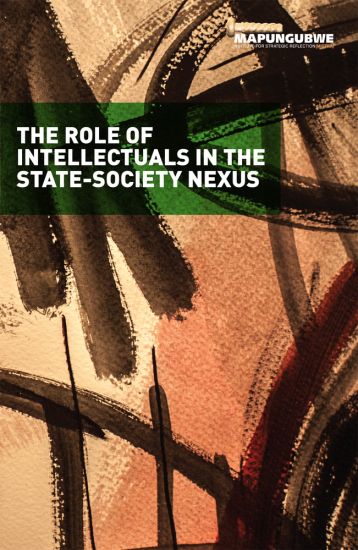
If we are to talk of a 'new' intellectual movement, the question is begged: what happened to the 'old' intellectual movement? What happened to the thinkers who inspired and led our struggle against colonialism, apartheid and exploitation? What has happened to the thinkers who gave substance and guidance and, in many cases, practical leadership to our attempts to undo the past and forge a new future? In pursuit of answers to these questions, the Mapungubwe Institute for Strategic Reflection (MISTRA), in partnership with the Liliesleaf Trust, hosted a roundtable in March 2015 on the theme 'The Role of Intellectuals in the State-Society Nexus'. The roundtable received inputs from a range of thinkers, including Ibbo Mandaza, Ben Turok, Ari Sitas, Ayanda Ntsaluba, Xolela Mangcu, Joel Netshitenzhe, Tshilidzi Marwala and Nomboniso Gasa, as well as provocative and piercing inputs from the attendees. This publication aims to put the contributions and debates at the roundtable further into the public domain and records the input of the main speakers, the respondents, as well as the discussion from the floor. The rigorous debate at the roundtable spilt out of the boundaries of the event itself and encouraged a number of thinkers to provide additional material for this publication: Z. Pallo Jordan, David Moore (with Tshilidzi Marwala) and Desiree Lewis.
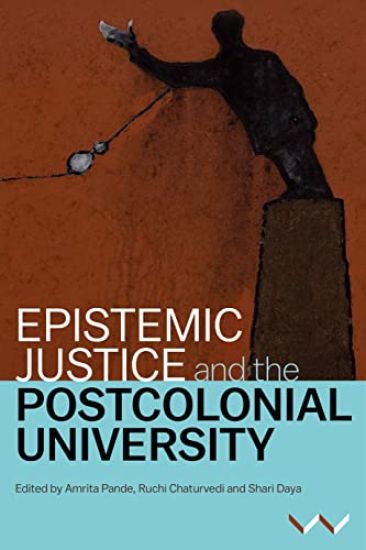
This book addresses urgent current debates on decolonisation by offering reimagined teaching and learning interventions for obtaining greater epistemic justice in the contemporary postcolonial university. At a time when debates on decolonisation have gained urgency in academic, civic and public spaces, this interdisciplinary collection by authors based at the University of Cape Town, South Africa, serves as a valuable archive documenting and reflecting on a turbulent period in South African higher education. It is an important resource for academics looking to grasp debates on decoloniality both in South Africa, and in university and teaching spaces further afield. Calling for concerted and collaborative work towards greater epistemic justice across diverse disciplines, the book puts forward a new vision of the postcolonial university as one that enables excellent teaching and learning, undertaken in a spirit of critical consciousness and reciprocity.
This book addresses urgent current debates on decolonisation by offering reimagined teaching and learning interventions for obtaining greater epistemic justice in the contemporary postcolonial university. At a time when debates on decolonisation have gained urgency in academic, civic and public spaces, this interdisciplinary collection by authors based at the University of Cape Town, South Africa, serves as a valuable archive documenting and reflecting on a turbulent period in South African higher education. It is an important resource for academics looking to grasp debates on decoloniality both in South Africa, and in university and teaching spaces further afield. Calling for concerted and collaborative work towards greater epistemic justice across diverse disciplines, the book puts forward a new vision of the postcolonial university as one that enables excellent teaching and learning, undertaken in a spirit of critical consciousness and reciprocity.