Kirjojen hintavertailu. Mukana 12 016 292 kirjaa ja 12 kauppaa.

Kirjahaku

Etsi kirjoja tekijän nimen, kirjan nimen tai ISBN:n perusteella.

4 kirjaa tekijältä Ariane Knüsel

China's European Headquarters

China's European Headquarters

Ariane Knüsel

Cambridge University Press
2022
sidottu
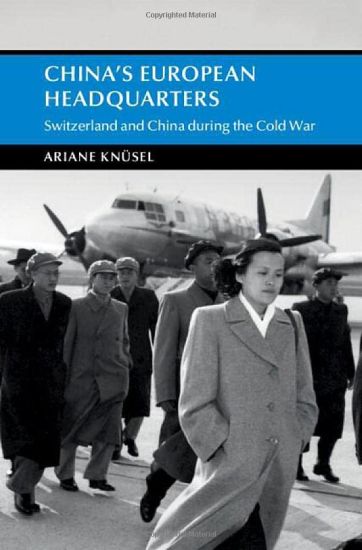
During the Cold War, the People's Republic of China used Switzerland as headquarters for its economic, political, intelligence, and cultural networks in Europe. Based on extensive research in Western and Chinese archives, China's European Headquarters charts not only how Switzerland came to play this role, but also how Chinese networks were built in practice, often beyond the public face of official proclamations and diplomatic interactions. By tracing the development of Sino-Swiss relations in the Cold War, Ariane Knüsel sheds new light on the People's Republic of China's formulation and implementation of foreign policy in Europe, Latin America and Africa and Switzerland's efforts to align neutrality, humanitarian engagement, and economic interests.
China's European Headquarters

China's European Headquarters

Ariane Knüsel

Cambridge University Press
2025
pokkari
During the Cold War, the People's Republic of China used Switzerland as headquarters for its economic, political, intelligence, and cultural networks in Europe. Based on extensive research in Western and Chinese archives, China's European Headquarters charts not only how Switzerland came to play this role, but also how Chinese networks were built in practice, often beyond the public face of official proclamations and diplomatic interactions. By tracing the development of Sino-Swiss relations in the Cold War, Ariane Knüsel sheds new light on the People's Republic of China's formulation and implementation of foreign policy in Europe, Latin America and Africa and Switzerland's efforts to align neutrality, humanitarian engagement, and economic interests.
Framing China

Framing China

Ariane Knüsel

Routledge
2017
nidottu
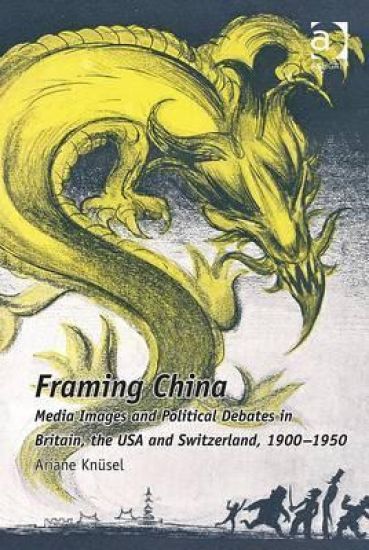
Framing China sheds new light on Western relations with and perceptions of China in the first half of the twentieth century. In this ground-breaking book, Ariane Knüsel examines how China was portrayed in political debates and the media in Britain, the USA and Switzerland between 1900 and 1950. By focusing on the political, economic, cultural and social context that led to the construction of the particular images of China in each country, the author demonstrates that national interests, anxieties and issues influenced the way China was framed and resulted in different portrayals of China in each country. The author’s meticulous analysis of a vast amount of newspaper and magazine articles, commentaries, editorials, cartoons and newsreels that have previously not been studied before also focuses on the transnational circulation of images of China. While previous publications have dealt with the occurrence of the Yellow Peril and Red Menace in particular countries, Framing China reveals that these images were interpreted differently in every nation because they both reflected and contributed to the discursive construction of nationhood in each country and were influenced by domestic issues, cultural values, pre-existing stereotypes, pressure groups and geopolitical aspirations.
Framing China

Framing China

Ariane Knüsel

Ashgate Publishing Limited
2012
sidottu
Framing China sheds new light on Western relations with and perceptions of China in the first half of the twentieth century. In this ground-breaking book, Ariane Knüsel examines how China was portrayed in political debates and the media in Britain, the USA and Switzerland between 1900 and 1950. By focusing on the political, economic, cultural and social context that led to the construction of the particular images of China in each country, the author demonstrates that national interests, anxieties and issues influenced the way China was framed and resulted in different portrayals of China in each country. The author’s meticulous analysis of a vast amount of newspaper and magazine articles, commentaries, editorials, cartoons and newsreels that have previously not been studied before also focuses on the transnational circulation of images of China. While previous publications have dealt with the occurrence of the Yellow Peril and Red Menace in particular countries, Framing China reveals that these images were interpreted differently in every nation because they both reflected and contributed to the discursive construction of nationhood in each country and were influenced by domestic issues, cultural values, pre-existing stereotypes, pressure groups and geopolitical aspirations.