Kirjojen hintavertailu. Mukana 12 016 292 kirjaa ja 12 kauppaa.

Kirjahaku

Etsi kirjoja tekijän nimen, kirjan nimen tai ISBN:n perusteella.

2 kirjaa tekijältä Ariel Colonomos

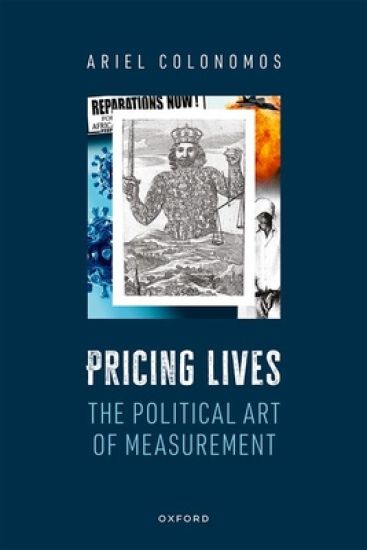
Pricing Lives

Pricing Lives

Ariel Colonomos

Oxford University Press
2023
sidottu
This book discusses how human lives are equated with the material, and argues that pricing lives lies at the core of the political; in fact, as in Plato or Hobbes, and in the Weberian ethics of responsibility, measurement is considered to be one of its central features. Ariel Colonomos argues that this measure relies primarily on human lives and interests, and that the material equivalence to lives is twofold. The equivalence is a double equation, as we pay for lives and we pay with lives. This double equation constitutes the measurement upon which the political equilibrium of a society depends and is thus a key constitutive part of the political. The book adopts two approaches, both with an interdisciplinary perspective: one explanatory and the other normative. First, it explains the nexus between existential goods and material goods, drawing on a detailed analysis of several case studies from contemporary politics, both domestic and international. Second, it discusses normatively the material valuation of human lives and the human value of material goods. Value attribution and the question of the material equivalent to lives are of relevance not only for political theory and philosophy, but also for sociology, history, international relations, and legal studies.
Selling the Future

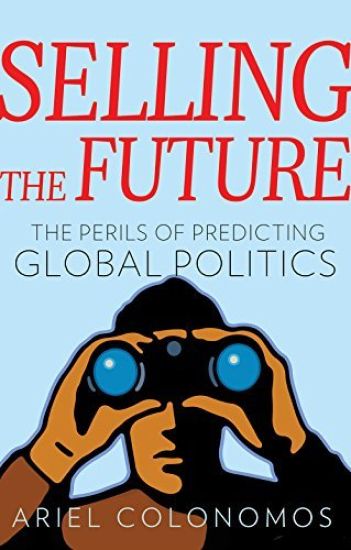
Selling the Future

Ariel Colonomos

C Hurst Co Publishers Ltd
2016
sidottu
*** Winner of the 2017 ISA Ethics Book Award 2017*** In an age of uncertainty, those who can anticipate revolution, the outbreak of wars, or which states might default are much in demand. The marketplace of ideas about the future is huge, and includes 'wonks', scholars and pundits who produce scenarios, predictions and ratings. The more opaque the future seems to be, so the relation between knowledge and power intensifies, above all the nexus between those who sell their expertise and those who consume it. In his investigation of the paradoxes of fore--casting, Ariel Colonomos interrogates today's knowledge factories to reveal how our futures are shaped by social scientists, think tanks and rat--ing agencies. He explains why conservative and linear predictions prevail, and why the future, especially when linked to national interest, re--flects a systematic search for stability. The notion of a globalised world whose main characteristic is speed, and where predictions have accelerat--ing, self-fulfilling effects, is obsolete. Those who are supposed to know, reassure those who are supposed to act. Their preferences converge, and thus the industry of the future has a decelerating effect on world politics. These 'lords of knowledge' reinforce pre-existing beliefs, create expectations about the future, while obstructing its vision when - inevitably - it diverges from its orderly path.