Kirjojen hintavertailu. Mukana 12 016 292 kirjaa ja 12 kauppaa.

Kirjahaku

Etsi kirjoja tekijän nimen, kirjan nimen tai ISBN:n perusteella.

3 kirjaa tekijältä Arien Mack

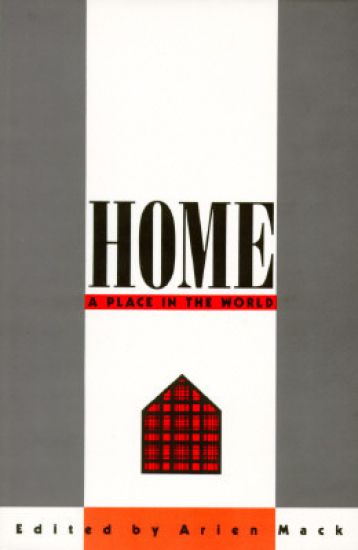
Home

Home

Arien Mack

New York University Press
1993
sidottu
Home, wrote Robert Frost, is the place where, when you have to go there, they have to take you in. And yet the idea of home has, in the modern world, become extremely problematic. Robert Frost's words tellingly illustrate the centrality of home to the human experience, as an unconditional haven that one simply has, without having to earn. Yet, we live at a time when the idea of home has become extremely problematic. Our homeless fill America's streets and shelters; the comfort of home is increasingly threatened by urban violence; and the world-wide plight of those exiled or fleeing from their homelands due to civil war, starvation, or political repression seems relentless. The idea of home, bound as it is in family and in the roles of men and women, has a deep resonance that is not fully captured by its use as a social and political slogan. What is its history and ideology? What has it meant and how has its meaning changed? Home moves us perhaps most powerfully as absence or negation. Homelessness and exile are among the worst of conditions, bringing with them alienation, estrangement, and the feelings of greatest despair. This volume, based on a multi-institutional collaboration between the New School for Social Research and five major New York City museums, and its resulting conference, convenes many of America's top scholarly minds to address historical and contemporary meanings of home. Among the issues specifically addressed are the artistic rendition of home in art and propaganda; literary meanings of home; exile through the ages; homelessness past; homelessness in Dickens; the homeless in New York City history; alienation and belonging; slavery and the female discovery of personal freedom; and, more generally, the home and family in historical perspective. Contributing to the volume are Breyten Breytenbach, David Bromwich (Yale University), Sanford Budick (Hebrew University of Jerusalem), Stanley Cavell (Harvard University), Mary Douglas, Tamara K. Hareven (University of Delaware), Eric Hobsbawm (Cambridge University, Emeritus), John Hollander (Yale University), Kim Hopper (Nathan Kline Institute for Psychiatric Research), George Kateb (Princeton University), Alexander Keyssar (Duke University), Steven Marcus (Columbia University), Orlando Patterson (Harvard University), Joseph Rykwert (University of Pennsylvania), Simon Schama (Harvard University), Alan Trachtenberg (Yale University), and Gwendolyn Wright (Columbia University).
In Time of Plague

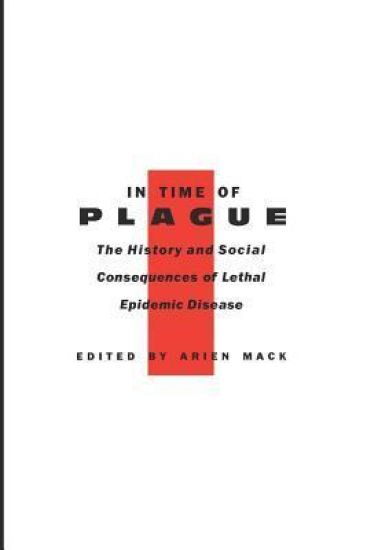
In Time of Plague

Arien Mack

New York University Press
1992
pokkari
Plague. The word itself is like a blow, connoting misery, miasma and death. Plague takes many forms: influenza, typhus, cholera, the Black Death, and, recently, AIDS. AIDS has reminded us that epidemic infectious disease is not simply a historical phenomenon?or one limited like famine to remote continents ?and is a vivid and painful illustration of how epidemics take place at a number of levels ?biological event, social perception, collective response, and, finally, the individual, the existential and the moral. In Time of Plagueexamines the many ways in which catastrophic infectious and contagious diseases are both biologically and socially defined. In the politically charged age of AIDS, In Time of Plague analyzes what past epidemics tell us about this new, deadly virus: How has the definition of disease differed throughout history? How have new technologies and advances in epidemiology changed our perception and response to disease? When has quarantine been appropriate or effective? What norms should govern our thinking about responsibility, culpability, legality, and confidentiality? What does society owe the victims? What, in turn, are the responsibilities of the carrier population? Featuring essays by such distinguished scholars as Lewis Thomas, Joshua Lederberg, Dorothy Nelkin, Sander Gilman, Barbara Guttmann Rosenkrantz, Baruch S. Blumberg, George Kateb, and David A. J. Richards, among others, from a wide range of disciplines, this work seeks to answer some of these pressing questions.
Home

Home

Arien Mack

New York University Press
1995
pokkari
Home, wrote Robert Frost, is the place where, when you have to go there, they have to take you in. And yet the idea of home has, in the modern world, become extremely problematic. Robert Frost's words tellingly illustrate the centrality of home to the human experience, as an unconditional haven that one simply has, without having to earn. Yet, we live at a time when the idea of home has become extremely problematic. Our homeless fill America's streets and shelters; the comfort of home is increasingly threatened by urban violence; and the world-wide plight of those exiled or fleeing from their homelands due to civil war, starvation, or political repression seems relentless. The idea of home, bound as it is in family and in the roles of men and women, has a deep resonance that is not fully captured by its use as a social and political slogan. What is its history and ideology? What has it meant and how has its meaning changed? Home moves us perhaps most powerfully as absence or negation. Homelessness and exile are among the worst of conditions, bringing with them alienation, estrangement, and the feelings of greatest despair. This volume, based on a multi-institutional collaboration between the New School for Social Research and five major New York City museums, and its resulting conference, convenes many of America's top scholarly minds to address historical and contemporary meanings of home. Among the issues specifically addressed are the artistic rendition of home in art and propaganda; literary meanings of home; exile through the ages; homelessness past; homelessness in Dickens; the homeless in New York City history; alienation and belonging; slavery and the female discovery of personal freedom; and, more generally, the home and family in historical perspective. Contributing to the volume are Breyten Breytenbach, David Bromwich (Yale University), Sanford Budick (Hebrew University of Jerusalem), Stanley Cavell (Harvard University), Mary Douglas, Tamara K. Hareven (University of Delaware), Eric Hobsbawm (Cambridge University, Emeritus), John Hollander (Yale University), Kim Hopper (Nathan Kline Institute for Psychiatric Research), George Kateb (Princeton University), Alexander Keyssar (Duke University), Steven Marcus (Columbia University), Orlando Patterson (Harvard University), Joseph Rykwert (University of Pennsylvania), Simon Schama (Harvard University), Alan Trachtenberg (Yale University), and Gwendolyn Wright (Columbia University).