Kirjojen hintavertailu. Mukana 11 342 296 kirjaa ja 12 kauppaa.

Kirjahaku

Etsi kirjoja tekijän nimen, kirjan nimen tai ISBN:n perusteella.

141 kirjaa tekijältä Aristotle

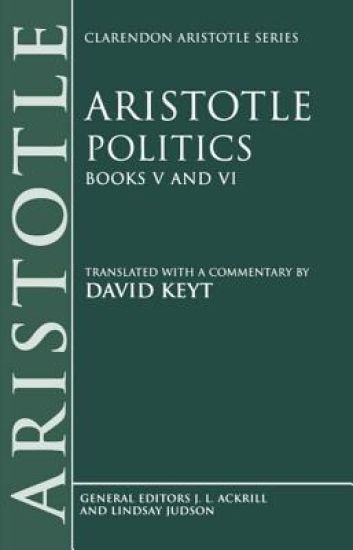
Aristotle: Politics, Books V and VI

Aristotle: Politics, Books V and VI

Aristotle

Clarendon Press
1999
sidottu
Books V and VI of Aristotle's Politics constitute a manual on practical politics. In the fifth book Aristotle examines the causes of faction and constitutional change and suggests remedies for political instability. In the sixth book he offers practical advice to the statesman who wishes to establish, preserve, or reform a democracy or an oligarchy. He discusses many political issues, theoretical and practical, which are still widely debated today--revolution and reform, democracy and tyranny, freedom and equality. David Keyt presents a clear and accurate new translation of these books, together with a commentary which, though primarily philosophical, also supplies a key to Aristotle's many historical references. It is intended to guide readers towards a proper understanding of this classic text in the history of political thought, and does not assumes knowledge of Greek or of ancient history and politics.
Aristotle: Politics, Books V and VI

Aristotle: Politics, Books V and VI

Aristotle

Clarendon Press
1999
nidottu
Books V and VI of Aristotle's Politics constitute a manual on practical politics. In the fifth book Aristotle examines the causes of faction and constitutional change and suggests remedies for political instability. In the sixth book he offers practical advice to the statesman who wishes to establish, preserve, or reform a democracy or an oligarchy. He discusses many political issues, theoretical and practical, which are still widely debated today--revolution and reform, democracy and tyranny, freedom and equality. David Keyt presents a clear and accurate new translation of these books, together with a commentary which, though primarily philosophical, also supplies a key to Aristotle's many historical references. It is intended to guide readers towards a proper understanding of this classic text in the history of political thought, and does not assumes knowledge of Greek or of ancient history and politics.
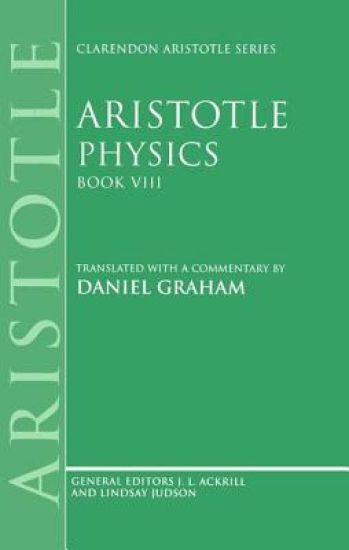
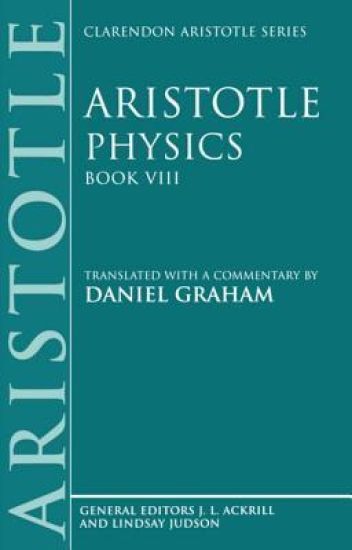
Aristotle: Physics, Book VIII

Aristotle: Physics, Book VIII

Aristotle

Clarendon Press
1999
sidottu
The eighth book of Aristotle's Physics is the culmination of his theory of nature. He discusses not just physics, but the origins of the universe and the metaphysical foundations of cosmology and physical science. He moves from the discussion of motion in the cosmos to the identification of a single source and regulating principle of all motion, and so argues for the existence of a first `unmoved mover'. Daniel Graham offers a clear, accurate new translation of this key text in the history of Western thought, and accompanies the translation with a careful philosophical commentary to guide the reader towards an understanding of the wealth of important and influential arguments and ideas that Aristotle puts forward.
Aristotle: Physics, Book VIII

Aristotle: Physics, Book VIII

Aristotle

Clarendon Press
1999
nidottu
The eighth book of Aristotle's Physics^ R is the culmination of his theory of nature. He discusses not just physics, but the origins of the universe and the metaphysical foundations of cosmology and physical science. He moves from the discussion of motion in the cosmos to the identification of a single source and regulating principle of all motion, and so argues for the existence of a first `unmoved mover'. Daniel Graham offers a clear, accurate new translation of this key text in the history of Western thought, and accompanies the translation with a careful philosophical commentary to guide the reader towards an understanding of the wealth of important and influential arguments and ideas that Aristotle puts forward.
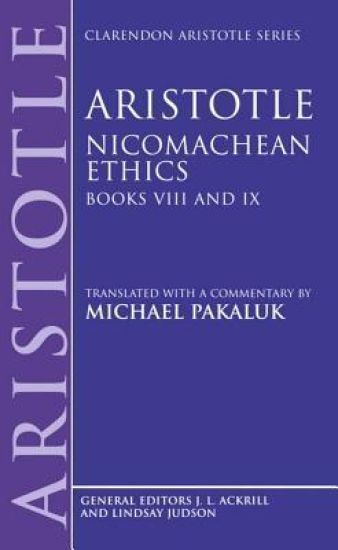
Aristotle: Nicomachean Ethics, Books VIII and IX
In Books VIII and IX of his masterpiece of moral philosophy, the Nicomachean Ethics, Aristotle gives perhaps the most famous of all philosophical discussions of friendship. Michael Pakaluk presents the first systematic study in English of these books, showing how important Aristotle's treatment of friendship is to his ethics as a whole. Pakaluk's fresh and scrupulously accurate translation is accompanied by a detailed philosophical commentary which reveals the remarkably coherent structure of the books and unfolds with lucidity the various arguments contained within Aristotle's terse and compressed text. Pakaluk looks at the logical form of Aristotle's analysis of friendship, at his subtle view of the relationship between friendship and justice, at the role of reciprocity in friendship, at civic friendship and its relation to the family, and at the development of friendship out of self-love and reflexive consciousness. This volume will be a valuable tool for anyone studying Aristotle's ethics, especially readers with no Greek.
Aristotle: Nicomachean Ethics, Books VIII and IX
In Books VIII and IX of his masterpiece of moral philosophy, the Nicomachean Ethics, Aristotle gives perhaps the most famous of all philosophical discussions of friendship. Michael Pakaluk presents the first systematic study in English of these books, showing how important Aristotle's treatment of friendship is to his ethics as a whole. Pakaluk's fresh and scrupulously accurate translation is accompanied by a detailed philosophical commentary which reveals the remarkably coherent structure of the books and unfolds with lucidity the various arguments contained within Aristotle's terse and compressed text. Pakaluk looks at the logical form of Aristotle's analysis of friendship, at his subtle view of the relationship between friendship and justice, at the role of reciprocity in friendship, at civic friendship and its relation to the family, and at the development of friendship out of self-love and reflexive consciousness. This volume will be a valuable tool for anyone studying Aristotle's ethics, especially readers with no Greek.
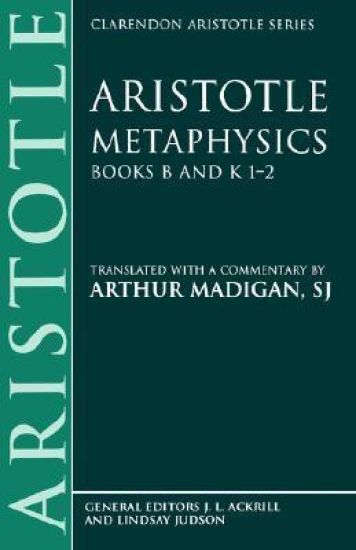
Aristotle: Metaphysics Books B and K 1-2

Aristotle: Metaphysics Books B and K 1-2

Aristotle

Oxford University Press
1999
nidottu
Arthur Madigan presents a clear, accurate new translation of the third book (Beta) of Aristotle's Metaphysics, together with two related chapters from the eleventh book (Kappa). Madigan's accompanying introduction and commentary give detailed guidance to these texts, in which Aristotle sets out what he takes to be the main problems of metaphysics or 'first philosophy' and assesses possible solutions to them; he takes his starting-point from the work of earlier philosophers, especially Plato and some of the Presocratics. These texts serve as a useful introduction both to Aristotle's own work on metaphysics and to classical metaphysics in general; they are also a good example of Aristotle's dialectical method, which reasons not from known truths but from reputable opinions.
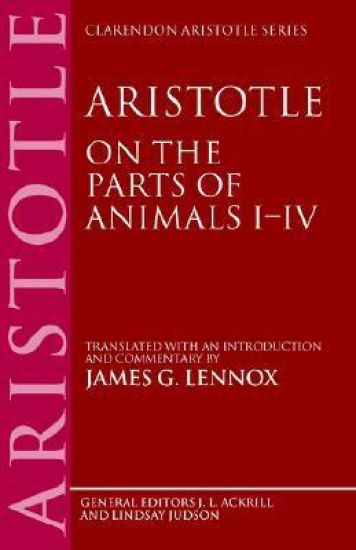
Aristotle: On the Parts of Animals

Aristotle: On the Parts of Animals

Aristotle

Clarendon Press
2002
sidottu
In On the Parts of Animals, Aristotle develops his systematic principles for biological investigation and explanation, and applies those principles to explain why the different animals have the different parts that they do. This new translation and commentary reflects the subtlety and detail of Aristotle's reasoning.
Aristotle: On the Parts of Animals

Aristotle: On the Parts of Animals

Aristotle

Clarendon Press
2002
nidottu
On the Parts of Animals is at the heart and soul of Aristotle's scientific investigation of animals. It not only contains the results of his investigation of why different kinds of animals have the parts that they do; it also opens with a book devoted to laying the philosophical stones of the entire biological enterprise. Those philosophical foundations, in turn, reflect and build on Aristotle's theory of knowledge, as found in the Analytics, and his metaphysics and natural philosophy, as found in the Metaphysics, Physics, and De Anima. Whether one is interested in Aristotle the philosopher, or Aristotle the biologist, the De Partibus Animalium has a great deal to offer. The translation of the entire four books, with commentary, gives the reader an opportunity to judge the integrity of Aristotle's zoological practice in books II-IV, in light of the philosophical recommendations for such a study presented in book I. The translation aims to reflect the fine details of Aristotle's reasoning. The commentary gives line-by-line clarification of individual passages while at the same time providing an overall interpretation of Aristotle's purposes and methods.
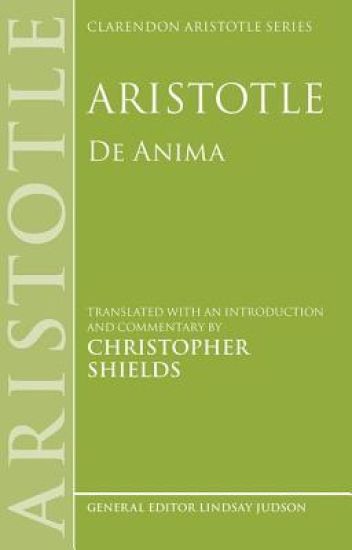
Aristotle: De Anima

Aristotle: De Anima

Aristotle

Clarendon Press
2016
sidottu
The Clarendon Aristotle Series is designed for both students and professionals. It provides accurate translations of selected Aristotelian texts, accompanied by incisive commentaries that focus on philosophical problems and issues, The volumes in the series have been widely welcomed and favourably reviewed. Important new titles are being added to the series, and a number of well-established volumes are being reissued with revisions and/or supplementary material. Christopher Shields presents a new translation and commentary of Aristotle's De Anima, a work of interest to philosophers at all levels, as well as psychologists and students interested in the nature of life and living systems. The volume provides a full translation of the complete work, together with a comprehensive commentary. While sensitive to philological and textual matters, the commentary addresses itself to the philosophical reader who wishes to understand and assess Aristotle's accounts of the soul and body; perception; thinking; action; and the character of living systems. It aims to present controversial aspects of the text in a neutral, fair-minded manner, so that readers can come to be equipped to form their own judgments. This volume includes the crucial first book, which the original translation in the Clarendon Aristotles Series omitted.
Aristotle: De Anima

Aristotle: De Anima

Aristotle

Clarendon Press
2016
nidottu
The Clarendon Aristotle Series is designed for both students and professionals. It provides accurate translations of selected Aristotelian texts, accompanied by incisive commentaries that focus on philosophical problems and issues, The volumes in the series have been widely welcomed and favourably reviewed. Important new titles are being added to the series, and a number of well-established volumes are being reissued with revisions and/or supplementary material. Christopher Shields presents a new translation and commentary of Aristotle's De Anima, a work of interest to philosophers at all levels, as well as psychologists and students interested in the nature of life and living systems. The volume provides a full translation of the complete work, together with a comprehensive commentary. While sensitive to philological and textual matters, the commentary addresses itself to the philosophical reader who wishes to understand and assess Aristotle's accounts of the soul and body; perception; thinking; action; and the character of living systems. It aims to present controversial aspects of the text in a neutral, fair-minded manner, so that readers can come to be equipped to form their own judgments. This volume includes the crucial first book, which the original translation in the Clarendon Aristotles Series omitted.
Aristotle's "Art of Rhetoric"

Aristotle's "Art of Rhetoric"

Aristotle

University of Chicago Press
2019
sidottu
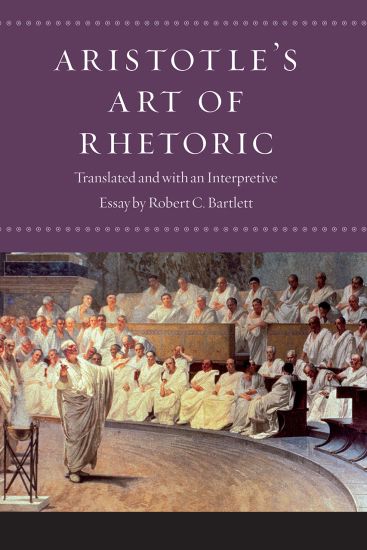
For more than two thousand years. Aristotle's "Art of Rhetoric" has shaped thought on the theory and practice of rhetoric, the art of persuasive speech. In three sections, Aristotle discusses what rhetoric is, as well as the three kinds of rhetoric (deliberative, judicial, and epideictic), the three rhetorical modes of persuasion, and the diction, style, and necessary parts of a successful speech. Throughout, Aristotle defends rhetoric as an art and a crucial tool for deliberative politics while also recognizing its capacity to be misused by unscrupulous politicians to mislead or illegitimately persuade others. Here Robert C. Bartlett offers a literal, yet easily readable, new translation of Aristotle's "Art of Rhetoric," one that takes into account important alternatives in the manuscript and is fully annotated to explain historical, literary, and other allusions. Bartlett's translation is also accompanied by an outline of the argument of each book; copious indexes, including subjects, proper names, and literary citations; a glossary of key terms; and a substantial interpretive essay.
The Basic Works of Aristotle

The Basic Works of Aristotle

Aristotle

Modern Library Inc
2001
pokkari
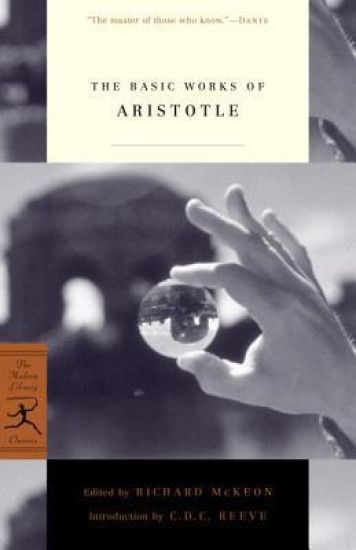
Preserved by Arabic mathematicians and canonized by Christian scholars, Aristotle's works have shaped Western thought, science, and religion for nearly two thousand years. Richard McKeon's The Basic Works of Aristotle-constituted out of the definitive Oxford translation and in print as a Random House hardcover for sixty years-has long been considered the best available one-volume Aristotle. Appearing in paperback at long last, this edition includes selections from the Organon, On the Heavens, The Short Physical Treatises, Rhetoric, among others, and On the Soul, On Generation and Corruption, Physics, Metaphysics, Nicomachean Ethics, Politics, and Poetics in their entirety.
Aristotle's Poetics

Aristotle's Poetics

Aristotle

WW Norton Co
1983
nidottu
Aristotle's doctrines are basic to every critical discussion of Greek tragedy and of other literary forms. Although the Poetics has often been denounced or rejected, such rejection is usually the result of a misunderstanding of what Aristotle says. And that is where Hutton's work is uniquely important. Commentators have long recognized the need to view the Poetics in the context of its creation and it re-emergence in the Renaissance. Few, if any, however, have had the necessary combination of talents that James Hutton possessed as an accomplished Hellenist with a particularly strong background in Greek philosophy, a graceful stylist in English, and a leading authority on the Renaissance humanists. To supplement his translation, Hutton has provided full explanatory and glossarial notes. In his introduction he discusses the work in terms of Aristotelian thought and its Platonic roots, thereby correcting the dogmatism that often attends study of the Poetics. The introduction also fully outlines the work's historical influence.
The Philosophy of Aristotle
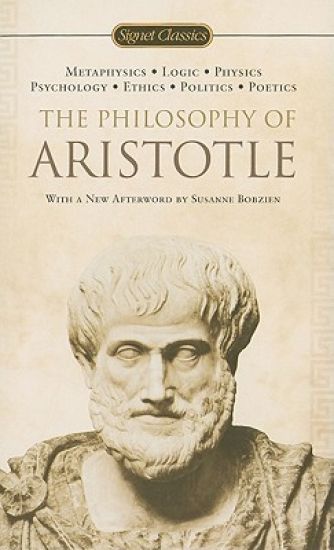
More than two thousand years ago, Aristotle established unique standards of philosophic inquiry, observation, and judgment. This book offers a contemporary reevaluation of the philosophy of the master of Western thought, and shows his vital, continuing influence in our modern world.
Aristotle

Aristotle

Aristotle

Cambridge University Press
1968
pokkari
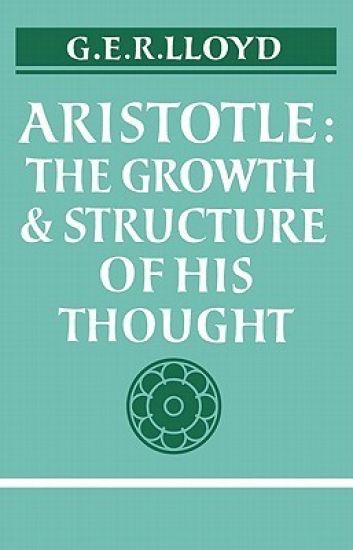
Dr Lloyd writes for those who want to discover and explore Aristotle's work for themselves. He acts as mediator between Aristotle and the modern reader. The book is divided into two parts. The first tells the story of Aristotle's intellectual development as far as it can be reconstructed; the second presents the fundamentals of his thought in the main fields of inquiry which interested him: logic and metaphysics, physics, psychology, ethics, politics, and literary criticism. The final chapter considers the unity and coherence of Aristotle's philosophy, and records briefly his later influence on European thought. This is a concise and lucid account of the work of a difficult and profound thinker. Dr Lloyd's business is only with the essentials; but he does not shirk the difficulties which arise in their interpretation, nor does he invest Aristotle with a spurious modernity.
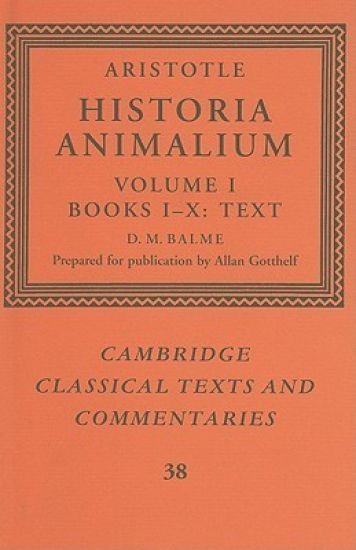
Aristotle: 'Historia Animalium': Volume 1, Books I-X: Text
David Balme's major critical edition of Aristotle's largest and perhaps least studied treatise is based on a collation of the 26 known extant manuscripts and a study of the early Latin translations. Begun in 1975, with his work towards the Loeb editio minor of books VII–X, this edition of all ten books, including a very full apparatus criticus, was largely complete by 1989 when Professor Balme died, but it needed extensive work to put it in publishable form. This work has been carried out by Allan Gotthelf, Balme's friend and associate. Volume I of the edition contains the complete text of the Historia Animalium, the critical apparatus, and Balme's introduction to the manuscripts, expanded and updated with the assistance of Friederike Berger, and in consultation with the editors of forthcoming editions of the extant medieval translations. A substantial index to the text has been provided by Liliane Bodson in collaboration with Professor Gotthelf.
Aristotle: The Politics and the Constitution of Athens
This new collection of Aristotle's political writings provides the student with all the necessary materials for a full understanding of his work as a political scientist. Not only does it offer an unusually lucid and accessible account of The Politics, it also shows the relation between this and his studies as a constitutional historian. Only one of Aristotle's many constitutions - The Constitution of Athens -has survived and this is now presented here alongside The Politics so that the student can appreciate both the empirical and the theoretical aspects of Aristotle's political science. This expanded Cambridge Texts edition contains an extensive guide to further reading and an index of names with biographical notes, in addition to a revised and extended introduction. Presentation of The Politics and The Constitution of Athens in a single volume will make this the most attractive and convenient student edition of these seminal works currently available.
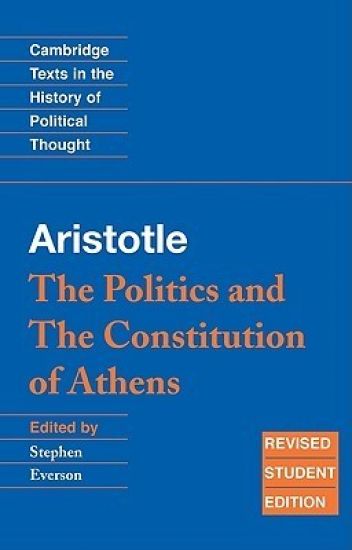
Aristotle: The Politics and the Constitution of Athens
This new collection of Aristotle’s political writings provides the student with all the necessary materials for a full understanding of his work as a political scientist. Not only does it offer an unusually lucid and accessible account of The Politics, it also shows the relation between this and his studies as a constitutional historian. Only one of Aristotle’s many constitutions - The Constitution of Athens -has survived and this is now presented here alongside The Politics so that the student can appreciate both the empirical and the theoretical aspects of Aristotle’s political science. This expanded Cambridge Texts edition contains an extensive guide to further reading and an index of names with biographical notes, in addition to a revised and extended introduction. Presentation of The Politics and The Constitution of Athens in a single volume will make this the most attractive and convenient student edition of these seminal works currently available.