
Kirjahaku
Etsi kirjoja tekijän nimen, kirjan nimen tai ISBN:n perusteella.
846 kirjaa tekijältä Arnold Bennett
How to live on 24 hours a day by Arnold Bennett ( World's Classic )
Arnold Bennett
Createspace Independent Publishing Platform
2015
nidottu

How to Make the Best of Life - With an Excerpt from Arnold Bennett by F. J. Harvey Darton
Arnold Bennett
Read Co. Books
2020
pokkari
"How to Make the Best of Life" is a 1923 self help book by English writer Arnold Bennett. It offers the reader simple, practical advice on how to lead a good life, looking at how one should deal with such aspects as business, love, children, citizenship, and much more. A timeless self-betterment manual that has helped improve people's lives for nearly a hundred years. Contents include: "Temperament and Habits", "Establishing Good Humour: Three Aids", "The Business of Education", "Starting Life", "Falling in Love", "Marriage", "The Continuation of Marriage", "Children", "Not for the Young", and "Being Interested in the Community". Enoch Arnold Bennett (1867-1931) was an English writer. Although he is perhaps best remembered for his popular novels, Bennett also produced work in other areas including the theatre, propaganda, journalism, and film. Other notable works by this author include: "Helen with a High Hand" (1910), "The Card" (1911), and "Hilda Lessways" (1911). This classic work is being republished now in a new edition complete with an introductory essay on Arnold Bennett by F. J. Harvey Darton.
The old wives' tale, By Arnold Bennett A NOVEL: Enoch Arnold Bennett
Arnold Bennett
Createspace Independent Publishing Platform
2016
nidottu
The Old Wives' Tale is a novel by Arnold Bennett, first published in 1908. It deals with the lives of two very different sisters, Constance and Sophia Baines, following their stories from their youth, working in their mother's draper's shop, into old age. It is generally regarded as one of Bennett's finest works. It covers a period of about 70 years from roughly 1840 to 1905, and is set in Burslem and Paris. Bennett was initially inspired to write the book by a chance encounter in a Parisian restaurant. In the introduction to the book, he says...an old woman came into the restaurant to--dine. She was fat, shapeless, ugly, and grotesque. She had a ridiculous voice, and ridiculous gestures. It was easy to see that she lived alone, and that in the long lapse of years she had developed the kind of peculiarity which induces guffaws among the thoughtless.and--I reflected, concerning the grotesque diner: "This woman was once--young, slim, perhaps beautiful; certainly free from these ridiculous mannerisms. Very probably she is unconscious of her singularities. Her case is a tragedy. One ought to be able to make a heartrending novel out of the history of a woman such as she." Every stout, ageing woman is not grotesque-far from it -but there is an extreme pathos in the mere fact that every stout ageing woman was once a young girl with the unique charm of youth in her form and movements and in her mind. And the fact that the change from the young girl to the stout ageing woman is made up of an infinite number of infinitesimal changes, each unperceived by her, only intensifies the pathos.Bennett also found inspiration in Maupassant's novel Une Vie. The book is broken up into four parts. The first section, "Mrs Baines" details the adolescence of both Sophia and Constance, and their life in their father's shop and house (a combined property). The father is ill and bedridden, and the main adult in their life is Mrs Baines, their mother.By the end of the first book, Sophia (whose name reflects her sophistication, as opposed to the constant Constance) has eloped with a travelling salesman. Constance meanwhile marries Mr Povey, who works in the shop. The second part, "Constance", details the life of Constance from that point forward up until the time she is reunited with her sister in old age. Her life, although outwardly prosaic, is nevertheless filled with personal incident, including the death of her husband, Mr Povey, and her concerns about the character and behaviour of her son.The third part, "Sophia", carries forward the story of what happened to Sophia after her elopement. Abandoned by her husband in Paris, Sophia eventually becomes the owner of a successful pensione. The final part, "What Life Is", details how the two sisters are eventually reunited. Sophia returns to England and the house of her childhood, where Constance still lives. Enoch Arnold Bennett (27 May 1867 - 27 March 1931) was an English writer. He is best known as a novelist, but he also worked in other fields such as journalism, propaganda and film.Bennett was born in a modest house in Hanley in the Potteries district of Staffordshire. Hanley is one of a conurbation of six towns which were joined together at the beginning of the 20th century as Stoke-on-Trent. Enoch Bennett, his father, qualified as a solicitor in 1876, and the family moved to a larger house between Hanley and Burslem.Bennett was educated locally in Newcastle-under-Lyme. Bennett was employed by his father but the working relationship failed. Bennett found himself doing jobs such as rent-collecting which were uncongenial. He also resented the low pay; it is no accident that the theme of parental miserliness is important in his novels. In his spare time he was able to do a little journalism, but his breakthrough as a writer came after he had moved from the Potteries. At the age of 21, he left his father's practice and went to London as a solicitor's clerk.

A Man from the North, By Arnold Bennett: Enoch Arnold Bennett
Arnold Bennett
Createspace Independent Publishing Platform
2016
nidottu

The Grand Babylon Hotel. NOVEL By: Arnold Bennett: a new edition
Arnold Bennett
Createspace Independent Publishing Platform
2016
nidottu
The Grand Babylon Hotel is a novel by Arnold Bennett, published in 1902 The protagonists are an American millionaire, Theodore Racksole, and his daughter Nella (Helen). While staying at the supremely exclusive Grand Babylon Hotel, Nella asks for a steak and Bass beer for dinner, but the order is refused. To get her what she wants Racksole buys the entire hotel, for 400,000 "and a guinea" (so the previous owner can say that he haggled with the multi-millionaire businessman). Strange things are happening in the hotel. First, Racksole notices the headwaiter, Jules, winking at his daughter's friend, Reginald Dimmock, while they consume their expensive steak. He dismisses the headwaiter. The next day Miss Spencer, the pretty, efficient hotel clerk who has been employed there for years, disappears. It appears that she just took her things and left, no one knows when or where. And Prince Eugen, a prince regnant of Posen, who was to come to the hotel and meet his youthful uncle Prince Aribert (he and the nephew are of the same age), never turns up. Then the body of Dimmock, who was an equerry to the princes, come ahead to prepare for their visit, is found. He was obviously poisoned. And soon after, Dimmock's body disappears. The same evening the hotel is having a ball in the Gold Room, hosted by a Mr and Mrs Sampson Levi. There is a special secret window though which one can observe the room and the guests. Racksole looks out of it and sees among the guests the dismissed headwaiter, Jules. Racksole runs out to confront him and throw him out, but can't find him. He comes back to the secret window to find Jules, staring intensely into the ball room. Racksole orders him out of the hotel for the second

A man from the North.NOVEL By: Arnold Bennett
Arnold Bennett
Createspace Independent Publishing Platform
2016
nidottu

Anna of the five towns; A NOVEL By: Arnold Bennett
Arnold Bennett
Createspace Independent Publishing Platform
2016
nidottu

The gates of wrath: a melodrama.By: Arnold Bennett
Arnold Bennett
Createspace Independent Publishing Platform
2016
nidottu
Whom God hath joined. NOVEL By: Arnold Bennett: (Original Version)
Arnold Bennett
Createspace Independent Publishing Platform
2016
nidottu

The ghost, a modern fantasy.By: Arnold Bennett
Arnold Bennett
Createspace Independent Publishing Platform
2016
nidottu
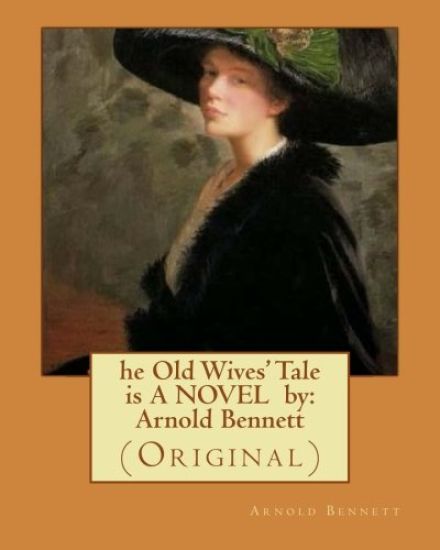
he Old Wives' Tale is A NOVEL by: Arnold Bennett: (Original)
Arnold Bennett
Createspace Independent Publishing Platform
2016
nidottu

Buried alive. By. Arnold Bennett
Arnold Bennett
Createspace Independent Publishing Platform
2016
nidottu
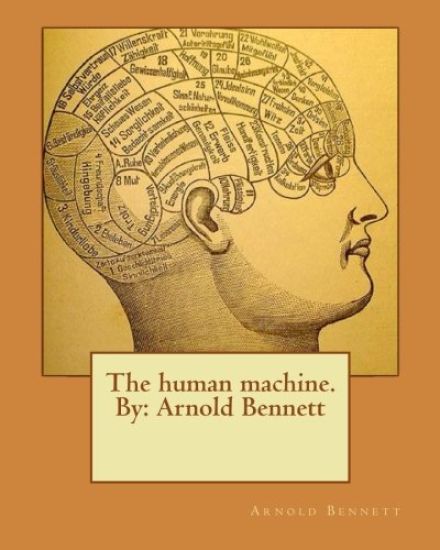
The human machine.By: Arnold Bennett
Arnold Bennett
Createspace Independent Publishing Platform
2016
nidottu

Mental efficiency, and other hints to men and women. By: Arnold Bennett
Arnold Bennett
Createspace Independent Publishing Platform
2016
nidottu
Literary Taste: How to Form It. (1909) by: Arnold Bennett
Arnold Bennett
Createspace Independent Publishing Platform
2016
nidottu
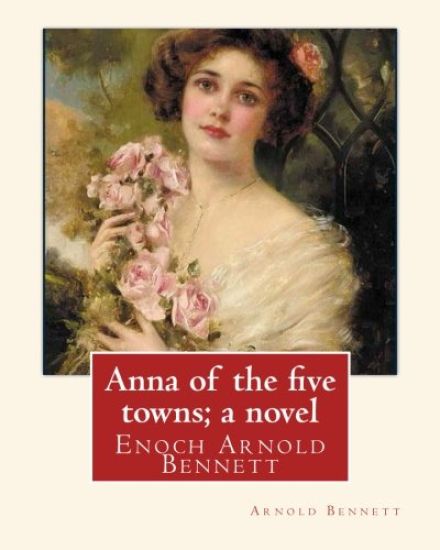
Anna of the five towns; a novel, By Arnold Bennett (World's Classics): Enoch Arnold Bennett
Arnold Bennett
Createspace Independent Publishing Platform
2016
nidottu
Anna of the Five Towns is a novel by Arnold Bennett, first published in 1902 and one of his best-known works. Plot summary The plot centres on Anna Tellwright, daughter of a wealthy but miserly and dictatorial father, living in the Potteries area of Staffordshire, England. Her activities are strictly controlled by the Methodist church. The novel tells of Anna's struggle for freedom and independence against her father's restraints, and her inward battle between wanting to please her father and wanting to help Willie Price whose father, Titus Price, commits suicide after falling into bankruptcy and debt. During the novel, Anna is courted by the town's most eligible bachelor Henry Mynors, and agrees to be his wife, much to her young sister Agnes' pleasure. She discovers in the end, however, that she loves Willie Price, but does not follow her heart, as he is leaving for Australia, and she is already promised to Mynors. Willie then also commits suicide. "The Five Towns" Stoke-on-Trent has become known as "The Five Towns", because of the name given to it by local novelist Arnold Bennett. In his novels, Bennett used mostly recognisable aliases for five of the six towns (although he called Stoke "Knype"). However, Bennett said that he believed "Five Towns" was more euphonious than "Six Towns", so he omitted Fenton (sometimes referred to as "the forgotten town"). In order from northwest to southeast, the towns are Tunstall, Burslem, Hanley, Stoke, Fenton and Longton.... Enoch Arnold Bennett (27 May 1867 - 27 March 1931) was an English writer. He is best known as a novelist, but he also worked in other fields such as journalism, propaganda and film. Early life--Bennett was born in a modest house in Hanley in the Potteries district of Staffordshire. Hanley is one of a conurbation of six towns which were joined together at the beginning of the 20th century as Stoke-on-Trent. Enoch Bennett, his father, qualified as a solicitor in 1876, and the family moved to a larger house between Hanley and Burslem.Bennett was educated locally in Newcastle-under-Lyme. Bennett was employed by his father but the working relationship failed. Bennett found himself doing jobs such as rent-collecting which were uncongenial. He also resented the low pay; it is no accident that the theme of parental miserliness is important in his novels. In his spare time he was able to do a little journalism, but his breakthrough as a writer came after he had moved from the Potteries. At the age of 21, he left his father's practice and went to London as a solicitor's clerk....

The old wives' tale. By: Arnold Bennett: Novel
Arnold Bennett
Createspace Independent Publishing Platform
2017
nidottu
The Old Wives' Tale is a novel by Arnold Bennett, first published in 1908. It deals with the lives of two very different sisters, Constance and Sophia Baines, following their stories from their youth, working in their mother's draper's shop, into old age. It covers a period of about 70 years from roughly 1840 to 1905, and is set in Burslem and Paris. It is generally regarded as one of Bennett's finest works.The book is broken up into four parts. The first section, "Mrs Baines" details the adolescence of both Sophia and Constance, and their life in their father's shop and house (a combined property). 2] The father is ill and bedridden, and the main adult in their life is Mrs Baines, their mother. By the end of the first book, Sophia (whose name reflects her sophistication, as opposed to the constant Constance) has eloped with a travelling salesman. Constance meanwhile marries Mr Povey, who works in the shop. The second part, "Constance", details the life of Constance from that point forward up until the time she is reunited with her sister in old age. Her life, although outwardly prosaic, is nevertheless filled with personal incident, including the death of her husband, Mr Povey, and her concerns about the character and behaviour of her so The third part, "Sophia", carries forward the story of what happened to Sophia after her elopement. Abandoned by her husband in Paris, Sophia eventually becomes the owner of a successful pensione. The final part, "What Life Is", details how the two sisters are eventually reunited. Sophia returns to England and the house of her childhood, where Constance still lives.. Enoch Arnold Bennett (27 May 1867 - 27 March 1931) was an English writer. He is nowadays best known as a novelist, but he also worked in other fields such as the theatre, journalism, propaganda and film. Bennett was born in a modest house in Hanley in the Potteries district of Staffordshire. Hanley is one of a conurbation of six towns which were joined together at the beginning of the 20th century as Stoke-on-Trent. Enoch Bennett, his father, qualified as a solicitor in 1876, and the family moved to a larger house between Hanley and Burslem. 1] Bennett was educated locally in Newcastle-under-Lyme. Bennett was employed by his father but the working relationship failed. He found himself doing jobs such as rent-collecting which were uncongenial. Bennett also resented the low pay; it is no accident that the theme of parental miserliness is important in his novels. In his spare time he was able to do a little journalism, but his breakthrough as a writer came after he had moved from the Potteries. At the age of 21, he left his father's practice and went to London as a solicitor's clerk.......
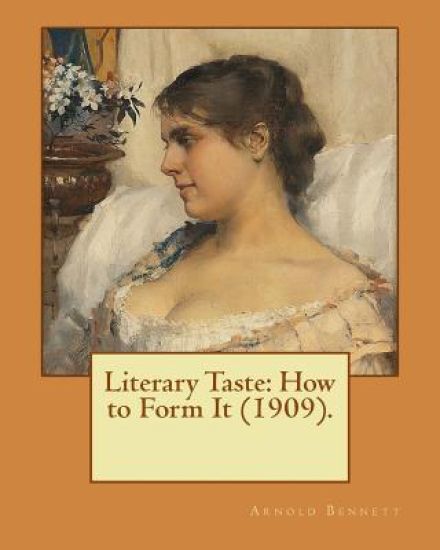
Literary Taste: How to Form It (1909). By: Arnold Bennett: Literary Taste: How to Form it is a long essay by Arnold Bennett, first published in 1909
Arnold Bennett
Createspace Independent Publishing Platform
2017
nidottu
Literary Taste: How to Form it is a long essay by Arnold Bennett, first published in 1909, with a revised edition by his friend Frank Swinnerton appearing in 1937. Enoch Arnold Bennett (27 May 1867 - 27 March 1931) was an English writer. He is nowadays best known as a novelist, but he also worked in other fields such as the theatre, journalism, propaganda and film. Early life: Bennett was born in a modest house in Hanley in the Potteries district of Staffordshire. Hanley is one of a conurbation of six towns which were joined together at the beginning of the 20th century as Stoke-on-Trent. Enoch Bennett, his father, qualified as a solicitor in 1876, and the family moved to a larger house between Hanley and Burslem.Bennett was educated locally in Newcastle-under-Lyme. Bennett was employed by his father but the working relationship failed. He found himself doing jobs such as rent-collecting which were uncongenial. Bennett also resented the low pay; it is no accident that the theme of parental miserliness is important in his novels. In his spare time he was able to do a little journalism, but his breakthrough as a writer came after he had moved from the Potteries. At the age of 21, he left his father's practice and went to London as a solicitor's clerk. Career: Journalism and nonfiction: Bennett won a literary competition hosted by Tit-Bits magazine in 1889 and was encouraged to take up journalism full-time. In 1894, he became assistant editor of the periodical Woman. He noticed that the material offered by a syndicate to the magazine was not very good, so he wrote a serial which was bought by the syndicate for 75 (equivalent to 10,000 in 2015).He then wrote another. This became The Grand Babylon Hotel. Just over four years later, his first novel, A Man from the North, was published to critical acclaim and he became editor of the magazine. From 1900 he devoted himself full-time to writing, giving up the editorship. He continued to write journalism despite the success of his career as a novelist. In 1926, at the suggestion of Lord Beaverbrook, he began writing an influential weekly article on books for the Evening Standard newspaper. As well as the novels, much of Bennett's non-fiction work has stood the test of time. One of his most popular non-fiction works, which is still read to this day, is the self-help book How to Live on 24 Hours a Day. His diaries have yet to be published in full, but extracts from them are often quoted in the British press.

A man from the North. By: Arnold Bennett: Novel
Arnold Bennett
Createspace Independent Publishing Platform
2017
nidottu
Enoch Arnold Bennett (27 May 1867 - 27 March 1931) was an English writer. He is nowadays best known as a novelist, but he also worked in other fields such as the theatre, journalism, propaganda and film. Early life: Bennett was born in a modest house in Hanley in the Potteries district of Staffordshire. Hanley is one of a conurbation of six towns which were joined together at the beginning of the 20th century as Stoke-on-Trent. Enoch Bennett, his father, qualified as a solicitor in 1876, and the family moved to a larger house between Hanley and Burslem.Bennett was educated locally in Newcastle-under-Lyme. Bennett was employed by his father but the working relationship failed. He found himself doing jobs such as rent-collecting which were uncongenial. Bennett also resented the low pay; it is no accident that the theme of parental miserliness is important in his novels. In his spare time he was able to do a little journalism, but his breakthrough as a writer came after he had moved from the Potteries. At the age of 21, he left his father's practice and went to London as a solicitor's clerk. Career: Journalism and nonfiction: Bennett won a literary competition hosted by Tit-Bits magazine in 1889 and was encouraged to take up journalism full-time. In 1894, he became assistant editor of the periodical Woman. He noticed that the material offered by a syndicate to the magazine was not very good, so he wrote a serial which was bought by the syndicate for 75 (equivalent to 10,000 in 2015).He then wrote another. This became The Grand Babylon Hotel. Just over four years later, his first novel, A Man from the North, was published to critical acclaim and he became editor of the magazine. From 1900 he devoted himself full-time to writing, giving up the editorship. He continued to write journalism despite the success of his career as a novelist. In 1926, at the suggestion of Lord Beaverbrook, he began writing an influential weekly article on books for the Evening Standard newspaper. As well as the novels, much of Bennett's non-fiction work has stood the test of time. One of his most popular non-fiction works, which is still read to this day, is the self-help book How to Live on 24 Hours a Day. His diaries have yet to be published in full, but extracts from them are often quoted in the British press.