Kirjojen hintavertailu. Mukana 12 390 323 kirjaa ja 12 kauppaa.

Kirjahaku

Etsi kirjoja tekijän nimen, kirjan nimen tai ISBN:n perusteella.

3 kirjaa tekijältä Arnold R. Alanen

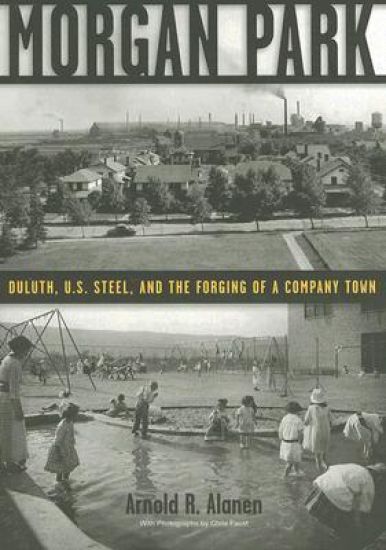
Morgan Park

Morgan Park

Arnold R. Alanen

University of Minnesota Press
2008
nidottu
From 1915 to 1971 the large U.S. Steel plant was a major part of Duluth’s landscape and life. Just as important was Morgan Park-an innovatively planned and close-knit community constructed for the plant’s employees and their families. In this new book Arnold R. Alanen brings to life Morgan Park, the formerly company-controlled town that now stands as a city neighborhood, and the U.S. Steel plant for which it was built. Planned by renowned landscape architects, architects, and engineers, and provided with schools, churches, and recreational and medical services by U.S. Steel, Morgan Park is an iconic example-like Lowell, Massachusetts, and Pullman, Illinois-of a twentieth-century company town, as well as a window into northeastern Minnesota’s industrial roots. Starting with the intense political debates that preceded U.S. Steel’s decision to build a plant in Duluth, Morgan Park follows the town and its residents through the boom years to the closing of the outmoded facility-an event that foreshadowed industrial shutdowns elsewhere in the United States-and up to today, as current residents work to preserve the community’s historic character. Through compelling archival and contemporary photographs and vibrant stories of a community built of concrete and strong as steel, Alanen shows the impact both the plant and Morgan Park have had on life in Duluth. Arnold R. Alanen is professor of landscape architecture at the University of Wisconsin–Madison. His previous books include Main Street Ready-Made: The New Deal Community of Greendale, Wisconsin and Preserving Cultural Landscapes in America.
The Scenic Route

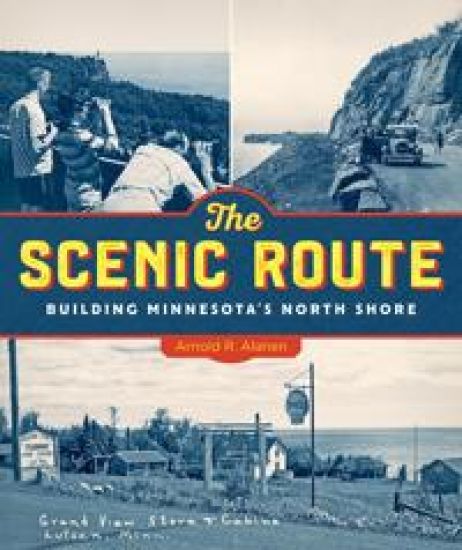
The Scenic Route

Arnold R. Alanen

UNIVERSITY OF MINNESOTA PRESS
2025
sidottu
A guide to the built environment and history of one of the Midwest’s most popular roads Journey along Minnesota’s North Shore, the spectacular Lake Superior coastline between Duluth and the Canadian border, and travel through natural and cultural splendor. The North Shore Scenic Drive, the stretch of Minnesota Highway 61 that leads through tunnels and remarkable vistas, crosses rivers and streams and rocky divides as it makes its way through fishing villages, logging sites, tourist enclaves, Grand Portage National Monument, Superior National Forest, and numerous state parks that have made the North Shore a beloved destination for generations. This is the North Shore explored in The Scenic Route, a field guide to the cultural landscape that comprises one of the Midwest’s most famous byways. The highway corridor and lakeshore offer evidence of human activities that began after the retreat of glacial ice, when the Anishinaabe people plied the waters of Lake Superior. Euro-American explorers and traders followed, and soon the footpaths established by the region’s first inhabitants were used by dogsleds, horse-drawn sleighs, and coaches-and then, in 1917, the rugged trails became the early motor road that would eventually be Minnesota Highway 61. Arnold R. Alanen follows these denizens and visitors, exploring the material world they built along the way: cabins and resorts, docks and fish houses, farms and logging operations, as well as churches, cemeteries, streetscapes, bridges, schools, lighthouses, parks, waysides, and roadside attractions. Interwoven with his tour of the built environment are stories of the people who shaped the cultural heritage along Minnesota’s North Shore.
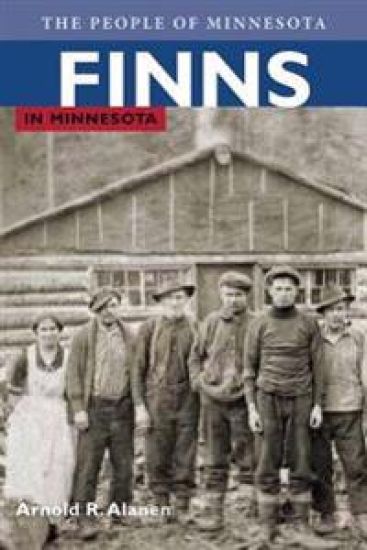
Finns in Minnesota

Finns in Minnesota

Arnold R. Alanen

Minnesota Historical Society Press,U.S.
2012
nidottu
The first Finnish immigrants arrived in Red Wing in 1864, the vanguard of thousands who eventually and resolutely placed Minnesota second among the states in terms of Finnish population. Today we may recognise Minnesota's "Finnishness" in the popular sauna, in the characteristic tenacity known as sisu, or in place names and cultural markers that link to homeland. The newest contribution to the People of Minnesota series traces the Finns' migration to the state, particularly its north-eastern region; their log construction techniques, including dovetail notching; and their ethnic organisations, from religious to political to fraternal. Colourful sidebars enliven the narrative, highlighting such topics as "Finglish", New World legends, and the 1920s Olympic competitors in track and field known as the "Flying Finns". A separate thread tells the story of the Finland Swedes "the minority within a minority" whose members were born in Finland but spoke Swedish and thus straddled two ethnic groups, belonging fully to neither.The book concludes with a personal narrative of Fred Torma (1888-1979), a miner and carpenter from Nashwauk, who describes establishing a Socialist hall, involvement in the 1907 Mesabi strike, and founding a co-operative boarding-house and store. His is just one engaging example of the vibrant lives and legacy of Finnish Americans in Minnesota.