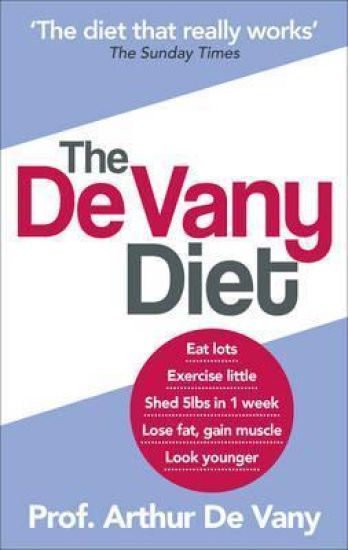
The simple way to lose weight, look younger and feel healthier - without restricting calories or excessive exercisingThe De Vany Diet is Professor Arthur De Vany's astonishing lifestyle programme.
The simple way to lose weight, look younger and feel healthier - without restricting calories or excessive exercisingThe New Evolution Diet is Professor Arthur De Vany's astonishing lifestyle programme.
Just how risky is the movie industry? Is screenwriter William Goldman's claim that "nobody knows anything" really true? Can a star and a big opening change a movie's risks and return? Do studio executives really earn their huge paychecks? These and many other questions are answered in Hollywood Economics. The book uses powerful analytical models to uncover the wild uncertainty that shapes the industry. The centerpiece of the analysis is the unpredictable and often chaotic dynamic behaviour of motion picture audiences. This unique and important book will be of interest to students and researchers involved in the economics of movies, industrial economics and business studies. The book will also be a real eye-opener for film writers, movie executives, finance and risk management professionals as well as more general movie fans.
Just how risky is the movie industry? Is screenwriter William Goldman's claim that "nobody knows anything" really true? Can a star and a big opening change a movie's risks and return? Do studio executives really earn their huge paychecks? These and many other questions are answered in Hollywood Economics. The book uses powerful analytical models to uncover the wild uncertainty that shapes the industry. The centerpiece of the analysis is the unpredictable and often chaotic dynamic behaviour of motion picture audiences. This unique and important book will be of interest to students and researchers involved in the economics of movies, industrial economics and business studies. The book will also be a real eye-opener for film writers, movie executives, finance and risk management professionals as well as more general movie fans.
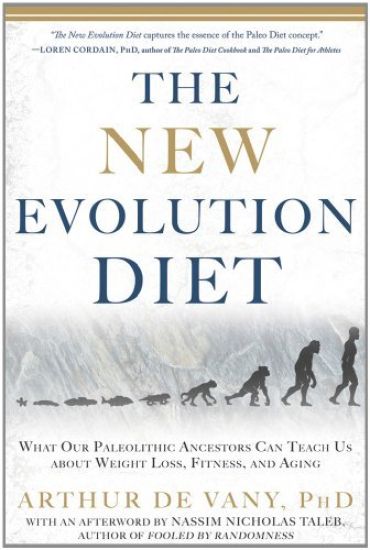
Believe it or not, our DNA is almost exactly the same as that of our ancestors. While scientific advances in agriculture, medicine, and technology have protected man, to some degree, from dangers such as starvation, illness, and exposure, the fact remains that our cave-dwelling cousins were considerably healthier than we are. Our paleolithic ancestors did not suffer from heart disease, diabetes, high blood pressure, or obesity. In fact, a good deal of what we view as normal aging is a modern condition that is more akin to disease than any natural state of growing older. Our predecessors were incomparably better nourished than we are, and were incredibly physically fit. And certainly none of them ever craved a doughnut, let alone tasted one. In fact, the human preference for sweet tastes and fatty textures was developed in an environment where such treats were rare, and signaled dense, useful energy. This once-helpful adaptation is the downfall of many a dieter today. It's what makes it hard to resist fats and sweets, especially when they are all around us.We are not living as we were built to live. Our genes were forged in an environment where activity was mandatory—you were active or you starved or were eaten. This created strong selective pressure for genes encoding a smart, physically adept individual capable of very high activity levels. Humans are among the most active of species, and we carry energetically expensive brains to boot. Our energy expenditures rank high among all animals. At least they once did. The New Evolution Diet by Arthur De Vany, PhD is a roadmap back to the better health our ancestors once enjoyed. By eliminating modern foods, including carbohydrates, dairy, and all processed foods from our diets, we can undo much of the damage caused by our modern food environment. The plan is based on three simple principles:1. Enjoy the pleasure of food and do not count or restrict calories. Eat three satisfying meals a day filled with non-starchy vegetables, fruits, and high-quality, lean proteins2. Do not starve yourself, but do go hungry episodically, for brief periods, to promote a low fasting blood insulin level and increase metabolic fat-burning. 3. Exercise less, not more, but with more playfulness and intensity. The goal is to create a strong body with a high resting metabolism and a large physiologic capacity to move through life easily—not to burn calories.