Kirjojen hintavertailu. Mukana 12 016 292 kirjaa ja 12 kauppaa.

Kirjahaku

Etsi kirjoja tekijän nimen, kirjan nimen tai ISBN:n perusteella.

26 kirjaa tekijältä Arthur Green

Radical Judaism

Radical Judaism

Arthur Green

Yale University Press
2010
nidottu
As featured on the cover of Tikkun magazine How do we articulate a religious vision that embraces evolution and human authorship of Scripture? Drawing on the Jewish mystical traditions of Kabbalah and Hasidism, path-breaking Jewish scholar Arthur Green argues that a neomystical perspective can help us to reframe these realities, so they may yet be viewed as dwelling places of the sacred. In doing so, he rethinks such concepts as God, the origins and meaning of existence, human nature, and revelation to construct a new Judaism for the twenty-first century.
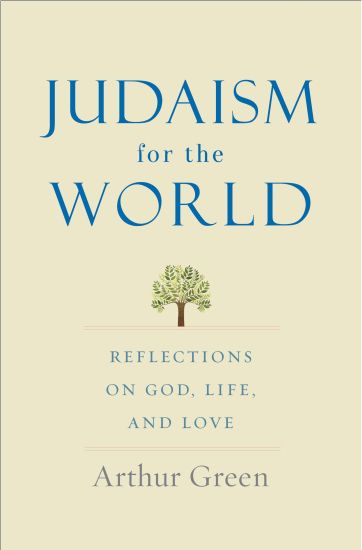
Judaism for the World

Judaism for the World

Arthur Green

Yale University Press
2020
sidottu
National Jewish Book Award winner An internationally recognized scholar and theologian shares a Jewish mysticism for our times in this " humane, accessible " book (Publishers Weekly, Starred Review)“Green challenges traditional notions of God, Israel, and Torah, offering a radically new understanding and stimulating the reader to join him in a journey of discovery.”—Daniel Matt, Graduate Theological Union Judaism, one of the world’s great spiritual traditions, is not addressed to Jews alone. In this masterful book, winner of the 2020 National Jewish Book Award in the Con­tem­po­rary Jew­ish Life and Practice category, Arthur Green calls out to seekers of all sorts, offering a universal response to the eternal human questions of who we are, why we exist, where we are going, and how to live. Drawing on over half a century as a Jewish seeker and teacher, he shows us a Judaism that cultivates the life of the spirit, that inspires an inward journey leading precisely toward self-transcendence, to an awareness of the universal Self in whose presence we exist. As a neo-hasidic seeker, he is both devotional and boldly questioning in his understanding of God and tradition. Engaging with the mystical sources, he translates the insights of the Hasidic masters into a new religious language accessible to all those eager to build an inner life and a human society that treasures the divine spark in each person and throughout Creation.
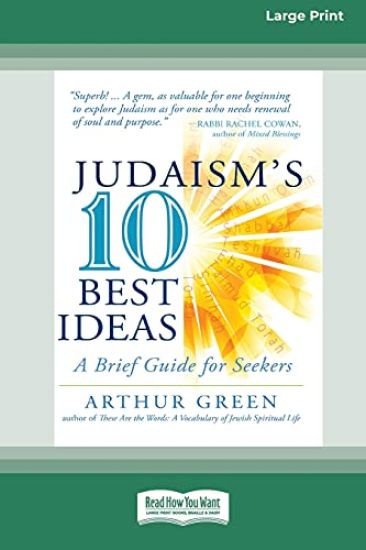
Judaism's Ten Best Ideas

Judaism's Ten Best Ideas

Arthur Green

Readhowyouwant
2014
pokkari
A welcoming introduction to the most important ideas in Judaism. In an age of fluid identity, many people are honestly asking the question ''Why be Jewish'' What in this religious and ethnic legacy is worth preserving? Does Judaism have something unique to offer a contemporary seeker free to choose a way of life and a system of values? Here is the answer of a leading spiritual teacher who has faced these questions in conversation with generations of students. With warmth, humor, personal and rabbinic stories and down - to - earth explanations, Arthur Green presents the ideas in Judaism that kept him loyal to the tradition passed on to him. The result is an enticing look into timeless Jewish wisdom that will encourage you to explore further and search out the riches of Judaism for yourself.
Keter

Keter

Arthur Green

Princeton University Press
2014
pokkari
Keter is a close reading of fifty relatively brief Jewish texts, tracing the motif of divine coronation from Jewish esoteric writings of late antiquity to the Zohar, written in thirteenth-century Spain. In the course of this investigation Arthur Green draws a wide arc including Talmudic, Midrashic, liturgical, Merkavah, German Hasidic, and Kabbalistic works, showing through this single theme the spectrum of devotional, mystical, and magical views held by various circles of Jews over the course of a millennium or more. The first portion of the work deals with late antiquity, emphasizing the close relationship between texts of what is often depicted as "normative" Judaism and their mystical/magical analogues. The mythic imagination of ancient Judaism, he suggests, is shared across this spectrum. The latter portion of the work turns to the medieval Jews who inherited this ancient tradition and its evolution into Kabbalah, where keter plays a key role as the first of the ten divine emanations or sefirot. The nature of these sefirot as symbols and the emergence of a structured and hierarchical symbolism out of the mythic imagery of the past are key themes in these later chapters. As a whole, Keter takes the reader on an exciting tour of the interior landscapes of the Jewish imagination, offering some remarkable insights into the nature of mystical and symbolic thinking in the Jewish tradition. Originally published in 1997. The Princeton Legacy Library uses the latest print-on-demand technology to again make available previously out-of-print books from the distinguished backlist of Princeton University Press. These editions preserve the original texts of these important books while presenting them in durable paperback and hardcover editions. The goal of the Princeton Legacy Library is to vastly increase access to the rich scholarly heritage found in the thousands of books published by Princeton University Press since its founding in 1905.
Keter

Keter

Arthur Green

Princeton University Press
2016
sidottu
Keter is a close reading of fifty relatively brief Jewish texts, tracing the motif of divine coronation from Jewish esoteric writings of late antiquity to the Zohar, written in thirteenth-century Spain. In the course of this investigation Arthur Green draws a wide arc including Talmudic, Midrashic, liturgical, Merkavah, German Hasidic, and Kabbalistic works, showing through this single theme the spectrum of devotional, mystical, and magical views held by various circles of Jews over the course of a millennium or more. The first portion of the work deals with late antiquity, emphasizing the close relationship between texts of what is often depicted as "normative" Judaism and their mystical/magical analogues. The mythic imagination of ancient Judaism, he suggests, is shared across this spectrum. The latter portion of the work turns to the medieval Jews who inherited this ancient tradition and its evolution into Kabbalah, where keter plays a key role as the first of the ten divine emanations or sefirot. The nature of these sefirot as symbols and the emergence of a structured and hierarchical symbolism out of the mythic imagery of the past are key themes in these later chapters. As a whole, Keter takes the reader on an exciting tour of the interior landscapes of the Jewish imagination, offering some remarkable insights into the nature of mystical and symbolic thinking in the Jewish tradition. Originally published in 1997. The Princeton Legacy Library uses the latest print-on-demand technology to again make available previously out-of-print books from the distinguished backlist of Princeton University Press. These editions preserve the original texts of these important books while presenting them in durable paperback and hardcover editions. The goal of the Princeton Legacy Library is to vastly increase access to the rich scholarly heritage found in the thousands of books published by Princeton University Press since its founding in 1905.
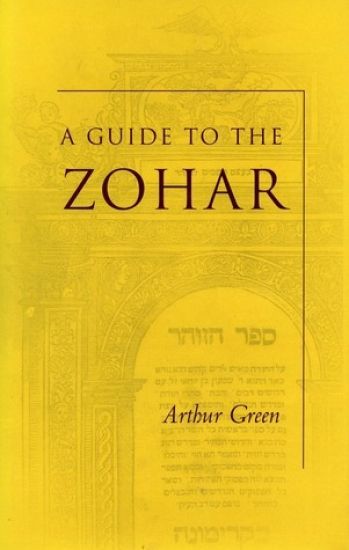
A Guide to the Zohar

A Guide to the Zohar

Arthur Green

Stanford University Press
2003
pokkari
The Zohar is the great medieval compendium of Jewish esoteric and mystical teaching, and the basis of the kabbalistic faith. It is, however, a notoriously difficult text, full of hidden codes, concealed meanings, obscure symbols, and ecstatic expression. This illuminating study, based upon the last several decades of modern Zohar scholarship, unravels the historical and intellectual origins of this rich text and provides an excellent introduction to its themes, complex symbolism, narrative structure, and language. A Guide to the Zohar is thus an invaluable companion to the Zohar itself, as well as a useful resource for scholars and students interested in mystical literature, particularly that of the west, from the Middle Ages to the present.
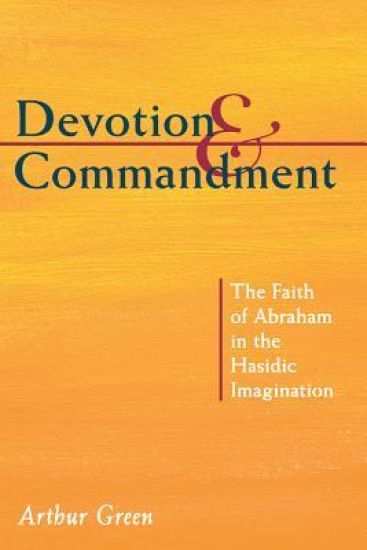
Devotion and Commandment

Devotion and Commandment

Arthur Green

Hebrew Union College Press,U.S.
2015
nidottu
What was piety like before the commandments were revealed? How did Abraham live in a way that fulfilled the ideals of piety without the Torah? This question, raised in the ancient Jewish theology of Philo and central to the struggle of Paul with his own Judaism and his emerging Christian faith, was raised once again by the Hasidic masters of Eastern Europe in the eighteenth century. In a series of powerful and spiritually searching sermons, the Hasidic masters reinterpret spiritually the ancient rabbis' insistence that the patriarchs lived within the Law. In centering their spiritualization of Judaism around the figure of Abraham, these latter-day Jewish thinkers express a position that stands midway between the claims of the Talmud and those of the Christian apostle. Arthur Green uses this Hasidic debate on the patriarchs and the commandments as a point of departure for a wide-ranging consideration of the relationship between piety and commandment in Hasidic Judaism. The result of this effort is a series of rather remarkable mystical defenses of the commandments and an original contribution of Hasidic thought to the ongoing history of Judaism.
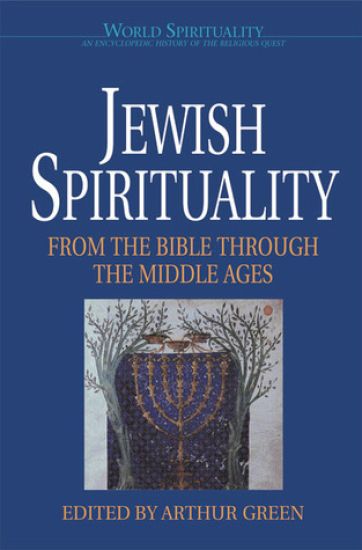
Jewish Spirituality

Jewish Spirituality

Arthur Green

Crossroad Publishing Co ,U.S.
1989
nidottu
Part of the World Sprituality series, this is a broad-ranging, illustrated, scholarly treatment of core topics in Jewish spirituality from the earliest text references in Biblical times, through Second Temple Judaism and the Middle Ages.
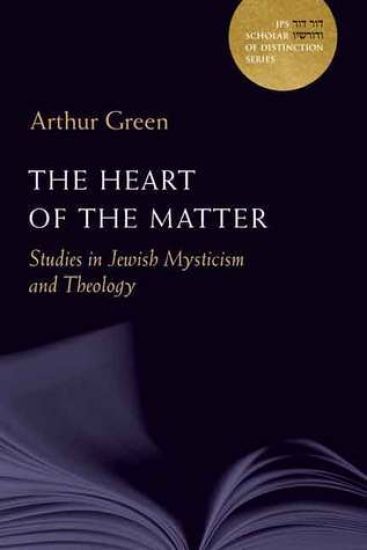
The Heart of the Matter

The Heart of the Matter

Arthur Green

Jewish Publication Society
2015
sidottu
Judaism, like all the great religions, has a strand within it that sees inward devotion, the opening of the human heart to God's presence, to be the purpose of its entire edifice of praxis, liturgy, and way of life. This voice is not always easy to hear in a tradition where so much attention is devoted to the how rather than the why of religious living. The devotional claim, certainly a key part of Judaism's biblical heritage, has reasserted itself in the teachings of individual mystics and in the emergence of religious movements over the long course of Jewish history. This volume represents Arthur Green's own quest for such a Judaism—as a rabbi, as a scholar, and as a contemporary seeker. This collection of essays brings together Green's scholarly writings, centered on the history of early Hasidism, and his highly personal approach to a rebirth of Jewish spirituality in our own day. In choosing to present them in this way he asserts a claim that they are all of a piece. They represent one man's attempt to wade through history and text, language and symbol, and an array of voices both past and present while always focusing on the essential questions: "What does it mean to be a religious human being, and what does Judaism teach us about how to be one?" This, the author considers to be the heart of the matter.
Seek My Face

Seek My Face

Arthur Green

Jewish Lights Publishing
2003
nidottu
Arthur Green's classic work of contemporary Jewish theology, revised and updated. He tackles the topics of the reality of God, creation, revelation, and the return to God that are so much a part of our times. It is a profound, deeply personal statement of the lasting truths of Jewish mysticism and the basic faith claims of Judaism.
Ehyeh

Ehyeh

Arthur Green

Jewish Lights Publishing
2005
nidottu
According to the Jewish myslical tradition of Kabbalah, Ehyeh, or "I shall be," is the deepest, most hidden name of God. Arthur Green, one of the most respected teachers of Jewish mysticism of his generation, uses this simple Hebrew word to unlock the spiritual meaning of Kabbalah for our lives. Blending Jewish theology and mysticism, Arthur Green invites readers on a contemporary exploration of Kabbalah, showing how the ancient Jewish mystical tradition can be retooled to address the needs of our generation. Drawing on the Zohar and other kabbalistic texts, Green examines the fundamental ideas and spiritual teachings of Kabbalah, encouraging today's modern seeker to stretch to new ways of thinking with both heart and mind, setting us on a rewarding path to the wisdom Kabbalah has to offer.
These Are the Words

These Are the Words

Arthur Green

Jewish Lights Publishing
2012
pokkari
Judaism itself is a language, a group's way of expressing beliefs, longings, aspirations and dreams. The vocabulary of Jewish life is the framework that Jews use to hand their past to their children. It is also the vocabulary that people of other faiths need to know to understand Judaism and Jewish life. In this revised, expanded, highly readable, enlightening and entertaining new edition of "the ultimate Jewish primer," one of the greatest teachers of our time takes readers on a historical and spiritual journey through Judaism. Dr. Arthur Green explains the meaning, history and origin of over 150 core Hebrew words that are shared and understood throughout the Jewish world. This new edition includes terms previously unexplored. With humor, insight and relevance, he lays out the basic vocabulary of Jewish communal and religious identity and shows why it is important for people to know and use these words in Hebrew.
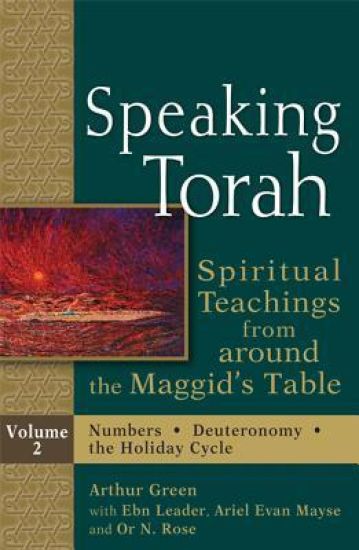
Speaking Torah, Volume 2

Speaking Torah, Volume 2

Arthur Green

Jewish Lights Publishing
2013
sidottu
The most powerful Hasidic teachings made accessible--from some of the world's preeminent authorities on Jewish thought and spirituality."The teachings of Torah, from beginning to end, are read here as a path toward liberation, a way of uplifting your soul and allowing it to journey homeward, back to its Source in the oneness of all being. Or, even better, to discover that oneness right here, in a loving but transformative embrace of both world and self."--from "To the Reader"While Hasidic tales have become widely known to modern audiences, the profound spiritual teachings that stand at the very heart of Hasidism have remained a closed book for all except scholars. This fascinating selection--presented in two volumes following the weekly Torah reading and the holiday cycle, and featured in English and Hebrew--makes the teachings accessible in an extraordinary way.Volume 1 covers Genesis, Exodus and Leviticus, and includes a history of early Hasidism and a summary of central religious teachings of the Maggid's school. Volume 2 covers Numbers and Deuteronomy and the holiday cycle, and includes brief biographies of the Hasidic figures. Each teaching is presented with a fresh translation and contemporary commentary that builds a bridge between the eighteenth and twenty-first centuries. And each teaching concludes with a dynamic round-table discussion between distinguished Jewish scholar Arthur Green and his closest students--the editors of this volume. They highlight the wisdom that is most meaningful for them, thus serving as a contemporary circle's reflections on the original mystical circle of master and disciples who created these teachings.Volume 2 of a 2-volume set
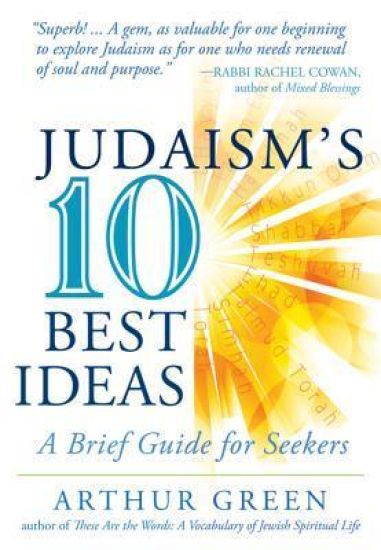
Judaism's 10 Best Ideas

Judaism's 10 Best Ideas

Arthur Green

Jewish Lights Publishing
2014
pokkari
A welcoming introduction to the most important ideas in Judaism.In an age of fluid identity, many people are honestly asking the question "Why be Jewish?" What in this religious and ethnic legacy is worth preserving? Does Judaism have something unique to offer a contemporary seeker free to choose a way of life and a system of values?Here is the answer of a leading spiritual teacher who has faced these questions in conversation with generations of students. With warmth, humor, personal and rabbinic stories and down-to-earth explanations, Arthur Green presents the ideas in Judaism that kept him loyal to the tradition passed on to him. The result is an enticing look into timeless Jewish wisdom that will encourage you to explore further and search out the riches of Judaism for yourself.
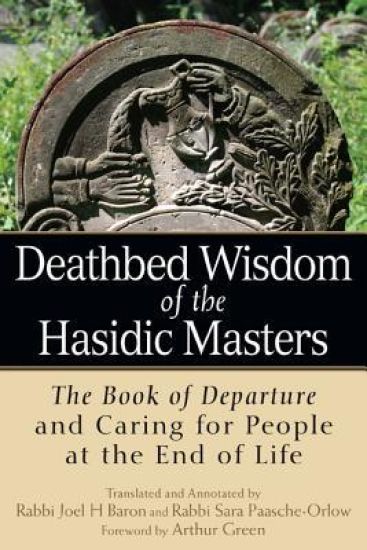
Deathbed Wisdom of the Hasidic Masters

Deathbed Wisdom of the Hasidic Masters

Arthur Green

Jewish Lights Publishing
2016
pokkari
Death is a time of life that holds meaning for the dying, their family and friends, their community--and us."Most of Torah's teaching is about how to live. But there is a special section within its wisdom that also speaks to us about how to die. Since we are all mortals, our lives fashioned somehow around the awareness that death is inevitably to come, this is one of the important lessons.... There is something profound to be learned about the way of dying, and it is best learned from the wisdom and stories of those who have gone before us."--from the ForewordStudents of the Hasidic masters wrote down the stories of the last months, days, hours and moments of the lives of their rebbes. A compilation of their experiences, called The Book of Departure (Sefer haHistalkut), first published in Hebrew in 1930, brings together the rich end-of-life stories of forty-two holy men who died between 1760 and 1904, as well as their philosophical forebearer, Isaac Luria. Featuring new pastoral commentary in a unique facing-page format, this English presentation of heart-touching deathbed tales sheds light on Jewish traditions about death, the afterlife and how to care for people in their final days.
Deathbed Wisdom of the Hasidic Masters

Deathbed Wisdom of the Hasidic Masters

Arthur Green

Jewish Lights Publishing
2016
sidottu
Death is a time of life that holds meaning for the dying, their family and friends, their community--and us."Most of Torah's teaching is about how to live. But there is a special section within its wisdom that also speaks to us about how to die. Since we are all mortals, our lives fashioned somehow around the awareness that death is inevitably to come, this is one of the important lessons.... There is something profound to be learned about the way of dying, and it is best learned from the wisdom and stories of those who have gone before us."--from the ForewordStudents of the Hasidic masters wrote down the stories of the last months, days, hours and moments of the lives of their rebbes. A compilation of their experiences, called The Book of Departure (Sefer haHistalkut), first published in Hebrew in 1930, brings together the rich end-of-life stories of forty-two holy men who died between 1760 and 1904, as well as their philosophical forebearer, Isaac Luria. Featuring new pastoral commentary in a unique facing-page format, this English presentation of heart-touching deathbed tales sheds light on Jewish traditions about death, the afterlife and how to care for people in their final days.
Ehyeh

Ehyeh

Arthur Green

Jewish Lights Publishing
2002
sidottu
What can Kabbalah teach us about our lives today? What can it teach us about our future? According to the Jewish mystical tradition of Kabbalah, Ehyeh, or "I shall be," is the deepest, most hidden name of God. Arthur Green, one of the most respected teachers of Jewish mysticism of his generation, uses this simple Hebrew word to unlock the spiritual meaning of Kabbalah for our lives. When Moses experienced his great moment of call at the Burning Bush, he asked God, “When people ask me, 'What is His name?' what should I say to them?” God answers with this mysterious phrase, “I shall be what I shall be,” and says to Moses, “Tell them that ‘I shall be’ sent you.” God’s puzzling answer makes the conversation sound like a koan-dialogue between a Zen master and disciple…. Like the koan, the text here is reaching to some place beyond words, seeking to create a breakthrough in our consciousness. What is it trying to tell us? —from the Introduction Blending Jewish theology and mysticism, Arthur Green invites us on a contemporary exploration of Kabbalah, showing how the ancient Jewish mystical tradition can be retooled to address the needs of our generation. Drawing on the Zohar and other kabbalistic texts, Green examines the fundamental ideas and spiritual teachings of Kabbalah, encouraging today’s modern seeker to stretch to new ways of thinking with both heart and mind, setting us on a rewarding path to the wisdom Kabbalah has to offer.
Seek My Face

Seek My Face

Arthur Green

Jewish Lights Publishing
2003
sidottu
The new Jewish spirituality lies somewhere between God's elusive presence in our world and our search for authentic language to describe it. Personal journeys seldom have a clear beginning, and they rarely have a definite end. If there is an end to our journey, surely it is one that leads to some measure of wisdom, and thence back to its own beginning. But somewhere along the way, we come to realize that we must know where we have been going, why we have been going. Most of all, we come to understand as best we can the One who sends us on our way. --from the Introduction Rabbi Arthur Green leads us on a journey of discovery to seek God, the world, and ourselves. One of the most influential Jewish thinkers of our time, Green has created a roadmap of meaning for our lives in the light of Jewish mysticism, using the Hebrew letters that make up the divine name: Yod-- Reality at the beginning. God as the oneness of being at the outset, before it unfolds into our universe. Heh-- Creation and God's presence in the world. A renewed faith in God as Creator has powerful implications for us today. Vav-- Revelation, the central faith claim of Judaism and the claim it makes on our lives. Heh-- Redemption and our return to God through the life of Torah and by participating in the ongoing repair of the world. A personal and honest framework of understanding for the seeker, this revised and updated edition of a classic sheds new light on our search for the divine presence in our everyday lives.
These are the Words (2nd Edition)

These are the Words (2nd Edition)

Arthur Green

Jewish Lights Publishing
2012
sidottu
The basic vocabulary of Jewish spiritual life, explained with humor, insight and relevance to guide you on a historical and spiritual journey through Judaism.Judaism itself is a language, a group's way of expressing beliefs, longings, aspirations and dreams. The vocabulary of Jewish life is the framework that Jews use to hand their past down to their children. It is also the vocabulary that people of other faiths need to know to understand Judaism and Jewish life.In this revised, expanded, highly readable, enlightening and entertaining new edition of "the ultimate Jewish primer," one of the greatest spiritual teachers of our time takes readers--Jews and non-Jews alike--on a historical and spiritual journey through Judaism. Dr. Arthur Green explains the meaning, history and origin of over 150 core Hebrew words that are shared and understood throughout the Jewish world. With humor, insight and relevance, he lays out the basic vocabulary of Jewish communal and religious identity and shows why it is important for people to know and use these words in Hebrew.