Kirjojen hintavertailu. Mukana 11 627 220 kirjaa ja 12 kauppaa.

Kirjahaku

Etsi kirjoja tekijän nimen, kirjan nimen tai ISBN:n perusteella.

14 kirjaa tekijältä Arthur Herman

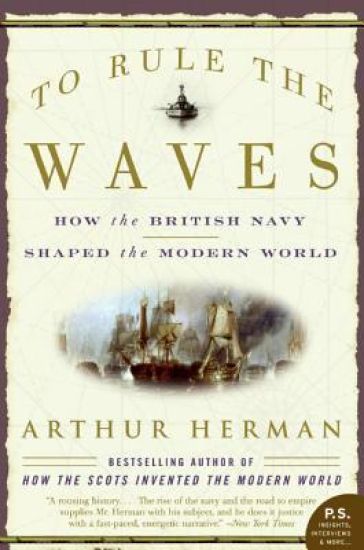
To Rule the Waves

To Rule the Waves

Arthur Herman

Harper Perennial
2005
pokkari
To Rule the Waves tells the extraordinary story of how the British Royal Navy allowed one nation to rise to a level of power unprecedented in history. From the navy's beginnings under Henry VIII to the age of computer warfare and special ops, historian Arthur Herman tells the spellbinding tale of great battles at sea, heroic sailors, violent conflict, and personal tragedy -- of the way one mighty institution forged a nation, an empire, and a new world.This P.S. edition features an extra 16 pages of insights into the book, including author interviews, recommended reading, and more.
1917

1917

Arthur Herman

HarperPerennial
2019
nidottu
How did two men move the world away from wars for land and treasure to wars over ideas and ideologies—a change that would go on to kill millions?In April 1917, Woodrow Wilson—champion of American democracy but also of segregation, advocate for free trade and a new world order based on freedom and justice—thrust the United States into the First World War in order to make the “world safe for democracy”—only to see his dreams for a liberal international system dissolve into chaos, bloodshed, and betrayal.That October, Vladimir Lenin—communist revolutionary and advocate for class war and “dictatorship of the proletariat”—would overthrow Russia’s earlier democratic revolution that had toppled the powerful czar, all in the name of liberating humanity—and instead would set up the most repressive totalitarian regime in history, the Soviet Union. In this incisive, fast-paced history, the New York Times bestselling author Arthur Herman brilliantly reveals how Lenin and Wilson rewrote the rules of modern geopolitics. Prior to and through the end of World War I, countries marched into war only to advance or protect their national interests. After World War I, countries began going to war over ideas. Together Lenin and Wilson unleashed the disruptive ideologies that would sweep the world, from nationalism and globalism to Communism and terrorism, and that continue to shape our world today.Our new world disorder is the legacy left by Wilson and Lenin, and their visions of the perfectibility of man. One hundred years later, we still sit on the powder keg they first set the detonator to, through war and revolution.
1917: Lenin, Wilson, and the Birth of the New World Disorder
How did two men move the world away from wars for land and treasure to wars over ideas and ideologies--a change that would go on to kill millions?In April 1917, Woodrow Wilson--champion of American democracy but also of segregation, advocate for free trade and a new world order based on freedom and justice--thrust the United States into the First World War in order to make the "world safe for democracy"--only to see his dreams for a liberal international system dissolve into chaos, bloodshed, and betrayal.That October, Vladimir Lenin--communist revolutionary and advocate for class war and "dictatorship of the proletariat"--would overthrow Russia's earlier democratic revolution that had toppled the powerful czar, all in the name of liberating humanity--and instead would set up the most repressive totalitarian regime in history, the Soviet Union. In this incisive, fast-paced history, the New York Times bestselling author Arthur Herman brilliantly reveals how Lenin and Wilson rewrote the rules of modern geopolitics. Prior to and through the end of World War I, countries marched into war only to advance or protect their national interests. After World War I, countries began going to war over ideas. Together Lenin and Wilson unleashed the disruptive ideologies that would sweep the world, from nationalism and globalism to Communism and terrorism, and that continue to shape our world today.Our new world disorder is the legacy left by Wilson and Lenin, and their visions of the perfectibility of man. One hundred years later, we still sit on the powder keg they first set the detonator to, through war and revolution.
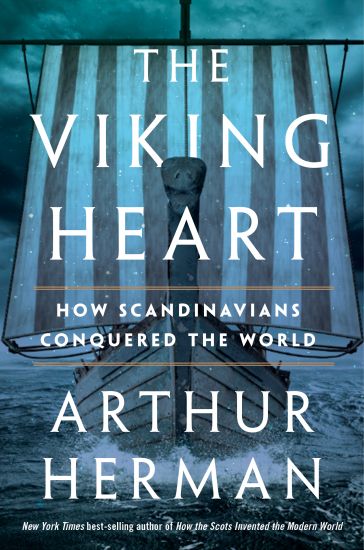
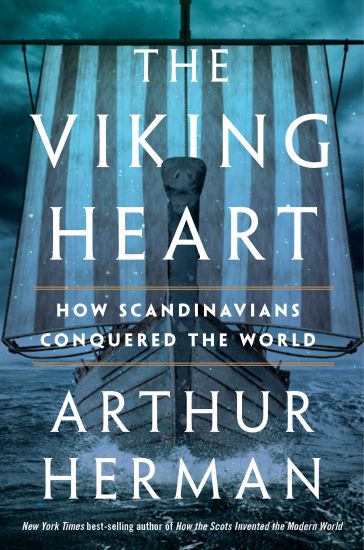
The Viking Heart: How Scandinavians Conquered the World
From a New York Times best-selling historian and Pulitzer Prize finalist, a sweeping epic of how the Vikings and their descendants have shaped history and AmericaScandinavia has always been a world apart. For millennia Norwegians, Danes, Finns, and Swedes lived a remote and rugged existence among the fjords and peaks of the land of the midnight sun. But when they finally left their homeland in search of opportunity, these wanderers--including the most famous, the Vikings--would reshape Europe and beyond. Their ingenuity, daring, resiliency, and loyalty to family and community would propel them to the gates of Rome, the steppes of Russia, the courts of Constantinople, and the castles of England and Ireland. But nowhere would they leave a deeper mark than across the Atlantic, where the Vikings' legacy would become the American Dream.In The Viking Heart, Arthur Herman melds a compelling historical narrative with cutting-edge archaeological and DNA research to trace the epic story of this remarkable and diverse people. He shows how the Scandinavian experience has universal meaning, and how we can still be inspired by their indomitable spirit.
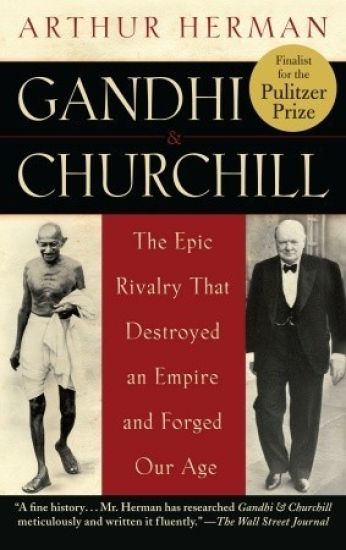
Gandhi & Churchill: The Epic Rivalry That Destroyed an Empire and Forged Our Age
In this fascinating and meticulously researched book, bestselling historian Arthur Herman sheds new light on two of the most universally recognizable icons of the twentieth century, and reveals how their forty-year rivalry sealed the fate of India and the British Empire. They were born worlds apart: Winston Churchill to Britain's most glamorous aristocratic family, Mohandas Gandhi to a pious middle-class household in a provincial town in India. Yet Arthur Herman reveals how their lives and careers became intertwined as the twentieth century unfolded. Both men would go on to lead their nations through harrowing trials and two world wars--and become locked in a fierce contest of wills that would decide the fate of countries, continents, and ultimately an empire. Gandhi & Churchill reveals how both men were more alike than different, and yet became bitter enemies over the future of India, a land of 250 million people with 147 languages and dialects and 15 distinct religions--the jewel in the crown of Britain's overseas empire for 200 years. Over the course of a long career, Churchill would do whatever was necessary to ensure that India remain British--including a fateful redrawing of the entire map of the Middle East and even risking his alliance with the United States during World War Two. Mohandas Gandhi, by contrast, would dedicate his life to India's liberation, defy death and imprisonment, and create an entirely new kind of political movement: satyagraha, or civil disobedience. His campaigns of nonviolence in defiance of Churchill and the British, including his famous Salt March, would become the blueprint not only for the independence of India but for the civil rights movement in the U.S. and struggles for freedom across the world. Now master storyteller Arthur Herman cuts through the legends and myths about these two powerful, charismatic figures and reveals their flaws as well as their strengths. The result is a sweeping epic of empire and insurrection, war and political intrigue, with a fascinating supporting cast, including General Kitchener, Rabindranath Tagore, Franklin Roosevelt, Lord Mountbatten, and Mohammed Ali Jinnah, the founder of Pakistan. It is also a brilliant narrative parable of two men whose great successes were always haunted by personal failure, and whose final moments of triumph were overshadowed by the loss of what they held most dear.
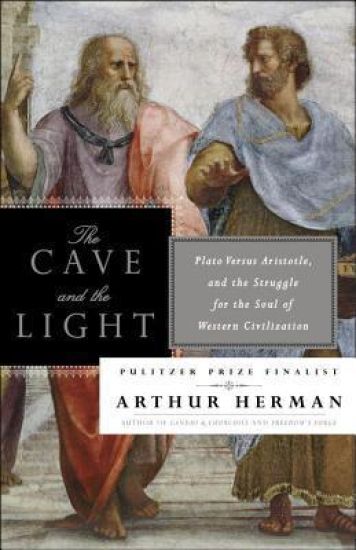
The Cave and the Light

The Cave and the Light

Arthur Herman

Random House Inc
2014
pokkari
The definitive sequel to New York Times bestseller How the Scots Invented the Modern World is a magisterial account of how the two greatest thinkers of the ancient world, Plato and Aristotle, laid the foundations of Western culture--and how their rivalry shaped the essential features of our culture down to the present day. Plato came from a wealthy, connected Athenian family and lived a comfortable upper-class lifestyle until he met an odd little man named Socrates, who showed him a new world of ideas and ideals. Socrates taught Plato that a man must use reason to attain wisdom, and that the life of a lover of wisdom, a philosopher, was the pinnacle of achievement. Plato dedicated himself to living that ideal and went on to create a school, his famed Academy, to teach others the path to enlightenment through contemplation. However, the same Academy that spread Plato's teachings also fostered his greatest rival. Born to a family of Greek physicians, Aristotle had learned early on the value of observation and hands-on experience. Rather than rely on pure contemplation, he insisted that the truest path to knowledge is through empirical discovery and exploration of the world around us. Aristotle, Plato's most brilliant pupil, thus settled on a philosophy very different from his instructor's and launched a rivalry with profound effects on Western culture. The two men disagreed on the fundamental purpose of the philosophy. For Plato, the image of the cave summed up man's destined path, emerging from the darkness of material existence to the light of a higher and more spiritual truth. Aristotle thought otherwise. Instead of rising above mundane reality, he insisted, the philosopher's job is to explain how the real world works, and how we can find our place in it. Aristotle set up a school in Athens to rival Plato's Academy: the Lyceum. The competition that ensued between the two schools, and between Plato and Aristotle, set the world on an intellectual adventure that lasted through the Middle Ages and Renaissance and that still continues today. From Martin Luther (who named Aristotle the third great enemy of true religion, after the devil and the Pope) to Karl Marx (whose utopian views rival Plato's), heroes and villains of history have been inspired and incensed by these two master philosophers--but never outside their influence. Accessible, riveting, and eloquently written, The Cave and the Light provides a stunning new perspective on the Western world, certain to open eyes and stir debate. Praise for The Cave and the Light "A sweeping intellectual history viewed through two ancient Greek lenses . . . breezy and enthusiastic but resting on a sturdy rock of research."--Kirkus Reviews "Examining mathematics, politics, theology, and architecture, the book demonstrates the continuing relevance of the ancient world."--Publishers Weekly "A fabulous way to understand over two millennia of history, all in one book."--Library Journal "Entertaining and often illuminating."--The Wall Street Journal
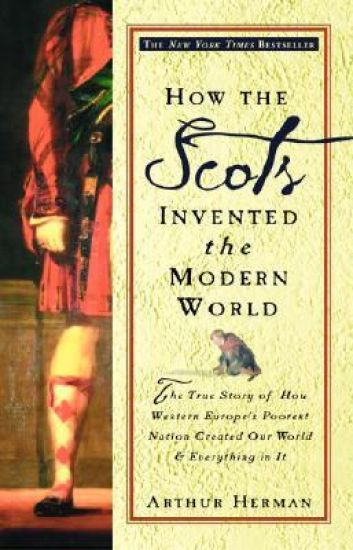
How the Scots Invented the Modern W

How the Scots Invented the Modern W

Arthur Herman

Crown Publications
2002
nidottu
A distinguished historian explores the seminal contributions of Scotland to the development of modern Western civilization, discussing the impact of such ideals as democracy, freedom of speech, equal opportunity, and a commitment to education and exploring Scottish accomplishments in the fields of philosophy, science, medicine, engineering, political thought, and more. Reprint. 75,000 first printing.
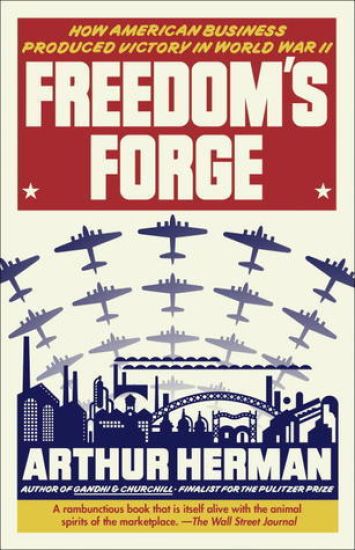
Freedom's Forge

Freedom's Forge

Arthur Herman

Ballantine Books Inc.
2013
pokkari
"NEW YORK TIMES "BESTSELLER SELECTED BY "THE ECONOMIST" AS ONE OF THE BEST BOOKS OF THE YEAR Remarkable as it may seem today, there once was a time when the president of the United States could pick up the phone and ask the president of General Motors to resign his position and take the reins of a great national enterprise. And the CEO would oblige, no questions asked, because it was his patriotic duty. In "Freedom s Forge, "bestselling author Arthur Herman takes us back to that time, revealing how two extraordinary American businessmen automobile magnate William Knudsen and shipbuilder Henry J. Kaiser helped corral, cajole, and inspire business leaders across the country to mobilize the arsenal of democracy that propelled the Allies to victory in World War II. Knudsen? I want to see you in Washington. I want you to work on some production matters. With those words, President Franklin D. Roosevelt enlisted Big Bill Knudsen, a Danish immigrant who had risen through the ranks of the auto industry to become president of General Motors, to drop his plans for market domination and join the U.S. Army. Commissioned a lieutenant general, Knudsen assembled a crack team of industrial innovators, persuading them one by one to leave their lucrative private sector positions and join him in Washington, D.C. Dubbed the dollar-a-year men, these dedicated patriots quickly took charge of America s moribund war production effort. Henry J. Kaiser was a maverick California industrialist famed for his innovative business techniques and his can-do management style. He, too, joined the cause. His Liberty ships became World War II icons and the Kaiser name became so admired that FDR briefly considered making him his vice president in 1944. Together, Knudsen and Kaiser created a wartime production behemoth. Drafting top talent from companies like Chrysler, Republic Steel, Boeing, Lockheed, GE, and Frigidaire, they turned auto plants into aircraft factories and civilian assembly lines into fountains of munitions, giving Americans fighting in Europe and Asia the tools they needed to defeat the Axis. In four short years they transformed America s army from a hollow shell into a truly global force, laying the foundations for a new industrial America and for the country s rise as an economic as well as military superpower. Featuring behind-the-scenes portraits of FDR, George Marshall, Henry Stimson, Harry Hopkins, Jimmy Doolittle, and Curtis LeMay, as well as scores of largely forgotten heroes and heroines of the wartime industrial effort, "Freedom s Forge" is the American story writ large. It vividly re-creates American industry s finest hour, when the nation s business elites put aside their pursuit of profits and set about saving the world. Praise for "Freedom s Forge" A rambunctious book that is itself alive with the animal spirits of the marketplace. "The Wall Street Journal" A rarely told industrial saga, rich with particulars of the growing pains and eventual triumphs of American industry . . . Arthur Herman has set out to right an injustice: the loss, down history s memory hole, of the epic achievements of American business in helping the United States and its allies win World War II. "The New York Times Book Review" Magnificent . . . It s not often that a historian comes up with a fresh approach to an absolutely critical element of the Allied victory in World War II, but Pulitzer finalist Herman . . . has done just that. "Kirkus Reviews" (starred review) "From the Hardcover edition.""
The Viking Heart: How Scandinavians Conquered the World
"An absorbing and humane account . . . Mr. Herman is at pains to remind us that the Viking world was never just a stage for mayhem. It was, he says, 'about daring to reach for more than the universe had gifted you, no matter the odds and the obstacles.' In short: We might all take our own life's cue from the Viking heart."--The Wall Street Journal From a New York Times best-selling historian and Pulitzer Prize finalist, a sweeping epic of how the Vikings and their descendants have shaped history and America Scandinavia has always been a world apart. For millennia Norwegians, Danes, Finns, and Swedes lived a remote and rugged existence among the fjords and peaks of the land of the midnight sun. But when they finally left their homeland in search of opportunity, these wanderers--including the most famous, the Vikings--would reshape Europe and beyond. Their ingenuity, daring, resiliency, and loyalty to family and community would propel them to the gates of Rome, the steppes of Russia, the courts of Constantinople, and the castles of England and Ireland. But nowhere would they leave a deeper mark than across the Atlantic, where the Vikings' legacy would become the American Dream.In The Viking Heart, Arthur Herman melds a compelling historical narrative with cutting-edge archaeological and DNA research to trace the epic story of this remarkable and diverse people. He shows how the Scandinavian experience has universal meaning, and how we can still be inspired by their indomitable spirit.
The Idea of Decline in Western History

The Idea of Decline in Western History

Arthur Herman

The Free Press
2007
pokkari
Historian Arthur Herman traces the roots of declinism and shows how major thinkers, past and present, have contributed to its development as a coherent ideology of cultural pessimism.From Nazism to the Sixties counterculture, from Britain's Fabian socialists to America's multiculturalists, and from Dracula and Freud to Robert Bly and Madonna, this work examines the idea of decline in Western history and sets out to explain how the conviction of civilization's inevitable end has become a fixed part of the modern Western imagination. Through a series of biographical portraits spanning the 19th and 20th centuries, the author traces the roots of declinism and aims to show how major thinkers of the past and present, including Nietzsche, DuBois, Sartre, and Foucault, have contributed to its development as a coherent ideology of cultural pessimism.
Scottish Enlightenment

Scottish Enlightenment

Arthur Herman

Harpercollins Publishers
2003
pokkari
'Every Scot should read it. Scotland now has the lively, provocative and positive history it deserves.' Irvine Welsh, Guardian A dramatic and intriguing history of how Scotland produced the institutions, beliefs and human character that have made the West into the most powerful culture in the world.
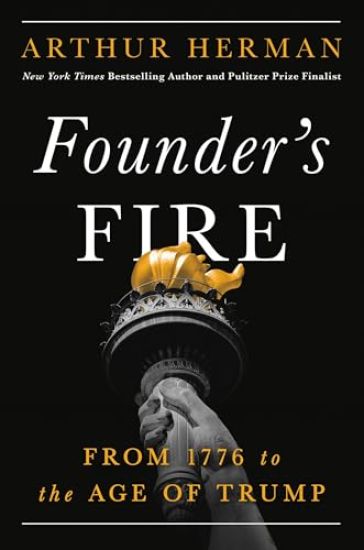
Founder's Fire: From 1776 to the Age of Trump
From a New York Times bestselling historian and Pulitzer Prize finalist comes a bold reinterpretation of American history--just in time for the country's 250th birthday. Whether it's 1776 or the era of Donald Trump and Elon Musk, Arthur Herman argues that the United States has always been propelled forward by a special kind of leader: the founder. More than just business creators, founders are visionaries--risk-takers, builders, rebels--who reinvent America in times of crisis and stagnation. From Washington and Lincoln to Edison, Ford, Elon Musk, and even political disruptors like Martin Luther King and Donald Trump, this book reveals how their relentless drive, bold vision, and refusal to accept a stagnant status quo have reshaped America time and again. Herman introduces a compelling framework: the constant battle between founders and the managers who inevitably take over their achievements and enterprises. As our own history shows, those successors often institutionalize, but can also stifle, innovation and meaningful change--until a new generation of founders and disruptors surges forward to renew and reinvent based on first principles, whether it's a business, an institution, or America itself. In a contemporary twist, Founder's Fire even shows how current cultural touchstones like Shark Tank reflect the enduring appeal of the founder mindset stretching back to 1776 and rolling on through the rich pageantry of American history until today. Insightful, provocative, and deeply relevant, this is a sweeping history that helps us understand America's past, present, and its future. In its pages readers will discover the soul of America as the founder nation: and perhaps learn something about themselves in the process.