Kirjojen hintavertailu. Mukana 11 342 296 kirjaa ja 12 kauppaa.

Kirjahaku

Etsi kirjoja tekijän nimen, kirjan nimen tai ISBN:n perusteella.

3 kirjaa tekijältä Arthur J. Cropley

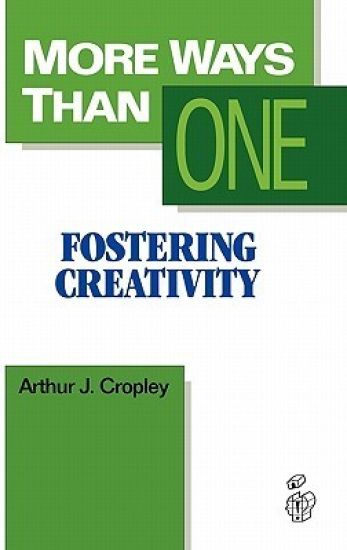
More Ways Than One

More Ways Than One

Arthur J. Cropley

Praeger Publishers Inc
1992
sidottu
Current conceptualizations of children's thinking tend to be unneccesarily narrow, and to focus on what might be called convergent thinking. As a result, invention and innovation are often underemphasized in schools. This text aims to encourage a broad understanding of intellect, and attempts to help teachers to recognize and foster more varied forms of intellectual activity in their students. It offers a review of recent theory on creativity, conceptualizing this as a matter of getting ideas, trying the new, branching out and the like, rather than of producing artistic or scientific products. It discusses the factors in the classroom which block this more divergent kind of thinking and suggests practical ways through which teachers can promote bolder and more innovative intellectual activity in their students. This involves not merely cognitive factors (thinking, remembering, reasoning) but also motivation (courage and willingness), personality (openness to the new, self-confidence), and social factors (nonconformity, ability to communicate ideas). The text is applied in orientation, contains a large number of examples and case studies, and aims at providing practicing teachers with guidelines.
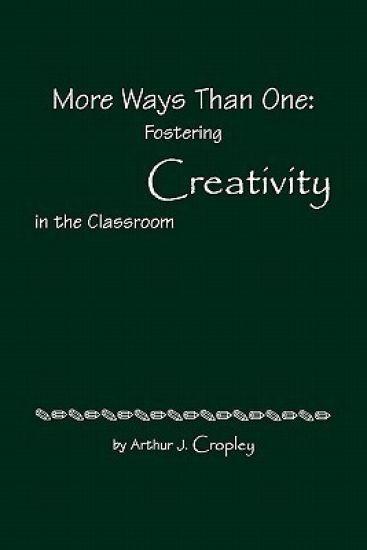
More Ways Than One

More Ways Than One

Arthur J. Cropley

Praeger Publishers Inc
1992
nidottu
Current conceptualizations of children's thinking tend to be unneccesarily narrow, and to focus on what might be called convergent thinking. As a result, invention and innovation are often underemphasized in schools. This text aims to encourage a broad understanding of intellect, and attempts to help teachers to recognize and foster more varied forms of intellectual activity in their students. It offers a review of recent theory on creativity, conceptualizing this as a matter of getting ideas, trying the new, branching out and the like, rather than of producing artistic or scientific products. It discusses the factors in the classroom which block this more divergent kind of thinking and suggests practical ways through which teachers can promote bolder and more innovative intellectual activity in their students. This involves not merely cognitive factors (thinking, remembering, reasoning) but also motivation (courage and willingness), personality (openness to the new, self-confidence), and social factors (nonconformity, ability to communicate ideas). The text is applied in orientation, contains a large number of examples and case studies, and aims at providing practicing teachers with guidelines.