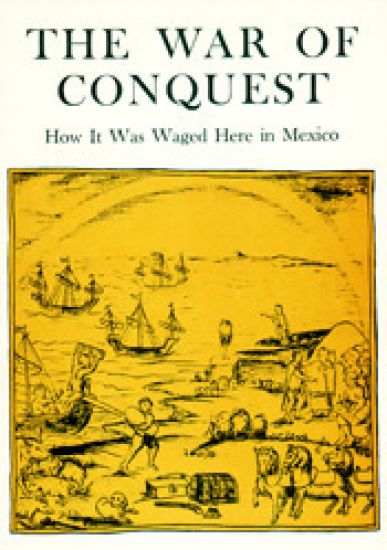
How is it possible that in 1521 five-hundred Spanish soldiers defeated the most powerful military force in Middle America? The answer lies not in western firearms, as we have been taught, but rather in the differences between the Aztec and Spanish cultures. Differing concepts of warfare and diplomacy, reinforced by tensions and stresses within the Aztec political system and its supporting religious beliefs, allowed CortÉs to systematically gain and hold the military and diplomatic advantages that gave the Spaniards the day, the war, and the continent.
Two of the world’s leading scholars of the Aztec language and culture have translated SahagÚn’s monumental and encyclopedic study of native life in Mexico at the time of the Spanish Conquest. This immense undertaking is the first complete translation into any language of SahagÚn’s Nahuatl text, and represents one of the most distinguished contributions in the fields of anthropology, ethnography, and linguistics. Written between 1540 and 1585, the Florentine Codex (so named because the manuscript has been part of the Laurentian Library’s collections since at least 1791) is the most authoritative statement we have of the Aztecs’ lifeways and traditions—a rich and intimate yet panoramic view of a doomed people. The Florentine Codex is divided by subject area into twelve books and includes over 2,000 illustrations drawn by Nahua artists in the sixteenth century. Book Eight lists the rulers of Tenochtitlan from the first, Acamapichtli, to the sixteenth, Don Cristobal Cecepatic. It also documents the rulers of the ancient Aztec cities of Tlatillco, Texcoco, and Uexotla. Several chapters are devoted to describing the various articles of clothing that the rulers and noblemen wore and the foods they ate for differing ceremonies and activities.
Two of the world’s leading scholars of the Aztec language and culture have translated SahagÚn’s monumental and encyclopedic study of native life in Mexico at the time of the Spanish Conquest. This immense undertaking is the first complete translation into any language of SahagÚn’s Nahuatl text, and represents one of the most distinguished contributions in the fields of anthropology, ethnography, and linguistics. Written between 1540 and 1585, the Florentine Codex (so named because the manuscript has been part of the Laurentian Library’s collections since at least 1791) is the most authoritative statement we have of the Aztecs’ lifeways and traditions—a rich and intimate yet panoramic view of a doomed people. The Florentine Codex is divided by subject area into twelve books and includes over 2,000 illustrations drawn by Nahua artists in the sixteenth century. Book Ten gives a broad overview of the different occupations, classes, and characteristics of Aztecs during this time period. Arguably the most fascinating part of this book is the detailed documentation of human anatomy and commonly used cures for physical ailments.