

Kirjahaku
Etsi kirjoja tekijän nimen, kirjan nimen tai ISBN:n perusteella.
7 kirjaa tekijältä Arthur MacGregor
A Summary Catalogue of the Continental Archaeological Collections in the Asmolean Museum
Arthur MacGregor
BAR Publishing
1997
nidottu
Photos with descriptions and dimensions of the Migration period and Viking material in the Ashmolean. Many items come from the 19th century collecting of Sir Arthur Evans and his meticulous recording of provenances will enable these items to be fitted into their correct context on the Continent; some of his brooches can be paired with pieces now in Cologne and Berlin.
Artefacts made from skeletal materials since the Roman period were, before this book, neglected as a serious area of study. This is a comprehensive account which reviews over fifty categories of artefact. The book starts with a consideration of the formation, morphology and mechanical properties of the materials and illuminates characteristics concerning working with them. Following chapters discuss the organisation of the industry and trade in such items, including the changing status of the industry over time. Archaeological evidence is combined with that from historical and ethnological sources, with many illustrations providing key visual reference. Originally published in 1985.
Artefacts made from skeletal materials since the Roman period were, before this book, neglected as a serious area of study. This is a comprehensive account which reviews over fifty categories of artefact. The book starts with a consideration of the formation, morphology and mechanical properties of the materials and illuminates characteristics concerning working with them. Following chapters discuss the organisation of the industry and trade in such items, including the changing status of the industry over time. Archaeological evidence is combined with that from historical and ethnological sources, with many illustrations providing key visual reference. Originally published in 1985.
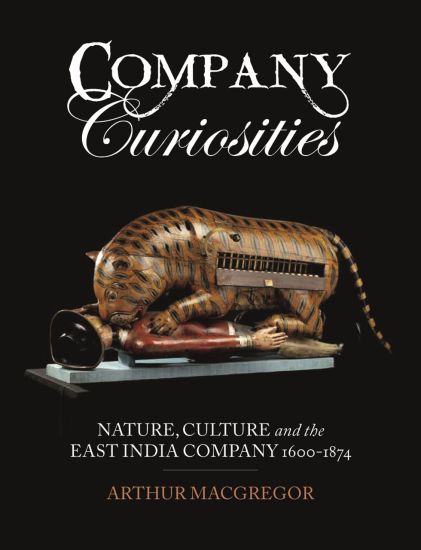
For nearly three hundred years, the East India Company dominated British trade and relations with Asia. It made handsome profits for shareholders but also provided collectors in Europe with natural specimens and man-made rarities that were prized for their scientific, aesthetic or cultural value. An array of administrators, soldiers, surveyors spent much of their lives attempting to inventory and to comprehend India's vast country, its teeming populations and its myriad rituals and wildlife: nearly forty species of mammals and over 120 species of birds were discovered in the Katmandu valley alone; astonishing wall paintings from the fifth-century were unearthed in caves at Ajanta; and spectacular fossil fauna arrived from the Siwalik Hills. Company Curiosities: Nature, Culture and the East India Company, 1600-1874 offers the first-ever overview of the remarkable role of the East India Company and its servants in collecting and showcasing a treasure-house of natural specimens and man-made objects - craft materials, paintings and sculptures, weapons, costumes, jewels and ornaments - that established the look and the feel of India for those who had never ventured abroad. Arthur MacGregor tells the stories behind the remarkable discoveries and collections, and those responsible for them, and their impact on natural science, commerce and industry, and personal taste.
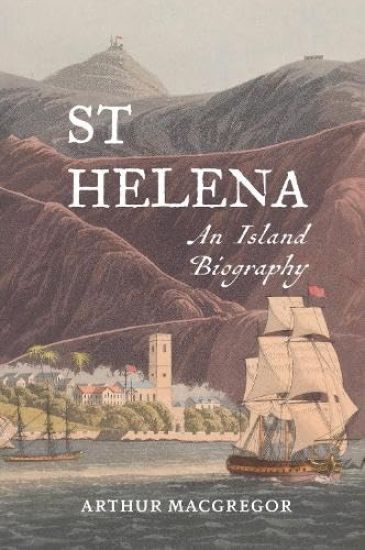
Traces the impact of world events on St Helena's topography, ecology and human population, from the early 1500s to the present day. Since its discovery in the early 1500s, St Helena - though remotely situated - has repeatedly participated in events taking place on a world stage; evidence of those encounters is etched on the topography, ecology and human population of the island. This book examines the impacts of a century of casual but destructive visits from sailing ships of various nations followed by settlement by the East India Company; the fortification and population of the island by the Company, including the importation of an enslaved population; efforts to make it economically self-reliant; its employment a base for scientific observations from Edmond Halley to Joseph Hooker and beyond; its role as a prison-fortress from Napoleon to the twentieth century and as a base for anti-slavery patrols in the South Atlantic following the Abolition of Slavery; its decline since the end of the days of sail; measures taken to reconnect it with the modern world in terms of sea and air travel as well as electronic communication; and efforts to regain to some degree the ecological diversity of the virgin island setting.
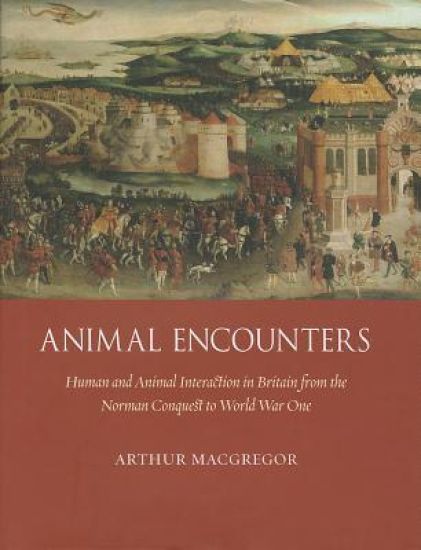
Until the advent of steam and later the internal combustion engine, the fortunes of man and beast were intimately and essentially bound together. Animals played a variety of fundamental roles in a range of human work and leisure activities such as transport, agriculture, industry, warfare, sport and recreation. Their importance to human progress has become increasingly hard to grasp for our largely urbanized society, from which the animal world has become ever more remote. Animal Encounters draws on the author's lifetime interest in the fields of art history, topographical literature, archaeology, history and archaeozoology, to provide an overview of the evolving relations between the human and animal populations of the British Isles from the Norman Conquest to World War I. In this very readable, instructive and well-illustrated narrative, Arthur MacGregor explores the animal kingdom from bees to horses, and the range of human activities, from pigeon-breeding to bear-baiting, showing how interdependent the animal-human relationship has been throughout history. Animal Encounters will have a broad appeal, aimed at all those with sympathy for and an interest in the animal world.