Kirjojen hintavertailu. Mukana 11 627 220 kirjaa ja 12 kauppaa.

Kirjahaku

Etsi kirjoja tekijän nimen, kirjan nimen tai ISBN:n perusteella.

14 kirjaa tekijältä Arthur Prado-Netto

Gewichtszunahme nach dem Rauchstopp

Gewichtszunahme nach dem Rauchstopp

Arthur Prado-Netto

Verlag Unser Wissen
2023
pokkari
Die Gewichtszunahme nach dem Rauchstopp ist das Ziel dieser Untersuchung, da dieses Thema in der wissenschaftlichen Literatur kaum vorkommt. Die Gewichtszunahme ist jedoch mitverantwortlich f r die F lle, in denen die Behandlung mit Tabak versagt. Die Rolle des Tabaks bei der Gewichtsregulierung ist manchmal ein Grund f r den Einstieg in das Rauchen als "ungeeignete" Strategie zur Gewichtskontrolle. Unter mehreren Instrumenten zur Behandlung der Gewichtszunahme beim Rauchen ist die SCQ-A-Skala (Smoking Consequences Questionnaire -Adult) von Brandon & Baker (1991) unseres Wissens nach die zuverl ssigste. Ausgehend von dieser Perspektive haben wir diese Skala ins Deutsche bersetzt, um sie als Hilfsmittel in der kognitiven Verhaltenstherapie zur Behandlung von Rauchern einsetzen zu k nnen, indem wir die Therapie auf Strategien zur Vermeidung der Gewichtszunahme sowie auf andere wichtige Dimensionen ausrichten.
Weight gain after smoking cessation

Weight gain after smoking cessation

Arthur Prado-Netto

Our Knowledge Publishing
2023
pokkari
Weight gain after smoking cessation is the aim of this research, as this topic is not very present in the scientific literature. However, weight gain is a factor in the failure of smoking treatment. The role of tobacco in weight regulation is sometimes a cause of initiation of smoking as an "inappropriate" strategy for weight control. Among several tools to manage weight gain in smoking, the Smoking Consequences Questionnaire-A (SCQ-A) by Brandon & Baker (1991) is to our knowledge the most reliable. From this perspective, we have translated this scale into French in order to use it as an aid in the cognitive behavioral clinic for the management of smokers, by structuring the therapy on strategies to avoid weight gain, as well as other important dimensions.
Aumento di peso dopo la cessazione del fumo

Aumento di peso dopo la cessazione del fumo

Arthur Prado-Netto

Edizioni Sapienza
2023
pokkari
L'aumento di peso dopo la cessazione del fumo l'obiettivo di questa ricerca, poich questo argomento non molto presente nella letteratura scientifica. L'aumento di peso tuttavia un fattore di fallimento del trattamento del tabagismo. Il ruolo del tabacco nella regolazione del peso talvolta causa dell'inizio del fumo come strategia "inappropriata" per il controllo del peso. Tra i vari strumenti per gestire l'aumento di peso nel tabagismo, lo Smoking Consequences Questionnaire-A (SCQ-A) di Brandon & Baker (1991) a nostra conoscenza il pi affidabile. In quest'ottica, abbiamo tradotto questa scala in francese affinch possa essere utilizzata come ausilio nella clinica cognitivo-comportamentale per la gestione dei fumatori, strutturando la terapia sulle strategie per evitare l'aumento di peso, oltre che su altre importanti dimensioni.
Aumento de peso após a cessação do tabagismo

Aumento de peso após a cessação do tabagismo

Arthur Prado-Netto

Edicoes Nosso Conhecimento
2023
pokkari
O ganho de peso ap s a cessa o do tabagismo o objectivo desta investiga o, uma vez que este t pico n o est muito presente na literatura cient fica. O ganho de peso , no entanto, um factor de insucesso no tratamento do tabagismo. O papel do tabaco na regula o do peso por vezes uma causa do in cio do tabagismo como uma estrat gia "inapropriada" para o controlo do peso. Entre v rios instrumentos para gerir o ganho de peso no tabagismo, o Question rio sobre as Consequ ncias do Fumo - A (SCQ-A) de Brandon & Baker (1991) , tanto quanto sabemos, o mais fi vel. Nesta perspectiva, traduzimos esta escala em franc s para que possa ser utilizada como auxiliar na cl nica cognitiva comportamental para a gest o dos fumadores, estruturando a terapia sobre estrat gias para evitar o ganho de peso, bem como outras dimens es importantes.
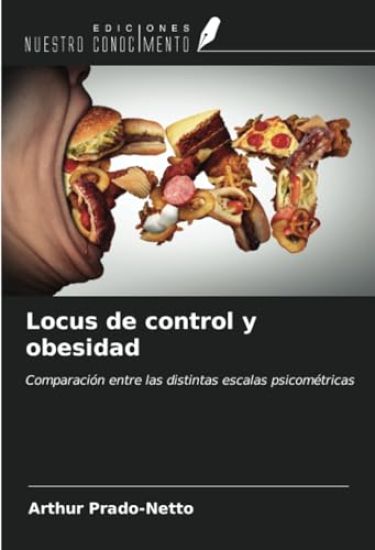
Kontrollüberzeugung und Fettleibigkeit

Kontrollüberzeugung und Fettleibigkeit

Arthur Prado-Netto

Verlag Unser Wissen
2023
pokkari
Rotters (1966) Konzept des LOC ist die allgemeine Tendenz zu glauben, dass das, was uns widerf hrt, von uns selbst abh ngt (Internalit t) oder umgekehrt von Zuf llen oder anderen Faktoren, auf die wir keinen Einfluss haben (Externalit t). Das Hauptziel dieser Studie bestand darin, den prognostischen Wert des LOC und den Wert psychotherapeutischer Ma nahmen zur St rkung des Glaubens an die eigene Kontrolle bei der Behandlung von Fettleibigkeit aufzuzeigen. Es wurde ein Vergleich zwischen den verschiedenen allgemeinen LOC-Skalen vorgenommen. Die Probanden wurden nach dem Vorhandensein oder Nichtvorhandensein von Essst rungen klassifiziert. Die Population bestand aus 46 fettleibigen Frauen, die in einem Krankenhaus in Bordeaux (Frankreich) behandelt wurden. Die Ergebnisse zeigten, dass Essverhaltensst rungen bei fettleibigen Menschen mit Externalismus bei der Gewichtskontrolle und Externalismus bei der pers nlichen Kontrolle verbunden sind. Adip se Personen ohne BAC glaubten mehr an Gewichtskontrolle und pers nliche Kontrolle als Personen mit BAC.
Locus of Control and Obesity

Locus of Control and Obesity

Arthur Prado-Netto

Our Knowledge Publishing
2023
pokkari
Rotter's (1966) concept of locus of control is the general tendency to believe that what happens to us depends on ourselves (internality) or, conversely, on chance or other factors beyond our control (externality). The main aim of this study was to show the prognostic value of the LOC and the value of psychotherapeutic action aimed at increasing the belief in personal control in the treatment of obesity. A comparison was made between the different general locus scales. Subjects were classified according to the presence or absence of eating disorders. The population consisted of 46 obese women undergoing treatment at a hospital in Bordeaux, France. The results showed that eating behaviour disorders in obese people are linked to externalism in weight control and externalism in personal control. Obese subjects without BAC believed more in weight control and personal control than subjects with BAC.
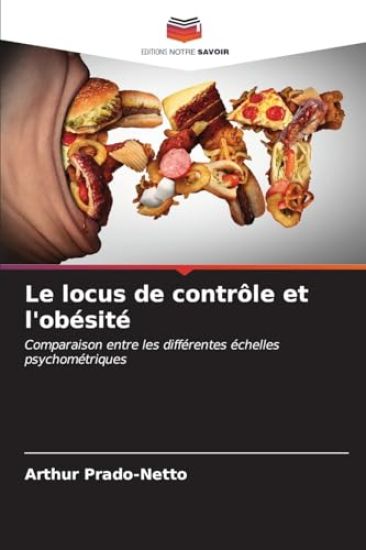
Le locus de contrôle et l'obésité

Le locus de contrôle et l'obésité

Arthur Prado-Netto

Editions Notre Savoir
2023
pokkari
Le concept de locus of control de Rotter (1966) est la tendance g n rale croire que ce qui nous arrive d pend de nous-m mes (internalit ) ou, l'inverse, du hasard ou d'autres facteurs hors de notre contr le (externalit ). L'objectif principal de cette tude tait de montrer la valeur pronostique du LOC et l'int r t d'une action psychoth rapeutique visant augmenter la croyance en un contr le personnel dans le traitement de l'ob sit . Une comparaison a t faite entre les diff rentes chelles de locus g n ral. Les sujets ont t class s en fonction de la pr sence ou de l'absence de troubles alimentaires. La population tait compos e de 46 femmes ob ses en traitement dans un h pital de Bordeaux, en France. Les r sultats ont montr que les troubles du comportement alimentaire chez les personnes ob ses sont li s l'externalisme dans le contr le du poids et l'externalisme dans le contr le personnel. Les sujets ob ses sans alcool mie croient davantage au contr le du poids et au contr le personnel que les sujets avec alcool mie.
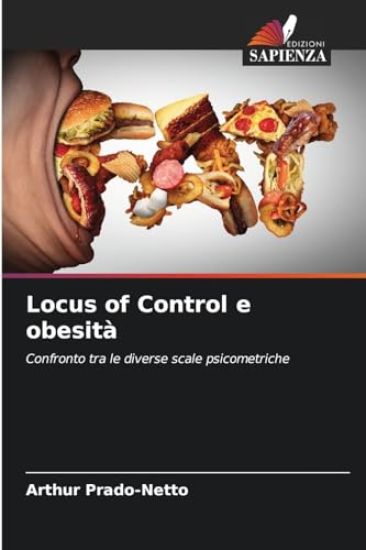
Locus of Control e obesità

Locus of Control e obesità

Arthur Prado-Netto

Edizioni Sapienza
2023
pokkari
Il concetto di locus of control di Rotter (1966) la tendenza generale a credere che ci che ci accade dipenda da noi stessi (internalit ) o, al contrario, dal caso o da altri fattori fuori dal nostro controllo (esternalit ). L'obiettivo principale di questo studio stato quello di dimostrare il valore prognostico del LOC e l'utilit di un'azione psicoterapeutica volta ad aumentare la convinzione del controllo personale nel trattamento dell'obesit . stato effettuato un confronto tra le diverse scale di locus generale. I soggetti sono stati classificati in base alla presenza o all'assenza di disturbi alimentari. La popolazione era costituita da 46 donne obese in trattamento presso un ospedale di Bordeaux, in Francia. I risultati hanno mostrato che i disturbi del comportamento alimentare nelle persone obese sono legati all'esternalismo nel controllo del peso e all'esternalismo nel controllo personale. I soggetti obesi senza BAC credevano maggiormente nel controllo del peso e nel controllo personale rispetto ai soggetti con BAC.