Kirjojen hintavertailu. Mukana 11 342 296 kirjaa ja 12 kauppaa.

Kirjahaku

Etsi kirjoja tekijän nimen, kirjan nimen tai ISBN:n perusteella.

12 kirjaa tekijältä Asa Briggs

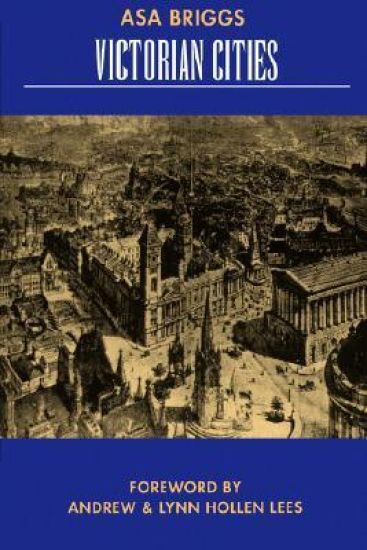
Victorian Cities

Victorian Cities

Asa Briggs

Penguin Books Ltd
1990
pokkari
In 1837, in England and Wales, there were only five provincial cities of more than 100,000 inhabitants. By 1891 there were twenty-three. Over the same period London’s population more than doubled.In this companion volume to Victorian People and Victorian Things, Lord Briggs focuses on the cities of Manchester, Leeds, Birmingham, Middlesbrough, Melbourne (an example of a Victorian community overseas) and London, comparing and contrasting their social, political and topographical development. Full of illuminating detail, Victorian Cities presents a unique social, political and economic bird's-eye view of the past.
The History of Broadcasting in the United Kingdom: Volume I: The Birth of Broadcasting
This is the first part of a five-volume history of broadcasting in the UK. Together the volumes give an authoritative account of the rise of broadcasting in this country. Though naturally largely concerned with the BBC it does give a general history of broadcasting, not simply an institutional history of the BBC. The Birth of Broadcasting covers early amateur experiments in wireless telephony in America and in England, the pioneer days at Writtle in Essex and elsewhere, and the coming of organized broadcasting and its rapid growth during the first four years of the BBC's existence as a private Company before it became a public Corporation in January 1927. Briggs describes how and why the Company was formed, the scope of its activities and the reasons which led to its conversion from a business enterprise into a national institution. The issues raised between 1923 and 1927 remain pertinent today. The hard bargaining between the Post Office, private wireless interests, and the emergent British Broadcsting Company is discussed in illuminating details, together with the remarkable opposition with which the Company had to contend in its early days. Many sections of the opposition, including a powerful section of the press, seemed able to conceive of broadcasting only as competing with their own interests, never as complementing or enlarging them. One of the main themes of this volume is that of the gradual forging of the instruments of public control, and particular attention is paid to the Crawford Report (1926) from which the Corporation arose. During this period all the characteristics of the Corporation first appeared - particularly its reputation for publc service and impartiality. Briggs also examines the background of wireless as an invention and considers its impact on society. He has much to say about personalities and programmes as well as policies.
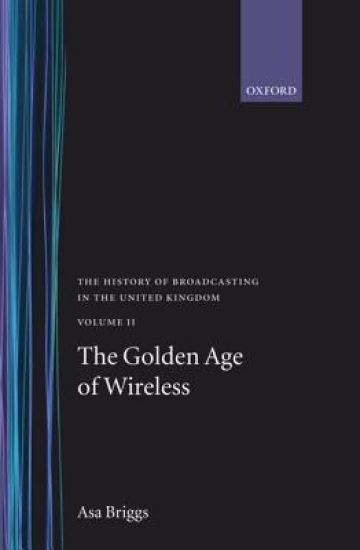
The History of Broadcasting in the United Kingdom: Volume II: The Golden Age of Wireless
This is the second part of a projected four-volume history of broadcasting in the United Kingdom. This volume covers the period from the beginning of 1927, when the BBC ceased to be a private company and became a public corporation, up to the outbreak of war in 1939. The acceptance of wireless as a part of the homely background of life and the acceptance of the BBC as the `natural' institution for controlling it distinguish this period from that covered in the earlier volume. From 1927 to 1939 the system of public control which had evolved from the early struggles was never seriously in jeopardy and the one big official inquiry, the Ullswater Report, favoured no major constitutional changes. The main theme of the second volume, therefore, may be called the extension and the enrichment of the activity of broadcasting. Different chapters deal with the programmes and programme-makers; the listeners and the ways in which their needs were (or were not) met as the system expanded; public attitudes to the BBC and the increasing complexity of its control and organization; the coming of television and the early experiments of Baird and others; and the retirement of Sir John Reith - not only the end of a regime but the end of an era. The volume ends with preparations for war.
The History of Broadcasting in the United Kingdom: Volume III: The War of Words
This is the third part of a five-volume history of broadcasting in the UK, giving an authoritative account of the rise of broadcasting in this country. This volume covering the period from 1939 to 1945, is concerned not only with the impact of the Second World War on the structure, organization, and programmes of the BBC, itself a fascinating subject; it also deals directly with the role of the BBC outside as well as inside Britain within the context of the general political and military history of the war; an exciting, complicated, sometimes controversial role, strangely neglected by historians.
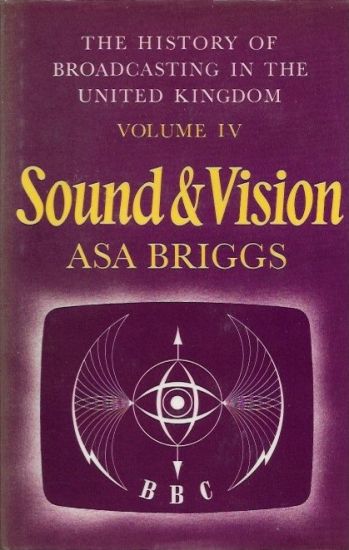
The History of Broadcasting in the United Kingdom: Volume IV: Sound and Vision
The ten years following the end of the Second World War were critical years in the history of British broadcasting. They witnessed the rise of television and the end of the BBC's monopoly. This fourth volume of Asa Briggs's detailed study is based on a mass of hitherto unexplored documentary evidence, much, but not all of it, from the BBC's own voluminous archives. It examines in detail how and why some of the key decisions affecting broadcasting policy - domestic and external - were reached and what were their effects. Yet it is more than an institutional history. One long chapter deals with the changing arts and techniques of broadcasting news and views, politics, drama, features and variety, music, religion, education and sport. It describes a pattern of broadcasting - and a society and culture - already remote from our own. At every point the main contours of society and culture are explored. It ends with the first night of competitive television and with contemporary assessments of the likely impact of television on sound broadcasting and other media. It is profusely illustrated and can be read either as complete in itself or as one fascinating phase in the unfolding history of British broadcasting.
The History of Broadcasting in the United Kingdom: Volume V: Competition
`Competition' continues the monumental history of broadcasting in the UK over a period of 20 years, from 1955 to the mid 1970s. Unlike the previous volumes it chronicles and analyses the history of the BBC in an age of competition, so inevitably contains much fascinating material on the `independent' radio and television companies as well as the BBC. The first chapter deals with the early relationship of the BBC to these new companies, sharing their impact on the types of programmes being broadcast. The second chapter concerns Suez, the first time when there was a conflict between what the Government wanted broadcast and what the BBC felt it ought to broadcast. Chapter 3 compares BBC programmes with their rivals' in the 1960s, and chapter 4 evaluates the effect of the new Director-General, Hugh Greene, the man who - Mary Whitehouse said - was `responsible for the moral collapse which characterized the sixties and seventies'. The remaining chapters debate the changing relationship between politicians and broadcasters, Radio Piracy, the changes to the Third Programme, the introduction of new technologies, and the state of the BBC at the time of the Jubilee and the first meetings of the Annan Committee.
A History of the Royal College of Physicians of London
This is the fourth volume to be published of A History of the Royal College of Physicians, covering the period 1948-1983. Volumes I-III were published in 1964, 1966, and 1972 respectively, and covered the history of the College from its foundation in 1518 to 1947. It is a scholarly study, based on archival and other sources, of a major historical institution, and examines the way in which it adapted to far-reaching changes in medical knowledge, social attitudes, and the organization of health. As such, it is a major contribution to institutional history. At the same time it illuminates the history of the National Health Service and examines controversial public issues such as smoking.
Victorian People

Victorian People

Asa Briggs

University of Chicago Press
1975
nidottu
This text looks at the people, ideas and events between the Great Exhibition of 1851 and the Second Reform Act of 1867. From "John Arthur Roebuck and the Crimean War", and "Samuel Smiles and the Gospel of Work" to "Thomas Hughes and the Public Schools" and "Benjanmin Disraeli and the Leap in the Dark", Asa Briggs provides an assessment of Victorian achievements; and in doing so conjures up an enviable picture of the progress and independence of the last century. "For expounding this theme, this interaction of event and personality, Mr. Briggs is abundantly and happily endowed. He is always readable, often amusing, never facetious. He is widely read and widely interested. He has a sound historic judgment, and an unfailing sense for what is significant in the historic sequence and what is merely topical. . . . Above all, he is in sympathy with the age of which he is writing."—Times Literary Supplement
Victorian Cities

Victorian Cities

Asa Briggs

University of California Press
1993
pokkari
A comparative study in urban history, Victorian Cities examines the 19th-century history of four developing cities in England in a period of rapid growth, with chapters on London and Melbourne and references to Los Angeles and Chicago as well.
The Age of Improvement, 1783-1867
The Age of Improvement has long established itself as a classic of modern historical writing. Widely read and quoted it has had a unique influence on teaching and research. This second edition draws on the great volume of new research - produced by Lord Briggs amongst others, since its original publication. The book stresses both the underlying unity and the rich variety of the age, and raises fundamental issues about a period of crucial change in British history - industrialisation, war, constitutional change and the attitudes of politicians towards it, political development, and, not least, society and culture. In the background are the new economic powers based on the development of a coal and iron technology; in the foreground, new social and political problems and new ways of tackling them. The author also discusses perceptions of, and reactions to, changing circumstances, the influence of religion and science on national life, and changing styles in art and literature. The story ends, not with a full stop but with a question mark. Could improvement be maintained? Could balance and progress continue to be reconciled?
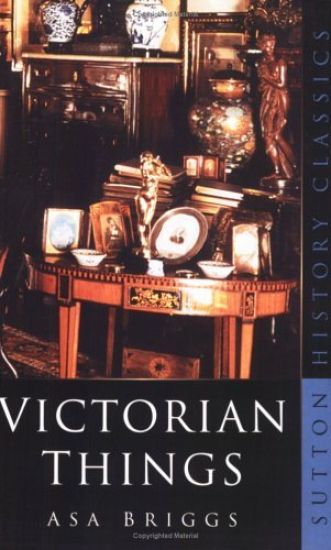
Victorian Things

Victorian Things

Asa Briggs

Sutton Publishing Ltd
2007
nidottu
The restless curiosity of the Victorians, their search for higher levels of comfort, their passion for scientific advance and their general obsession with "things" inspired them to search the natural world, the artistic heritage of other cultures and ages and to apply their minds to devising solutions to a host of practical issues. This survey of Victorian material culture brings to life the material culture of one of the most inventive, and acquisitive, societies.
The Age of Improvement, 1783-1867
The Age of Improvement has long established itself as a classic of modern historical writing. Widely read and quoted it has had a unique influence on teaching and research. This second edition draws on the great volume of new research - produced by Lord Briggs amongst others, since its original publication. The book stresses both the underlying unity and the rich variety of the age, and raises fundamental issues about a period of crucial change in British history - industrialisation, war, constitutional change and the attitudes of politicians towards it, political development, and, not least, society and culture. In the background are the new economic powers based on the development of a coal and iron technology; in the foreground, new social and political problems and new ways of tackling them. The author also discusses perceptions of, and reactions to, changing circumstances, the influence of religion and science on national life, and changing styles in art and literature. The story ends, not with a full stop but with a question mark. Could improvement be maintained? Could balance and progress continue to be reconciled?