Kirjojen hintavertailu. Mukana 11 699 587 kirjaa ja 12 kauppaa.

Kirjahaku

Etsi kirjoja tekijän nimen, kirjan nimen tai ISBN:n perusteella.

18 kirjaa tekijältä Ashley Jackson

Ashley Jackson: The Yorkshire Artist

Ashley Jackson: The Yorkshire Artist

Ashley Jackson

Pen Sword Books Ltd
2017
sidottu
'Ashley Jackson The Yorkshire Artist' contains a collection of paintings that have been personally chosen by the artist to bring together his personal memories and intimate reflections of the emotions and atmosphere that he has captured in each watercolour painting. As he explains, 'All artists paint what inspires them, what allows them to capture what they see with their eyes with their hands and heart. We all have differing inspirations, mediums and connections with our subject mine is the Yorkshire Moors.' From the open moorland of Marsden Moor to the inhabited landscape of Whitby, this book brims with what Ashley does best; capturing the atmospheric skies and drama of the landscape. As Ashley explains, 'I have strived throughout my life to witness and portray every mood swing of nature as she takes a stand against all that the elements throw at her, whether that be rain, wind, snow or fire.' You will truly find Ashley Jackson and his 'Yorkshire Mistress', as he calls the Yorkshire landscape, laid bare in these stunning paintings.

Ashley Jackson's Watercolour Sketches
I am not one for pretty pictures.' Perhaps when I am long gone this will be a quote that I am remembered for alongside my paintings. For you will mostly find me in the gallery on a sunny day and out on the moors when it is at its most inhospitable, for these are the days that captivate me. All your senses are alive, so that what you visibly see is not the whole painting , the rest comes from you. Ashley Jackson's Watercolour sketches is a collection of these raw drawings combined with my intimate thoughts and feelings, together they may become a finished painting. I suppose you could say that I use my sketchbook in the same way that others create a diary of words, they are a reflection of my relationship with the Yorkshire landscape. In all honesty, they were never intended for anything other than my personal recollections. I can go back to the drawing months later and mentally open that moment as if I was stood in that same location, I could tell you the weather, the sounds and smells , whilst the colours are as vivid as if I had gone back in time and revisited the day itself. This book allows you to step back from my dramatic and atmospheric watercolour paintings and see the landscape in its nakedness, through my private, personal sketches you can join me in my artistic journey and conversation with nature.
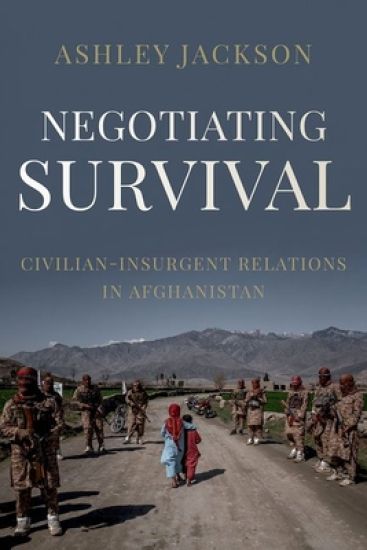
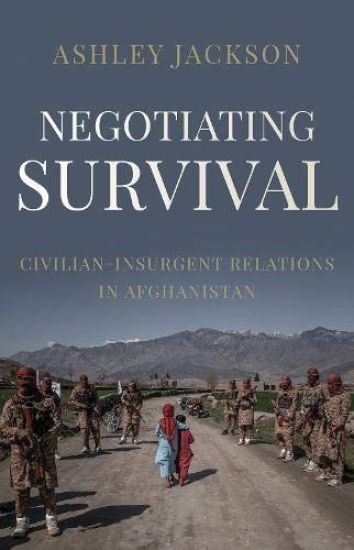
Negotiating Survival: Civilian - Insurgent Relations in Afghanistan
Two decades on from 9/11, the Taliban now control more than half of Afghanistan. Few would have foreseen such an outcome, and there is little understanding of how Afghans living in Taliban territory have navigated life under insurgent rule. Based on over 400 interviews with Taliban and civilians, this book tells the story of how civilians have not only bargained with the Taliban for their survival, but also ultimately influenced the course of the war in Afghanistan. While the Taliban have the power of violence on their side, they nonetheless need civilians to comply with their authority. Both strategically and by necessity, civilians have leveraged this reliance on their obedience in order to influence Taliban behaviour. Challenging prevailing beliefs about civilians in wartime, Negotiating Survival presents a new model for understanding how civilian agency can shape the conduct of insurgencies. It also provides timely insights into Taliban strategy and objectives, explaining how the organisation has so nearly triumphed on the battlefield and in peace talks. While Afghanistan's future is deeply unpredictable, there is one certainty: it is as critical as ever to understand the Taliban--and how civilians survive their rule.
Botswana 1939-1945

Botswana 1939-1945

Ashley Jackson

Clarendon Press
1999
sidottu
This is the first full study of an African country during the Second World War. Unusually, it provides both an Africanist and an imperial perspective. Using extensive archival and oral evidence, Ashley Jackson explores the social, economic, political, agricultural, and military history of Botswana. He examines Botswana's military contribution to the war effort and the impact of the war on the African home front. The book focuses on events and personalities `on the ground' in Africa and also on their interaction with and impact upon events and personalities in distant imperial centres, such as Whitehall and the wartime British Army headquarters in the Middle East. The attitudes, aims, and actions of all levels of colonial society - British rulers, African chiefs, military officials, ordinary African men and women - are considered, producing a `total history' of an African country at war.
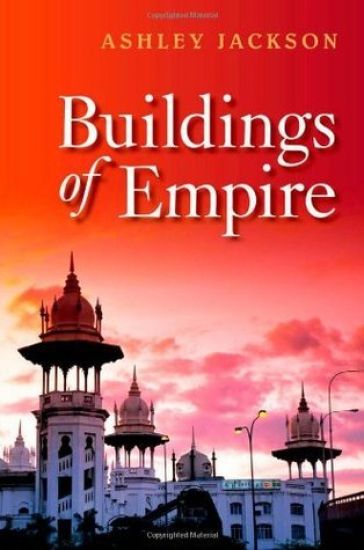
Buildings of Empire

Buildings of Empire

Ashley Jackson

Oxford University Press
2013
sidottu
Buildings of Empire takes the reader on an exciting journey through thirteen territories of the British Empire. From Dublin Castle to the glass and steel of Sir Norman Foster's Hong Kong and Shanghai Bank skyscraper, these buildings capture the essence of the imperial experience, painting an intimate portrait of the biggest empire the world has ever seen: the people who made it and the people who resisted it, as well as the legacy of the imperial project throughout the world. Ashley Jackson visits classic examples of the buildings that the British governed from, the forts they (often brutally) imposed their rule from, the railway stations they travelled from, the banks they traded from, the educational establishments they spread their values from, as well as the grand colonial hotels they stayed in, the sporting clubs and botanical gardens where they took their leisure, and the monumental exhibition spaces in which they celebrated the achievements of settlement and imperial endeavour. The history of these buildings does not end with the empire that built them. Their story in the aftermath of empire highlights the continuing legacy of many of the structures and institutions the British left behind, as well as the sometimes unexpected role that these former symbols of alien rule have played in the establishment of new national identities in the years since independence.
The British Empire

The British Empire

Ashley Jackson

Oxford University Press
2013
nidottu
From the eighteenth century until the 1950s the British Empire was the biggest political entity in the world. The territories forming this empire ranged from tiny islands to vast segments of the world's major continental land masses. The British Empire left its mark on the world in a multitude of ways, many of them permanent. In this Very Short Introduction, Ashley Jackson introduces and defines the British Empire, reviewing its historiography by answering a series of key questions: What was the British Empire, and what were its main constituent parts? What were the phases of imperial expansion and contraction and the general causes of expansion and contraction? How was the Empire ruled? What were its economic effects? What were the cultural implications of empire, in Britain and its colonies? What was life like for people living under imperial rule? What are the legacies of the British Empire and how should we view its place in world history? ABOUT THE SERIES: The Very Short Introductions series from Oxford University Press contains hundreds of titles in almost every subject area. These pocket-sized books are the perfect way to get ahead in a new subject quickly. Our expert authors combine facts, analysis, perspective, new ideas, and enthusiasm to make interesting and challenging topics highly readable.
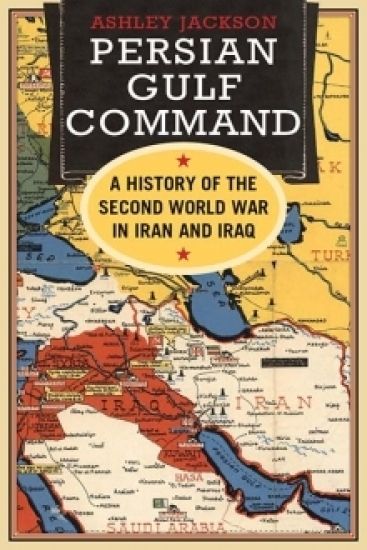
Persian Gulf Command

Persian Gulf Command

Ashley Jackson

Yale University Press
2018
sidottu
A new history of the long-overlooked WWII theater in Iran and Iraq, its unrecognized significance, and its impact on local society and politics This dynamic history is the first to construct a total picture of the experience and impact of World War II in Iran and Iraq. Contending that these two countries were more important to the Allied forces’ war operations than has ever been acknowledged, historian Ashley Jackson investigates the grand strategy of the Allies and their operations in the region and the continuing legacy of Western intervention in the Middle East. Iran and Iraq served as the first WWII theater in which the U.S., the U.K., and the U.S.S.R. fought alongside each other. Jackson charts the intense Allied military activity in Iran and Iraq and reveals how deeply the war impacted common people’s lives. He also provides revelations about the true nature of Anglo-American relations in the region, the beginnings of the Cold War, and the continuing corrosive legacy of Western influence in these lands.
Lost Travel Found

Lost Travel Found

Ashley Jackson

Unlocked Purpose LLC
2021
pokkari
Lost, Travel, Found: A Compelling Story of Surviving Grief, Finding Oneself Through World Travels, & Falling Madly in Love - Indulge in an Inspirational Personal Tale of Overcoming Hardships, Caregiving, & Coming Out a Victor Hardships have defined us in more ways than we realize... or more than we care to admit.It is through surviving life's rough patches that we find our way to off the beaten paths toward self-discovery, learning, and well-deserved triumphs.Ashley Jackson is a walking testament to this. After the unexpected death of her beloved father, Ashley sought to blunt her grief by navigating the world on a solo trip, and coming home to the love of her life, Troy.But, as with most things, her happiness - though profound and life-changing - was challenged, her faith shaken, when her husband was given a devastating cancer diagnosis.Not one to be defeated easily, Ashley used her life's hardships to inspire her to find the best version of herself. This allowed her to radiate love, compassion, patience, and determination unto others and become an inspiration to the people around her."Lost, Travel, Found" is a story of perspective, hope, and big dreams. Ashley takes you through the challenges she went through on her caregiving journey, including her struggle to overcome her victim mentality and finally emerge the victor."Lost, Travel, Found" will make hope call your name again. The question is... Will you be brave enough to answer?
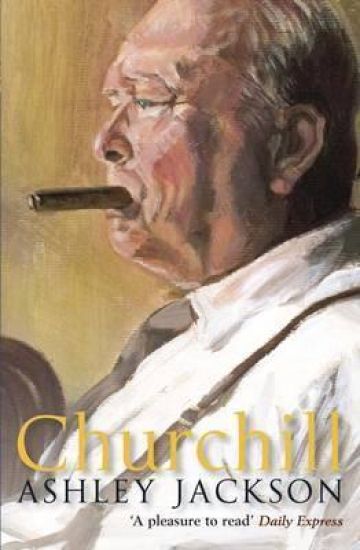
Churchill

Churchill

Ashley Jackson

Quercus Publishing
2012
pokkari
Winston Churchill attracted far more criticism alive than he has since his death. He was, according to Evelyn Waugh, 'always in the wrong, surrounded by crooks, a terrible father, a radio personality'. Whatever one's view of 'the greatest Briton', and despite the best efforts of an army of writers who have penned portraits of him, Winston Churchill remains splendidly unreduced. In this new biography Ashley Jackson describes the contours of Winston Churchill's remarkable life and political career, and gives a sense of the man behind the dark eyes and bulldog features. From Cabinet outcast to the greatest war leader ever, this is the eternally fascinating story of Winston Churchill's appointment with destiny.
Persian Gulf Command: A History of the Second World War in Iran and Iraq
A new history of the long-overlooked WWII theater in Iran and Iraq, its unrecognized significance, and its impact on society and politicsThis dynamic history is the first to construct a total picture of the experience and impact of World War II in Iran and Iraq. Contending that these two countries were more important to the Allied forces' war operations than has ever been acknowledged, historian Ashley Jackson investigates the grand strategy of the Allies and their operations in the region and the continuing legacy of Western intervention in the Middle East.Iran and Iraq served as the first WWII theater in which the US, the UK, and the USSR fought alongside each other. Jackson charts the intense Allied military activity in Iran and Iraq and reveals how deeply the war impacted common people's lives. He also provides revelations about the true nature of Anglo-American relations in the region, the beginnings of the Cold War, and the continuing corrosive legacy of Western influence in these lands.
The Flowers Will Never Die

The Flowers Will Never Die

Ashley Jackson

Xlibris Us
2022
pokkari
This book is to give women a different perspective on life, relationships, business, personal development, branding, and just being a better version of themselves. The flowers represent on how you die from things that no longer serves a purpose in your life. When you blossom to a beautiful flower you begin to live the life you always dreamed of by hard work and commitment. Most important consistency. It takes time but sis it's coming. Grow every day and make the necessary steps towards your dreams. There is so much to do to get to the success that is upon your life. What steps would you take? One of the most important keys to becoming successful is changing your mindset. This often gets overlooked. You can't begin your journey until you have an open mind to learn new things and to be teachable. That's where the journey begins. You will begin to see doors opening and some doors closing. This is all a part of the journey. It's never easy so keep pushing. Experience helps you in gaining the knowledge you need to become successful. This is often do not mention. You must have skillsets. Once you have these things now you can focus on letting others see you in your rightful position. Let the world see you for the new and improved woman that's about making change and getting to the bag. Let's celebrate life and happiness
Negotiating Survival

Negotiating Survival

Ashley Jackson

C Hurst Co Publishers Ltd
2021
sidottu
Two decades on from 9/11, the Taliban now control more than half of Afghanistan. Few would have foreseen such an outcome, and there is little understanding of how Afghans living in Taliban territory have navigated life under insurgent rule. Based on over 400 interviews with Taliban and civilians, this book tells the story of how civilians have not only bargained with the Taliban for their survival, but also ultimately influenced the course of the war in Afghanistan. While the Taliban have the power of violence on their side, they nonetheless need civilians to comply with their authority. Both strategically and by necessity, civilians have leveraged this reliance on their obedience in order to influence Taliban behaviour. Challenging prevailing beliefs about civilians in wartime, Negotiating Survival presents a new model for understanding how civilian agency can shape the conduct of insurgencies. It also provides timely insights into Taliban strategy and objectives, explaining how the organisation has so nearly triumphed on the battlefield and in peace talks. While Afghanistan's future is deeply unpredictable, there is one certainty: it is as critical as ever to understand the Taliban--and how civilians survive their rule.
Distant Drums

Distant Drums

Ashley Jackson

LIVERPOOL UNIVERSITY PRESS
2009
sidottu
"Distant Drums" reveals how colonies were central to the defence of the British Empire and the command of the oceans that underpinned it. It blends sweeping overviews of the nature of imperial defence with grass-roots explanations of how individual colonies were mobilised for war, drawing on the author's specialist knowledge of the Indian Ocean and colonies such as Bechuanaland, Ceylon, Mauritius, and Swaziland. This permits the full and dramatic range of action involved in imperial warfare -- from policy-makers and military planners in Whitehall to chiefs recruiting soldiers in African villages -- to be viewed as part of an interconnected whole. After examining the martial reasons for acquiring colonies, the book considers the colonial role in the First World War. It then turns to the Second World War, documenting the recruitment of colonial soldiers, their manifold roles in British military formations, and the impact of war upon colonial home fronts. It reveals the problems associated with the use of colonial troops far from home, and the networks used to achieve the mobilisation of a global empire, such as those formed by colonial governors and regional naval commanders. The book is an important contribution to our understanding of the role of British colonies in twentieth-century warfare. The defence of empire has traditionally been associated with the military endeavours of Britain and the 'white' Dominions, with the Indian Army sometimes in the background. This book champions the crucial role played by the other parts of the British Empire -- the sixty or so colonies spread across the globe -- in delivering victory during the world wars of the twentieth century.
Distant Drums

Distant Drums

Ashley Jackson

LIVERPOOL UNIVERSITY PRESS
2010
nidottu
"Distant Drums" reveals how colonies were central to the defence of the British Empire and the command of the oceans that underpinned it. It blends sweeping overviews of the nature of imperial defence with grass-roots explanations of how individual colonies were mobilised for war, drawing on the author's specialist knowledge of the Indian Ocean and colonies such as Bechuanaland, Ceylon, Mauritius, and Swaziland. This permits the full and dramatic range of action involved in imperial warfare -- from policy-makers and military planners in Whitehall to chiefs recruiting soldiers in African villages -- to be viewed as part of an interconnected whole. After examining the martial reasons for acquiring colonies, the book considers the colonial role in the First World War. It then turns to the Second World War, documenting the recruitment of colonial soldiers, their manifold roles in British military formations, and the impact of war upon colonial home fronts. It reveals the problems associated with the use of colonial troops far from home, and the networks used to achieve the mobilisation of a global empire, such as those formed by colonial governors and regional naval commanders. The book is an important contribution to our understanding of the role of British colonies in twentieth-century warfare. The defence of empire has traditionally been associated with the military endeavours of Britain and the 'white' Dominions, with the Indian Army sometimes in the background. This book champions the crucial role played by the other parts of the British Empire -- the sixty or so colonies spread across the globe -- in delivering victory during the world wars of the twentieth century.
Oxford's War 1939 - 1945

Oxford's War 1939 - 1945

Ashley Jackson

BODLEIAN LIBRARY
2024
sidottu
Oxford played a unique part in the national endeavour to defend Britain in the Second World War. During the Blitz and beyond, thanks to its proximity to London, the city provided an alternative base for civil servants from the Ministry of Food, the Foreign Office, the Ministry of Home Security, the Ministry of Information and the Ministry of Works. The Admiralty, the War Office, the Air Ministry, MI5, and Bletchley Park all also had a presence in Oxford. Colleges became military hospitals, evacuee centres and both cadet and senior officer schools. Students fit for active service took shortened degree courses and underwent military training while they studied. Grassy quadrangles were converted into vegetable plots and the New Bodleian Library provided underground storage for treasures from Parliament and national museums. Drawing on first-hand narratives and material from University and college archives, this pioneering account reveals the essential role Oxford played in producing military intelligence, creating propaganda, and developing radar and the atomic bomb. It also explores the city’s role in bringing penicillin to market and laying the foundations of the welfare state. It shows how the Cowley car works was heavily involved in arms production and the salvage of RAF fighter planes, and also how the University provided a place of sanctuary for academics fleeing fascism who in turn made significant contributions in their fields of expertise. Together these accounts paint an extraordinary picture of the war’s profound impact on an ancient seat of learning.
The British Empire and the Second World War

The British Empire and the Second World War

Ashley Jackson

BLOOMSBURY PUBLISHING PLC
2006
sidottu
In 1939 Hitler went to war not just with Great Britain; he also went to war with the whole of the British Empire, the greatest empire that there had ever been. In the years since 1945 that empire has disappeared, and the crucial fact that the British Empire fought together as a whole during the war has been forgotten. All the parts of the empire joined the struggle and were involved in it from the beginning, undergoing huge changes and sometimes suffering great losses as a result. The war in the desert, the defence of Malta and the Malayan campaign, and the contribution of the empire as a whole in terms of supplies, communications and troops, all reflect the strategic importance of Britain's imperial status. Men and women not only from Australia, New Zealand and India but from many parts of Africa and the Middle East all played their part. Winston Churchill saw the war throughout in imperial terms. The British Empire and the Second World War emphasises a central fact about the Second World War that is often forgotten.
Ceylon at War, 1939-1945

Ceylon at War, 1939-1945

Ashley Jackson

Helion Company
2018
sidottu
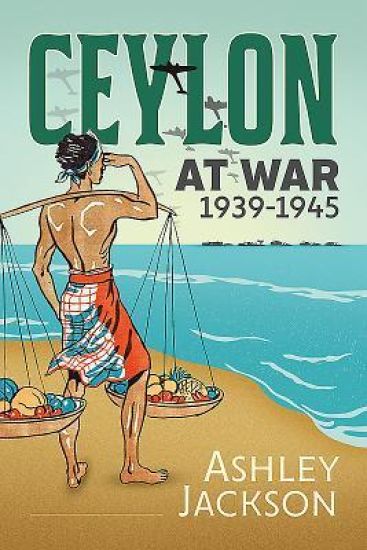
Ceylon became a vital Allied and imperial bastion following the fall of Singapore. Forces were rushed to its defence in the dark days of 1942, because if the Japanese had managed to take the island, the sea lanes of the Indian Ocean, vital to imperial and Allied communications, would have been threatened. Furthermore, as traditional sources were lost to the Japanese, Ceylon became the Allies’ main source of rubber, an essential material of war. Ceylon at War explains why the British War Cabinet considered the island to be strategically vital as it became a surrogate Singapore following Japan’s dramatic conquest of South-east Asia and Burma. It documents the measures taken to defend the island and the flight of thousands of civilians and service personnel to its harbours as they fled in the face of Japanese forces fanning out across South-east Asia and the Dutch East Indies. The April 1942 Japanese raids on Colombo and Trincomalee, described by Churchill as ‘the most dangerous moment of the war’, are described, as are the concurrent naval manoeuvres off Ceylon’s coast as the same Japanese fleet that had devastated Pearl Harbor sought to extinguish the Royal Navy in eastern waters. Ceylon’s role as a base for imperial and Allied forces and headquarters of Admiral Lord Louis Mountbatten’s South East Asia Command is explained, along with the transformations brought to the island by the war. Table of contents: Chapter 1 - The surrogate Singapore; Chapter 2 - ‘Refugee harbour’: The flight to Ceylon; Chapter 3 - Fortifying the island; Chapter 4 - ‘The most dangerous moment’: The Japanese raids; Chapter 5 - Life in Ceylon
Of Islands, Ports and Sea Lanes

Of Islands, Ports and Sea Lanes

Ashley Jackson

Helion Company
2018
sidottu
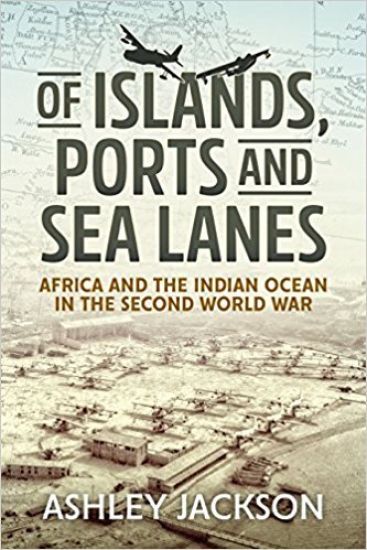
Of Islands, Ports, and Sea Lanes explains the operational and strategic importance of the ports and sea lanes of Africa and the Indian Ocean during the Second World War. In addition, it offers a novel account of the war in the Indian Ocean, a busy and vital theatre of military operations throughout the conflict, though one that is overlooked in most historical studies. An understanding of the significance of the Indian Ocean region, from imperial and strategic perspectives, helps bring unity to the Allied war effort in Africa, Asia, and the Middle East, and demonstrates how the highest levels of strategy depended on places, people, and infrastructure in faraway places of seemingly little consequence. The movement of goods and people by sea was central to the prosecution of the imperial and Allied war effort, and this was dependent upon ports and their facilities, together with troopships and merchantmen and the air and naval assets that protected them. The book offers a `how it worked’ guide to the Empire’s logistical system, and explains the interconnectivity of actions and events on land, sea, and air, detailing the indispensable role played by the ports and sea lanes of the African continent and the Indian Ocean, the British Empire’s great connector. Table of contents: Introduction The British Indian Ocean world; Chapter 1 - Ports, islands, and sea lanes in Africa and the Indian Ocean; Chapter 2 - The role of Africa’s ports and sea lanes; Chapter 3 - The role of Indian Ocean islands; Chapter 4 - German and Italian raiders and sea lane protection; Chapter 5 - The consequences of Japanese aggression; Chapter 6- Admiral Somerville and the reinforcement of the Indian Ocean; Chapter 7 - Holding the ring; Chapter 8 - The turn towards the offensive; Chapter 9 - Victory Japan