Kirjojen hintavertailu. Mukana 12 016 292 kirjaa ja 12 kauppaa.

Kirjahaku

Etsi kirjoja tekijän nimen, kirjan nimen tai ISBN:n perusteella.

5 kirjaa tekijältä Asma Mehan

Tehran

Tehran

Asma Mehan

TAYLOR FRANCIS LTD
2022
sidottu
This book is an interdisciplinary research work designed to be of interest to a broad range of academics. The book examines the relationship between democracy and the (trans)formations of urban spaces through comparative perspective. It engages with the ideas of ‘modernity’ in architecture and investigates how they might align (or not) with other forms of radical power. This book offers an understanding of the public spaces through political change, power struggle, and autocratic modernity manifested. It addresses the subject of politics in architecture and built environment by examining the various academic literature in urban studies, architectural history, urban anthropology, urban sociology, cultural geographies, planning history, philosophy, and the broader social and political sciences. Followingly, it will be focused on the less well-known traditions of architecture and democratic values drawing upon western and (non)western perspectives to decolonize the notion of public space in the global south. In better words, the book investigates the mechanisms of power struggles and the transformative dynamism of totalization and state-led modernization, which motivates or shapes a creative tension in the form of the city. The topic of the work is novel and aims to examine the relationship between the affordances of public spaces, their micro-histories, and the emergence of critical social events and movements. The breadth of the topic demanded engagement with a rich body of architectural theory and history and relevant texts in urban sociology, colonial and postcolonial studies, political geography, and cultural studies, a challenge to which the book has responded outstandingly. The issue is urgent for policymakers and architects, urban designers, political and cultural geographers, and other practitioners working on the built environment to create more democratic public spaces in the global south.
Tehran

Tehran

Asma Mehan

TAYLOR FRANCIS LTD
2024
nidottu
This book is an interdisciplinary research work designed to be of interest to a broad range of academics. The book examines the relationship between democracy and the (trans)formations of urban spaces through comparative perspective. It engages with the ideas of ‘modernity’ in architecture and investigates how they might align (or not) with other forms of radical power. This book offers an understanding of the public spaces through political change, power struggle, and autocratic modernity manifested. It addresses the subject of politics in architecture and built environment by examining the various academic literature in urban studies, architectural history, urban anthropology, urban sociology, cultural geographies, planning history, philosophy, and the broader social and political sciences. Followingly, it will be focused on the less well-known traditions of architecture and democratic values drawing upon western and (non)western perspectives to decolonize the notion of public space in the global south. In better words, the book investigates the mechanisms of power struggles and the transformative dynamism of totalization and state-led modernization, which motivates or shapes a creative tension in the form of the city. The topic of the work is novel and aims to examine the relationship between the affordances of public spaces, their micro-histories, and the emergence of critical social events and movements. The breadth of the topic demanded engagement with a rich body of architectural theory and history and relevant texts in urban sociology, colonial and postcolonial studies, political geography, and cultural studies, a challenge to which the book has responded outstandingly. The issue is urgent for policymakers and architects, urban designers, political and cultural geographers, and other practitioners working on the built environment to create more democratic public spaces in the global south.
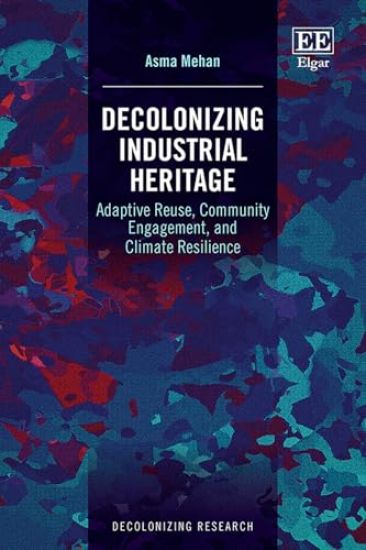
Decolonizing Industrial Heritage

Decolonizing Industrial Heritage

Asma Mehan

EDWARD ELGAR PUBLISHING LTD
2026
sidottu
This timely book explores the adaptive reuse of industrial heritage through the lenses of decolonization and climate resilience. Author Asma Mehan presents a critical framework for understanding and reinvigorating industrial remains as evolving infrastructures that foster ecological and social transformation. Chapters highlight the need for new models of reuse that advance circular economies, inclusive governance and spatial equality. Drawing on a wide range of case studies, from grain silos to oil towns, Mehan connects digital technologies like Geographic Information System and AI with community-driven approaches, proposing adaptive reuse as a core strategy for climate response and urban regeneration. The book provides a roadmap for revitalizing post-industrial spaces and entities with care, culture and accountability. Decolonizing Industrial Heritage is a key resource for students and scholars in heritage studies, planning, architecture and urban studies. It is also beneficial for heritage, development and indigenous rights practitioners, as well as professionals in international development agencies and NGOs.
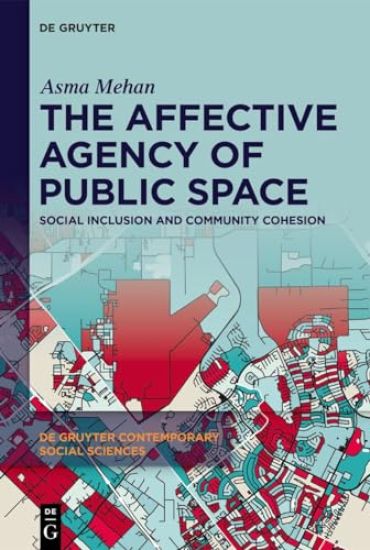
The Affective Agency of Public Space
The Affective Agency of Public Space explores the pivotal role that public spaces play in fostering social inclusion and community cohesion within various settings, including Europe and the United States. This scholarly work underscores the critical importance of developing inclusive public zones that enhance urban life and promote integration and interaction among diverse community groups. It also confronts and debunks common myths about ‘different people,’ actively addressing misconceptions while promoting the recognition of diverse identities and voices. Through a comparative lens, the book presents insightful case studies that illustrate its core themes. Serving as a timely and important academic resource, this text is indispensable for urban planners, educators, architects, designers, and sociologists committed to progressive urban planning methodologies.
Intersections: Urban Infrastructure and Community Resilience
This book critically examines the complex and multifaceted linkage between urban infrastructure and community resilience, delving into the politics and design of the built environment and the urban strategies shaping our cities. It explores how infrastructure--beyond its physical manifestations--serves as a conduit for social equity, environmental sustainability, and economic vitality. This monograph explores the intricate relationship between urban infrastructure and the communities it serves. Drawing from a transnational historical analysis, it elucidates the pivotal role of infrastructure in shaping urban development and contemplates the implications of transitioning towards resilient urban futures. By employing a comparative methodology, the volume offers nuanced insights into the multifarious relationships between past infrastructure-driven urbanization and emerging building paradigms. Notably, the book foregrounds the delicate balance between preserving infrastructural heritage, current transition efforts, and envisioning sustainable urban scenarios. It also critically assesses the influential triad of governance, policy frameworks, and technological shifts in this transformation. Furthermore, the book delves into the socio-political dimensions of infrastructural development, examining how power dynamics, community engagement, and participatory planning influence the resilience and adaptability of urban systems. By integrating perspectives from urban studies, architecture, and social sciences, it offers a holistic understanding of how infrastructure serves not only as a physical framework but also as a catalyst for social cohesion and community empowerment. Through detailed case studies and theoretical analyses, the monograph provides valuable insights for policymakers, urban planners, and scholars interested in fostering inclusive and resilient urban environments.