Kirjojen hintavertailu. Mukana 12 016 292 kirjaa ja 12 kauppaa.

Kirjahaku

Etsi kirjoja tekijän nimen, kirjan nimen tai ISBN:n perusteella.

15 kirjaa tekijältä Atul Kohli

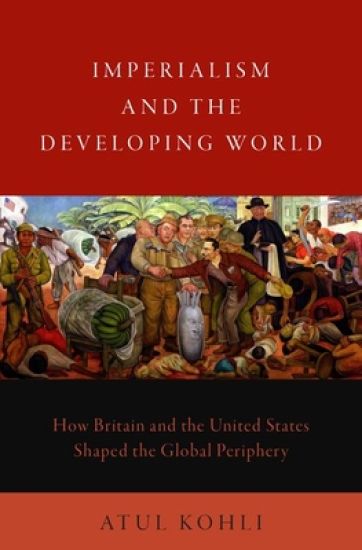
Imperialism and the Developing World

Imperialism and the Developing World

Atul Kohli

Oxford University Press Inc
2020
sidottu
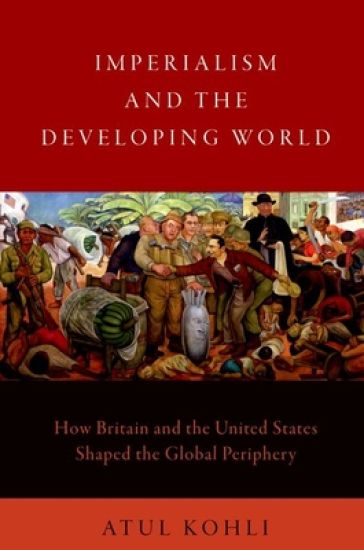
How did Western imperialism shape the developing world? In Imperialism and the Developing World, Atul Kohli tackles this question by analyzing British and American influence on Asia, Africa, the Middle East, and Latin America from the age of the British East India Company to the most recent U.S. war in Iraq. He argues that both Britain and the U.S. expanded to enhance their national economic prosperity, and shows how Anglo-American expansionism hurt economic development in poor parts of the world. To clarify the causes and consequences of modern imperialism, Kohli first explains that there are two kinds of empires and analyzes the dynamics of both. Imperialism can refer to a formal, colonial empire such as Britain in the 19th century or an informal empire, wielding significant influence but not territorial control, such as the U.S. in the 20th century. Kohli contends that both have repeatedly undermined the prospects of steady economic progress in the global periphery, though to different degrees. Time and again, the pursuit of their own national economic prosperity led Britain and the U.S. to expand into peripheral areas of the world. Limiting the sovereignty of other states-and poor and weak states on the periphery in particular-was the main method of imperialism. For the British and American empires, this tactic ensured that peripheral economies would stay open and accessible to Anglo-American economic interests. Loss of sovereignty, however, greatly hurt the life chances of people living in Asia, the Middle East, Africa, and Latin America. As Kohli lays bare, sovereignty is an economic asset; it is a precondition for the emergence of states that can foster prosperous and inclusive industrial societies.
Imperialism and the Developing World

Imperialism and the Developing World

Atul Kohli

OXFORD UNIVERSITY PRESS INC
2021
nidottu
How did Western imperialism shape the developing world? Atul Kohli tackles that question by analyzing British and American influence on Asia, Africa, the Middle East and Latin America from the age of the British East India Company to the most recent U.S. war in Iraq. How did Western imperialism shape the developing world? In Imperialism and the Developing World, Atul Kohli tackles this question by analyzing British and American influence on Asia, Africa, the Middle East, and Latin America from the age of the British East India Company to the most recent U.S. war in Iraq. He argues that both Britain and the U.S. expanded to enhance their national economic prosperity, and shows how Anglo-American expansionism hurt economic development in poor parts of the world. To clarify the causes and consequences of modern imperialism, Kohli first explains that there are two kinds of empires and analyzes the dynamics of both. Imperialism can refer to a formal, colonial empire such as Britain in the 19th century or an informal empire, wielding significant influence but not territorial control, such as the U.S. in the 20th century. Kohli contends that both have repeatedly undermined the prospects of steady economic progress in the global periphery, though to different degrees. Time and again, the pursuit of their own national economic prosperity led Britain and the U.S. to expand into peripheral areas of the world. Limiting the sovereignty of other states-and poor and weak states on the periphery in particular-was the main method of imperialism. For the British and American empires, this tactic ensured that peripheral economies would stay open and accessible to Anglo-American economic interests. Loss of sovereignty, however, greatly hurt the life chances of people living in Asia, the Middle East, Africa, and Latin America. As Kohli lays bare, sovereignty is an economic asset; it is a precondition for the emergence of states that can foster prosperous and inclusive industrial societies.
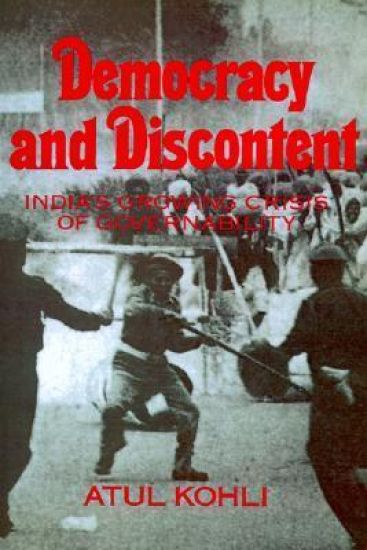
Democracy and Discontent

Democracy and Discontent

Atul Kohli

Cambridge University Press
1991
sidottu
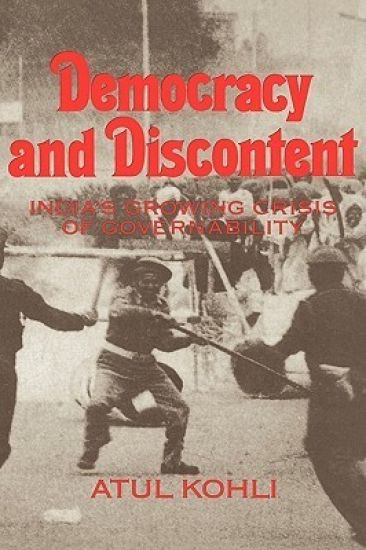
Long considered one of the great successes of the developing world, India has more recently experienced growing challenges to political order and stability. Institutional mechanisms for the resolution of conflict have broken down, the civil and police services have become highly politicized, and the state bureaucracy appears incapable of implementing an effective plan for economic development. In this book, Atul Kohli analyzes political change in India from the late 1960s to the late 1980s. Based on research conducted at the local, state and national level, the author analyzes the changing patterns of authority in and between the centre and periphery. He combines rich empirical investigation, extensive interviews and theoretical perspectives in developing a detailed explanation of the growing crisis of governance his research reveals. The book will be of interest to both specialists in Indian politics and to students of comparative politics more generally.
Democracy and Discontent

Democracy and Discontent

Atul Kohli

Cambridge University Press
1991
pokkari
Long considered one of the great successes of the developing world, India has in recent years experienced growing challenges to political order and stability. Dominant social groups face growing demands of newly organized social groups, often leading to intense violence, and the once hegemonic Congress party has forfeited its commanding role, culminating in the defeat of Rajiv Gandhi in the recent national elections. Institutional mechanisms for the resolution of conflict have broken down, the civil and police services have become highly politicized, and the state bureaucracy appears incapable of implementing an effective plan for economic development. In this book, Atul Kohli analyzes political change in India from the late 1960s to the late 1980s. Based on research conducted at the local, state and national level, the author analyzes the changing patterns of authority in and between the center and periphery. He combines rich empirical investigation, extensive interviews and theoretical perspectives in developing a detailed explanation of the growing crisis of governance his research reveals. The book will be of interest to both specialists in Indian politics and to students of comparative politics more generally as an analysis of political patterns that evolve in democratic governments in developing countries. Atul Kohli is an Associate Professor at the Woodrow Wilson School of International Affairs, Princeton University. He is the author of The State and Poverty in India: The Politics of Reform (CUP, 1987).
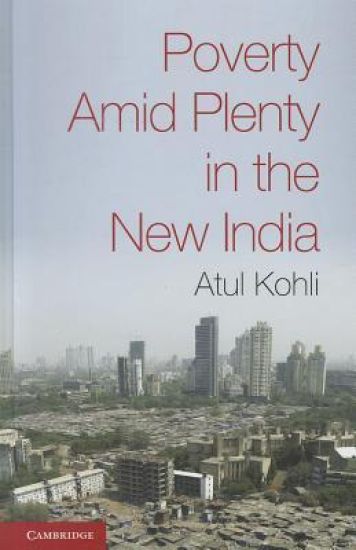
Poverty amid Plenty in the New India

Poverty amid Plenty in the New India

Atul Kohli

Cambridge University Press
2012
sidottu
India has one of the fastest growing economies on earth. Over the past three decades, socialism has been replaced by pro-business policies as the way forward. And yet, in this 'new' India, grinding poverty is still a feature of everyday life. Some 450 million people subsist on less than $1.25 per day and nearly half of India's children are malnourished. In his latest book, Atul Kohli, a seasoned scholar of Indian politics and economics, blames this discrepancy on the narrow nature of the ruling alliance in India that, in its new-found relationship with business, has prioritized economic growth above all other social and political considerations. This thoughtful and challenging book affords an alternative vision of India's rise in the world that its democratic rulers will be forced to come to grips with in the years ahead.
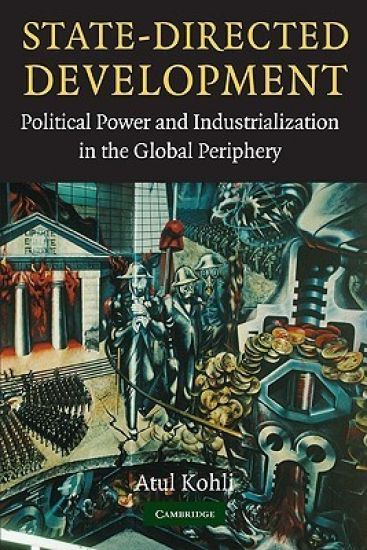
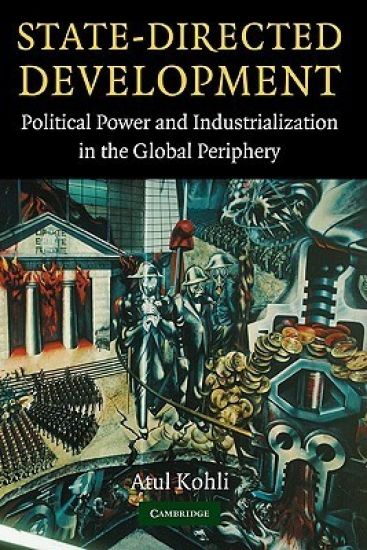
State-Directed Development

State-Directed Development

Atul Kohli

Cambridge University Press
2004
pokkari
Why have some developing country states been more successful at facilitating industrialization than others? An answer to this question is developed by focusing both on patterns of state construction and intervention aimed at promoting industrialization. Four countries are analyzed in detail - South Korea, Brazil, India, and Nigeria - over the twentieth century. The states in these countries varied from cohesive-capitalist (mainly in Korea), through fragmented-multiclass (mainly in India), to neo-patrimonial (mainly in Nigeria). It is argued that cohesive-capitalist states have been most effective at promoting industrialization and neo-patrimonial states the least. The performance of fragmented-multiclass states falls somewhere in the middle. After explaining in detail as to why this should be so, the study traces the origins of these different state types historically, emphasizing the role of different types of colonialisms in the process of state construction in the developing world.
Poverty amid Plenty in the New India

Poverty amid Plenty in the New India

Atul Kohli

Cambridge University Press
2012
pokkari
India has one of the fastest growing economies on earth. Over the past three decades, socialism has been replaced by pro-business policies as the way forward. And yet, in this 'new' India, grinding poverty is still a feature of everyday life. Some 450 million people subsist on less than $1.25 per day and nearly half of India's children are malnourished. In his latest book, Atul Kohli, a seasoned scholar of Indian politics and economics, blames this discrepancy on the narrow nature of the ruling alliance in India that, in its new-found relationship with business, has prioritized economic growth above all other social and political considerations. This thoughtful and challenging book affords an alternative vision of India's rise in the world that its democratic rulers will be forced to come to grips with in the years ahead.
State-Directed Development

State-Directed Development

Atul Kohli

Cambridge University Press
2004
sidottu
Why have some developing country states been more successful at facilitating industrialization than others? An answer to this question is developed by focusing both on patterns of state construction and intervention aimed at promoting industrialization. Four countries are analyzed in detail - South Korea, Brazil, India, and Nigeria - over the twentieth century. The states in these countries varied from cohesive-capitalist (mainly in Korea), through fragmented-multiclass (mainly in India), to neo-patrimonial (mainly in Nigeria). It is argued that cohesive-capitalist states have been most effective at promoting industrialization and neo-patrimonial states the least. The performance of fragmented-multiclass states falls somewhere in the middle. After explaining in detail as to why this should be so, the study traces the origins of these different state types historically, emphasizing the role of different types of colonialisms in the process of state construction in the developing world.
Greed and Guns

Greed and Guns

Atul Kohli

Cambridge University Press
2022
pokkari
This Element studies the causes and the consequences of modern imperialism. The focus is on British and US imperialism in the nineteenth and the twentieth centuries respectively. The dynamics of both formal and informal empires are analyzed. The argument is that imperialism is moved mainly by the desire of major powers to enhance their national economic prosperity. They do so by undermining sovereignty in peripheral countries and establishing open economic access. The impact on the countries of the periphery tends to be negative. In a world of states, then, national sovereignty is an economic asset. Since imperialism seeks to limit the exercise of sovereign power by subject people, there tends to be an inverse relationship between imperialism and development: the less control a state has over its own affairs, the less likely it is that the people of that state will experience economic progress.
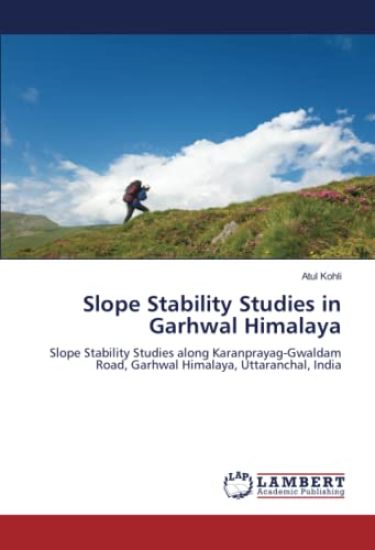
Slope Stability Studies in Garhwal Himalaya

Slope Stability Studies in Garhwal Himalaya

Atul Kohli

Lap Lambert Academic Publishing
2023
pokkari
In hilly terrains, roads constitute a major communication link with inaccessible areas. Unplanned excavations for construction of roads lead to the creation of unstable cut slopes which, along with various other adverse geological conditions, cause their failure creating damages to life and property. Uttarakhand is comparatively a new state in the fragile Himalayan terrain of India. Since its formation in 2000, there is a rapid surge of road construction in this hill state. The economy of this state is mainly tourism based and so more emphasis should be given on road networks. Therefore, a sound geological and geotechnical evaluation of hill slopes in the state is essential prior to construction of roads. Besides, it is also necessary to carry out a fast appraisal of the existing roads especially in the vulnerable sections. This exercise would be of immense importance towards identification of hill slopes prone to slope failures and landslides. The present work embodies the findings of slope stability studies along Karnaprayag - Gwaldam road stretch was carried out during present investigation.
Studien zur Hangstabilität im Garhwal Himalaya
In h geligem Gel nde stellen Stra en eine wichtige Kommunikationsverbindung zu unzug nglichen Gebieten dar. Ungeplante Ausgrabungen f r den Bau von Stra en f hren zu instabilen Einschnitten, die zusammen mit verschiedenen anderen ung nstigen geologischen Bedingungen zu ihrem Versagen f hren und Sch den an Leben und Eigentum verursachen. Uttarakhand ist ein vergleichsweise neuer Bundesstaat im fragilen Himalaya-Gebiet Indiens. Seit seiner Gr ndung im Jahr 2000 hat der Stra enbau in diesem Bergstaat rasant zugenommen. Die Wirtschaft dieses Bundesstaates ist haupts chlich auf den Tourismus ausgerichtet, weshalb dem Stra ennetz mehr Bedeutung beigemessen werden sollte. Daher ist eine fundierte geologische und geotechnische Bewertung der Bergh nge in diesem Bundesstaat vor dem Bau von Stra en unerl sslich. Au erdem ist es notwendig, eine schnelle Bewertung der bestehenden Stra en vorzunehmen, insbesondere in den gef hrdeten Abschnitten. Dies w re von immenser Bedeutung f r die Identifizierung von Bergh ngen, die anf llig f r Hangrutschungen und Erdrutsche sind. Die vorliegende Arbeit enth lt die Ergebnisse von Studien zur Hangstabilit t entlang der Strecke Karnaprayag - Gwaldam, die im Rahmen dieser Untersuchung durchgef hrt wurden.
Études sur la stabilité des pentes dans l'Himalaya du Garhwal
Dans les r gions vallonn es, les routes constituent un lien de communication majeur avec les zones inaccessibles. Les excavations non planifi es pour la construction des routes conduisent la cr ation de pentes instables qui, avec d'autres conditions g ologiques d favorables, provoquent leur effondrement, causant des dommages la vie et la propri t . L'Uttarakhand est un tat relativement nouveau dans le fragile paysage himalayen de l'Inde. Depuis sa cr ation en 2000, la construction de routes a connu un essor rapide dans cet tat montagneux. L' conomie de cet tat est principalement bas e sur le tourisme et il convient donc de mettre davantage l'accent sur les r seaux routiers. Par cons quent, une valuation g ologique et g otechnique solide des pentes des collines de l' tat est essentielle avant la construction des routes. En outre, il est galement n cessaire de proc der une valuation rapide des routes existantes, en particulier dans les sections vuln rables. Cet exercice serait d'une grande importance pour l'identification des pentes de collines sujettes des ruptures de pente et des glissements de terrain. Le pr sent travail pr sente les r sultats des tudes de stabilit des pentes le long de la route Karnaprayag - Gwaldam, qui ont t r alis es au cours de la pr sente enqu te.
Studi sulla stabilità dei pendii nell'Himalaya di Garhwal
Nei terreni collinari, le strade costituiscono un importante collegamento con aree inaccessibili. Scavi non pianificati per la costruzione di strade portano alla creazione di pendii instabili che, insieme a varie altre condizioni geologiche avverse, ne causano il cedimento, con conseguenti danni a persone e cose. L'Uttarakhand uno Stato relativamente nuovo nel fragile territorio himalayano dell'India. Dalla sua formazione nel 2000, si assistito a una rapida impennata della costruzione di strade in questo Stato collinare. L'economia di questo Stato si basa principalmente sul turismo e quindi occorre dare maggiore importanza alle reti stradali. Per questo motivo, prima della costruzione di strade essenziale una solida valutazione geologica e geotecnica dei pendii collinari dello Stato. Inoltre, necessario effettuare una rapida valutazione delle strade esistenti, soprattutto nei tratti pi vulnerabili. Questo esercizio sarebbe di immensa importanza per l'identificazione dei pendii collinari soggetti a cedimenti e frane. Il presente lavoro illustra i risultati degli studi sulla stabilit dei pendii lungo il tratto stradale Karnaprayag - Gwaldam.
Estudos de estabilidade de taludes em Garhwal Himalaya

Estudos de estabilidade de taludes em Garhwal Himalaya

Atul Kohli

Edicoes Nosso Conhecimento
2023
pokkari
Em terrenos montanhosos, as estradas constituem um importante elo de comunica o com zonas inacess veis. Escava es n o planeadas para a constru o de estradas levam cria o de taludes inst veis que, juntamente com v rias outras condi es geol gicas adversas, provocam o seu fracasso, causando danos vida e propriedade. Uttarakhand , comparativamente, um estado novo no fr gil terreno dos Himalaias da ndia. Desde a sua forma o em 2000, regista-se um r pido aumento da constru o de estradas neste estado montanhoso. A economia deste Estado baseia-se principalmente no turismo, pelo que deve ser dada maior nfase s redes rodovi rias. Por conseguinte, antes da constru o de estradas, essencial efetuar uma avalia o geol gica e geot cnica s lida das encostas das colinas do Estado. Al m disso, tamb m necess rio efetuar uma avalia o r pida das estradas existentes, especialmente nas sec es vulner veis. Este exerc cio seria de grande import ncia para a identifica o de encostas propensas a falhas de declive e deslizamentos de terra. O presente trabalho incorpora os resultados dos estudos de estabilidade de taludes ao longo do tro o rodovi rio Karnaprayag - Gwaldam, realizados durante a presente investiga o.