Kirjojen hintavertailu. Mukana 11 342 535 kirjaa ja 12 kauppaa.

Kirjahaku

Etsi kirjoja tekijän nimen, kirjan nimen tai ISBN:n perusteella.

7 kirjaa tekijältä Audrey Truschke

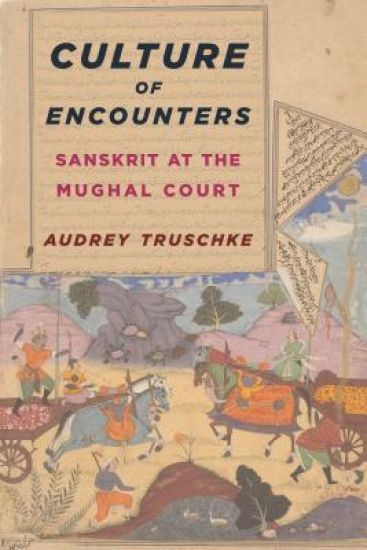
Culture of Encounters

Culture of Encounters

Audrey Truschke

Columbia University Press
2016
sidottu
Culture of Encounters documents the fascinating exchange between the Persian-speaking Islamic elite of the Mughal Empire and traditional Sanskrit scholars, which engendered a dynamic idea of Mughal rule essential to the empire's survival. This history begins with the invitation of Brahman and Jain intellectuals to King Akbar's court in the 1560s, then details the numerous Mughal-backed texts they and their Mughal interlocutors produced under emperors Akbar, Jahangir (1605-1627), and Shah Jahan (1628-1658). Many works, including Sanskrit epics and historical texts, were translated into Persian, elevating the political position of Brahmans and Jains and cultivating a voracious appetite for Indian writings throughout the Mughal world. The first book to read these Sanskrit and Persian works in tandem, Culture of Encounters recasts the Mughal Empire as a polyglot polity that collaborated with its Indian subjects to envision its sovereignty. The work also reframes the development of Brahman and Jain communities under Mughal rule, which coalesced around carefully selected, politically salient memories of imperial interaction. Along with its groundbreaking findings, Culture of Encounters certifies the critical role of the sociology of empire in building the Mughal polity, which came to irrevocably shape the literary and ruling cultures of early modern India.
Culture of Encounters

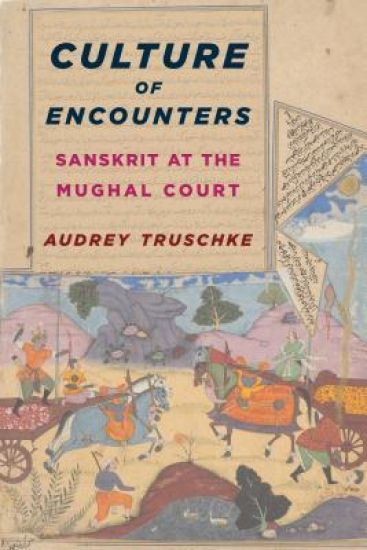
Culture of Encounters

Audrey Truschke

Columbia University Press
2018
pokkari
Culture of Encounters documents the fascinating exchange between the Persian-speaking Islamic elite of the Mughal Empire and traditional Sanskrit scholars, which engendered a dynamic idea of Mughal rule essential to the empire's survival. This history begins with the invitation of Brahman and Jain intellectuals to King Akbar's court in the 1560s, then details the numerous Mughal-backed texts they and their Mughal interlocutors produced under emperors Akbar, Jahangir (1605–1627), and Shah Jahan (1628–1658). Many works, including Sanskrit epics and historical texts, were translated into Persian, elevating the political position of Brahmans and Jains and cultivating a voracious appetite for Indian writings throughout the Mughal world. The first book to read these Sanskrit and Persian works in tandem, Culture of Encounters recasts the Mughal Empire as a polyglot polity that collaborated with its Indian subjects to envision its sovereignty. The work also reframes the development of Brahman and Jain communities under Mughal rule, which coalesced around carefully selected, politically salient memories of imperial interaction. Along with its groundbreaking findings, Culture of Encounters certifies the critical role of the sociology of empire in building the Mughal polity, which came to irrevocably shape the literary and ruling cultures of early modern India.
The Language of History

The Language of History

Audrey Truschke

Columbia University Press
2021
sidottu
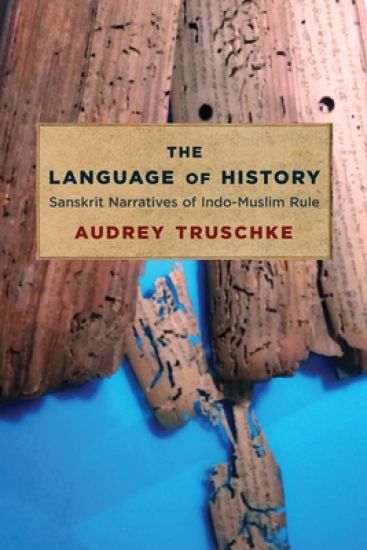
For over five hundred years, Muslim dynasties ruled parts of northern and central India, starting with the Ghurids in the 1190s through the fracturing of the Mughal Empire in the early eighteenth century. Scholars have long drawn upon works written in Persian and Arabic about this epoch, yet they have neglected the many histories that India’s learned elite wrote about Indo-Muslim rule in Sanskrit. These works span the Delhi Sultanate and Mughal Empire and discuss Muslim-led kingdoms in the Deccan and even as far south as Tamil Nadu. They constitute a major archive for understanding significant cultural and political changes that shaped early modern India and the views of those who lived through this crucial period.Audrey Truschke offers a groundbreaking analysis of these Sanskrit texts that sheds light on both historical Muslim political leaders on the subcontinent and how premodern Sanskrit intellectuals perceived the “Muslim Other.” She analyzes and theorizes how Sanskrit historians used the tools of their literary tradition to document Muslim governance and, later, as Muslims became an integral part of Indian cultural and political worlds, Indo-Muslim rule. Truschke demonstrates how this new archive lends insight into formulations and expressions of premodern political, social, cultural, and religious identities. By elaborating the languages and identities at play in premodern Sanskrit historical works, this book expands our historical and conceptual resources for understanding premodern South Asia, Indian intellectual history, and the impact of Muslim peoples on non-Muslim societies.At a time when exclusionary Hindu nationalism, which often grounds its claims on fabricated visions of India’s premodernity, dominates the Indian public sphere, The Language of History shows the complexity and diversity of the subcontinent’s past.
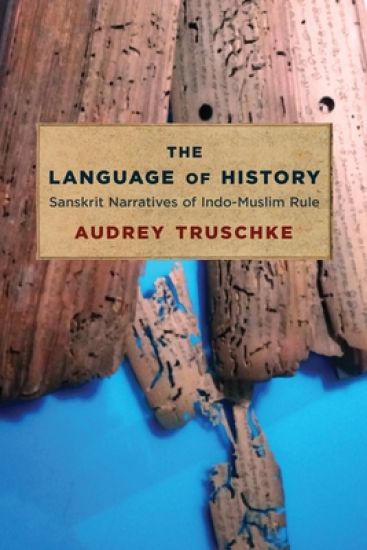
The Language of History

The Language of History

Audrey Truschke

Columbia University Press
2021
pokkari
For over five hundred years, Muslim dynasties ruled parts of northern and central India, starting with the Ghurids in the 1190s through the fracturing of the Mughal Empire in the early eighteenth century. Scholars have long drawn upon works written in Persian and Arabic about this epoch, yet they have neglected the many histories that India’s learned elite wrote about Indo-Muslim rule in Sanskrit. These works span the Delhi Sultanate and Mughal Empire and discuss Muslim-led kingdoms in the Deccan and even as far south as Tamil Nadu. They constitute a major archive for understanding significant cultural and political changes that shaped early modern India and the views of those who lived through this crucial period.Audrey Truschke offers a groundbreaking analysis of these Sanskrit texts that sheds light on both historical Muslim political leaders on the subcontinent and how premodern Sanskrit intellectuals perceived the “Muslim Other.” She analyzes and theorizes how Sanskrit historians used the tools of their literary tradition to document Muslim governance and, later, as Muslims became an integral part of Indian cultural and political worlds, Indo-Muslim rule. Truschke demonstrates how this new archive lends insight into formulations and expressions of premodern political, social, cultural, and religious identities. By elaborating the languages and identities at play in premodern Sanskrit historical works, this book expands our historical and conceptual resources for understanding premodern South Asia, Indian intellectual history, and the impact of Muslim peoples on non-Muslim societies.At a time when exclusionary Hindu nationalism, which often grounds its claims on fabricated visions of India’s premodernity, dominates the Indian public sphere, The Language of History shows the complexity and diversity of the subcontinent’s past.
India

India

Audrey Truschke

PRINCETON UNIVERSITY PRESS
2025
sidottu
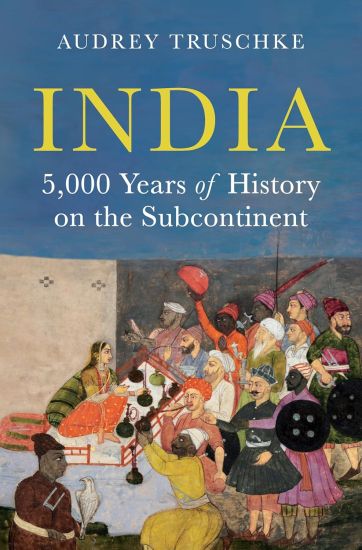
A dazzling new history of the Indian subcontinent and its diverse peoples in global context—from antiquity to todayMuch of world history is Indian history. Home today to one in four people, the subcontinent has long been densely populated and deeply connected to Asia, Africa, Europe, and the Americas through migration and trade. In this magisterial history, Audrey Truschke tells the fascinating story of the region historically known as India—which includes today’s India, Pakistan, Bangladesh, and parts of Afghanistan—and the people who have lived there.A sweeping account of five millennia, from the dawn of the Indus Valley Civilization to the twenty-first century, this engaging and richly textured narrative chronicles the most important political, social, religious, intellectual, and cultural events. And throughout, it describes how the region has been continuously reshaped by its astonishing diversity, religious and political innovations, and social stratification.Here, readers will learn about Hinduism, Buddhism, Jainism, Islam, and Sikhism; the Vedas and Mahabharata; Ashoka and the Mauryan Empire; the Silk Road; the Cholas; Indo-Persian rule; the Mughal Empire; European colonialism; national independence movements; the 1947 Partition of India; the recent rise of Hindu nationalism; the challenges of climate change; and much more. Emphasizing the diversity of human experiences on the subcontinent, the book presents a wide range of voices, including those of women, religious minorities, lower classes, and other marginalized groups.You cannot understand India today without appreciating its deeply contested history, which continues to drive current events and controversies. A comprehensive and innovative book, India is essential reading for anyone who is interested in the past, present, or future of the subcontinent.
Aurangzeb

Aurangzeb

Audrey Truschke

Stanford University Press
2017
sidottu
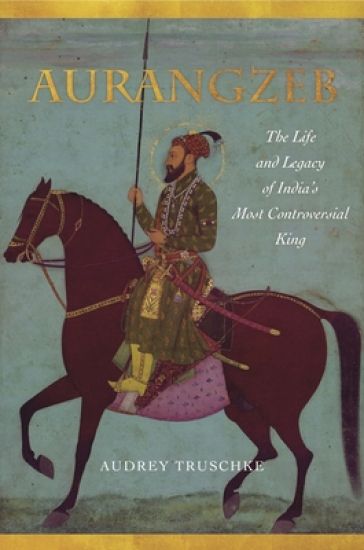
The Mughal emperor Aurangzeb Alamgir is one of the most hated men in Indian history. Widely reviled as a religious fanatic who sought to violently oppress Hindus, he is even blamed by some for setting into motion conflicts that would result in the creation of a separate Muslim state in South Asia. In her lively overview of his life and influence, Audrey Truschke offers a clear-eyed perspective on the public debate over Aurangzeb and makes the case for why his often-maligned legacy deserves to be reassessed. Aurangzeb was arguably the most powerful and wealthiest ruler of his day. His nearly 50-year reign (1658–1707) had a profound influence on the political landscape of early modern India, and his legacy—real and imagined—continues to loom large in India and Pakistan today. Truschke evaluates Aurangzeb not by modern standards but according to the traditions and values of his own time, painting a picture of Aurangzeb as a complex figure whose relationship to Islam was dynamic, strategic, and sometimes contradictory. This book invites students of South Asian history and religion into the world of the Mughal Empire, framing the contemporary debate on Aurangzeb's impact and legacy in accessible and engaging terms.
Aurangzeb

Aurangzeb

Audrey Truschke

Stanford University Press
2017
pokkari
The Mughal emperor Aurangzeb Alamgir is one of the most hated men in Indian history. Widely reviled as a religious fanatic who sought to violently oppress Hindus, he is even blamed by some for setting into motion conflicts that would result in the creation of a separate Muslim state in South Asia. In her lively overview of his life and influence, Audrey Truschke offers a clear-eyed perspective on the public debate over Aurangzeb and makes the case for why his often-maligned legacy deserves to be reassessed. Aurangzeb was arguably the most powerful and wealthiest ruler of his day. His nearly 50-year reign (1658–1707) had a profound influence on the political landscape of early modern India, and his legacy—real and imagined—continues to loom large in India and Pakistan today. Truschke evaluates Aurangzeb not by modern standards but according to the traditions and values of his own time, painting a picture of Aurangzeb as a complex figure whose relationship to Islam was dynamic, strategic, and sometimes contradictory. This book invites students of South Asian history and religion into the world of the Mughal Empire, framing the contemporary debate on Aurangzeb's impact and legacy in accessible and engaging terms.