Kirjojen hintavertailu. Mukana 11 342 296 kirjaa ja 12 kauppaa.

Kirjahaku

Etsi kirjoja tekijän nimen, kirjan nimen tai ISBN:n perusteella.

5 kirjaa tekijältä August Sarnitz

Relationen: Texte und Bauten

Relationen: Texte und Bauten

August Sarnitz

Birkhauser
2018
sidottu
Der Titel des Buches setzt die beiden Tätigkeitsfelder, das Bauen und das Schreiben, des Architekten, Architekturhistorikers und Theoretikers August Sarnitz in eine wechselseitige Beziehung: im Schreiben entsteht der Kontext zum Gebauten – so wie das Bauen im Kontext des Geschriebenen steht. Eben diesem Wechselspiel folgt auch der Aufbau des Buches: einem Essay über Architekturgeschichte und Big Data folgen drei Aufsätze zu den Themen Städtebau, sozialem Wohnbau und der Fiktion des Raums. Auch einige prägende Wiener Architekten treten auf: Frank, Kiesler, Hollein und Prix. Die Themen Wohnen, Design und Möbel werden mit eigenen Projekten von Sarnitz illustriert; am Ende widmet sich das Buch der Architekturfotografie, die für Sarnitz als Publizisten große Bedeutung hat.
Relations in Architecture

Relations in Architecture

August Sarnitz

Birkhauser
2020
sidottu
The title of the book sets the two fields of activity pursued by the architect, architectural historian and theorist August Sarnitz – building and writing – in a reciprocal relation: the context to what has been built emerges in the process of writing, just as the context to what has been written emerges in the process of building. The structure of the book follows precisely this reciprocity: an essay about architectural history and Big Data is followed by three on the topics of urban development, social housing, and the fiction of space. A number of influential Viennese architects appear as well: Frank, Kiesler, Hollein and Prix. The topics of housing, design and furniture are all illustrated with Sarnitz’s own projects; the end of the book is dedicated to architectural photography, which is especially important to Sarnitz in his capacity as publicist. The richly illustrated book is the first to document Sarnitz’s work as author, designer, exhibition designer, architect and photographer.
Adolf Loos

Adolf Loos

August Sarnitz

TASCHEN GMBH
2016
sidottu
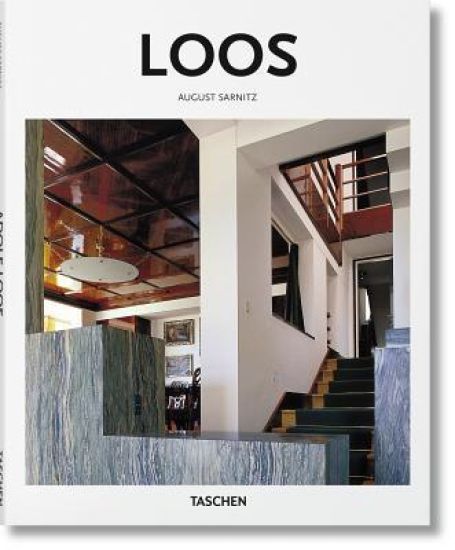
With his passion for smooth surfaces, fine lines, and spatial plans, Adolf Loos was a prophet of 20th-century architecture. This essential introduction explores his rejection of ornamental forms and his radical pursuit of stark, bold, and beautiful design.
Adolf Loos

Adolf Loos

August Sarnitz

Taschen GmbH
2019
sidottu
Adolf Loos (1870–1933) was a flamboyant character whose presence in the cultural hotbed of early 1900s Vienna galvanized the country’s architectural landscape. An early, impassioned advocate of modernism, he all-out rejected the grand Secessionist aesthetic prevalent at the time, as well as any hallmarks of the European fin de siècle.Instead, in lectures and essays, such as the milestone Ornament and Crime of 1908, Loos articulated his “passion for smooth and precious surfaces.” He advocated that architectural ornamentation was, by its nature, ephemeral—locked into current trends and styles, and therefore quickly dated. Loos, himself a Classicist at heart, argued instead for simple, timeless designs with time-honored aesthetic and structural qualities.In this essential introduction, we explore Loos’s writings, projects, and legacy, from his key concept of “spatial plan” architecture to his rejection of decorative fripperies in favor of opulent, fine-quality materials and crisp lines. Featured projects include Vienna’s Café Museum (1899), the fashion store Knize (1913), and the controversial Loos House (1912), which Emperor Franz Joseph I would refuse to travel past, bristling with rage at its insolently minimalist aesthetic.About the seriesBorn back in 1985, the Basic Art Series has evolved into the best-selling art book collection ever published. Each book in TASCHEN’s Basic Architecture series features:an introduction to the life and work of the architectthe major works in chronological orderinformation about the clients, architectural preconditions as well as construction problems and resolutionsa list of all the selected works and a map indicating the locations of the best and most famous buildingsapproximately 120 illustrations (photographs, sketches, drafts, and plans)
Otto Wagner

Otto Wagner

August Sarnitz

Taschen GmbH
2018
sidottu
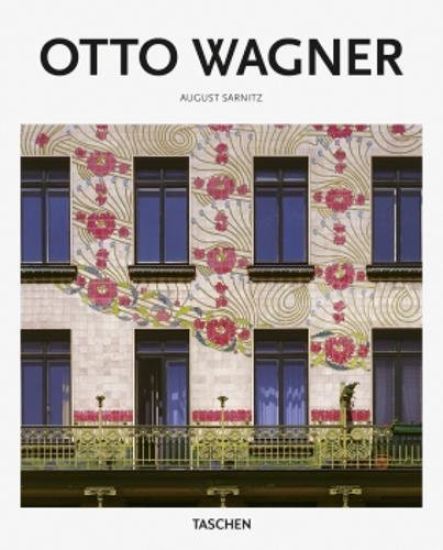
Otto Wagner (1841–1918) is one of the most significant figures of turn-of-the-century architecture. He was associated with the Viennese Secession, a group of artists and designers headed by Gustav Klimt that initiated a departure from the conservative style of the Viennese Künstlerhaus. Wagner’s visionary approach, described as structural rationalism, pioneered the use of materials such as glass, steel, and especially aluminum to redefine Viennese structural identity. From the imposing Austrian Postal Savings Bank to the scintillating St. Leopold Church at Steinhof, one of the most important Art Nouveau churches in the world: Discover the breadth of Wagner’s career as well as the political, economic, and social dynamics of his time. This incisive overview features a map locating all of the architect’s most renowned projects and recent, fresh photography from masters like Keiichi Tahara.