Kirjojen hintavertailu. Mukana 11 627 514 kirjaa ja 12 kauppaa.

Kirjahaku

Etsi kirjoja tekijän nimen, kirjan nimen tai ISBN:n perusteella.

5 kirjaa tekijältä Austin Harrington

Hermeneutic Dialogue and Social Science

Hermeneutic Dialogue and Social Science

Austin Harrington

Routledge
2001
sidottu
This book explores the writings of Gadamer and Habermas on hermeneutics and the methodology of the social sciences. By re-examining their views of earlier interpretive theorists, from Wilhelm Dilthey to Max Weber and Alfred Schutz, it offers a radical challenge to their idea of the 'dialogue' between researchers and their subjects.
Hermeneutic Dialogue and Social Science

Hermeneutic Dialogue and Social Science

Austin Harrington

Routledge
2013
nidottu
This book explores the writings of Gadamer and Habermas on hermeneutics and the methodology of the social sciences. By re-examining their views of earlier interpretive theorists, from Wilhelm Dilthey to Max Weber and Alfred Schutz, it offers a radical challenge to their idea of the 'dialogue' between researchers and their subjects.
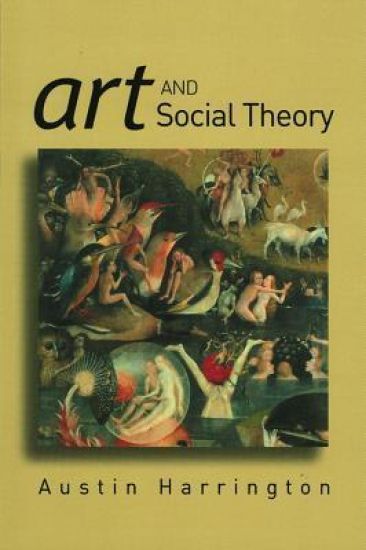
Art and Social Theory

Art and Social Theory

Austin Harrington

Polity Press
2004
sidottu
Art and Social Theory provides a comprehensive introduction to sociological studies of the arts. It examines the central debates of social theorists and sociologists about the place of the arts in society and the social significance of aesthetics. provides a comprehensive introduction to sociological study of art;examines the central debates of social theorists and sociologists about the place of the arts in society and the social significance of aesthetics;discusses the meaning of the arts in relation to changing cultural institutions and socio-economic structures;explores questions of aesthetic value and cultural politics, taste and social class, money and patronage, ideology and utopia, myth and popular culture, and the meaning of modernism and postmodernism;presents lucid accounts of leading social theorists of the arts from Weber, Simmel, Benjamin, Kracauer and the Frankfurt School to Foucault, Bourdieu, Habermas, Baudrillard, Lyotard, Luhmann and Jameson.
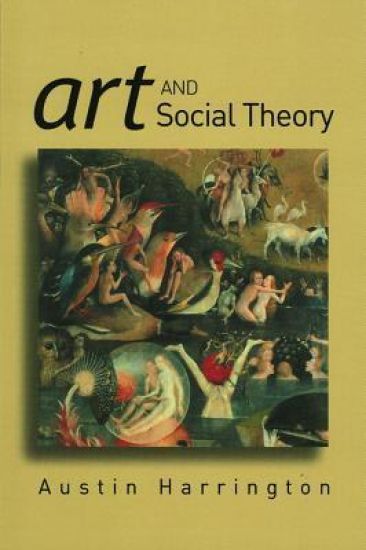
Art and Social Theory

Art and Social Theory

Austin Harrington

Polity Press
2004
nidottu
Art and Social Theory provides a comprehensive introduction to sociological studies of the arts. It examines the central debates of social theorists and sociologists about the place of the arts in society and the social significance of aesthetics. provides a comprehensive introduction to sociological study of art;examines the central debates of social theorists and sociologists about the place of the arts in society and the social significance of aesthetics;discusses the meaning of the arts in relation to changing cultural institutions and socio-economic structures;explores questions of aesthetic value and cultural politics, taste and social class, money and patronage, ideology and utopia, myth and popular culture, and the meaning of modernism and postmodernism;presents lucid accounts of leading social theorists of the arts from Weber, Simmel, Benjamin, Kracauer and the Frankfurt School to Foucault, Bourdieu, Habermas, Baudrillard, Lyotard, Luhmann and Jameson.

German Cosmopolitan Social Thought and the Idea of the West

German Cosmopolitan Social Thought and the Idea of the West

Austin Harrington

Cambridge University Press
2016
sidottu
There has been considerable interest in recent years in German social thinkers of the Weimar era. Generally, this has focused on reactionary and nationalist figures such as Schmitt and Heidegger. In this book, Austin Harrington offers a broader account of the German intellectual legacy of the period. He explores the ideas of a circle of left-liberal cosmopolitan thinkers (Troeltsch, Scheler, Tönnies, Max Weber, Alfred Weber, Mannheim, Jaspers, Curtius, and Simmel) who responded to Germany's crisis by rejecting the popular appeal of nationalism. Instead, they promoted pan-European reconciliation based on notions of a shared European heritage between East and West. Harrington examines their concepts of nationhood, religion, and 'civilization' in the context of their time and in their bearing on subsequent debates about European identity and the place of the modern West in global social change. The result is a groundbreaking contribution to current questions in social, cultural and historical theory.