Kirjojen hintavertailu. Mukana 11 244 527 kirjaa ja 12 kauppaa.

Kirjahaku

Etsi kirjoja tekijän nimen, kirjan nimen tai ISBN:n perusteella.

8 kirjaa tekijältä Avner Falk

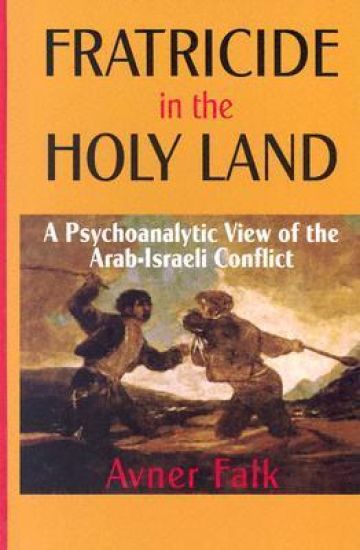
Fratricide in the Holy Land

Fratricide in the Holy Land

Avner Falk

University of Wisconsin Press
2004
sidottu
This is the first English-language book to apply psychoanalysis to the most intractable international struggle in the world today - the Arab-Israeli conflict. Two ethnic groups fight over a single territory that both consider to be theirs by historical right. Avner Falk makes a close historical examination to show that the two parties have missed innumerable opportunities for a rational partition of the territory between them and for a permanent state of peace and prosperity rather than perennial bloodshed and misery. Falk suggests that a way to understand and explain such irrational behavior is to explore the unconscious aspects of the conflict. He examines large-group psychology, nationalism, psychogeography, the Arab and Israeli minds, and suicidal terrorism, and he offers psychobiographical studies of Ariel Sharon and Yasser Arafat, two key players in this tragic conflict today.
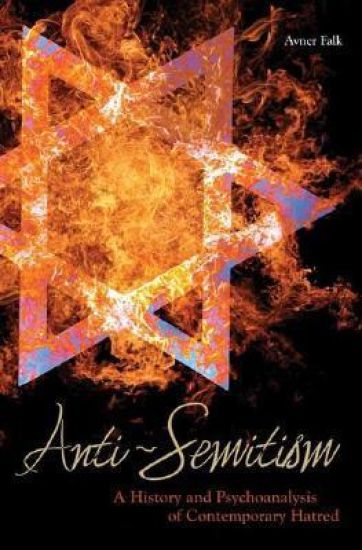
Anti-Semitism

Anti-Semitism

Avner Falk

Praeger Publishers Inc
2008
sidottu
In the summer of 2006, the author received a message that read, Love the Nazis, and KILL THE JEWS DEAD. And that was the trigger that launched internationally known scholar Falk into work on this book. Anti-Semitism has once again become a worldwide phenomenon, growing largely during the last decade of the 20th century and the early years of the 21st. Among the spurs for this are the migration of Muslim populations and the ongoing Israeli-Arab wars. In this far-reaching and comprehensive volume, Falk delves deeply into the current events, history, and literature on anti-Semitism, integrating insights from psychology, sociology, anthropology, psychoanalysis, and political science. The result is an absorbing exploration of one of the oldest scourges of humanity, spotlighting the irrational and unconscious causes of anti-Semitism.In the summer of 2006, the author received a message that read, Love the Nazis, and KILL THE JEWS DEAD. And that was the trigger that launched internationally known scholar Avner Falk into work on this book. Anti-Semitism has once again become a worldwide phenomenon, growing largely during the last decade of the twentieth century and the early years of the twenty-first. Among the spurs for this are migration of Muslim populations and the ongoing Israeli-Arab wars. In this far-reaching and comprehensive volume, Falk delves deeply into the current events, history and literature on anti-Semitism, integrating insights from psychology, sociology, anthropology, psychoanalysis, and political science. The result is an absorbing exploration of one of the oldest scourges of humanity, spotlighting the irrational and unconscious causes of anti-Semitism.This book also features chapters on the psychodynamics of racism, fascism, Nazism, and the dark, tragic, and unconscious processes, both individual and collective, that led to the Shoah. Holocaust denial and its psychological motives, as well as insights into the physical and psychological survival strategies of Holocaust survivors, are explored in depth. There are also chapters on scientific anti-Semitism including eugenics.
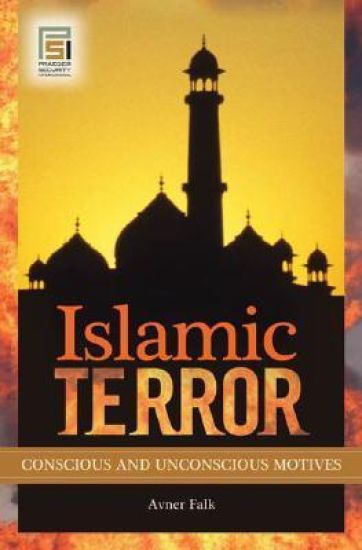
Islamic Terror

Islamic Terror

Avner Falk

Praeger Publishers Inc
2008
sidottu
Independent scholar Falk analyzes the genesis of Islamic terror from many standpoints, including religious, cultural, historical, political, social, economic and, above all, psychological. Drawing on his training as a clinical psychologist, Falk's writings specialize in psychohistory and political psychology. Here, he examines topics including infantile experience and adult terrorism, the meaning of terror, terrorists and their mothers, narcissistic rage and Islamic terror, and whether terrorists are normal people, as some scholars claim. He also describes the infantile development of terrorist pathology, non-psychoanalytic theories of terrorism, globalization's effect on terrorism, and the notion of the clash of civilizations. Other topics addressed in this reader-friendly analysis include history's first Islamic terrorists and three important cases—two recent, deadly terrorists and a primary figure in our current war on terror. Independent scholar Falk analyzes the genesis of Islamic terror from many standpoints, including religious, cultural, historical, political, social, economic and, above all, psychological. Drawing on his training as a clinical psychologist, Falk's writings specialize in psychohistory and political psychology. Here, he examines topics including infantile experience and adult terrorism, the meaning of terror, terrorists and their mothers, narcissistic rage and Islamic terror, and whether terrorists are normal people, as some scholars claim. He also describes the infantile development of terrorist pathology, non-psychoanalytic theories of terrorism, globalization's effect on terrorism, and the notion of the clash of civilizations. Examining the emotional structure of traditional Muslim families, Falk shows us the Muslim child's ambivalence toward his or her parents, ways in which Muslims abuse women and children, and the roots of Muslim rage, and why all of that plays into the development of future terrorism. Other topics addressed in this reader-friendly analysis include history's first Islamic terrorists and three important cases—two recent, deadly terrorists and a primary figure in our current war on terror. The central idea throughout the book is that a person's attitude toward terror and terrorism—as well as whether he or she becomes a murderous terrorist, or even who wages a global war on terror—has much to do with that person's own terrifying experiences in infancy and childhood. Such terror, usually experienced first in the earliest interactions with the mother, is symbolically expressed, as Falk shows, in fairy tales and myths about terrifying witches and female monsters. Further terror may be experienced in the relationship with the father and also in various other traumatic ways. It is these early terrors, when extreme and uncontrollable, that most often produce terrorists and wars on terror, Falk argues. Thus, his book focuses on the conscious, but also on the irrational and unconscious causes of terrorism.
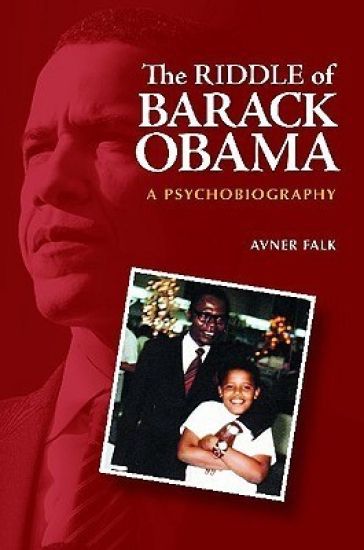
The Riddle of Barack Obama

The Riddle of Barack Obama

Avner Falk

Praeger Publishers Inc
2010
sidottu
An internationally noted clinical psychologist offers readers the first psychological biography of Barack Obama. The Riddle of Barack Obama: A Psychobiography is the first complete psychological biography of President Barack Obama written by a professional clinical psychologist. Covering Obama's life to date, as well as the lives of his parents, grandparents, and other ancestors, this fascinating volume illuminates the personal, professional, political, emotional, intellectual, and creative aspects of Obama's personality, as well as the motives—conscious and unconscious—for his beliefs and actions. Dr. Avner Falk draws on hundreds of biographies, newspaper and magazine articles, interviews, investigative reports, and more, using psychoanalytic models developed by Sigmund Freud, Donald Winnicott, Peter Blos, Heinz Kohut, and Schiffer to probe Obama's psychological development. Examining every facet of the president's biography, he delves into his earliest feelings of abandonment and helplessness, his inner conflicts, his protective relationship with his mother, his ambivalent identification with his father, and his quest for identity. Perhaps most intriguingly, Dr. Falk explores the psychological origins of Obama's "fierce ambitions" and the ingredients of his charisma.
Franks and Saracens

Franks and Saracens

Avner Falk

TAYLOR FRANCIS LTD
2024
nidottu
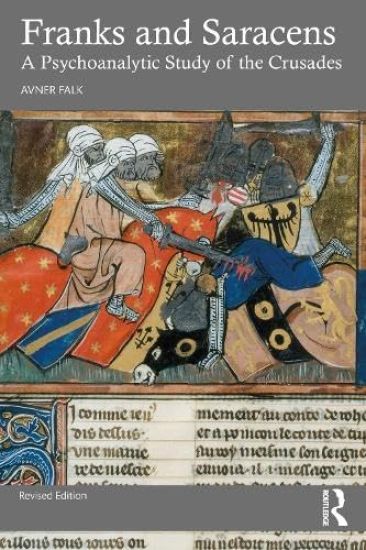
Franks and Saracens is the first and only book to examine the Crusades from the viewpoint of psychoanalysis, studying the hidden emotions and fantasies that drove the Crusaders and the Muslims to undertake their terrible wars.Using original documents as well as secondary sources, Avner Falk demonstrates that the deepest and most powerful motives for the Crusades were not only religious or territorial – or the quest for lands, wealth, or titles – but also unconscious emotions and fantasies about one's country, one's religion, one's enemies, God and the Devil, Us and Them. The book demonstrates the collective inability to mourn large-group losses, and the collective needs of large groups such as nations and religions to develop a clear identity, to have boundaries, and to have enemies and allies. Falk investigates the unconscious dynamics of the Crusades, both on the individual and on the collective level, to understand why the Crusading fantasies persisted for nearly two centuries, and why the “northern Crusades” went on until the early fifteenth century. This updated edition adds a new chapter on collective trauma both as cause and as consequence of the Crusades and has been fully revised to include literature on trauma and other psychological aspects of the Crusades.Franks and Saracens will be of great interest to historians, political scientists, medievalists, psychologists, psychiatrists, psychoanalysts, anthropologists, and sociologists interested in questions of conflict, fantasy, and identity, collective psychological processes, and to academics of the Crusades and military history.
Franks and Saracens

Franks and Saracens

Avner Falk

TAYLOR FRANCIS LTD
2024
sidottu
Franks and Saracens is the first and only book to examine the Crusades from the viewpoint of psychoanalysis, studying the hidden emotions and fantasies that drove the Crusaders and the Muslims to undertake their terrible wars.Using original documents as well as secondary sources, Avner Falk demonstrates that the deepest and most powerful motives for the Crusades were not only religious or territorial – or the quest for lands, wealth, or titles – but also unconscious emotions and fantasies about one's country, one's religion, one's enemies, God and the Devil, Us and Them. The book demonstrates the collective inability to mourn large-group losses, and the collective needs of large groups such as nations and religions to develop a clear identity, to have boundaries, and to have enemies and allies. Falk investigates the unconscious dynamics of the Crusades, both on the individual and on the collective level, to understand why the Crusading fantasies persisted for nearly two centuries, and why the “northern Crusades” went on until the early fifteenth century. This updated edition adds a new chapter on collective trauma both as cause and as consequence of the Crusades and has been fully revised to include literature on trauma and other psychological aspects of the Crusades.Franks and Saracens will be of great interest to historians, political scientists, medievalists, psychologists, psychiatrists, psychoanalysts, anthropologists, and sociologists interested in questions of conflict, fantasy, and identity, collective psychological processes, and to academics of the Crusades and military history.
Agnon’s Story

Agnon’s Story

Avner Falk

BRILL
2018
sidottu
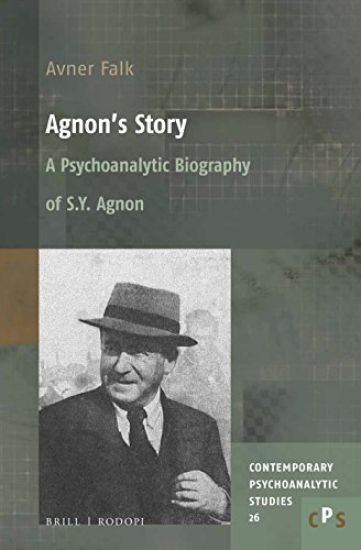
Agnon’s Story is the first complete psychoanalytic biography of the Nobel-Prize-winning Hebrew writer S.Y. Agnon. It investigates the hidden links between his stories and his biography. Agnon was deeply ambivalent about the most important emotional objects of his life, in particular his “father-teacher," his ailing, depressive and symbiotic mother, whom he left when she was very ill, and about whose death he felt guilty all his life, his emotionally-fragile wife, whom he named after his mother, and his adopted motherland, “the Land of Israel." Yet he maintained an incredible emotional resiliency and ability to sublimate his emotional pain into works of art. This biography seeks to investigate the unconscious emotional forces that drove his stories, his ambivalence about his family, and the underlying narcissistic grandiosity of his famous “modesty.”
Agnon’s Story

Agnon’s Story

Avner Falk

BRILL
2020
nidottu
Agnon’s Story is the first complete psychoanalytic biography of the Nobel-Prize-winning Hebrew writer S.Y. Agnon. It investigates the hidden links between his stories and his biography. Agnon was deeply ambivalent about the most important emotional objects of his life, in particular his “father-teacher," his ailing, depressive and symbiotic mother, whom he left when she was very ill, and about whose death he felt guilty all his life, his emotionally-fragile wife, whom he named after his mother, and his adopted motherland, “the Land of Israel." Yet he maintained an incredible emotional resiliency and ability to sublimate his emotional pain into works of art. This biography seeks to investigate the unconscious emotional forces that drove his stories, his ambivalence about his family, and the underlying narcissistic grandiosity of his famous “modesty.”