Kirjojen hintavertailu. Mukana 11 717 486 kirjaa ja 12 kauppaa.

Kirjahaku

Etsi kirjoja tekijän nimen, kirjan nimen tai ISBN:n perusteella.

6 kirjaa tekijältä Avraham Faust

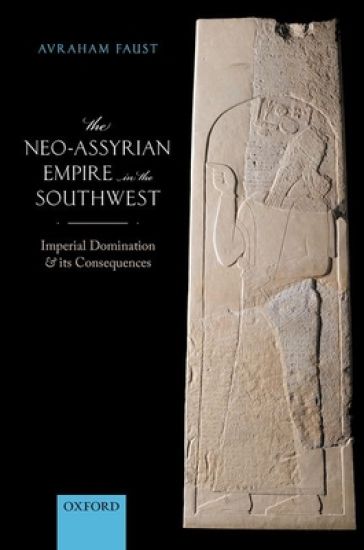
The Neo-Assyrian Empire in the Southwest

The Neo-Assyrian Empire in the Southwest

Avraham Faust

Oxford University Press
2021
sidottu
The Neo-Assyrian empire -- the first large empire of the ancient world -- has attracted a great deal of public attention ever since the spectacular discoveries of its impressive remains in the 19th century. The southwestern part of this empire, located in the lands of the Bible, is archaeologically speaking the best known region in the world, and its history is described in a plethora of texts, including the Hebrew Bible. Using a bottom-up approach, Avraham Faust utilises this unparalleled information to reconstruct the outcomes of the Assyrian conquest of the region and how it impacted the diverse political units and ecological zones that comprised it. In doing so, he draws close attention to the transformations the imperial take-over brought in its wake. His analysis reveals the marginality of the annexed territories in the southwest as the empire focused its activities in small border areas facing its prospering clients. A comparison of this surprising picture to the information available from other parts of the empire suggests that the distance of these provinces from the imperial core is responsible for their fate. This sheds new light on factors influencing imperial expansion, the considerations leading to annexation, and the imperial methods of control, challenging old conventions about the development of the Assyrian empire and its rule. Faust also examines the Assyrian empire within the broader context of ancient Near Eastern imperialism to answer larger questions on the nature of Assyrian domination, the reasons for its harsh treatment of the distant provinces, and the factors influencing the limits of its reach. His findings highlight the historical development of imperial control in antiquity and the ways in which later empires were able to overcome similar limitations, paving the way to much larger and longer-lasting polities.
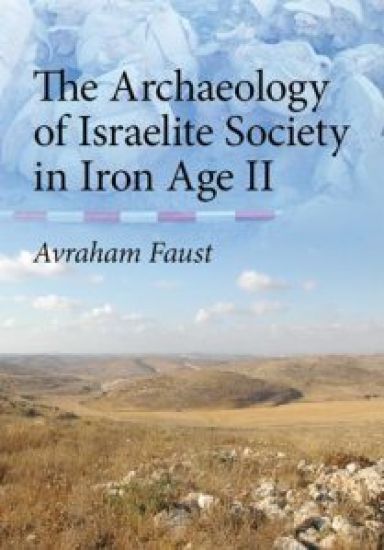
The Archaeology of Israelite Society in Iron Age II
Referring to several important introductory books written about the archaeology of the land of Israel, William Dever once stated: “However adequate these may be as introductions to the basic data, none makes any attempt to organize the data in terms of social structure. . . . This is a serious deficiency in Syro-Palestinian and biblical archaeology, when one considers that the general field of archaeology has been moving toward social archaeology for 20 years or more. (Dever, “Social Structure in Palestine in the Iron Age II Period on the Eve of Destruction,” in The Archaeology of Society in the Holy Land [ed. T. E. Levy, London, 1995, p. 416]).Lack of discussion of social questions has characterized the archaeology of the land of Israel for some time, even though around the world these questions constitute an important component of archaeological research (see, for instance, the work of Renfrew, Flannery, Gibbon, Blanton, Dark, Bahn, Hodder, Trigger, and many others).The Archaeology of Israelite Society in Iron Age II fills this gap and analyzes the structure of society in the ancient kingdoms of Israel and Judah from an archaeological viewpoint. It also applies models and theories from the field of social and cognitive archaeology, using the tools of various social-science disciplines (anthropology, sociology, economics, geography, and so on).Due to his ability to use what is probably the largest archaeological data set in the world—hundreds of planned excavations, thousands of salvage excavations, and extensive surveys, all from the small region that was ancient Israel—Avi Faust contributes not only to the study of ancient Israelite society but to the most fundamental questions about ancient societies. These questions include the identification of socioeconomic stratification in the archaeological record, the study of family and community organization, the significance of pottery, small finds and architecture as indicators of wealth, and more.This groundbreaking monograph is one of the first attempts at a large-scale study of Israelite society based primarily on the archaeological evidence.The following acknowledgments were inadvertently omitted from the front matter of the volume:Amihai Mazar: figure 31Amnon Ben-Tor: figures 40, 41Israel Antiquities Authority: figures 21, 24, 25, 26, 29, 30., 32, 33, 36, and Photo 5Israel Exploration Society: figures 11, 13, 15, 17, 18, 19, 27, 42Israel Finkelstein: figure 28Izhak Beit Arieh: figures 34, 35Shimon Dar: figures 22, 23The Institute of Archaeology, Tel Aviv University: figures 7, 8The Institute of Archaeology, the Hebrew University: figures 40, 41Zeev Herzog: figures 6, 9, 10, 12, 14, 16, 20
Israel's Ethnogenesis

Israel's Ethnogenesis

Avraham Faust

Equinox Publishing Ltd
2008
nidottu
Winner (for best semi-popular book) of the 2008 Irene Levi-Sala Prize for publications on the archaeology of Israel. The emergence of Israel in Canaan is a central topic in biblical/Syro-Palestinian archaeology. However, the archaeology of ancient Israel has rarely been subject to in-depth anthropological analysis until now. 'Israel's Ethnogenesis' offers an anthropological framework to the archaeological data and textual sources. Examining archaeological finds from thousands of excavations, the book presents a theoretical approach to Israel's ethnogenesis that draws on the work of recent critics. The book examines Israelite ethnicity - ranging from meat consumption, decorated and imported pottery, Israelite houses, circumcision, and hierarchy - and traces the complex ethnic negotiations that accompanied Israel's ethnogenesis. Israel's Ethnogenesis is unique in its contribution to the archaeology of ethnicity, offering an anthropological study that will be of interest to students of history, Israelite culture and religion, and the evolution of ethnic groups.
Israel's Ethnogenesis

Israel's Ethnogenesis

Avraham Faust

Equinox Publishing Ltd
2006
sidottu
Winner (for best semi-popular book) of the 2008 Irene Levi-Sala Prize for publications on the archaeology of Israel. The emergence of Israel in Canaan is a central topic in biblical/Syro-Palestinian archaeology. However, the archaeology of ancient Israel has rarely been subject to in-depth anthropological analysis until now. 'Israel's Ethnogenesis' offers an anthropological framework to the archaeological data and textual sources. Examining archaeological finds from thousands of excavations, the book presents a theoretical approach to Israel's ethnogenesis that draws on the work of recent critics. The book examines Israelite ethnicity - ranging from meat consumption, decorated and imported pottery, Israelite houses, circumcision, and hierarchy - and traces the complex ethnic negotiations that accompanied Israel's ethnogenesis. Israel's Ethnogenesis is unique in its contribution to the archaeology of ethnicity, offering an anthropological study that will be of interest to students of history, Israelite culture and religion, and the evolution of ethnic groups.