Kirjojen hintavertailu. Mukana 11 244 527 kirjaa ja 12 kauppaa.

Kirjahaku

Etsi kirjoja tekijän nimen, kirjan nimen tai ISBN:n perusteella.

5 kirjaa tekijältä Axel Englund

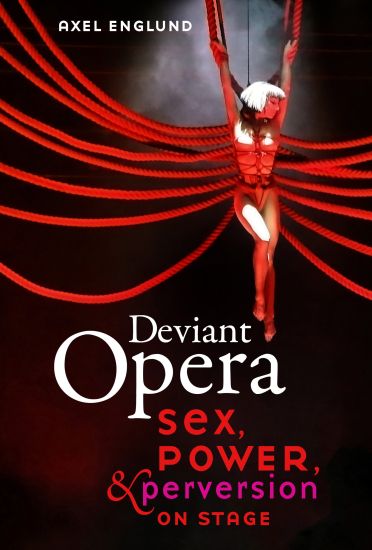
Deviant Opera

Deviant Opera

Axel Englund

University of California Press
2020
sidottu
The first book to use subversive sexuality as a lens through which to provocatively view opera in the 21st century. Imagine Armida, Handel’s Saracen sorceress, performing her breakneck coloraturas in a black figure-hugging rubber dress, beating her insubordinate furies into submission with a cane, suspending a captive Rinaldo in chains from the ceiling of her dungeon. Mozart’s peasant girl Zerlina, meanwhile, is tying up and blindfolding her fiancé to seduce him out of his jealousy of Don Giovanni. And how about Wagner’s wizard, Klingsor, ensnaring his choir of flower maidens in elaborate Japanese rope bondage? Opera, it would appear, has developed a taste for sadomasochism. For decades now, radical stage directors have repeatedly dressed canonical operas—from Handel and Mozart to Wagner and Puccini, and beyond—in whips, chains, leather, and other regalia of SM and fetishism. Deviant Opera seeks to understand this phenomenon, approaching the contemporary visual code of perversion as a lens through which opera focuses and scrutinizes its own configurations of sex, gender, power, and violence. The emerging image is that of an art form that habitually plays with an eroticization of cruelty and humiliation, inviting its devotees to take sensual pleasure in the suffering of others. Ultimately, Deviant Opera argues that this species of opera fantasizes about breaking the boundaries of its own role-playing, and pushing its erotic power exchanges from the enacted to the actual.
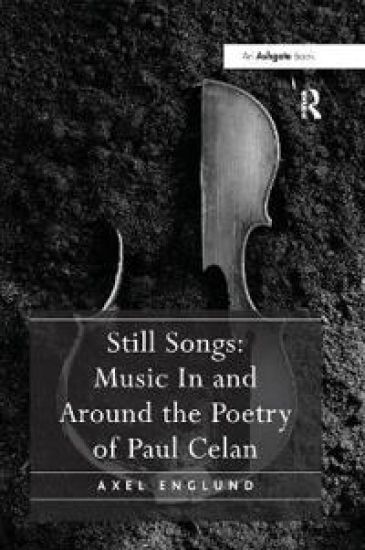
Still Songs: Music In and Around the Poetry of Paul Celan
What does it mean for poetry and music to turn to each other, in the shadow of the Holocaust, as a means of aesthetic self-reflection? How can their mutual mirroring, of such paramount importance to German Romanticism, be reconfigured to retain its validity after the Second World War? These are the core questions of Axel Englund's book, which is the first to address the topic of Paul Celan and music. Celan, a Jewish Holocaust survivor who has long been recognized as one of the most important poets of the German language, persistently evoked music and song in his oeuvre, from the juvenilia to the posthumous collections. Conversely, few post-war writers have inspired as large a body of contemporary music, including works by Harrison Birtwistle, György Kurtág, Wolfgang Rihm, Peter Ruzicka and many others. Through rich close readings of poems and musical compositions, Englund's book engages the artistic media in a critical dialogue about the conditions of their existence. In so doing, it reveals their intersection as a site of profound conflict, where the very possibility of musical and poetic meaning is at stake, and confrontations of aesthetic transcendentality and historical remembrance are played out in the wake of twentieth-century trauma.
Still Songs: Music In and Around the Poetry of Paul Celan

Still Songs: Music In and Around the Poetry of Paul Celan

Axel Englund

Ashgate Publishing Limited
2012
sidottu
What does it mean for poetry and music to turn to each other, in the shadow of the Holocaust, as a means of aesthetic self-reflection? How can their mutual mirroring, of such paramount importance to German Romanticism, be reconfigured to retain its validity after the Second World War? These are the core questions of Axel Englund's book, which is the first to address the topic of Paul Celan and music. Celan, a Jewish Holocaust survivor who has long been recognized as one of the most important poets of the German language, persistently evoked music and song in his oeuvre, from the juvenilia to the posthumous collections. Conversely, few post-war writers have inspired as large a body of contemporary music, including works by Harrison Birtwistle, György Kurtág, Wolfgang Rihm, Peter Ruzicka and many others. Through rich close readings of poems and musical compositions, Englund's book engages the artistic media in a critical dialogue about the conditions of their existence. In so doing, it reveals their intersection as a site of profound conflict, where the very possibility of musical and poetic meaning is at stake, and confrontations of aesthetic transcendentality and historical remembrance are played out in the wake of twentieth-century trauma.
Landskapsläsning. Utfärder i W.G. Sebalds poesi

Landskapsläsning. Utfärder i W.G. Sebalds poesi

Axel Englund

Ellerströms förlag AB
2016
nidottu
W.G. Sebald (1944–2001) har länge ­betraktats som en av de viktigaste ­författarna kring millennieskiftet, och hans prosa har kommit att inta en alltmer central plats i samtalet om vår tids ­litteratur. Men det finns också en helt annan sida av hans skrivande, som hittills passerat obemärkt: under nära fyra decennier producerade Sebald dikter. Många trycktes i tidskrifter, andra förblev outgivna fram till efter hans död. Mot slutet av sitt liv inledde han samarbeten med konstnärer, vilket utmynnade i två egenartade diktsamlingar där en tystlåten dialog uppstår mellan ord och bild.Landskapsläsning är en långsam fotvandring i dessa oupptäckta omgivningar, som dröjer vid dikternas minsta detaljer och finner en säregen språklig miljö, rik på talande spår och undflyende innebörder. Genom att rikta uppmärksamheten mot det specifika i Sebalds hantering av den poetiska formen – allt från bildspråk och allusioner till radbrytningar och typografi – tecknar boken en ny bild av ett unikt författarskap.
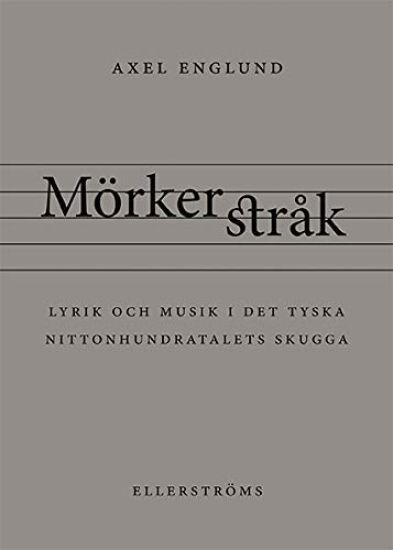
Mörkerstråk : lyrik och musik i det tyska nittonhundratalets skugga
Romantikens dikt hade gjort musiken till sin förebild: den var andens och känslans ­främsta uttryck, en universell konstart som samtidigt i allt högre grad kom att förkroppsligas av ett antal tyska och österrikiska tonsättare. När det borgerliga samhället kastades in i moderniteten och dess katastrofer tycktes de ­värden som musiken representerat omöjliga att vid­makthålla. Ändå levde förhållandet vidare: dikten fortsatte att söka sig till musiken, både som poetiskt motiv och som ­konkret klingande omgivning. Men vad ­betydde musiken för den tyskspråkiga poesin?I Mörkerstråk närmar sig Axel Englund denna fråga genom fyra av förra seklets mest framstående lyriker: Rainer Maria ­Rilke, Nelly Sachs, Paul Celan och Ingeborg ­Bachmann.