Kirjojen hintavertailu. Mukana 12 016 292 kirjaa ja 12 kauppaa.

Kirjahaku

Etsi kirjoja tekijän nimen, kirjan nimen tai ISBN:n perusteella.

4 kirjaa tekijältä Axel Hadenius

Institutions and Democratic Citizenship

Institutions and Democratic Citizenship

Axel Hadenius

Oxford University Press
2001
sidottu
This volume examines the nature and role of democratic citizenship, the conditions necessary fro its development, and its relationship to the key democratic institutions of the state. Comparing and contrasting the patterns of political development and practice in established democracies with those states that have experienced democatic breakdown, the author aims to contribute to our understanding of the political conditions that sustain liberal democracy. The book contains two parts, which have a broad theme in common. The aim in Part One is to contribute to the debate on democracy's preconditions. Drawing on a broad range of theories, the author specifies certain societal and institutional traits which can serve to further democracy. Democratic development in Africa, Latin America and India then is compared. The conclusion is that democracy is not the product of social and economic forces first of all. To a yet greater extent it is the consequence of prevailing institutional conditions, i.e. the nature of the state. The historical development of state structures is the object of analysis in Part Two. The focus is mainly on Europe. The prospects for democracy in modern times have been greatly affected, the author maintain, by varying paths of institutional development. Moreover, the differing modes of state have displayed a variable capacity for governance and economic development. The evolution of state structures thus has consequences across broad areas of political and social life.
Institutions and Democratic Citizenship

Institutions and Democratic Citizenship

Axel Hadenius

Oxford University Press
2001
nidottu
This volume examines the nature and role of democratic citizenship, the conditions necessary for its development, and its relationship to the key institutions of the state. Comparing and contrasting the patterns of political development and practice in established democracies with tthose states that have experience democratice breakdown, the author aims to contribute to our understanding of the political conditions that sustain liberal democracy. This book contains two parts, which have a broad theme in common. The aim in Part One is to contribute to the debate on democracy's preconditions. Drawing on a broad range of theories, the author specifies certain societal and institutional traits which can serve to further democracy. Democratic development in Africa, Latin America and India then is compared. The conclusion is that democracy is not the product of social and economic forces first of all. To a yet greater extent it is the consequence of prevailing institutional conditions, i.e. the nature of the state. The historical development of state structures is the object of analysis in Part Two. The focus is mainly on Europe. The prospects for democracy in modern times have been greatly affected, the author maintain, by varying paths of institutional development. Moreover, the differing modes of state have displayed a variable capacity for governance and economic development. The evolution of state structures thus has consequences across broad areas of political and social life.
Democracy and Development

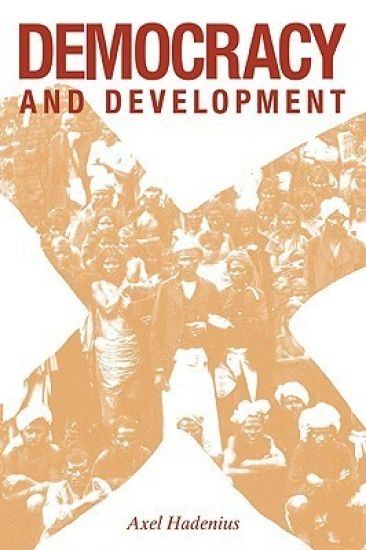
Democracy and Development

Axel Hadenius

Cambridge University Press
2008
pokkari
This book is a thorough investigation into the requisites of democracy. Based on data from 132 sovereign states of the Third World, it first establishes a scale to measure the level of democracy existing in these countries. The author discusses various interpretations of the meaning of political democracy, and emerges with a specification of its essential elements which includes such elements as the holding of elections to central decision-making organs, and the maintenance of certain fundamental political liberties. Theories concerning the requisites of democracy are then examined in order to explain the manifest differences in the level of democracy among the states of the Third World. The author employs statistical techniques including regression analysis to test theories related to socio-economic conditions, demographic and cultural factors, and institutional arrangements. This book thus provides a wide-ranging examination both of the elements which constitute democracy, and of the factors which explain its varying prevalence.
Democracy and Development

Democracy and Development

Axel Hadenius

Cambridge University Press
1992
sidottu
This book is a thorough investigation into the requisites of democracy. Based on data from all 132 sovereign states of the Third World, it first establishes a scale to measure the level of democracy existing in these countries. The author discusses various interpretations of the meaning of political democracy, and emerges with a specification of its essential elements which includes such elements as the holding of elections to central decision making organs, and the maintenance of certain fundamental political liberties. Theories concerning the requisites of democracy are then examined in order to explain the manifest differences in the level of democracy among the states of the Third World. The author employs statistical techniques including regression analysis to test theories related to socio-economic conditions, demographic and cultural factors, and institutional arrangements. This book thus provides a uniquely wide-ranging examination both of the elements which constitute democracy, and of the factors which explain its varying prevalence.