
Kirjahaku
Etsi kirjoja tekijän nimen, kirjan nimen tai ISBN:n perusteella.
7 kirjaa tekijältä B. R. Ambedkar
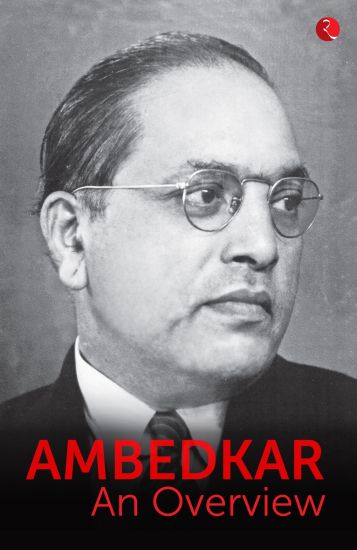
'Unlike a drop of water which loses its identity when it joins the ocean, man does not lose his being in the society in which he lives. Man's life is independent. He is born not for the development of the society alone, but for the development of his self.'-B.R. Ambedkar Born in 1891 into an Untouchable family, Dr Bhimrao Ambedkar is the man behind the Indian Constitution and the champion of the Dalit cause. Much ahead of his times, he raised pertinent issues pertaining to the broader cause of nation-building process for India. This is a collection of extracts from some of his finest works that capture him as a modernist thinker with an outstanding intellectual sweep over the major aspects of a then newly independent nation. These writings cover a wide range of issues such as the caste system, Untouchability, Hinduism, status of women, the multiple religions in India, creation of Pakistan, the constitution, and much more. Ambedkar: An Overview is both a handy reference guide and a preamble for those who wish to familiarize themselves with the pioneering works of Babasaheb.
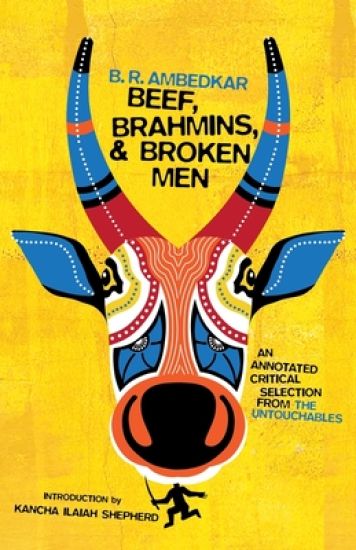
One of twentieth-century India’s great polymaths, statesmen, and militant philosophers of equality, B. R. Ambedkar spent his life battling Untouchability and instigating the end of the caste system. In his 1948 book The Untouchables, he sought to trace the origin of the Dalit caste. Beef, Brahmins, and Broken Men is an annotated selection from this work, just as relevant now, when the oppression of and discrimination against Dalits remains pervasive.Ambedkar offers a deductive, and at times a speculative, history to propose a genealogy of Untouchability. He contends that modern-day Dalits are descendants of those Buddhists who were fenced out of caste society and rendered Untouchable by a resurgent Brahminism since the fourth century BCE. The Brahmins, whose Vedic cult originally involved the sacrifice of cows, adapted Buddhist ahimsa and vegetarianism to stigmatize outcaste Buddhists who were consumers of beef. The outcastes were soon relegated to the lowliest of occupations and prohibited from participation in civic life. To unearth this lost history, Ambedkar undertakes a forensic examination of a wide range of Brahminic literature. Heavily annotated with an emphasis on putting Ambedkar and recent scholarship into conversation, Beef, Brahmins, and Broken Men assumes urgency as India witnesses unprecedented violence against Dalits and Muslims in the name of cow protection.

One of twentieth-century India’s great polymaths, statesmen, and militant philosophers of equality, B. R. Ambedkar spent his life battling Untouchability and instigating the end of the caste system. In his 1948 book The Untouchables, he sought to trace the origin of the Dalit caste. Beef, Brahmins, and Broken Men is an annotated selection from this work, just as relevant now, when the oppression of and discrimination against Dalits remains pervasive.Ambedkar offers a deductive, and at times a speculative, history to propose a genealogy of Untouchability. He contends that modern-day Dalits are descendants of those Buddhists who were fenced out of caste society and rendered Untouchable by a resurgent Brahminism since the fourth century BCE. The Brahmins, whose Vedic cult originally involved the sacrifice of cows, adapted Buddhist ahimsa and vegetarianism to stigmatize outcaste Buddhists who were consumers of beef. The outcastes were soon relegated to the lowliest of occupations and prohibited from participation in civic life. To unearth this lost history, Ambedkar undertakes a forensic examination of a wide range of Brahminic literature. Heavily annotated with an emphasis on putting Ambedkar and recent scholarship into conversation, Beef, Brahmins, and Broken Men assumes urgency as India witnesses unprecedented violence against Dalits and Muslims in the name of cow protection.
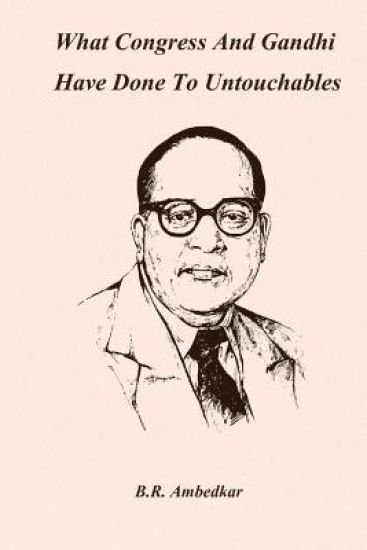
What Congress and Gandhi have done to the Untouchables
B. R. Ambedkar
Createspace Independent Publishing Platform
2017
nidottu
Ambedkar has shown the harsh reality and true faces of the Congress leaders (and Gandhi in particular) of his era who acted no less than racists when it came to granting privileges and showing concerns to the depressed classes. He even goes on to state facts which suggests how Gandhi tried very hard to appease the Muslim community but sidelined untouchables.
Who Were the Shudras How They Came to be the Fourth Varna in the Indo-Aryan Society
B. R. Ambedkar
Delhi Open Books
2021
nidottu
Who Were the Shudras? is a history book by Indian social reformer and polymath B. R. Ambedkar. The book discusses the origin of the Shudra Varna. In the book Ambedkar, citing Rigveda, Mahabharata and other ancient vedic scriptures, estimates that the Shudras were originally Aryans. Ambedkar writes in the preface of the book, ""Two questions are raised in this book: (1) Who were the Shudras? and (2) How they came to be the fourth Varna of the Indo-Aryan society? My answers to them are summarised below. The Shudras were one of the Aryan communities of the solar race"" There was a time when the Aryan society recognised only three Varnas, namely. Brahmins, Kshatriyas and Vaishyas. The Shudras did not form a separate Varna. They ranked as part of the Kshatriya Varna in the Indo-Aryan society. There was a continuous feud between the Shudra kings and the Brahmins in which the Brahmins were subjected to many tyrannies and indignities. As a result of the negligence towards the Shudras generated by their tyrannies and oppressions, the Brahmins refused to perform the Upanayana of the Shudras. Owing to the denial of Upanayana, the Shudras who were Kshatriyas became socially degraded, fell below the rank of the Vaishyas and thus came to form the fourth Varna."" Ambedkar also discusses Aryan race theory and rejects Indo-Aryan migration theory in the book.