Kirjojen hintavertailu. Mukana 11 342 296 kirjaa ja 12 kauppaa.

Kirjahaku

Etsi kirjoja tekijän nimen, kirjan nimen tai ISBN:n perusteella.

6 kirjaa tekijältä Barbara Goff

Citizen Bacchae

Citizen Bacchae

Barbara Goff

University of California Press
2004
sidottu
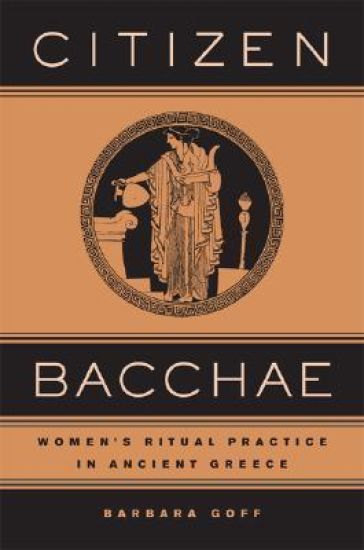
What activities did the women of ancient Greece perform in the sphere of ritual, and what were the meanings of such activities for them and their culture? By offering answers to these questions, this study aims to recover and reconstruct an important dimension of the lived experience of ancient Greek women. A comprehensive and sophisticated investigation of the ritual roles of women in ancient Greece, it draws on a wide range of evidence from across the Greek world, including literary and historical texts, inscriptions, and vase-paintings, to assemble a portrait of women as religious and cultural agents, despite the ideals of seclusion within the home and exclusion from public arenas that we know restricted their lives. As she builds a picture of the extent and diversity of women's ritual activity, Barbara Goff shows that they were entrusted with some of the most important processes by which the community guaranteed its welfare. She examines the ways in which women's ritual activity addressed issues of sexuality and civic participation, showing that ritual could offer women genuinely alternative roles and identities even while it worked to produce wives and mothers who functioned well in this male-dominated society. Moving to more speculative analysis, she discusses the possibility of a women's subculture focused on ritual and investigates the significance of ritual in women's poetry and vase-paintings that depict women. She also includes a substantial exploration of the representation of women as ritual agents in fifth-century Athenian drama.
The Noose of Words

The Noose of Words

Barbara Goff

Cambridge University Press
2007
pokkari
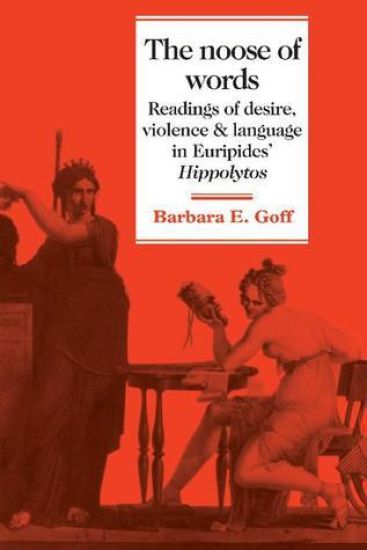
This 1990 book is a reading of Euripides' Hippolytos, a central play for the study of Euripides and of Greek tragedy. Dr Goff approaches the play through the techniques of modern literary criticism, including deconstruction and feminism, and is able to shed light on this influential text through her close examination of the language of the play. She divides her discussion into five important critical issues: gender, desire, violence, language and the status of poetry and drama. Throughout she is concerned to site the play in the historical and cultural context of fifth-century Athens, and her analysis of the position of women is particularly illuminating for the role of Phaedra, and for female characters throughout Greek tragedy. This is a provocative book which brings critical insights to one of the most extensively discussed of all Greek tragedies. It will be accessible both to classicists and students of drama and literary theory.
The Noose of Words

The Noose of Words

Barbara Goff

Cambridge University Press
1990
sidottu
This 1990 book is a reading of Euripides' Hippolytos, a central play for the study of Euripides and of Greek tragedy. Dr Goff approaches the play through the techniques of modern literary criticism, including deconstruction and feminism, and is able to shed light on this influential text through her close examination of the language of the play. She divides her discussion into five important critical issues: gender, desire, violence, language and the status of poetry and drama. Throughout she is concerned to site the play in the historical and cultural context of fifth-century Athens, and her analysis of the position of women is particularly illuminating for the role of Phaedra, and for female characters throughout Greek tragedy. This is a provocative book which brings critical insights to one of the most extensively discussed of all Greek tragedies. It will be accessible both to classicists and students of drama and literary theory.
Euripides

Euripides

Barbara Goff

Bristol Classical Press
2008
nidottu
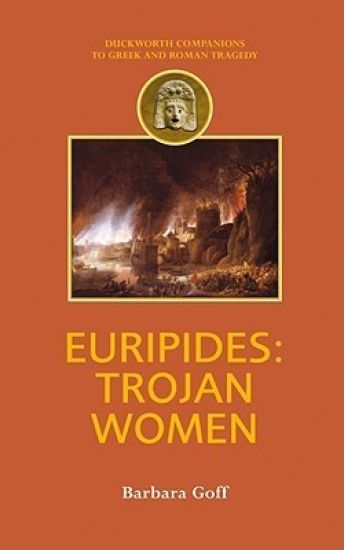
Set at the end of the Trojan war, "Euripides' Trojan Women" depicts the women of Troy as they wait to be taken into slavery. While choral songs recall the death-throes of the great city, the scenes between the old queen, Hekabe, and the women of her family explore the consequences of the defeat, from the rape of Cassandra, through the triumphant self-exculpation of Helen, to the pitiful death of the child Astyanax, who is thrown from the walls of his ravaged city. Barbara Goff sets the play in its historical, dramatic and literary contexts, and provides a scene-by-scene analysis which brings out the pace and intellectual vigour of the play. The main themes are fully discussed, and the book also introduces readers to the issues that have divided critics, such as the extent to which the play responds to the historical events of the Peloponnesian War. The final chapter, which deals with the reception of the play, offers new insights into several modern works.
'Your Secret Language'

'Your Secret Language'

Barbara Goff

Bloomsbury Academic
2014
nidottu
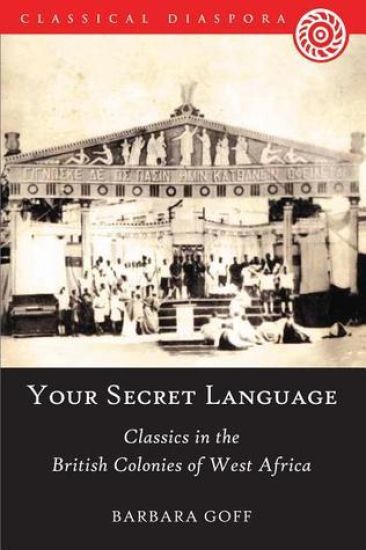
This book is the first to examine the complex and contradictory history of Classics in Sierra Leone, Ghana and Nigeria. It investigates how Classical Studies, as an integral part of colonial education, enforced a notion of cultural inferiority on African subjects, but conversely played an enabling role in nationalist expression. The enquiry is structured around three main questions: how Classics contributed to the formation of a new class of Europeanising West Africans in the late 19th century; how Classics was implicated in the ideological struggles of the early twentieth century over the desirability of 'practical' or 'agricultural' education; and how the uses of Classics changed in the years leading up to independence.
'Your Secret Language'

'Your Secret Language'

Barbara Goff

Bloomsbury Academic
2013
sidottu
This book is the first to examine the complex and contradictory history of Classics in Sierra Leone, Ghana and Nigeria. It investigates how Classical Studies, as an integral part of colonial education, enforced a notion of cultural inferiority on African subjects, but conversely played an enabling role in nationalist expression. The enquiry is structured around three main questions: how Classics contributed to the formation of a new class of Europeanising West Africans in the late 19th century; how Classics was implicated in the ideological struggles of the early twentieth century over the desirability of 'practical' or 'agricultural' education; and how the uses of Classics changed in the years leading up to independence.