Kirjojen hintavertailu. Mukana 11 244 527 kirjaa ja 12 kauppaa.

Kirjahaku

Etsi kirjoja tekijän nimen, kirjan nimen tai ISBN:n perusteella.

16 kirjaa tekijältä Barbara Green

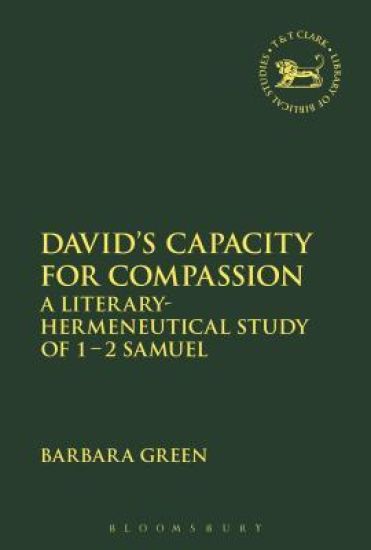
David's Capacity for Compassion

David's Capacity for Compassion

Barbara Green

T. T.Clark Ltd
2017
sidottu
In this book Barbara Green demonstrates how David is shown and can be read as emerging from a young naive, whose early successes grow into a tendency for actions of contempt and arrogance, of blindness and even cruelty, particularly in matters of cult. However, Green also shows that over time David moves closer to the demeanor and actions of wise compassion, more closely aligned with God.Leaving aside questions of historicity as basically undecidable Green's focus in her approach to the material is on contemporary literature. Green reads the David story in order, applying seven specific tools which she names, describes and exemplifies as she interprets the text. She also uses relevant hermeneutical theory, specifically a bridge between general hermeneutics and the specific challenges of the individual (and socially located) reader. As a result, Green argues that characters in the David narrative can proffer occasions for insight, wisdom, and compassion. Acknowledging the unlikelihood that characters like David and his peers, steeped in patriarchy and power, can be shown to learn and extend wise compassion, Green is careful to make explicit her reading strategies and offer space for dialogue and disagreement.
David's Capacity for Compassion

David's Capacity for Compassion

Barbara Green

T. T.Clark Ltd
2018
nidottu
In this book Barbara Green demonstrates how David is shown and can be read as emerging from a young naive, whose early successes grow into a tendency for actions of contempt and arrogance, of blindness and even cruelty, particularly in matters of cult. However, Green also shows that over time David moves closer to the demeanor and actions of wise compassion, more closely aligned with God.Leaving aside questions of historicity as basically undecidable Green's focus in her approach to the material is on contemporary literature. Green reads the David story in order, applying seven specific tools which she names, describes and exemplifies as she interprets the text. She also uses relevant hermeneutical theory, specifically a bridge between general hermeneutics and the specific challenges of the individual (and socially located) reader. As a result, Green argues that characters in the David narrative can proffer occasions for insight, wisdom, and compassion. Acknowledging the unlikelihood that characters like David and his peers, steeped in patriarchy and power, can be shown to learn and extend wise compassion, Green is careful to make explicit her reading strategies and offer space for dialogue and disagreement.
Girls in Khaki

Girls in Khaki

Barbara Green

The History Press Ltd
2012
nidottu
At the outbreak of the Second World War, Britain’s manpower crisis forced them to turn to a previously untapped resource: women. For years it was thought women would be incapable of serving in uniform, but the ATS was to prove everyone wrong. Formed in 1938, the Women’s Auxiliary Territorial Service was a remarkable legion of women; this is their story. They took over many roles, releasing servicemen for front-line duties. ATS members worked alongside anti-aircraft gunners as ‘gunner-girls’, maintained vehicles, drove supply trucks, operated as telephonists in France, re-fused live ammunition, provided logistical support in army supply depots and employed specialist skills from Bletchley to General Eisenhower’s headquarters in Reims. They were even among the last military personnel to be evacuated from Dunkirk. They grasped their new-found opportunities for education, higher wages, skilled employment and a different future from the domestic role of their mothers. They earned the respect and admiration of their male counterparts and carved out a new future for women in Britain. They showed great skill and courage, with famous members including the young Princess Elizabeth (now about to celebrate her Diamond Jubilee as Britain’s Queen) and Mary Churchill, Sir Winston’s daughter. Girls in Khaki reveals their extraordinary achievements, romances, heartbreaks and determination through their own words and never-before published photographs.
King Saul's Asking

King Saul's Asking

Barbara Green

Liturgical Press
2003
pokkari
Who should lead us? Who should we, as a community, look to for guidance? These questions, as old as humankind, followed the Israelite community upon their return from the Exile: Should they return with Davidic kingship or without it? Their answer was King Saul. Reading Israel's first king as a riddle or the epitome of Israel's experience with kingship, King Saul's Asking explores the characterization of the figure Saul, the question of the apparent silence of God, the multiple complexities of responsibility for kingship, and the readers' opportunities for transformation. It provides a new approach to the Old Testament, supplying the reader with not only an in-depth character study but also an interesting, insightful read, and opportunity for transformation. Chapters are "Asking a Child (1 Samuel 1-3)," "Seeking a Refuge (1 Samuel 4-7)," "Request for a King (1 Samuel 8-12)," "Obedience Wanted, Wanting (1 Samuel 13-15)" "Suspecting the Dreaded (1 Samuel 16-19)" "Futile Searching (1 Samuel 20-23)," "Sensing the Silent (1 Samuel 24-26)," and "Final Questions." Barbara Green, OP, PhD, is a professor of biblical studies and a member of the core doctoral faculty at the Dominican School of Philosophy and Theology, Graduate Theological Union, Berkeley, California. Editor of the Interfaces series, she also wrote Like a Tree Planted, published by Liturgical Press.
Like a Tree Planted

Like a Tree Planted

Barbara Green

Liturgical Press
1997
pokkari
How well are the psalms understood? The parables seem more accessible, but are they? And as familiar as we are with the texts of the psalms and the parables, how open are we to new perspectives on them?The studies in Like a Tree Planted, the first volume in the Connections series, encourage readers to deepen their understanding of the psalms and parables and to grow in their relationship with God. Like a Tree Planted invites reflection on eight pairs of psalms and parables by highlighting their shared metaphor. These images, familiar from our everyday lives as well as from both testaments, encourage fresh insights from familiar scriptural texts.The psalms presented here, all from the first book of the Psalter, and the parables, selected from Luke's Gospel, speak deeply and collaboratively through figures of the tree, our stature and status, searching faces, feelings of entitlement and responsiveness, the ecosystem, shepherding, the storehouse, and the other side."An introductory chapter in Like a Tree Planted introduces readers to the process of reading metaphorically, and a concluding chapter draws implications from the reading of these particular psalm and parable texts as a set.Barbara Green believes that many people want to explore both in language and in experience the mysteries of God and our own human condition. With her exciting, imaginative style she offers help for those on that journey those interested in prayer and in a deeper access to Scripture, those working with adult parish groups, preachers of Scripture, those doing retreat work, and individuals.Chapters are "Introduction to Metaphor in Psalm and Parable," "The Rooted Tree: Psalm 1 and Luke 13:1-9," "Stature: Psalm 8 and Luke 15:11-32,""Searching Faces: Psalm 27 and Luke 18:9-18," "Entitlement and Responsiveness: Psalm 18 and Luke 18:1-8," "The Ecosystem: Psalm 7 and Luke 16:1-9," "Shepherding: Psalm 23 and Luke 15:3-7," "The Storehouse: Psalm 39 and Luke 12:13-21," "The Other Side: Psalm 41, Luke 10:25-29," and "Conclusion."Barbara Green, OP, PhD, teaches Scripture and spirituality at the Graduate Theological Union in Berkeley and works with adult groups interested in deepening their spiritual commitment. She is the author of "What Profit for Us?" Remembering the Story of Joseph."
How Are the Mighty Fallen?

How Are the Mighty Fallen?

Barbara Green

Continuum Publishing Corporation
2003
sidottu
This text discusses how the characterization of Saul shows that kingship failed, why it did, and how the institution would need to be ended. It marries the following elements: a given text (1 Samuel), a focal character (King Saul), a spacious and creative theorist (Mikhail Bakhtin) and a historical context (the collapse of monarchic Israel and the moment for return. The dilemma for the exile community is to return with royal leadership or without it). The text poses the question of whether a character can be a cipher for a corporate experience - does Saul represent the whole monarchic experience? The thesis of the work is that Israel's first king is authored in such a way that the narrative of 1 Samuel may be read as a riddle propounding the complex story of Israel/Judah's experience with kings as an instruction for those pondering leadership choices in the sixth century. The work is an extended reflection on what went wrong with kings and why new leadership must be attempted. The extended riddle of Saul works to show how the life of the king is fundamentally destructive, not because he is malicious, but because of many factors of weakness and inadequacy that should be familiar to readers.
We Need to Pray

We Need to Pray

Barbara Green

Barbara Green
2018
nidottu
In this book, Barbara Green not only shares with us the extraordinary power of prayer but she shows us how to pray effectively by providing strategies and detailed instructions on prayer. This book is a prayer manual. It's a great resource for ministry groups and Bible studies to use.
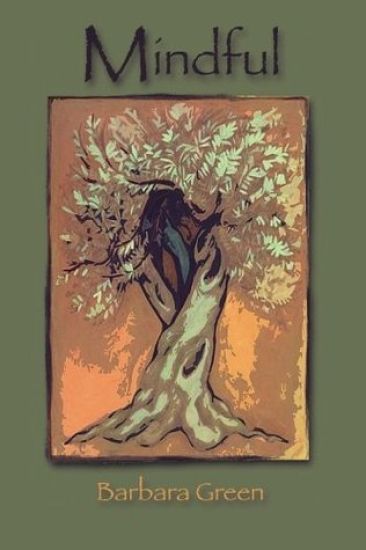
Mindful

Mindful

Barbara Green

Booksurge Publishing
2008
nidottu
All but invisible in biblical prose but a story waiting to be told, Mindful, by Barbara Green recounts the little-known journey of exiles returning to a homeland they've never seen. A stunning testament to responsible imagination, this is historic fiction at its finest. Beautifully wrought, the tale starts in the year 535 BCE and follows Tizkor, along with her three children, as they journey home from exile in Babylon to make a fresh start. The long road skirting the desert's edge and the winter weather allow them to reflect on their past hardships, present struggles, and dream about what lies ahead as they seek to reconcile the differences between the lives they have lived and the days which lie before them. Borrowing beloved language from biblical Deuteronomy, each character shapes his or her own experience through the ancient language, at the same time enriching it with the insight gained through hardship.
Jeremiah and God's Plan of Well-being

Jeremiah and God's Plan of Well-being

Barbara Green

University of South Carolina Press
2013
sidottu
In Jeremiah and God's Plan of Well-being, Barbara Green explores the prophet Jeremiah as a literary persona of the biblical book through seven periods of his prophetic ministry, focusing on the concerns and circumstances that shaped his struggles. Having confronted the vast complexity of scholarly issues found in the Book of Jeremiah, Green has chosen to examine the literary presentation of the prophet rather than focus on the precise historical details or the speculative processes of composition. What Green exposes is a prophet affected by the dire circumstances of his life, struggling consistently, but ultimately failing at his most urgent task of persuasion. In the first chapter Green examines Jeremiah's predicament as he is called to minister and faces royal opposition to his message. She then isolates the central crisis of mission, the choice facing Judah, and the sin repeatedly chosen. Delving into the tropes of Jeremiah's preaching and prophecy, she also analyses the struggle and lament that express Jeremiah's inability to succeed as an intermediary between God and his people. Next Green explores the characterisations of the kings with whom Jeremiah struggled and his persistence in his ministry despite repeated imprisonment, and, finally, Green focuses on Jeremiah's thwarted choice to remain in Judah at the end of the first temple period and his descent into Egypt after the assassination of Gedaliah. In Jeremiah and God's Plan of Well-being, Green shows the prophet as vulnerable, even failing at times, while suggesting the significance of his assignment and unlikelihood of success. She explores the complexities of the phenomenon of prophecy and the challenges of preaching unwelcome news during times of uncertainty and crisis. Ultimately Green provides a fresh treatment of a complex biblical text and prophet. In presenting Jeremiah as a literary figure, Green considers how his character continues to live on in the traditions of Judaism and Christianity.
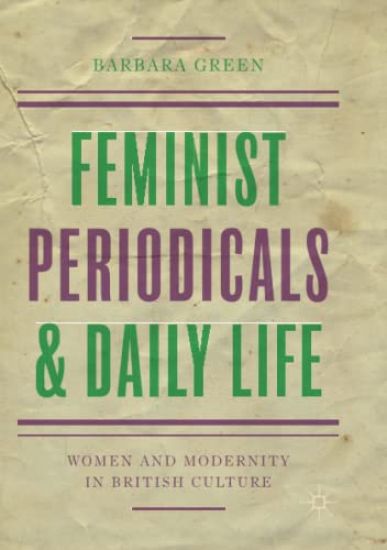
Feminist Periodicals and Daily Life

Feminist Periodicals and Daily Life

Barbara Green

Springer International Publishing AG
2017
sidottu
This volume uncovers the ideas concerning everyday life circulating in the burgeoning feminist periodical culture of Britain in the early twentieth century. Barbara Green explores the ways in which the feminist press used its correspondence columns, women’s pages, fashion columns and short fictions to display the quiet hum of everyday life that provided the backdrop to the more dramatic events of feminist activism such as street marches or protests. Positioning itself at the interface of periodical studies and everyday life studies, Feminist Periodicals and Daily Life illuminates the more elusive aspects of the periodical archive through a study of those periodical forms that are particularly well-suited to conveying the mundane. Feminist journalists such as Rebecca West, Teresa Billington-Greig, E. M. Delafield and Emmeline Pethick Lawrence provided new ways of conceptualizing the significance of domestic life and imagining new possibilities for daily routines. /p>
Feminist Periodicals and Daily Life

Feminist Periodicals and Daily Life

Barbara Green

Springer International Publishing AG
2018
nidottu
This volume uncovers the ideas concerning everyday life circulating in the burgeoning feminist periodical culture of Britain in the early twentieth century. Barbara Green explores the ways in which the feminist press used its correspondence columns, women’s pages, fashion columns and short fictions to display the quiet hum of everyday life that provided the backdrop to the more dramatic events of feminist activism such as street marches or protests. Positioning itself at the interface of periodical studies and everyday life studies, Feminist Periodicals and Daily Life illuminates the more elusive aspects of the periodical archive through a study of those periodical forms that are particularly well-suited to conveying the mundane. Feminist journalists such as Rebecca West, Teresa Billington-Greig, E. M. Delafield and Emmeline Pethick Lawrence provided new ways of conceptualizing the significance of domestic life and imagining new possibilities for daily routines. /p>