Kirjojen hintavertailu. Mukana 12 016 292 kirjaa ja 12 kauppaa.

Kirjahaku

Etsi kirjoja tekijän nimen, kirjan nimen tai ISBN:n perusteella.

4 kirjaa tekijältä Barbara Hanawalt

Teaching Guide to the European World, 400-1450

Teaching Guide to the European World, 400-1450

Barbara Hanawalt

Oxford University Press Inc
2005
nidottu
The Teaching Guide to The European World is a complete, all-in-one resource that provides teachers with the support they need to help their students access the content of the book. It contains a collection of important instructional tools for the teacher, and a separate section on reading and literacy with practical strategies for teaching content to students with a wide range of abilities and learning styles. Special multimedia, cross-curricular projects, one for each chapter, designed for mixed-group use gives students of all backgrounds and learning styles a chance to access and interact with the content. Chapter-by-chapter three-page lesson plans that are filled with activities to help teachers get the most out of every chapter in the book, including two chapter activities in blackline master form, graphic organizer reproducibles, project outlines, rubrics and a chapter assessment.
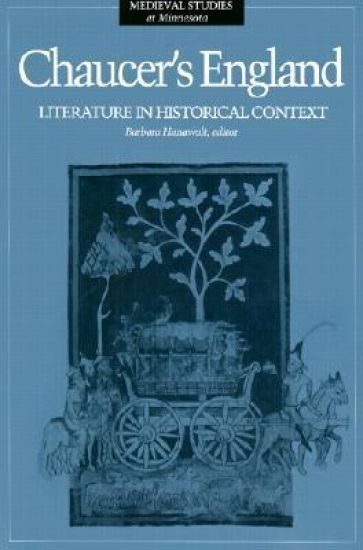
Chaucer's England

Chaucer's England

Barbara Hanawalt

University of Minnesota Press
1992
nidottu
Chaucer’s England presents new interpretations of late fourteenth-century English society through a unique combination of historical inquiry and literary analysis. Beginning with the turbulent reign of Richard I and Bolingbroke’s coup, the contributors look at organized crime, illiteracy, patronage, the influence Richard might have had personally over the remarkable literary production of the period, the concepts of gentility that shaped Chaucer’s own thinking, the pervasive influence of hunting on medieval literature, the role London played as the center of both the court and the literary world , and more.Contributors to the volume include:Caroline Barron, Royal Holloway and Bedford CollegeMichael Bennett, University of TasmaniaLawrence Clopper, Indiana UniversitySusan Crane, Rutgers UniversityRichard Firth Green, University of Western OntarioBarbara Hanawalt, University of MinnesotaNicholas Orme, University of ExeterNigel Saul, Royal Holloway and Bedford CollegePaul Strohm, Indiana UniversityDavid Wallace, University of Minnesota
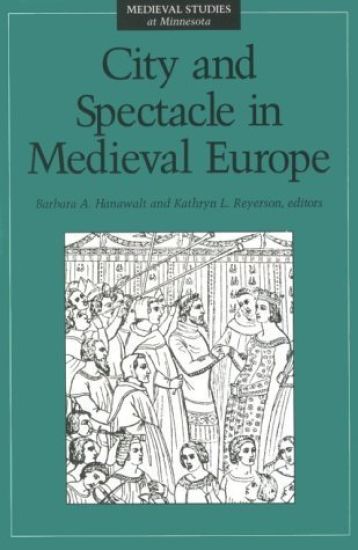
City and Spectacle in Medieval Europe

City and Spectacle in Medieval Europe

Barbara Hanawalt

University of Minnesota Press
1994
nidottu
Medieval Europe is known for its sense of ceremony and drama. Knightings, tournaments, coronations, religious processions, and even private celebrations such as baptisms, weddings, and funerals were occasions for ritual, feasting, and public display. This volume is the first to take a comprehensive look at the many types of city spectacles that entertained the masses and confirmed various messages of power in late medieval Europe. Bringing together leading scholars in history, art history, and literature, this interdisciplinary collection sets new standards for the study of medieval popular culture. Drawing examples from Spain, England, France, Italy, and the Netherlands, most of them in the fifteenth century, the authors explore the uses of ceremony as statements of political power, as pleas for divine intercession, and as expressions of popular culture. Their essays show us spectacles meant to confirm events such as victories, the signing of a city charter, or the coronation of a king. In other circumstances, the spectacle acts as a battleground where a struggle for the control of the metaphors of power is played out between factions within cities or between cities and kings. Still other ceremonies called upon divine spiritual powers in the hope that their intervention might save the urban inhabitants.We see here a public cognizant of the power of symbols to express its goals and achievements, a society reaching the height of sophistication in its manipulation of popular and elite culture for grand shows.
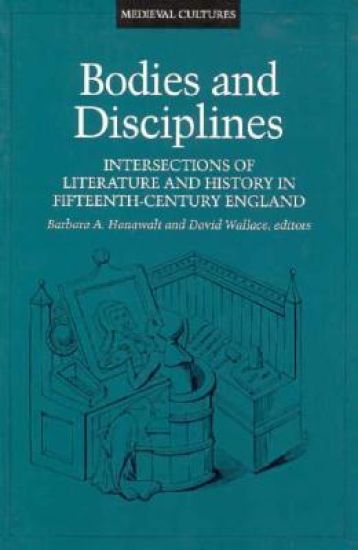
Bodies And Disciplines

Bodies And Disciplines

Barbara Hanawalt

University of Minnesota Press
1996
nidottu
Brings the insights of cultural studies to medieval studies.Centered on practices of the body-human bodies, the “body politic”-Bodies and Disciplines considers a fascinating and largely uncanonical group of texts, as well as public dramas, rituals, and spectacles, from multidisciplinary perspectives. These essays consider the way the human body is subjected to educational discipline, to corporate celebration, and to the production of gendered identity through the experiences of marriage and childbirth. Among the topics explored are the “theatrics of punishment,” including legal mutilation; the representation of the body of Christ as social ritual; adolescent misbehavior and its treatment; and conflicting ecclesiastical and lay models of sexual behavior. The contributors also trace the definition of “poor,” “foreign,” and “dissident” bodies, examining private and public issues surrounding social identities. The result is a volume that incorporates insights from history, literature, medieval studies, and critical theory, drawing from the strengths of each discipline to illuminate a relatively little-studied period. Insightful and momentous, Bodies and Disciplines marks an important intervention in the development of cultural studies of late medieval England. Contributors: Sarah Beckwith, U of Pittsburgh; Rita Copeland, U of Minnesota; Gail McMurray Gibson, Davidson College; Ralph Hanna III, U of California, Riverside; Felicity Heal, Oxford U; Ruth Mazo Karras, Temple U; Seth Lerer, Stanford U; Marjorie K. McIntosh, U of Colorado, Boulder; Miri Rubin, Oxford U; Paul Strohm, Indiana U. Medieval Cultures Series, volume 9