Kirjojen hintavertailu. Mukana 11 244 527 kirjaa ja 12 kauppaa.

Kirjahaku

Etsi kirjoja tekijän nimen, kirjan nimen tai ISBN:n perusteella.

15 kirjaa tekijältä Barbara Hardy

Thomas Hardy

Thomas Hardy

Barbara Hardy

Continuum International Publishing Group Ltd.
2000
pokkari
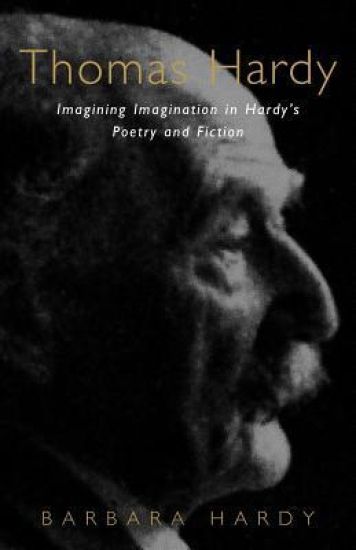
The author offers close readings of Thomas Hardy's poetry and novels, regarding these as expressive forms of everyday and professional acts of the imagination. Hardy is placed in the long tradition of writers who subject is not art but imagination and whose most interesting aesthetic introspection+as, like those of Jane Austen and George Eliot, are oblique or sub-textual. So what the reader follows here is Hardy's imagining of imagination in his elegies and nature poems and in his major characters from Gabriel Oak to Tess and Jude.The themes and forms examined by Barbara Hardy include narrative, conversation, gossip, memory, gender, poetry of place and imaginative thresholds. Altogether the study is a lucid and accessible introduction, which locates Hardy's place in the tradition of English literature.
A Reading of Jane Austen

A Reading of Jane Austen

Barbara Hardy

Continuum International Publishing Group Ltd.
2000
pokkari
A Reading of Jane Austen (first published by Peter Owen in 1975) has established itself with critics and readers as an outstanding contribution to the growing literature on this author, full of fresh and stimulating perceptions. Central to the work is Barbara Hardy's view of Jane Austen as the originator of the modern novel, largely through her creation of a new and flexible medium enabling her to move easily from sympathy to detachment, from one mind to many minds, from solitary scenes to social gatherings.
The Moral Art of Dickens

The Moral Art of Dickens

Barbara Hardy

Continuum International Publishing Group Ltd.
2000
pokkari
Professor Barbara Hardy is a noted critic of nineteenth-century fiction but her essays on Dickens have hitherto been scattered widely among critical journals and anthologies. The seven studies she has here collected, introduced and in part revised, together make up a sustained exploration of the moral concern which informs the novelist's work and gives to his portrayak of society and the individual its unique quality. A general discussion of the moral nature of Dickens' art leads to a study of patterns of change and conversion and this in turn to a close examination of four representative novels: Pickwick Papers, Martin Chuzzlewit, David Copperfield and Great Expectations.
Dylan Thomas

Dylan Thomas

Barbara Hardy

University of Georgia Press
2000
sidottu
Dylan Thomas's expressive, highly imaginative re-creation of forms and language intimately portrays his inner self and his time, earning him renown as one of the "great individualists of modern art." In this contemplative, focused study of poems, stories and other works by Thomas, including Portrait of the Artist as a Young Dog and Under Milk Wood, Barbara Hardy emphasizes his creative achievements and high intelligence, analyzing his regional identity; response to other writers, especially James Joyce; modernist style; subject matter; use of language; and themes of art and the natural world.Thomas, a Welsh writer, never a nationalist, put into his writing a subtle response to regional landscape, particular people and places, and social context, including the 1930s depression, rural poverty, and war. His poetry and prose are passionate, sensuous, and artistically self-aware. The poetry is especially congenial in its imaginative celebration of greenness—literal, metaphorical, and political. To adapt the words of Charles Lamb, the poet is in "love with this green earth."Hardy describes Thomas as a resourceful "language-changer" who, like Shakespeare, Dickens, Hopkins, and Joyce, transforms the English language. Through writing so uniquely inventive that it alters the reader's perception of language, Thomas left us with works that are as fresh and relevant to today's world as they were at their debut.
George Eliot

George Eliot

Barbara Hardy

Continuum International Publishing Group Ltd.
2006
sidottu
George Eliot (1819-1880) was one of the leading writers of the Victorian period and she remains one of Britain's greatest novelists. This brief life offers new insights into Eliot's life and work focusing on the themes, patterns, relationships, feelings and language common to both her life and writing. Barbara Hardy discusses Eliot's relations with parents and siblings, her brave but joyful unmarried partnership with George Henry Lewes, her friendships and her late brief marriage to the younger John Cross. Setting her life and fiction side by side, Hardy reveals Eliot's ideas about society, home, foreignness, nature, gender, religion, sex, illness and death and her experiences as translator, journalist, editor and novelist. Drawing on letters, journals, journalism and the memoirs and biographies written by contemporaries, Hardy brings together a biographical approach with close reading of Eliot's novels to give a combined perspective on her life and art. This book offers students, academics and readers alike an illuminating portrait of George Eliot as a woman and a writer.
George Eliot

George Eliot

Barbara Hardy

Continuum International Publishing Group Ltd.
2006
nidottu
George Eliot (1819-1880) was one of the leading writers of the Victorian period and she remains one of Britain's greatest novelists. This biography offers new insights into Eliot's life and work focusing on the themes, patterns, relationships, feelings and language common to both her life and writing. Barbara Hardy discusses Eliot's relations with parents and siblings, her brave but joyful unmarried partnership with George Henry Lewes, her friendships and her late brief marriage to the younger John Cross. Setting her life and fiction side by side, Hardy reveals Eliot's ideas about society, home, foreignness, nature, gender, religion, sex, illness and death and her experiences as translator, journalist, editor and novelist. Drawing on letters, journals, journalism and the memoirs and biographies written by contemporaries, Hardy brings together a biographical approach with close reading of Eliot's novels to give a combined perspective on her life and art. This book offers students, academics and readers alike an illuminating portrait of George Eliot as a woman and a writer.
Dickens and Creativity

Dickens and Creativity

Barbara Hardy

BLOOMSBURY PUBLISHING PLC
2008
sidottu
This monograph covers Dickens and creativity, analysing both his discussion of creativity and imagination and illustrations in his work.Charles Dickens' experience and imagining of creativity is at the heart of his self-awareness, subject-matter and narrative. His intelligence works intuitively rather than conceptually and ideas about imagination often emerge informally in personal letters and implicitly through characters, language and story. His self-analysis and reflexive tendency are embedded in his styles and forms of narrative and dialogue, images of normality, madness, extremity, subversion and disorder, poetry and inter-textuality, anticipating and shaping the languages of modernism, influencing James Joyce and Virginia Woolf as well as traditionalists like H.G. Wells and Evelyn Waugh.Discussing Dickens' novels and some of his letters, sketches, essays and stories, Barbara Hardy offers a fascinating demonstration of creativity.
The Advantage of Lyric

The Advantage of Lyric

Barbara Hardy

Bloomsbury Academic
2013
sidottu
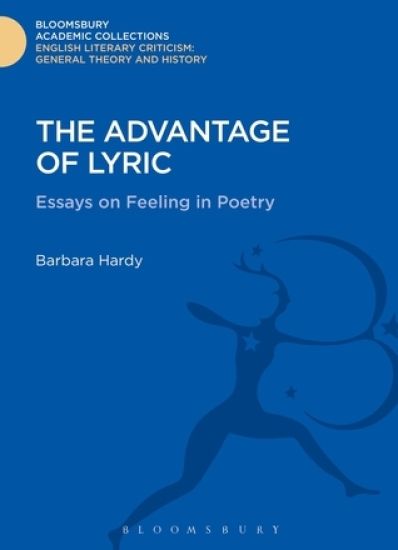
In the title essay, Professor Hardy argues for the special advantage of lyric over other other literary genres in conveying intense private feelings publicly. She then gives detailed consideraton to the lyric poetry of John Donne, Arthur Hugh Clough, and a group of poets central to the modernist canon: Hopkins, Yeats, Aden, Dylan Thomas, and Sylvia Plath. Those interested in W.H. Auden will find the book of particular value, since Auden occupies a central place in it. W.H. Auden has frequently been held up as the modern example par excellence of a 'public poet' whose works betray relatively little in the way of personal emotion. In the cahpters entitled 'The Reticence of W.H. Auden, Thirties to Sixties: A Face and a Map' barbara Hardy shows the inadequacy of that characterization and opens the way for a fresh appreciation of Auden's achievement as a poet. Readers interested in modern poetry genearlly and all readers acquainted with Barara Hardy's previous books will the book of importance.
Tellers and Listeners

Tellers and Listeners

Barbara Hardy

Bloomsbury Academic
2013
sidottu
Nature, not art, makes us all story-tellers. Daily and nightly we devise fictions and chronicles, calling some of them daydreams or dreams, some of them nightmares, some of them truths, records, reports and plans. The object of this book is to look at these natural narrative forms and themes, which have been neglected by critics but recognized by narrative artists, using literary criticism in order to argue the limits and limitations of literature. Although Hardy’s suggestions about narrative apply broadly to all artistic forms, in the second part of the book she approaches the subject through a detailed analysis of three authors, Dickens, Hardy and Joyce, all profound and far-reaching analysts of narrative structures and values.
The Appropriate Form

The Appropriate Form

Barbara Hardy

Bloomsbury Academic
2013
sidottu
In this substantial essay on the novel (first published in 1964) Barbara Hardy distinguishes three integral aspects of the art of fiction – story, the working-out of a moral problem, and “truthfulness”, defined as “the lively representation of reality”. From this standpoint she discusses and elucidates some characteristic excellences and limitations of a number of major novels and novelists, including Defoe, Charlotte Brontë, George Eliot, Meredith, James, Hardy, E. M. Forster, and D. H. Lawrence.
Ivy Compton-Burnett

Ivy Compton-Burnett

Barbara Hardy

Edinburgh University Press
2016
sidottu
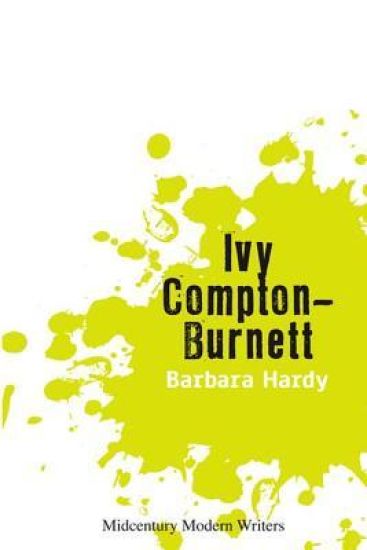
The first fully detailed and critically contextualised study of the novels of Ivy Compton-BurnettIvy Compton-Burnett is a strikingly original novelist, writing conversation-novels in which talk is the medium and subject. She is innovative like Joyce and Woolf but more accessible and less theoretical, a modernist unawares. She makes readers think and her terse cool witty style reminds us that the novel is an art. To read most living writers of fiction after reading her is to feel novelists have become lazy and made their readers lazy. She requires attention, and she doesn't write to pass the time or invite identification, but she is amusing and challenging.This re-valuation of a neglected artist is a close analysis of forms, ideas and language in novels which range from her first conventionally moral love-story, Dolores, which she tried to suppress, to startling stories about landed gentry in Victorian and Edwardian England.Key FeaturesProvides incisive and accessible close readings of Compton-Burnett's language, life-narratives, emotional expression and thoughtPresents new work of a leading criticPlaces Compton-Burnett in the context of Modernist writing
Ivy Compton-Burnett

Ivy Compton-Burnett

Barbara Hardy

Edinburgh University Press
2016
nidottu
The first fully detailed and critically contextualised study of the novels of Ivy Compton-BurnettIvy Compton-Burnett is a strikingly original novelist, writing conversation-novels in which talk is the medium and subject. She is innovative like Joyce and Woolf but more accessible and less theoretical, a modernist unawares. She makes readers think and her terse cool witty style reminds us that the novel is an art. To read most living writers of fiction after reading her is to feel novelists have become lazy and made their readers lazy. She requires attention, and she doesn't write to pass the time or invite identification, but she is amusing and challenging.This re-valuation of a neglected artist is a close analysis of forms, ideas and language in novels which range from her first conventionally moral love-story, Dolores, which she tried to suppress, to startling stories about landed gentry in Victorian and Edwardian England.Key FeaturesProvides incisive and accessible close readings of Compton-Burnett's language, life-narratives, emotional expression and thoughtPresents new work of a leading criticPlaces Compton-Burnett in the context of Modernist writing
Dickens and Creativity

Dickens and Creativity

Barbara Hardy

Continuum International Publishing Group Ltd.
2008
nidottu
This monograph covers Dickens and creativity, analysing both his discussion of creativity and imagination and illustrations in his work.Charles Dickens' experience and imagining of creativity is at the heart of his self-awareness, subject-matter and narrative. His intelligence works intuitively rather than conceptually and ideas about imagination often emerge informally in personal letters and implicitly through characters, language and story. His self-analysis and reflexive tendency are embedded in his styles and forms of narrative and dialogue, images of normality, madness, extremity, subversion and disorder, poetry and inter-textuality, anticipating and shaping the languages of modernism, influencing James Joyce and Virginia Woolf as well as traditionalists like H.G. Wells and Evelyn Waugh.Discussing Dickens' novels and some of his letters, sketches, essays and stories, Barbara Hardy offers a fascinating demonstration of creativity.