Kirjojen hintavertailu. Mukana 11 342 296 kirjaa ja 12 kauppaa.

Kirjahaku

Etsi kirjoja tekijän nimen, kirjan nimen tai ISBN:n perusteella.

3 kirjaa tekijältä Barbara K. Seeber

General Consent in Jane Austen

General Consent in Jane Austen

Barbara K. Seeber

McGill-Queen's University Press
2000
sidottu
General Consent in Jane Austen examines the "early" and "late" novels as well as the juvenilia in the light of three paradigms: "The Other Heroine" focuses on voices that challenge and compete with the central heroines, "Cameo Appearances" examines buried past narratives, and "Investigating Crimes" explores acts of violence. These three avenues into dialogic space destabilize conventional readings of Austen. The Bakhtinian model that structures this book is not one of linearity and balance but one of conflict, simultaneity, and multiplicity. While some novels fit into only one paradigm, others incorporate more than one; Mansfield Park receives the most attention. A bold and provocative study, General Consent in Jane Austen will be of interest not only to Austen scholars but to scholars of literary theory and dialogism.
Jane Austen and Animals

Jane Austen and Animals

Barbara K. Seeber

TAYLOR FRANCIS LTD
2021
nidottu
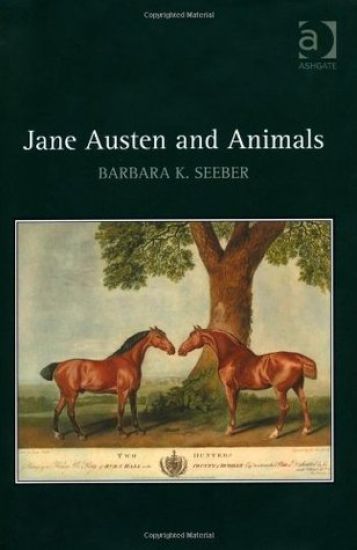
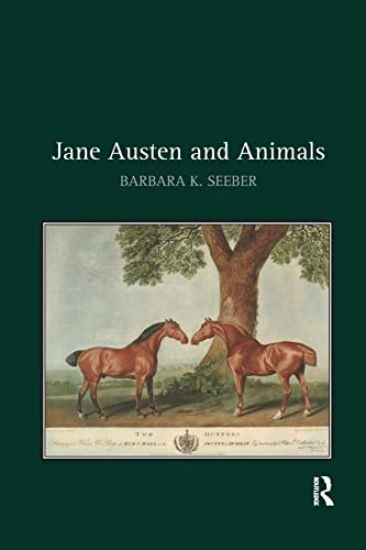
The first full-length study of animals in Jane Austen, Barbara K. Seeber’s book situates the author’s work within the serious debates about human-animal relations that began in the eighteenth century and continued into Austen’s lifetime. Seeber shows that Austen’s writings consistently align the objectification of nature with that of women and that Austen associates the hunting, shooting, racing, and consuming of animals with the domination of women. Austen’s complicated depictions of the use and abuse of nature also challenge postcolonial readings that interpret, for example, Fanny Price’s rejoicing in nature as a celebration of England’s imperial power. In Austen, hunting and the owning of animals are markers of station and a prerogative of power over others, while her representation of the hierarchy of food, where meat occupies top position, is identified with a human-nature dualism that objectifies not only nature, but also the women who are expected to serve food to men. In placing Austen’s texts in the context of animal-rights arguments that arose in the late eighteenth and early nineteenth centuries, Seeber expands our understanding of Austen’s participation in significant societal concerns and makes an important contribution to animal, gender, food, and empire studies in the nineteenth century.
Jane Austen and Animals

Jane Austen and Animals

Barbara K. Seeber

Ashgate Publishing Limited
2013
sidottu
The first full-length study of animals in Jane Austen, Barbara K. Seeber’s book situates the author’s work within the serious debates about human-animal relations that began in the eighteenth century and continued into Austen’s lifetime. Seeber shows that Austen’s writings consistently align the objectification of nature with that of women and that Austen associates the hunting, shooting, racing, and consuming of animals with the domination of women. Austen’s complicated depictions of the use and abuse of nature also challenge postcolonial readings that interpret, for example, Fanny Price’s rejoicing in nature as a celebration of England’s imperial power. In Austen, hunting and the owning of animals are markers of station and a prerogative of power over others, while her representation of the hierarchy of food, where meat occupies top position, is identified with a human-nature dualism that objectifies not only nature, but also the women who are expected to serve food to men. In placing Austen’s texts in the context of animal-rights arguments that arose in the late eighteenth and early nineteenth centuries, Seeber expands our understanding of Austen’s participation in significant societal concerns and makes an important contribution to animal, gender, food, and empire studies in the nineteenth century.