

Kirjahaku
Etsi kirjoja tekijän nimen, kirjan nimen tai ISBN:n perusteella.
16 kirjaa tekijältä Barbara Morris

Isle of Skye, November 1993. It is two months since Kate Wilder lost her mother, her identity and, according to her family, her sanity. What other explanation can there be for her following the astounding path she has chosen? But Kate is in love and nobody has the right to tell her what to do. Not now. On Vancouver Island, a man wrestles with emotions he barely recognises - hope, amazement, joy - all of which are steeped in fear. Fear that he may lose his daughter for good, that life may turn its back on him a second time or, worst of all, that he might damage a unique young woman beyond repair. When the road ahead is unclear, sometimes you have to rely on trust.

Little Old Ladies don't just happen--they are created by default. The road to little old lady-hood starts early in mid life but if a well thought out plan of prevention is in place, midlife women can keep and improve their current level of youthful attributes for at least another 25 years. One reason most women don't achieve their desired degree of agelessness is because the traditional retirement oriented senior culture does not support growth and productivity. The negative power of the senior culture is something few women are aware of, and nobody talks about it...until now. This aging influence in the lives of older women has finally been ""outed"" and you must discover what it's all about and how to avoid it in No More Little Old Ladies!
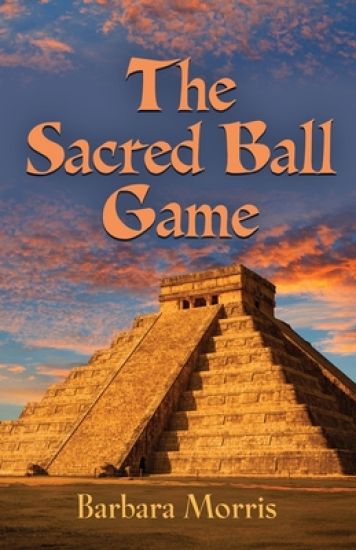
It's 900 AD in Chichen Itza, Mexico. Who will win The Sacred Ball Game, a fiercely fought sport played to honor the god Kukulkan?Will it be Dzek, the prince who was kidnapped and is held hostage? Or will it be a fellow prince and hostage, the muscular, cunning Zacuul?The outcome is vital for tradition demands that the winner must behead the loser, It's a grim and bloody death, but it is honorable because the loser's spirit rises to the gods to become spokesman and protector of Chichen Itza. The winner is widely acclaimed, laden with gold and jewels and freed to return to his home city.Though the story is fictitious, it is based loosely on ancient Mayan culture. The protagonist, Dzek, has been a hostage for six years, ever since he was kidnapped at age nine. He has tried to escape many times.Two other young hostages are Poco, a small crippled lad, Dzek's best friend and admirer; the other is Zacuul, a strong, but lazy and selfish young man who is content to remain in Chichen Itza as long as he can live an easy life of excellent food, a comfortable home, cared for by slaves and free to play the game every day.The three hostages are free to move about the city; however, each has his own warrior-guard who stays with him day and night. They are as close as shadows. Dzek detests his guard, Otaan, who, in turn, hates him and does what he can to make Dzek's life miserable. As long as these boys are well treated, even as captives, their fathers, rulers of rival cities, will not attack Chichen Itza for if they do, their sons will be killed.The plucky female character, Chuen, is the spirited daughter of the city's Chief Medicine Priest. She is treated as an outcast because she breaks tradition: she learns medicine from her father, and unlike "normal" girls who are chaperoned, are subject to men and are trained for traditional female duties, Chuen may be the world's first feminist: not only does she practice medicine, she's a natural athlete. She runs like the wind. She speaks up and acts as equal to a man.When Dzek is chosen as captain of the Gold Team in the Sacred Ball Game, Chuen offers to help him train. Reluctant at first to accept help from a mere girl, Dzek finally agrees. Suddenly Chichen Itza is plagued by locusts which demolish the newly planted corn. A drought follows, threatening to dry up the new seed. To appease the gods, the sweet little orphan slave girl, Tonina, who has been loved and cared for by Chuen and her father, is sacrificed in a ceremonial drowning in the Well of Sacrifice.Tonina's sacrifice brings rain; training for the Sacred Ball game goes on. Dzek decides to give purpose to his life by winning the game, being freed, then returning with an army to rescue Poco. But vindictive Zacuul has his own plan to win; he viciously injures Dzek's ankle. Chuen minsters to the ankle, tries to raise Dzek's spirits.As Dzek slowly heals, Chuen learns of a plot to kill him--a "jaguar attack" on his way home. It is now Chuen who contrives an escape plan, but Dzek, in pain and dispirited, has to be convinced, for Chuen's plan calls for her to steal the drug, balache, known as the "Holy Intoxicant" from within the dark, sacred depths of the Temple of Kukulkan. This could plunge her to eternal punishment. Chuen plans to slip the balache into the community pot of stew while the team and the guards are celebrating at the end of the game. It will put them into a drugged sleep. "It is then", she tells Dzek, "that you must escape." Even though he begs her to escape with him, and she loves him, she refuses. Her duty is to remain and use her healing powers here on her people.However, as Chuen, terrified but bold, steals the balache, fate intervenes; with surprising speed, it changes the lives of both o
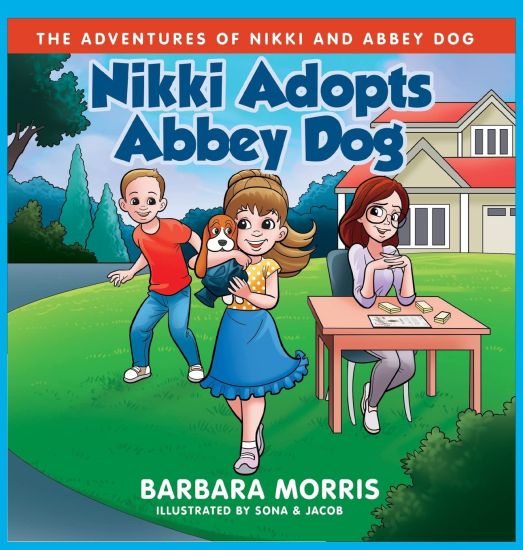
A heartfelt story about a little girl who adopts a tiny basset hound puppy and starts a whirlwind of adventures.Nikki loves helping set up items at her uncle's weekly auction. Her favorite job is making a big batch of her sour lemon-aid which always makes people pucker This week a man pulls up and has three adorable puppies that he would like to adopt to good homes. Nikki immediately falls in love and wants to adopt one of the adorable puppies. However, she only has her "sticky" quarter that she earned at last week's auction. A woman adopts the first two for ten dollars each but leaves the smallest one behind. Uncle AJ nods towards Nikki and winks at the crowd. It appears that today, a sticky quarter is just enough to adopt Abbey Dog


The third book in the series is about a little girl who adopts a tiny basset hound puppy and starts a whirlwind of adventures. Abbey Dog is exploring the yard and hears a loud "SQUEAK" coming from behind the blankets on the clothesline. She peeks under one of the blankets and finds a little bunny. Suddenly, Nikki hears Abbey Dog barking at something she has trapped by the staircase. Nikki rushes in to rescue the little bunny who appears to have an injured leg. Later that evening, Dr. Gladys stops by to check on the bunny. What will Nikki do? Will the bunny recover? Check out Nikki and Abbey Dog Rescue a Bunny to find out the rest of the story
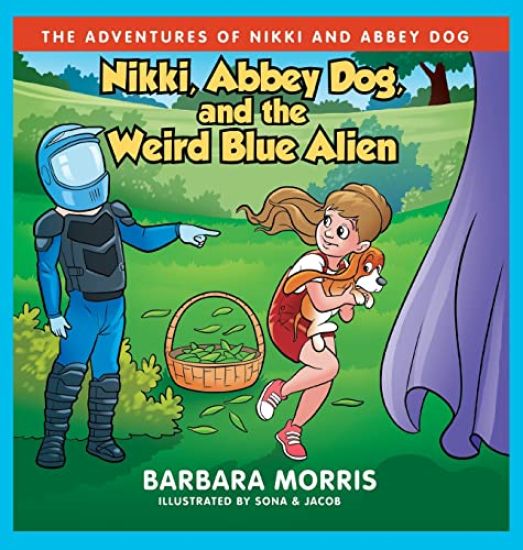
Welcome to the new adventure of a girl and her puppy Nikki and her cute friend, Abbey Dog, have so much fun and learn new things every day. And this day is no different. While Nikki is busy in the garden, her puppy meets the weirdest thing, a blue alien. What can roar louder than a lion? And what kind of creature has blue skin and one eye? What is your guess? The puppy is scared. Who wouldn't be? Abbey Dog wants to run away but she needs to find out more about this weird blue alien. The silly puppy has a brave and kind heart. But the scary creature is coming after her now. So, she must run back to the safety of Nikki. The frightened little puppy crashes into Nikki, and they tumble backward. No one is hurt, but the basket of peas is scattered everywhere. Nikki is not sure why Abbey Dog is so afraid, but she takes the time to calm Abbey Dog. In the end, the scary creature is just Nikki's older brother, Riley, on a motorcycle. But, of course, he must wear protective gear to keep safe. That's why he looks so strange to the puppy. Abbey Dog is learning there are so many strange and wonderful surprises in the world.
Vancouver Island, September 2003. In a family where the need to be loved has always outweighed the need to conform, further developments are taking place. A new baby is welcomed, which Kate Wilder embraces with her usual optimism, but which also creates a need within that her husband David does not share; their son is healthy, they know who they are, where is the need to prove anything more?Kate cannot settle and when the details of her father's birth begin to encroach on their relatively peaceful unit, she rises to a challenge which proves potentially damaging to more than one relationship. To her, there are amends to be made and hearts to be salved, and Kate is not alone in this particular quest. For one person time is running out.

About two years ago, when God looked around and spied Cora, a ragamuffin orphaned cat and Barbara, a disheveled, lonely 90-year-old widow, he knew there was a need for a call to action. It must have broken his kind heart to see Cora's once lustrous fur, now dull and matted from weeks of living alone in a dark closet and to despair at Barbara's tangled, unbrushed hair, slouched shoulders and worn and saggy jammies.God knew how uncomfortable-itchy and grimy-these two must feel, but he knew they needed more than a bath and cosmetic fixes. More than anything, this desultory duo needed compassion, friendship, love, warmth, understanding and heaps of hugs. In short, they needed each other. And so, God gave them as gifts to each other. Clearly they went together like peanut butter and jelly or gin and tonic. It was easy, not just because these were divine actions, but because Cora and Barbara lived in a retirement community on the same floor (the 13th) and same hallway.Cora was hiding in the closet because Marjorie, her owner, was dying, and the apartment was crammed with hospital equipment, nurses, aides, family and friends. Barbara was living a life of boredom alone at the other end of the hall because Ward, her husband of 56 years, a retired naval officer had suddenly died. During their married life, Barbara and Ward had joyfully traveled the world-to 100 countries. Now, mourning and alone, Barbara had no urge to travel. She wasn't pleased to admit it to herself, but she had no purpose in life.Well, God took care of that by sending Cora down the hall to be cared for when Marjorie died. She was a gift from God to Barbara. What a gift A ramshackle little cat who was not only orphaned, but deaf Well, so was Barbara. What a pair.

This is about two families of flowers that are neighbors.
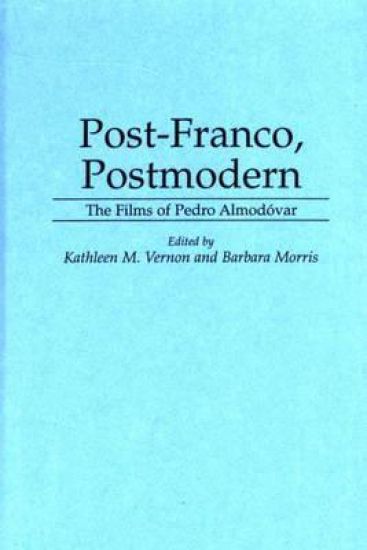
The films of Pedro Almodovar have demonstrated great crossover appeal in their ability to attract both mainstream and marginal audiences and to command critical as well as commercial success. The contributors to this anthology of critical essays seek, through close readings of the director's 10 feature films, to analyze the multiple contexts of Almodovar's phenomenal international success. This volume offers a corrective to the glib approaches that have dominated previous discussions of Almodovar's films, which have treated them, on the one hand, as simply the latest contribution to the travel poster image of passionate, romantic Spain, or, on the other, as historical joyrides through the global pop culture scene. As the first comprehensive study of Almodovar's cinema to be published in North America, the book is also noteworthy for the range of critical and theoretical methodologies that the contributors bring to the study of his works. Drawing upon disciplines that run from psychoanalysis, feminism, queer theory, film and media studies, and cultural theory to the empirical study of audience response, the authors nevertheless share a concern to illuminate the specifically Spanish context of the director's films. While this volume serves the important function of introducing American audiences to post-Franco Spanish culture, it also pursues the complementary goal of projecting contemporary Spain into the critical debate on the forms and functioning of postmodern culture and society.

Merchiston, Bruntsfield and North Morningside 1896
Barbara Morris; R. J. Morris
ALAN GODFREY MAPS
1983
kartta, viikattu

Nikki and Abbey Dog have had many adventures together, and today is no different. Nikki teaches Abbey Dog how to use the new doggie door. After many attempts, Abbey Dog pushes through and lands outside. But unfortunately, practice will have to wait because Nikki needs to leave with her family for church. Oh no Nikki forgets to lock the doggie door. Abbey Dog slips through the doggie door and slyly follows the family to church. Finally, she sneaks in the church door and begins a fantastic adventure. What trouble will Abbey Dog experience? Will she find Nikki in the sea of people? Will the church crowd be shocked to find a dog in church?
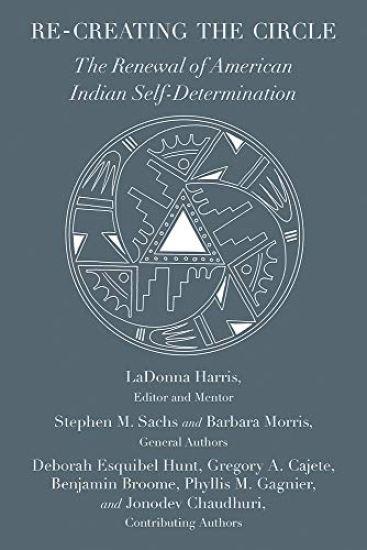
A collaboration between Native activists, professionals, and scholars, Re-creating the Circle brings a new perspective to the American Indian struggle for self-determination: the returning of Indigenous peoples to sovereignty, self-sufficiency, and harmony so that they may again live well in their own communities while partnering with their neighbors, the nation, and the world for mutual advancement. Given the complexity in realizing American Indian renewal, this project weaves the perspectives of individual contributors into a holistic analysis, providing a broader understanding of political, economic, educational, social, cultural, and psychological initiatives. The authors seek to assist not only in establishing American Indian nations as full partners in American federalism and society, but also in improving the conditions of Indigenous people worldwide, while illuminating the relevance of American Indian tradition for the contemporary world facing an abundance of increasing difficulties.

Operations Management in Service Industries and the Public Sector
Christopher Voss; Colin Armistead; Bob Johnston; Barbara Morris
John Wiley Sons Inc
1985
nidottu
Operations Management in Service Industries and the Public Sector Text and Cases Christopher Voss, School of Industrial and Business Studies, University of Warwick Colin Armistead, The European School of Management Studies, Oxford Bob Johnston, School of Industrial and Business Studies, University of Warwick Barbara Morris, Department of Management Studies, Sheffield City Polytechnic Aimed at teachers and students on business and management courses teaching and studying Operations as well as those concerned with the management of specific service industries, this book brings together concepts found in the wider literature as well as presenting some new concepts. Written from the standpoint of operations management specialists?rather than marketing managers?the book examines the operational aspects of service operations and includes vital links with marketing, organization and business policy by using a wide range of case studies from both the public and the private sector. Suitable as a teaching text at both graduate and postgraduate levels the book will also be of value to practitioners in service organizations, the public sector and those concerned with the management of internal services in manufacturing.