
Kirjahaku
Etsi kirjoja tekijän nimen, kirjan nimen tai ISBN:n perusteella.
22 kirjaa tekijältä Barbara Ward

"If, as I believe, there is more real security for Americans in understanding than in H-bombs, Barbara Ward has done us an inestimable service with this absorbing, enlightening book. I strongly urge my fellow countrymen to read it, for they will find in it essential information on the state of the world and essential inspiration to do what needs to be done."The ideas presented here are stimulating and provocative and illuminating. The ideas are new--and they make the news more understandable. And they suggest a policy for the West. A rewarding book...exceedingly important." --Adlai E. Stevenson

"Barbara Ward does not make the mistake common to many economists and political theorists of attempting to interpret the present, still less to prophesy the future, in terms solely of the past. Though in each of her lectures she traces for each of her fields the development of political thought from the earliest times, the great importance of the series lies in her analysis of the present and her synthesis of the components into a broad picture which explains while it informs." --Kwame Nkrumah, from the Foreword
Three topics dominate discussions of the global environment: pollution; the consequences of the affluent running ever faster through finite resources; and the growing tensions between rich and poor. Barbara Ward refused to see these processes as inevitable. Here, she describes new technologies for recycling waste, for energy, for 'getting more or less', linking them to ordinary people's working lives. She suggests a strategy for meeting the basic needs of the disadvantaged, and shows how the vast inequalities between countries can be reduced.

Three topics dominate discussions of the global environment: pollution; the consequences of the affluent running ever faster through finite resources; and the growing tensions between rich and poor as a third of humanity continues to live and die in desperate poverty. In this exceptional book Barbara Ward (co-author with Rene Dubos of the bestselling Only One Earth) refused to see these processes as inevitable. It describes new technologies for recycling waste, for energy, forgetting more or less linking them to ordinary people's working lives. It also suggests a strategy for meeting the basic needs of the disadvantaged, and shows how the vast inequalities between countries can be reduced. This perceptive survey of policies outlines a planetary bargain between the world's nations that would guarantee individual freedom from poverty and keep our shared biosphere in good working order. Originally published in 1988
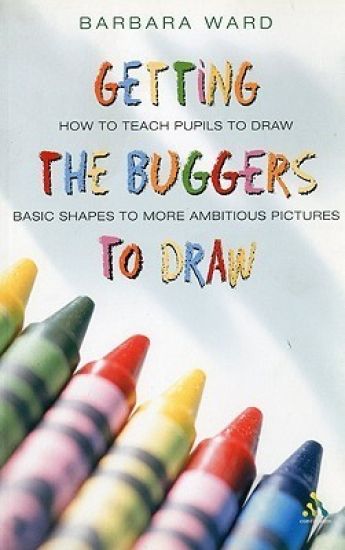
This practical guide shows readers how to teach students to draw in a step-by-step way. Covering topics as diverse as shading, perspective, shapes, portraits and figures, copious examples of student work illustrates Ward's concise prose. This book is a must for all art teachers.




Here is a vivid account of global economic development at a time of extraordinarily rapid change. Barbara Ward, the well-known economist, delivered the Falconer Lectures at the University of Toronto in 1963. In them she makes an expert and timely assessment of the role that the West must assume in order to make effective use of the astonishing plenty which is concentrated today in the control of less than 20 per cent of the world's population. In the first part of the book Miss Ward deals with growth in the developed economy, describing the course of European economic development from Ricardo and Malthus through Karl Marx to Jean Monnet; within a brief compass we are given a brilliant and exciting account of this progression of events, with a lucid exposition of the way that challenges have been met and the economy kept moving. The author assesses the role of the extension of the franchise and the growth of trade unionism in the creation of the first mass market, and goes on to discuss the long-term economic implications of the two great wars. In the second part, "Poverty and Expansion," she traces the economic history of colonialism and discusses the roles which must be assumed by the former colonial masters if any stability is to be assured. She stresses the need for continued international co-operation through such organizations as OECD and the European Common Market: their support is considered crucial to assure continued growth and to prevent a repetition of past economic disasters. She inisists, too that external trade policies must be devised which will stimulate, rather than discriminate against, economic growth in the developing nations. Such co-operation is seen as the responsibility of the West in the face of the economic and political dependence which are the legacy of colonialism. Miss Ward argues that the acceptance of this responsibility is essential not only politically and economically, but morally as well. This is a strong plea for the kind of civilized behaviour which alone can vindicate past offences and help to justify the privileged positions of the wealthy minority of the world's population. It will be read eagerly by all who are familiar with the writings of Barbara Ward, and by all who are concerned to close the appalling gap between rich nations and poor nations.

Three topics dominate discussions of the global environment: pollution; the consequences of the affluent running ever faster through finite resources; and the growing tensions between rich and poor as a third of humanity continues to live and die in desperate poverty. In this exceptional book Barbara Ward (co-author with Rene Dubos of the bestselling Only One Earth) refused to see these processes as inevitable. It describes new technologies for recycling waste, for energy, forgetting more or less linking them to ordinary people's working lives. It also suggests a strategy for meeting the basic needs of the disadvantaged, and shows how the vast inequalities between countries can be reduced. This perceptive survey of policies outlines a planetary bargain between the world's nations that would guarantee individual freedom from poverty and keep our shared biosphere in good working order. Originally published in 1988

With twenty educators contributing ideas piloted with children of different abilities and backgrounds in their care, 'Good Grief'has been designed to explore and demystify the experience of loss - in different contexts - within the framework of the National Curriculum.This second edition has been updated and revised, to include a new chapter on the effects of disasters on children. Suitable for all professionals, carers and parents, both books are activity based. Good Grief 1 facilitates the use of children's own experiences and encouraging improvisation and extension. Primarily designed for mixed ability secondary and adult education, Good Grief 2 will also be invaluable for many other statutory, professional and community organisations.

With twenty educators contributing ideas piloted with children of different abilities and backgrounds in their care, Good Grief has been designed to explore and demystify the experience of loss in different contexts within the framework of the National Curriculum. This second edition has been updated and revised, to include a new chapter on the effects of disasters on children. Suitable for all professionals, carers and parents, both books are activity based. Good Grief 1 facilitates the use of children's own experiences and encouraging improvisation and extension. Primarily designed for mixed ability secondary and adult education, Good Grief 2 will also be invaluable for many other statutory, professional and community organisations.


Although many educators and curriculum specialists tout the values of using discussion in the classroom, it isn't always clear exactly what discussion is or how it impacts its participants, particularly the females in the classrooms where discussion is used as part of the teaching methods. The voices of students, especially females, are rarely heard in the research studies that examine classroom practices, and this study attempts to amplify those voices in order to understand how they experience discussion as a classroom practice and what lies behind their reasons for speaking or not speaking during classroom activities ostensibly devised to encourage them to participate. This qualitative study uses participation observation, teacher interviews, and interviews with the five students selected for the study to gain understanding into the reasons behind silence in the classroom. The study concludes with a discussion of the implications researchers and educators my draw from its results.


